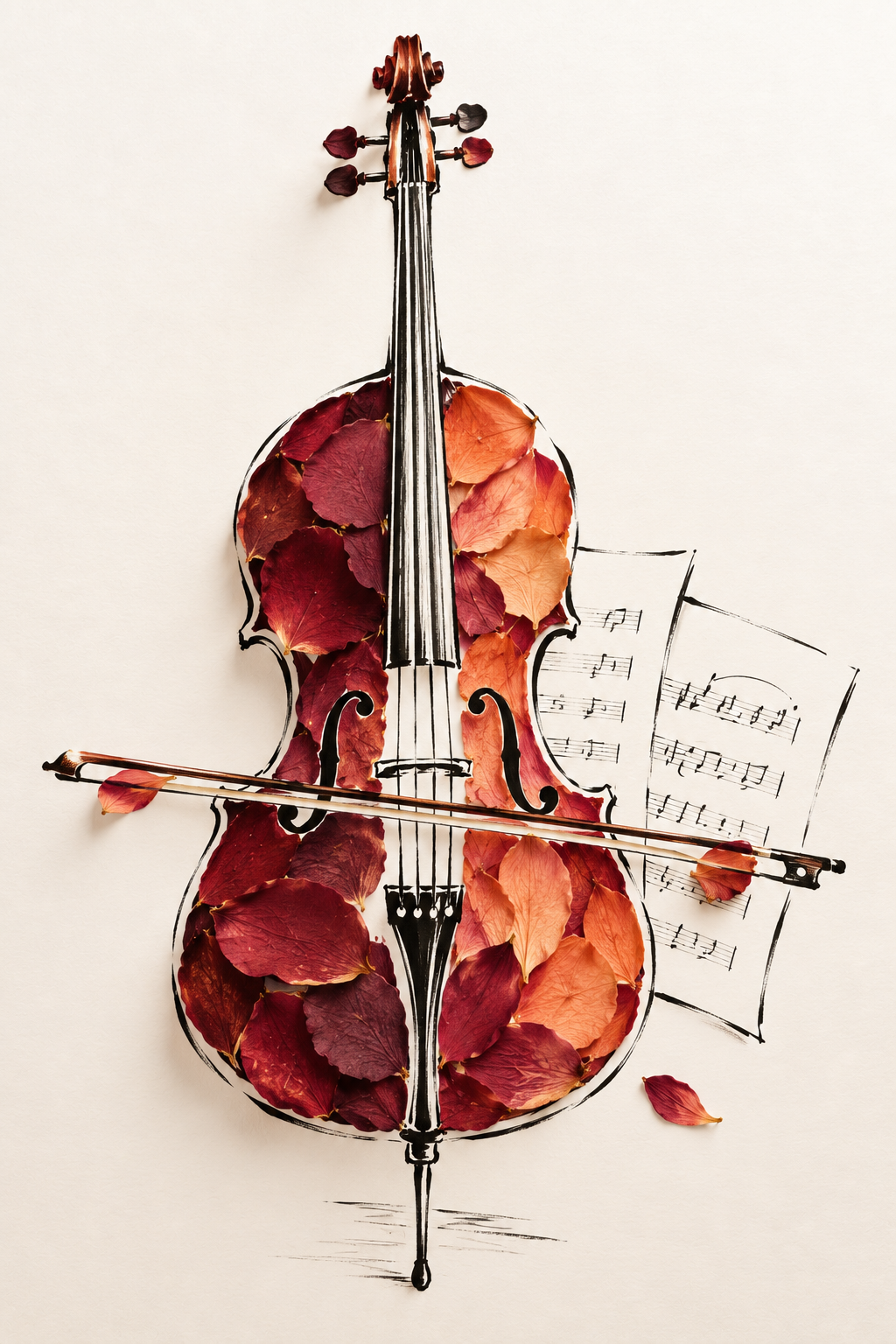
The Note That Stays Warm
Critique
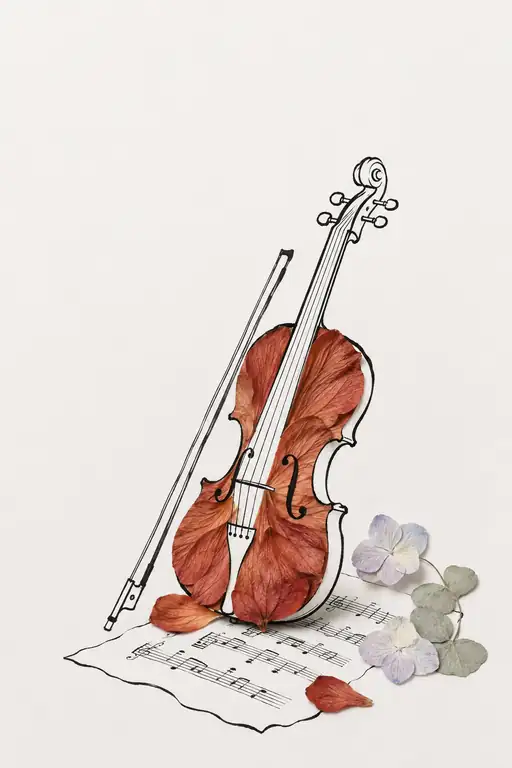
Introduction A bowed string instrument stands upright, its body filled with burgundy and copper petals. A bow crosses the lower middle, and sheets of music lean behind it at right. Description The narrow neck rises to a carved scroll and four dark tuning pegs. Parallel strings descend through the center of the instrument to a small bridge and tailpiece. Deep red petals fill the left half of the body, while orange and russet ones cover the right. Two curved sound holes remain visible within the color. The sheet music has lightly drawn staves and notes, its edge partly hidden by the instrument. Analysis The long vertical fingerboard divides the warm floral body into two unequal color zones. Straight strings and the crossing bow create a firm linear structure against irregular petal edges. Red and orange alternate around the curved sound holes, giving the broad body rhythm without masking its shape. The music sheets add a shallow layer behind the instrument, while the bow projects forward across it. Interpretation and Evaluation The bow and music imply a performance or practice paused between sounds. Petals occupy the place where the instrument would normally produce resonance, suggesting a visual counterpart to music's richness. The composition balances a rigid central axis with lively surface variation. Precise line drawing preserves the instrument's function, and the warm palette differentiates its two sides. Small scattered petals lend a trace of movement to the otherwise still scene. Conclusion The colored body draws attention first, but strings, bow, and notes return the viewer to music. The image uses floral texture to enrich rather than replace the instrument's recognizable construction.
Same Subcategory
Similar Artworks
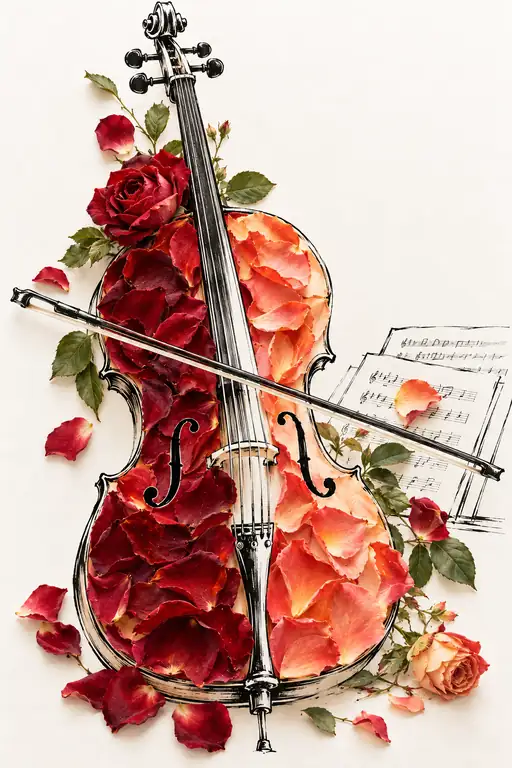 Where the Last Note Lingers
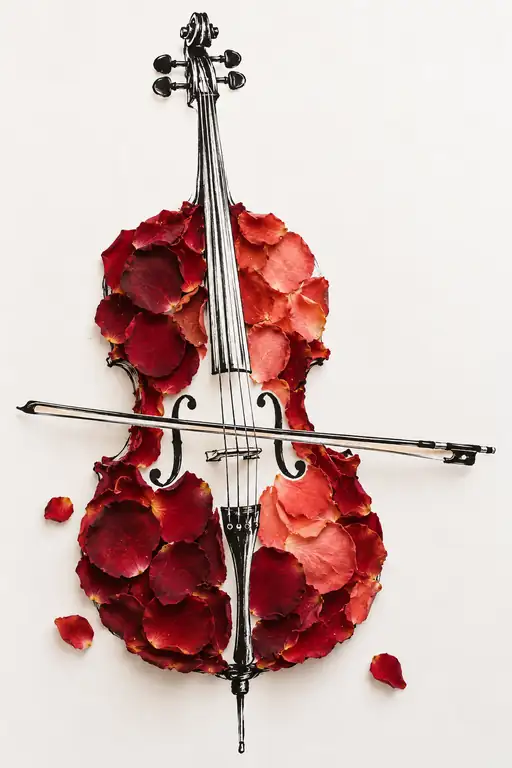 The Red Between the Notes
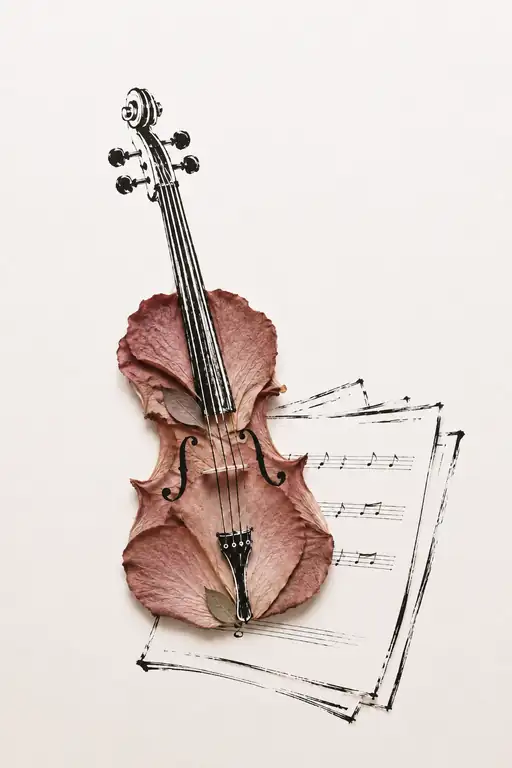 Verse of the Antique Cello on Sheet Music
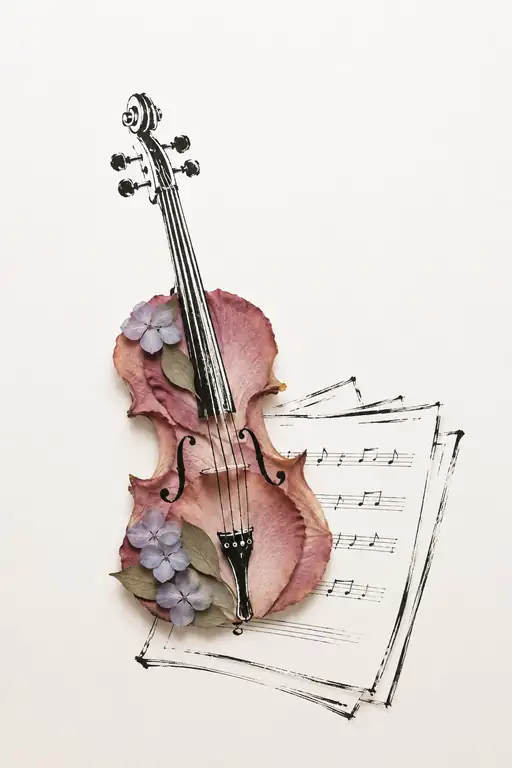 Silent Melody of the Rose Cello
 Violin of Resonant Memories
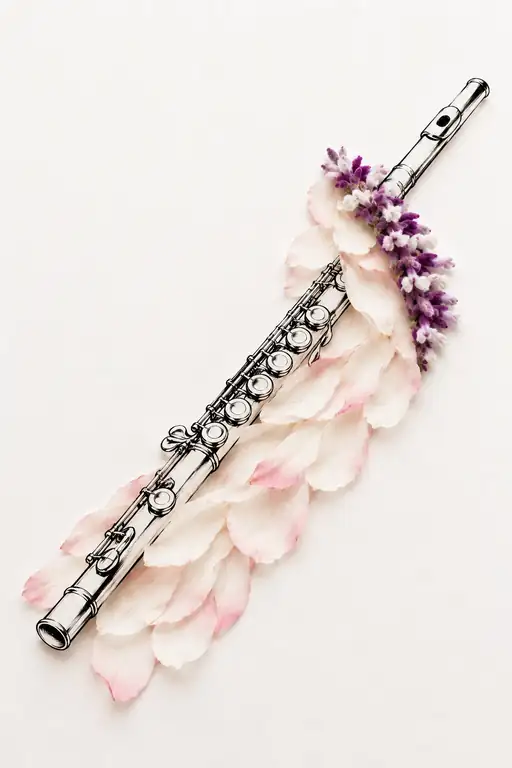 A Melody Soft Enough to Remember
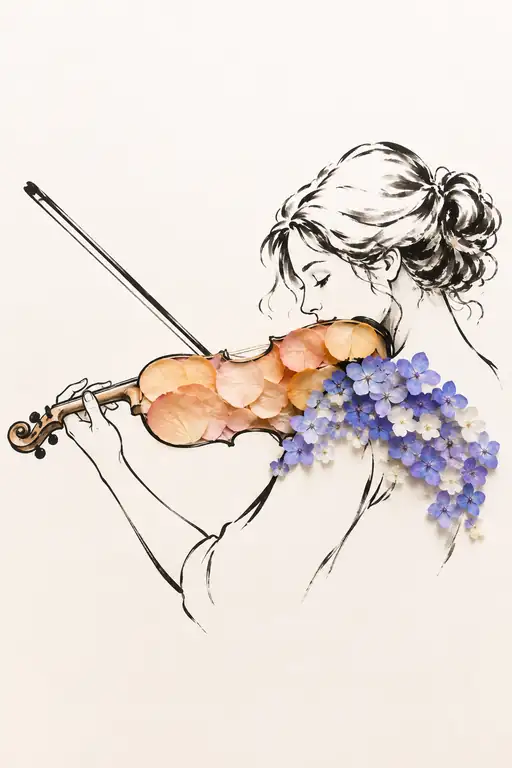 Close Enough to Hear My Heart
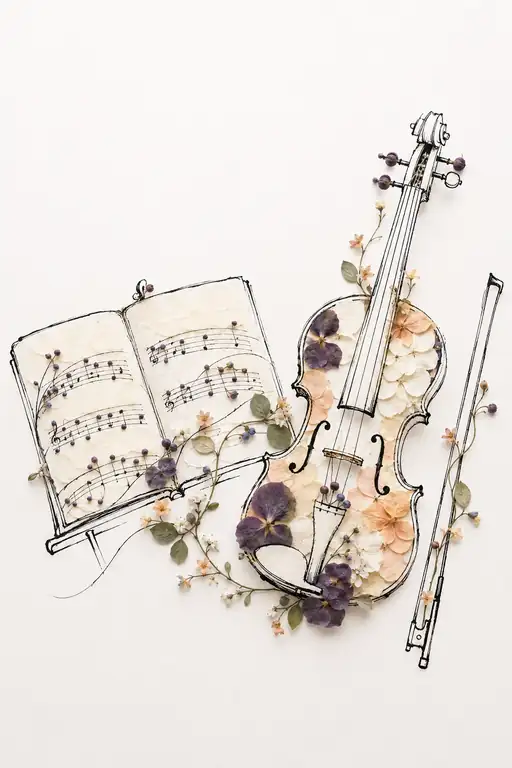 Nocturne in Blossom and Strings
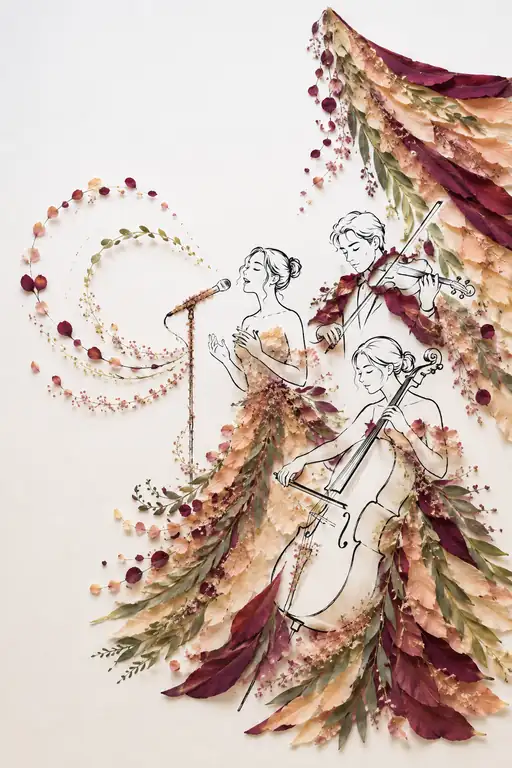 Trio Harmonizing in the Autumn Breeze
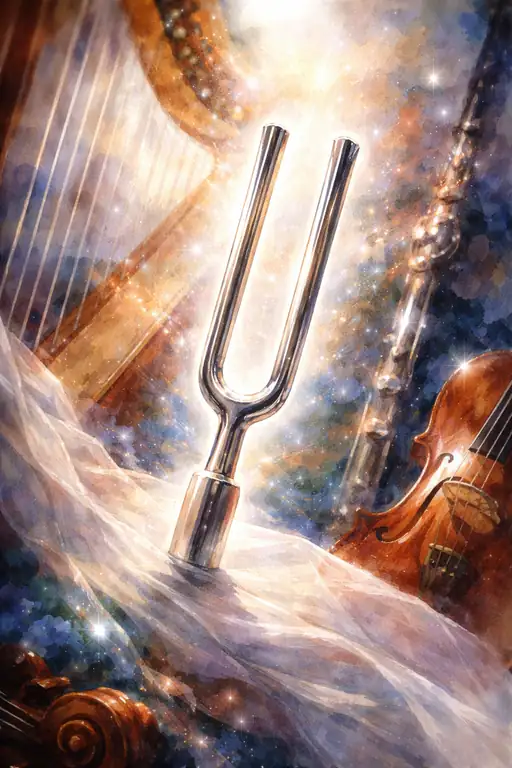 The Tuning of the Cosmos