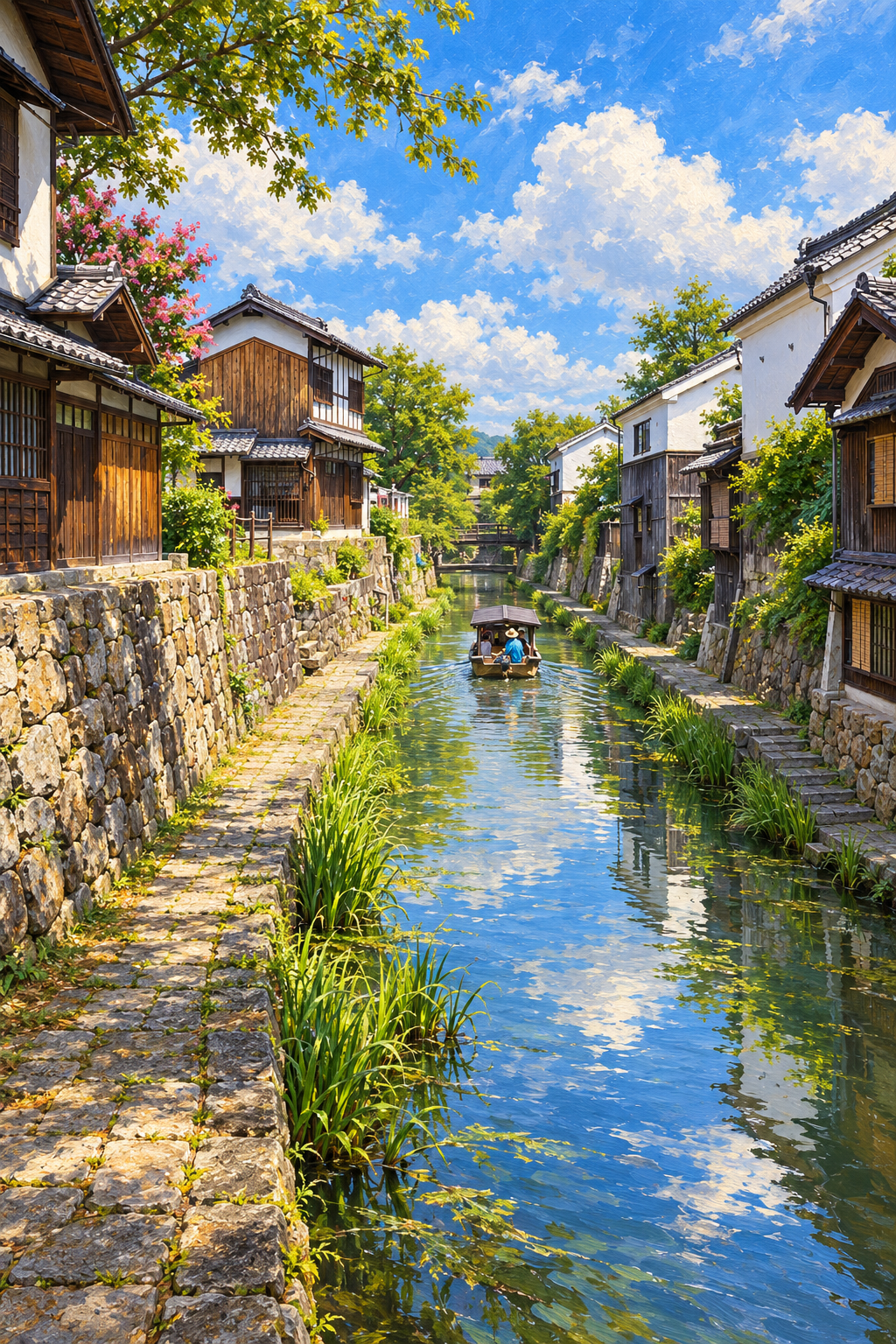
There Is Still Time to Wander
Critique
Introduction A canal recedes between tiled buildings beneath a broad blue sky filled with white clouds. A small roofed boat sits near the distant middle of the waterway. The viewpoint gives prominence to the left stone path and foreground grasses, allowing the scene's spaciousness to emerge through several clear depth cues. Description Wooden facades and stone walls line the left bank, opposite white upper walls and darker lower structures. A leafy branch extends from the upper left. Clumps of long green grass project beside the water, whose surface reflects sky and buildings. The boat includes a small blue-clad figure, and a low bridge spans the canal farther behind it. Analysis The broad near path narrows toward the bridge, while the right bank forms a second receding edge. The small boat leaves a large reflective foreground open. White cloud reflections interrupt blue and green water, providing varied rhythms without obscuring the canal's direction. Strong rooflines contrast with flexible leaves, and the overhead branch adds a near layer above the architecture. Interpretation and Evaluation The distant human presence makes the built environment feel traversable without dominating it. The larger share of sky supports an open, daylight atmosphere. Perspective is effective in the changing widths of paths and grass clumps. Surface handling distinguishes rough stone, linear wood, and broken reflections, while lively green accents prevent the repeated buildings from becoming visually severe. Conclusion The scene develops from a clear architectural view into an appreciation of its open intervals. Water, sky, and vegetation give the enclosed canal room to expand visually. With its small boat, spacious foreground, and carefully converging banks, the image balances human scale against a richly described but readable environment.
Same Subcategory
Similar Artworks
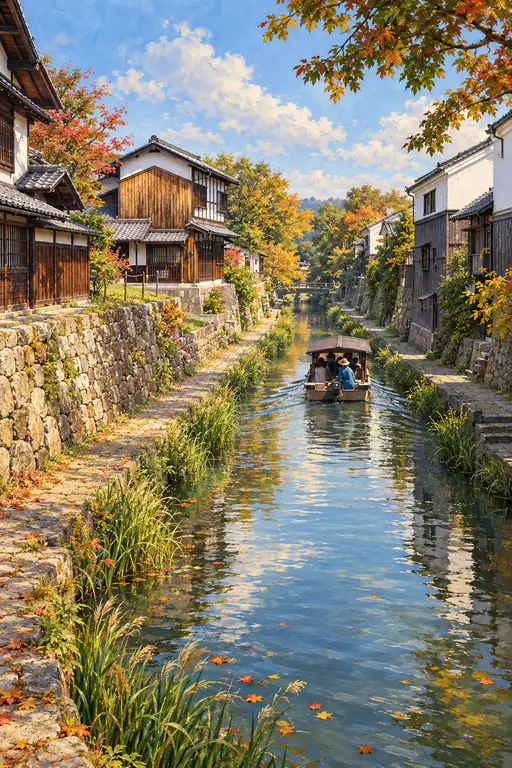 Autumn Travels Beside Us
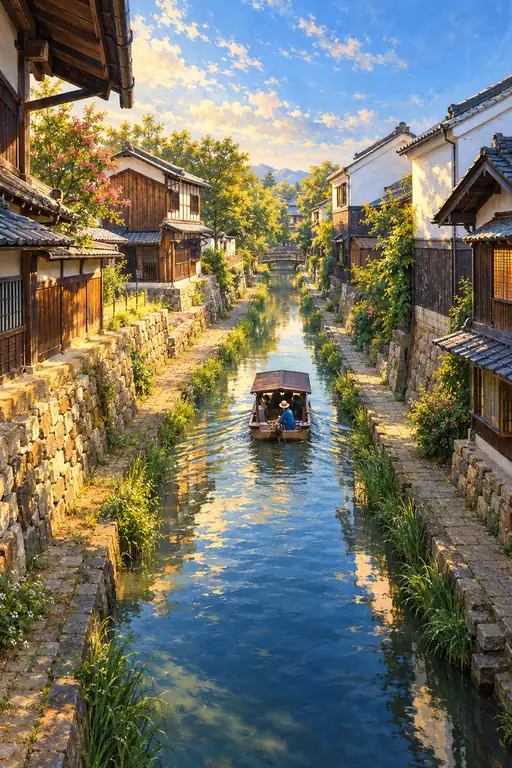 An Afternoon Carried by Water
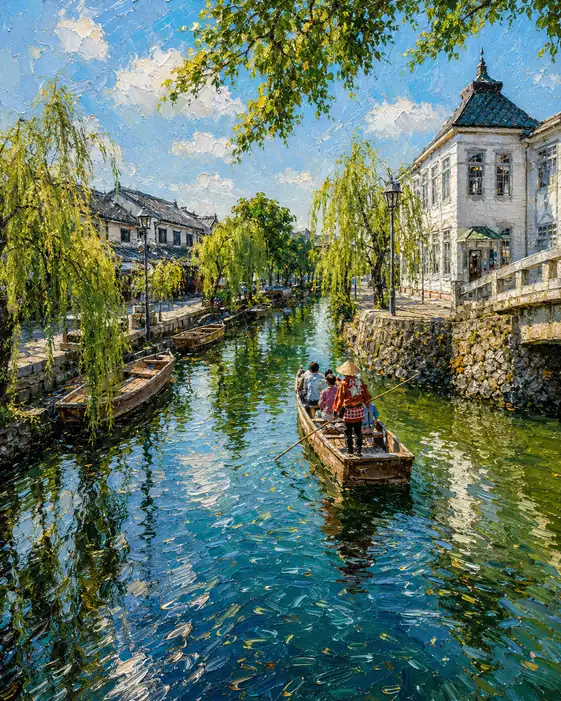 Shimmering Canal and the River Boat of Kurashiki
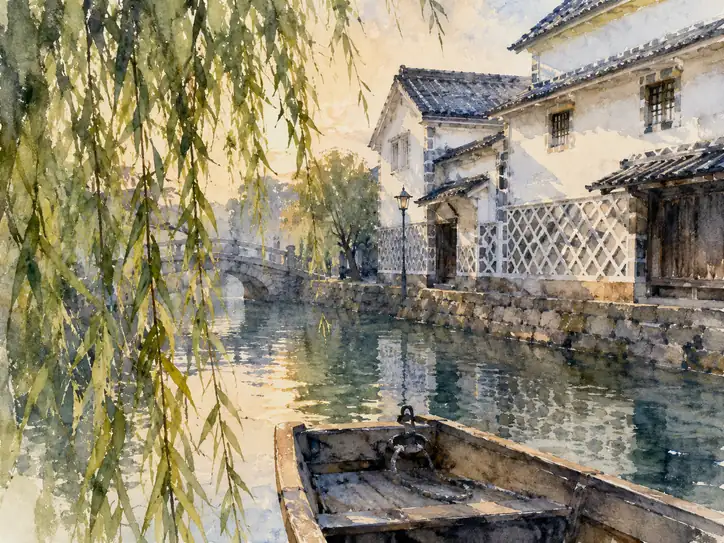 Ripples of Forgotten Time
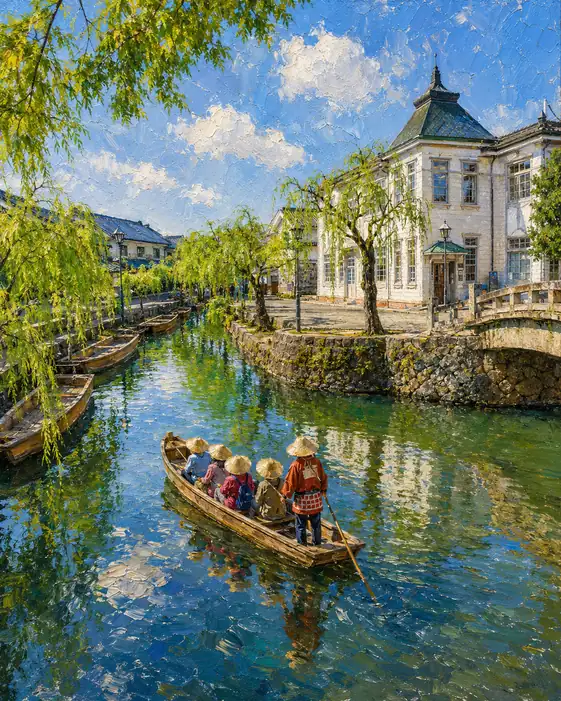 By Boat Between Willows and White Walls
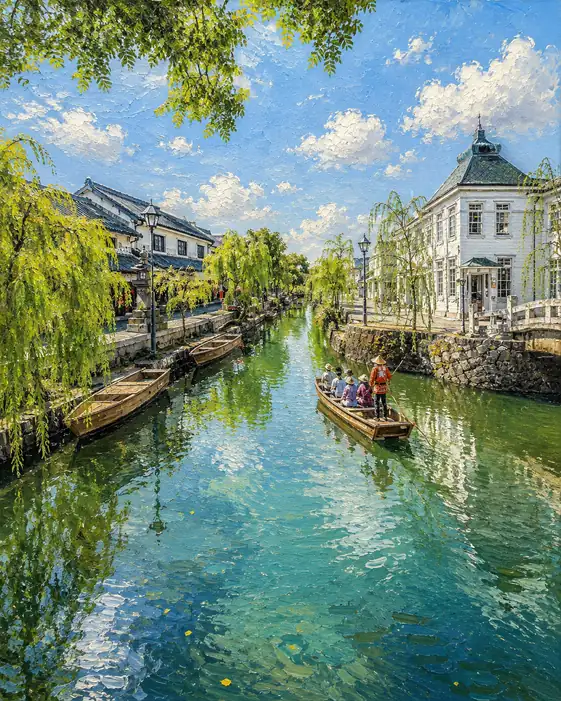 Punting along the Willow Canal of Kurashiki
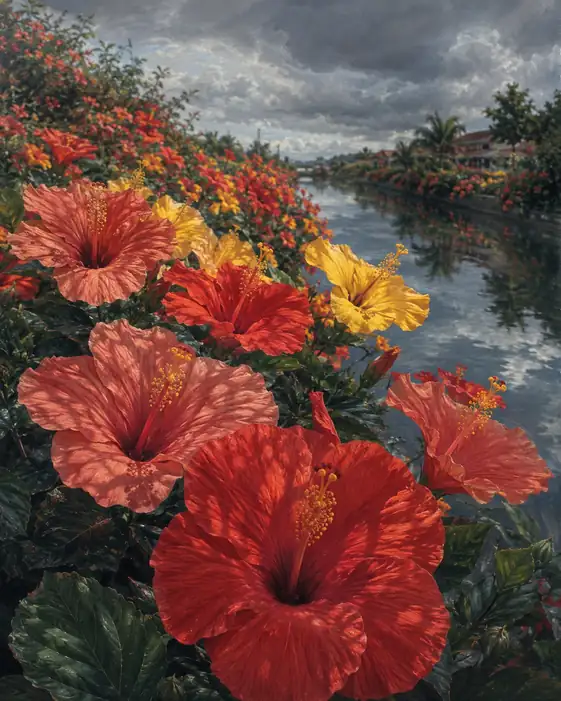 Hibiscus along the Storm-Laden Canal
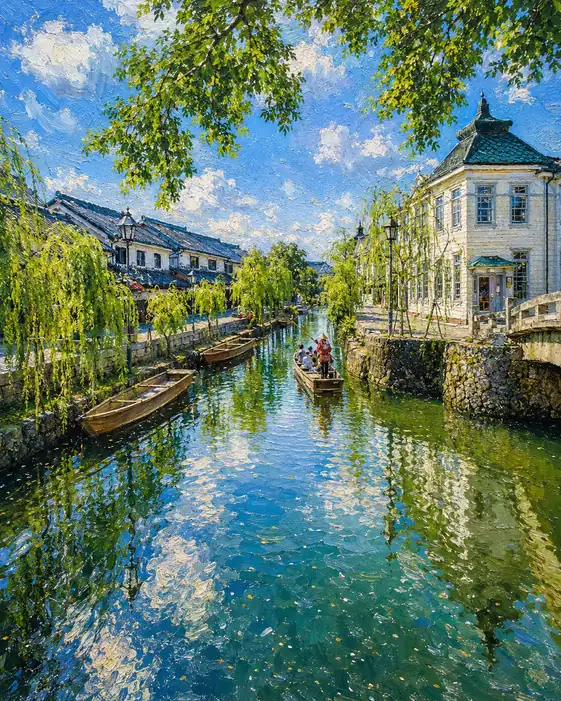 Summer Sky upon the Historic Canal of Kurashiki
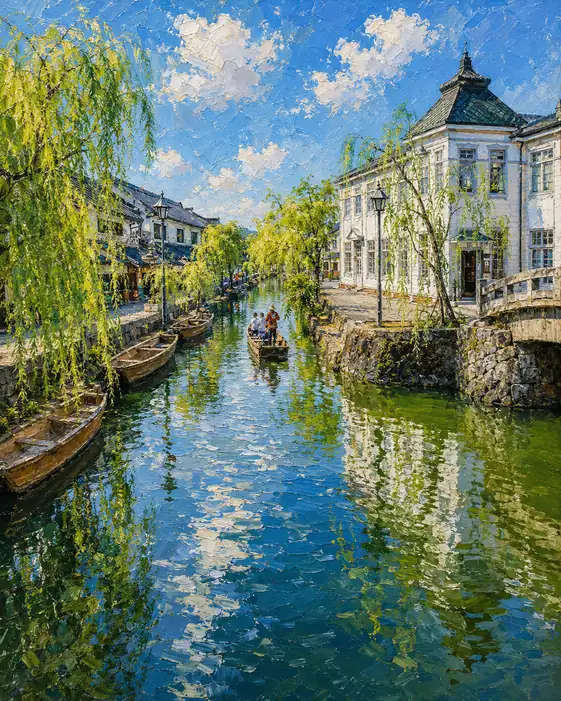 Azure Reflections on the Willow Canal of Kurashiki
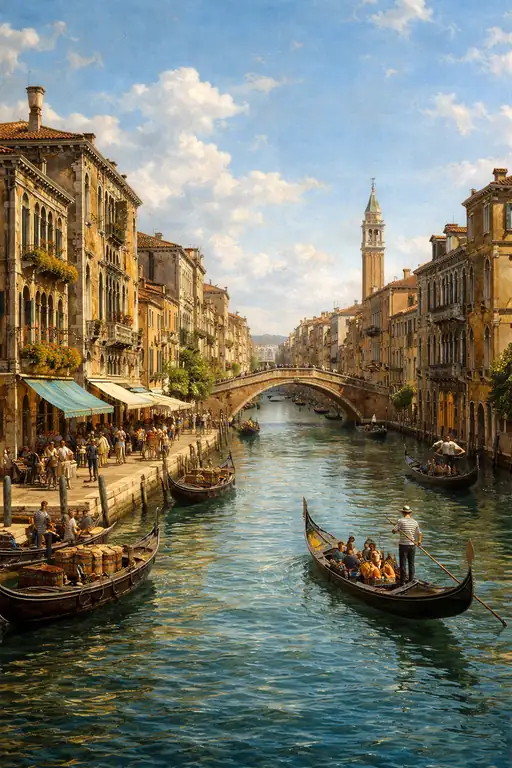 Rhythm of the Venetian Canal