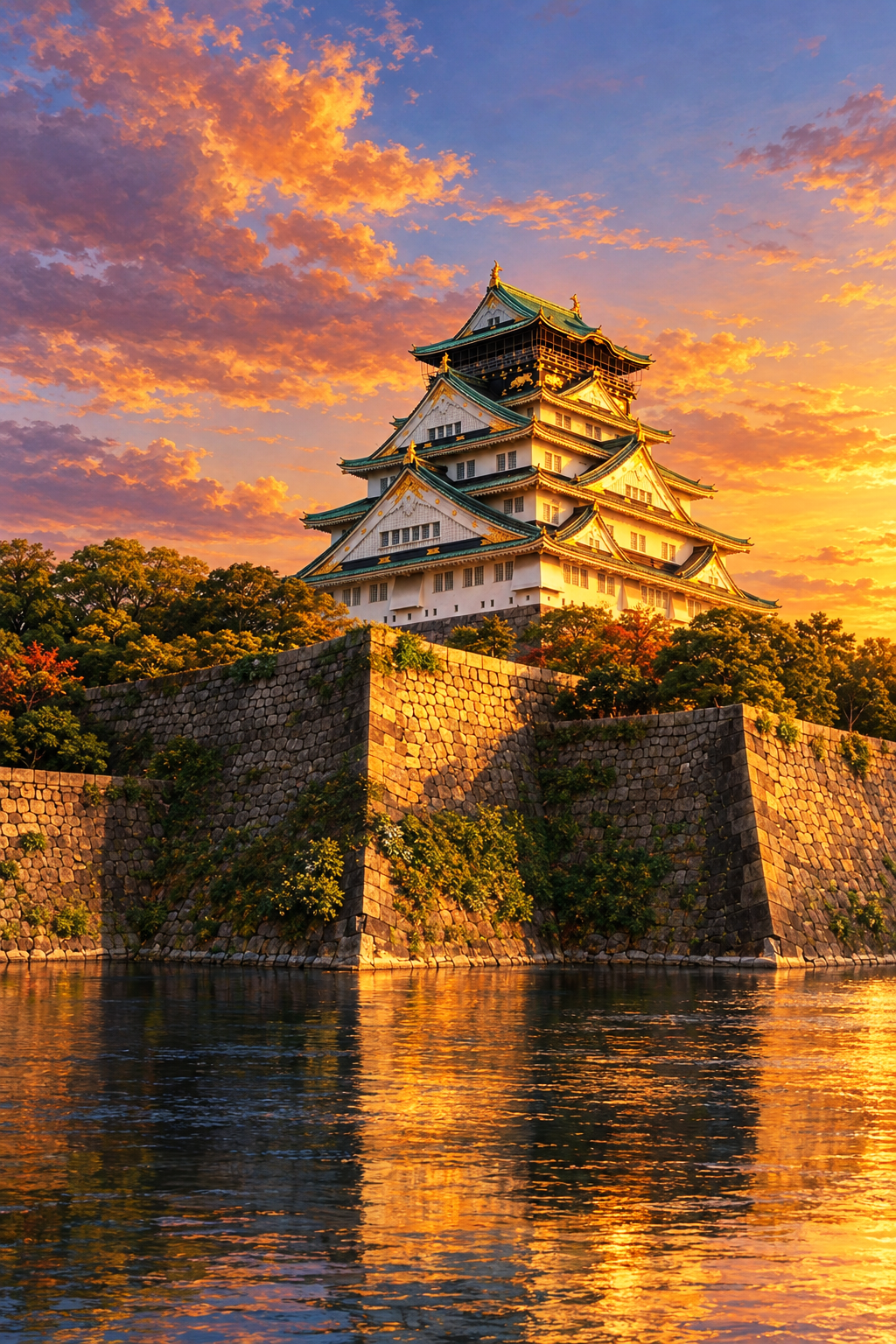
Time Stands in a Changing Sky
Critique
Introduction A castle tower stands above stepped stone ramparts beneath a broad evening sky. The viewpoint allows the entire roof profile to remain clear, while water fills the lower foreground. Bright cloud edges and sunlit wall faces connect the architecture to a field of orange and blue light. Description Green roofs with upturned corners alternate with white gables and darker upper windows. The stone base advances in several angular projections, with vines hanging across some faces. Trees sit between ramparts and tower. Dense orange clouds gather toward the upper left, while a clearer blue opening appears above. Golden reflections descend from illuminated corners into dark, rippled water. Analysis The tower's narrowing levels contrast with the foundation's broad stepped outline. Different wall corners break the base into distinct planes, each receiving light unevenly. The open sky grants the roof ornaments and curves a clean silhouette. Reflections repeat bright wall sections below but dissolve their edges into horizontal strokes, establishing a visual difference between solid mass and moving surface. Interpretation and Evaluation The landscape gives architectural stability a changing atmospheric context. The sky's scale prevents the tower from occupying the entire scene, and the water offers another measure of that surrounding space. Drawing of roof layers is precise, while masonry remains irregular enough to suggest substantial construction. Color transitions in the clouds are effective in sustaining warmth without flattening the cooler upper sky. Conclusion The first impression of monumental architecture expands toward its environmental setting. Stone projections, roof levels, and reflected light form a vertical sequence, but each retains a different texture. A balanced division of sky, building, and water makes the scene legible and gives the castle's weight a luminous counterpart.
Same Subcategory
Similar Artworks
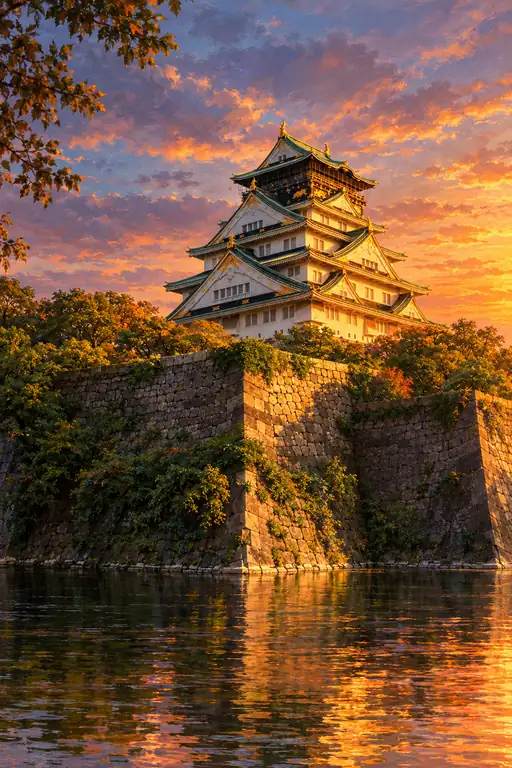 Stone Keeps the Evening Close
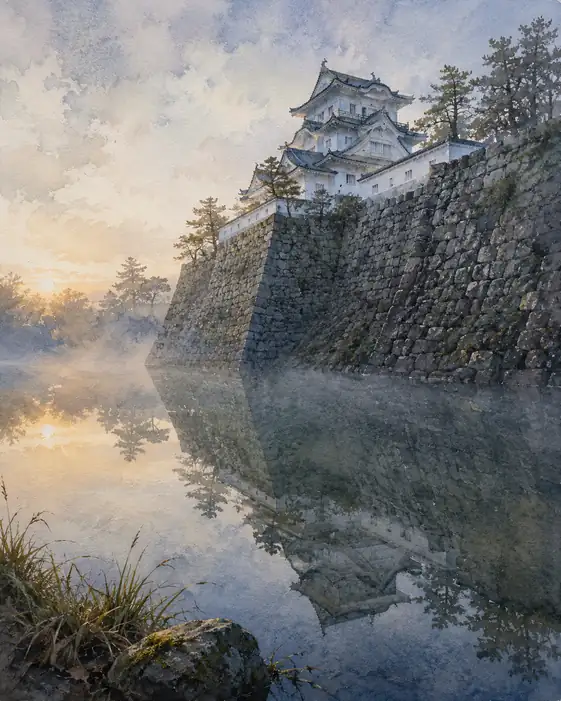 Castle Between Mist and Mirror
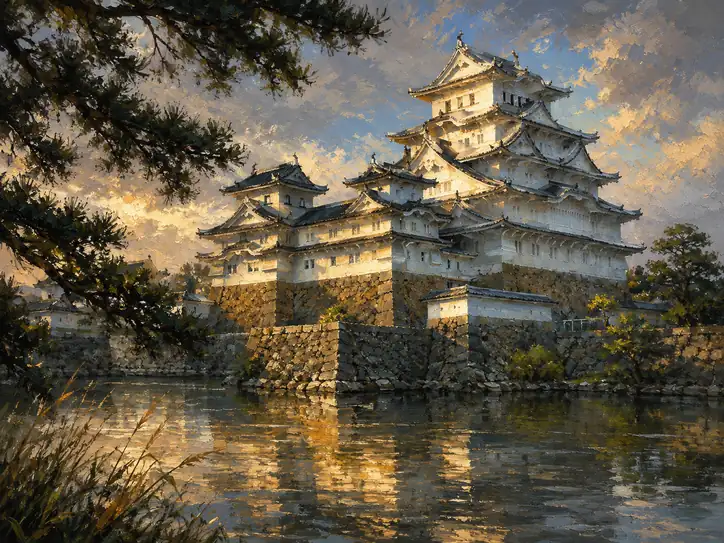 Eternal Gaze in the Amber Sunset
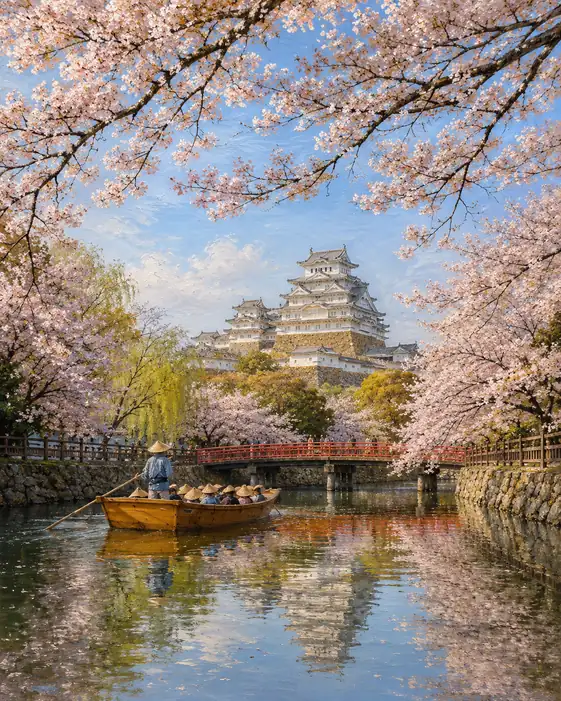 Cherry Blossom Splendor at the White Castle
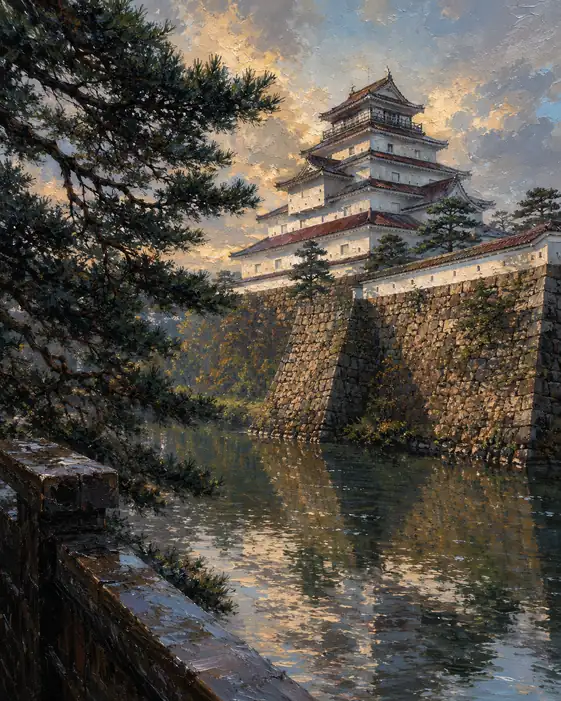 Sentinel of the Golden Twilight
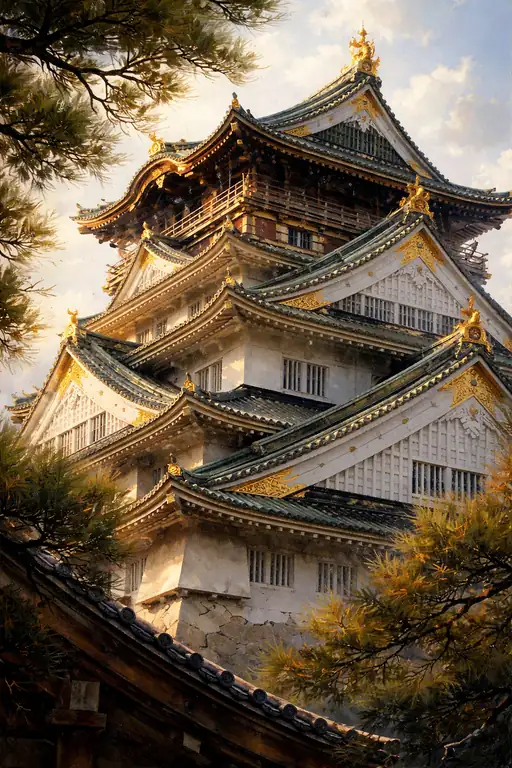 Cosmic Dreams
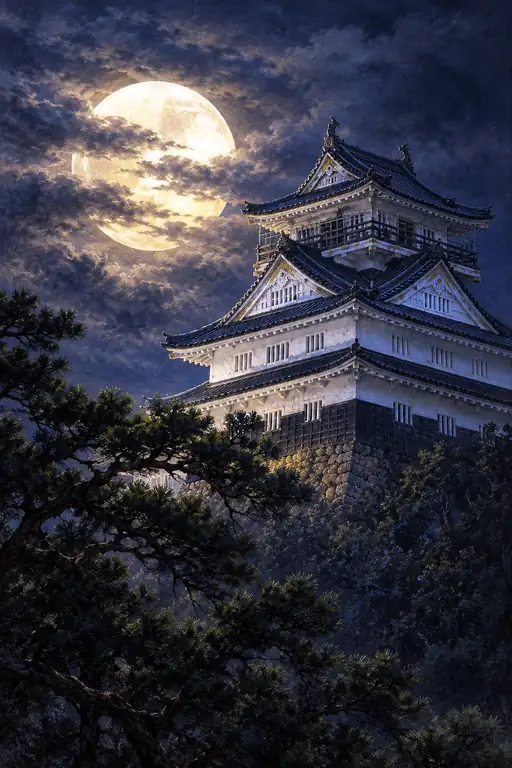 Through the Branches, Eternity
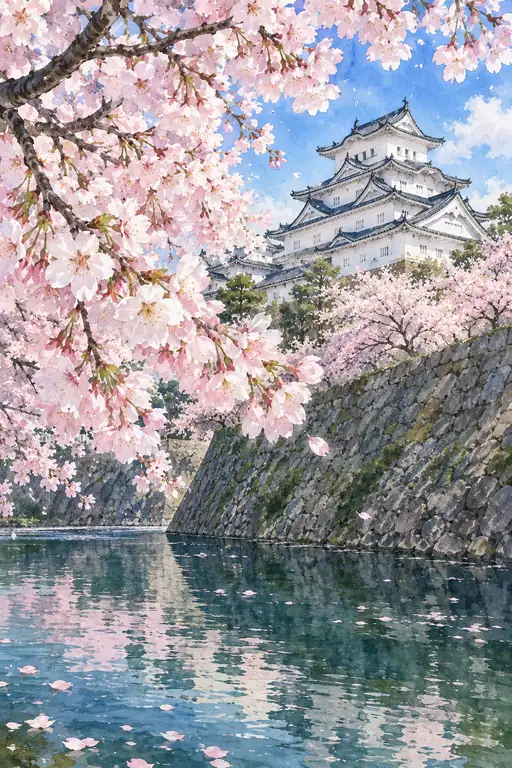 Spring Bloom over the Castle Moat
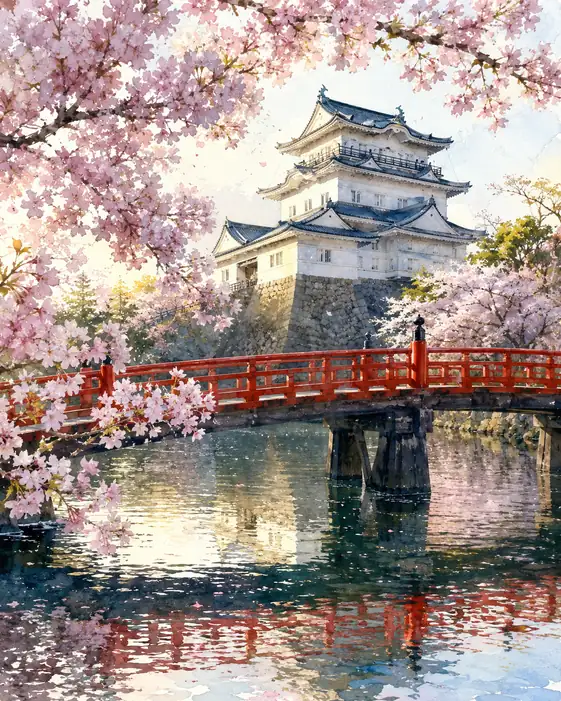 The Red Bridge Carries Spring
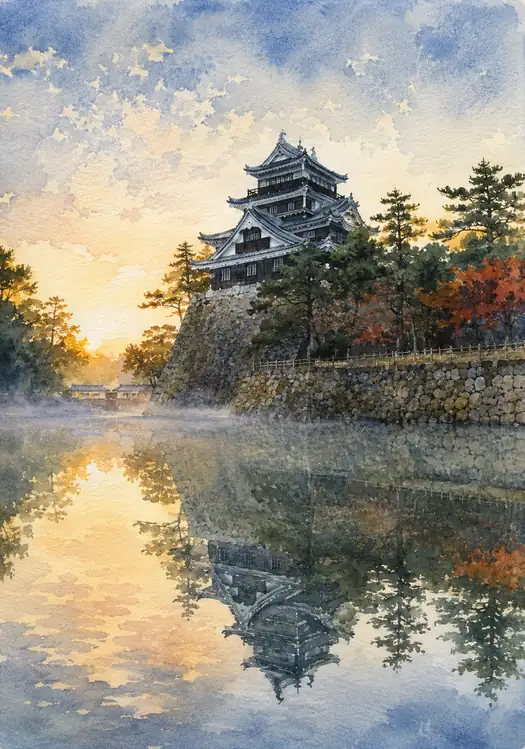 A Fortress Softened by Water