The Wonder We Watch Together
Critique
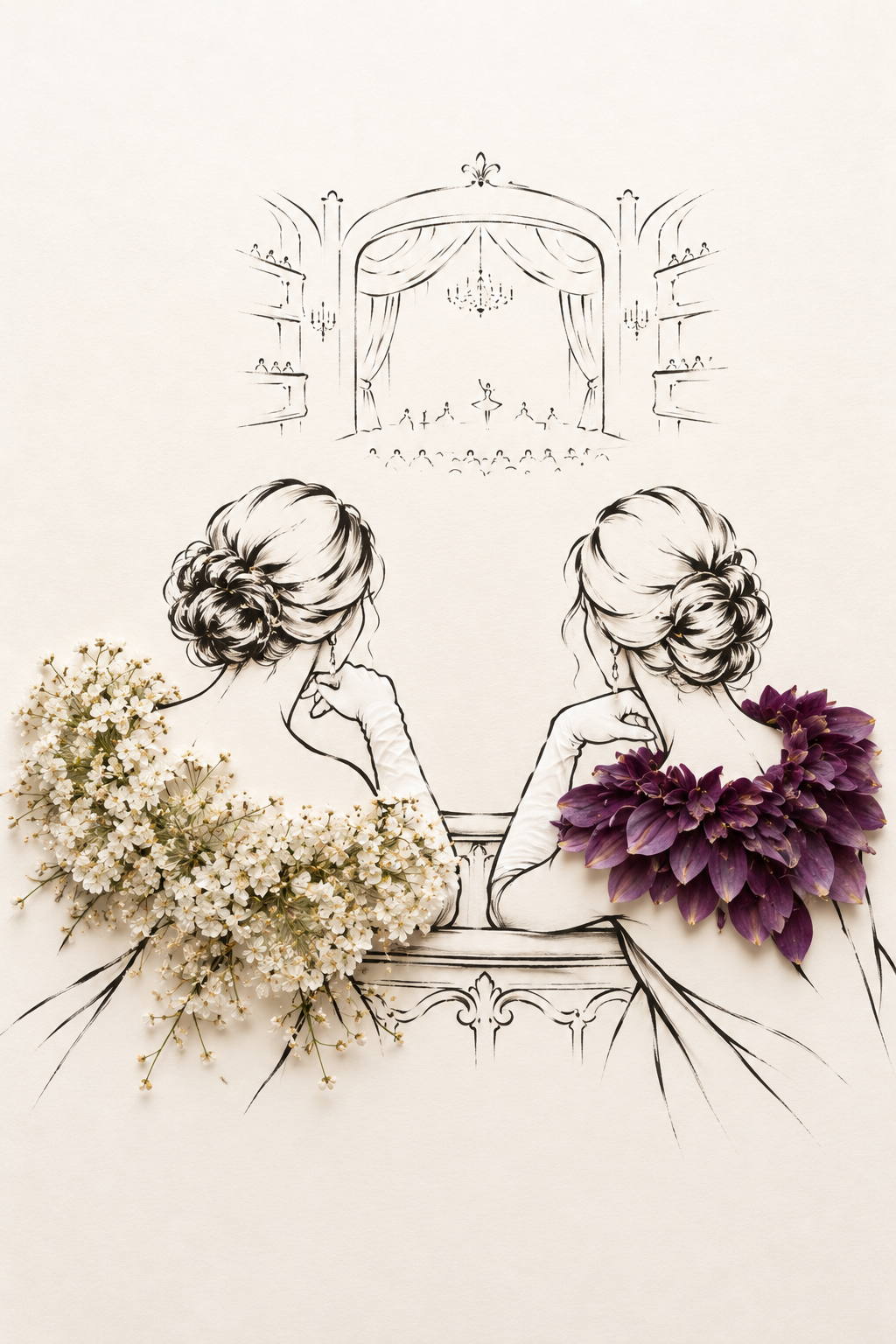
1. Introduction Two women viewed from behind watch a distant ballet stage from an ornamental balcony. Their large foreground figures contrast with the small dancer and lightly indicated audience beyond. White clustered flowers cover the left shoulder, while deep purple forms spread across the right, distinguishing the spectators within a shared viewing position. 2. Description Both women have gathered hair and raised gloved hands near their faces. A curved railing crosses below their arms, with a central decorative motif. The distant proscenium encloses parted curtains and a chandelier. Smaller chandeliers and stacked side boxes flank it, while tiny heads mark the audience between the balcony and stage. 3. Analysis The paired heads frame an open central interval leading toward the dancer. Dark hair marks give the nearest figures more weight than the fine distant drawing. Unequal white and purple textures prevent the balanced arrangement from becoming a strict mirror image. The railing supplies a clear foreground boundary, while reduced scale establishes the theater's depth without extensive shading. 4. Interpretation and Evaluation The hands near the faces suggest attentive watching rather than animated exchange. The performance remains distant, making spectatorship the image's principal experience. The elaborate shoulder surfaces bring the viewers forward but leave the stage visible. Precise scale relationships and restrained architectural lines organize multiple levels of space while preserving the intimate character of the nearest figures. 5. Conclusion The two ornamental figures first dominate, then lead attention toward the small performance they share. The scene's meaning develops through the distance between viewer and stage. Contrasting surface densities and a carefully preserved central opening turn an image of a theater into an account of quiet, sustained looking.
Same Subcategory
Similar Artworks
 Let Me Bring the Wonder Closer
 Symphony of Light and Blossoms in the Loge
 The Wonder I Want You to See
 Ascent of Floral Whispers to the Balcony
 All My Longing on a Single Point
 Harmony of Flight and Ground
 The Courage in Your Hand
 Unburdened, I Look Ahead
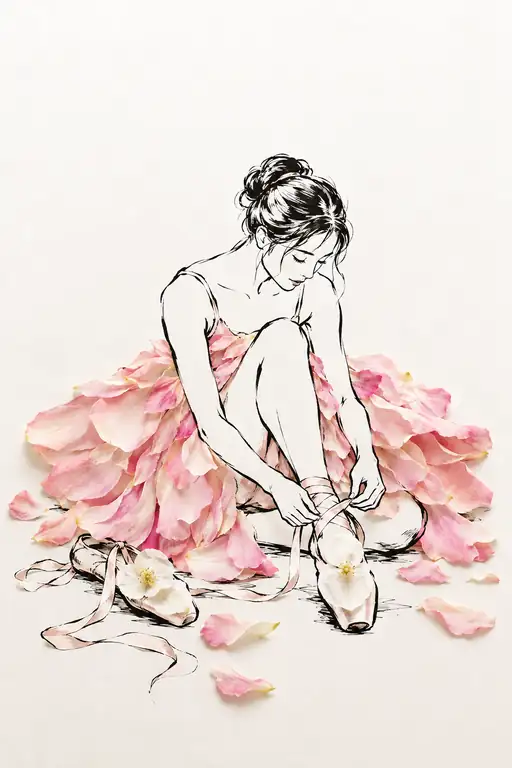 Tomorrow Begins with This Knot
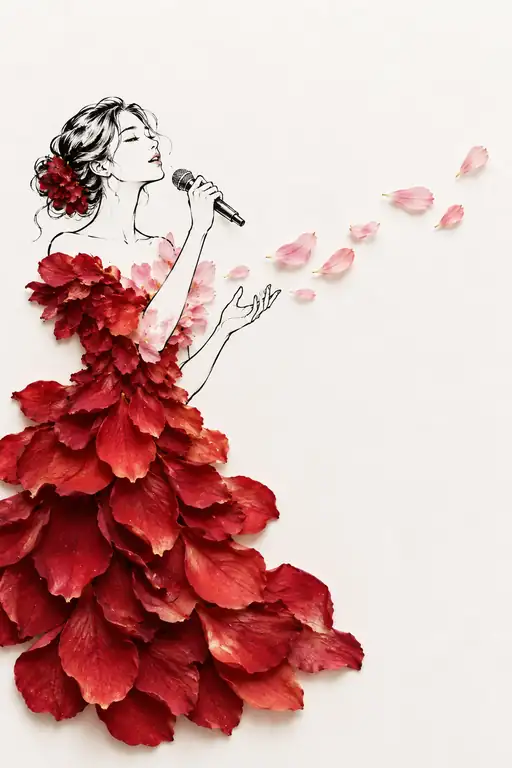 My Voice Reaches Beyond Me