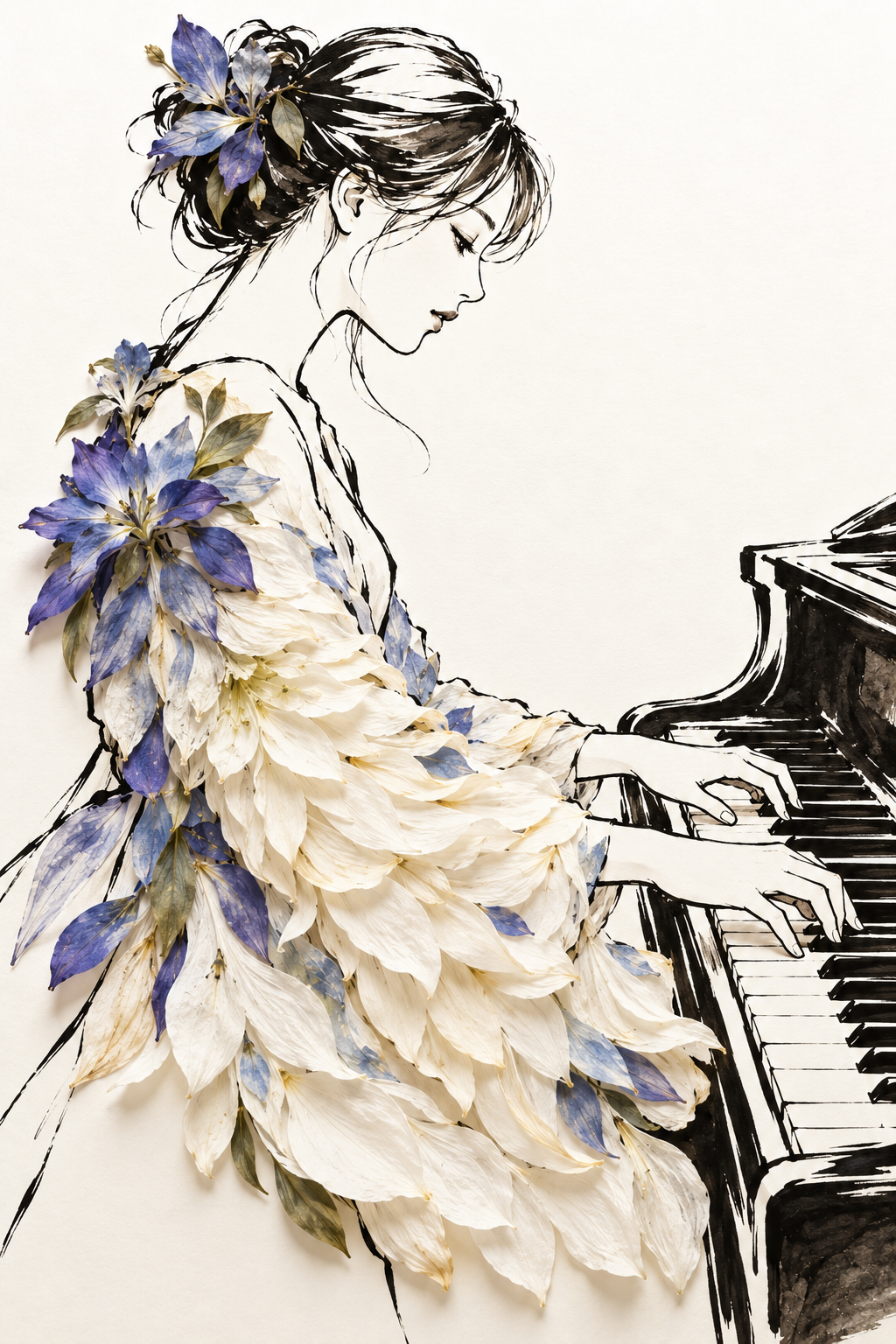
What My Hands Cannot Say
Critique
1. Introduction A woman plays a piano in profile, her lowered face positioned above the two hands extended toward the keys. Blue and ivory layered forms occupy her hair and clothing. The instrument's dark body contrasts with the pale figure, focusing the scene on the relationship between concentration and physical action. 2. Description Her gathered hair contains broad black strokes interrupted by white highlights and blue accents. Loose strands curve beside the cheek and neck. The sleeves expand into overlapping pale shapes with occasional olive areas. At right, separate fingers bend over white and black keys, while the piano's curved side rises behind the nearer hand. 3. Analysis The head, shoulders, and hands form a descending diagonal that connects expression to the keyboard. Dense hair and the piano's dark surface balance each other across an open central interval. Soft sleeve edges contrast with the keys' repeated straight divisions. Clear finger contours prevent the surrounding layered texture from obscuring the precise gesture of playing. 4. Interpretation and Evaluation The lowered gaze suggests sustained attention to the instrument rather than a performance directed toward an audience. The large clothing forms give breadth to an otherwise economical figure drawing. Their quiet color supports rather than replaces the hand movement. The composition's descriptive strength lies in keeping anatomy, surface variation, and instrument structure distinct while making them cooperate. 5. Conclusion The decorative clothing first attracts the eye, but the hands gradually become the scene's most consequential detail. The interval between face and keyboard allows their relationship to remain clear. Contrasting textures and deliberate black accents create an intimate account of playing, with attention concentrated on the body and its contact with the instrument.
Same Subcategory
 An Old Longing Between My Hands
Similar Artworks
 The Sound Between Strings
 Close Enough to Hear My Heart
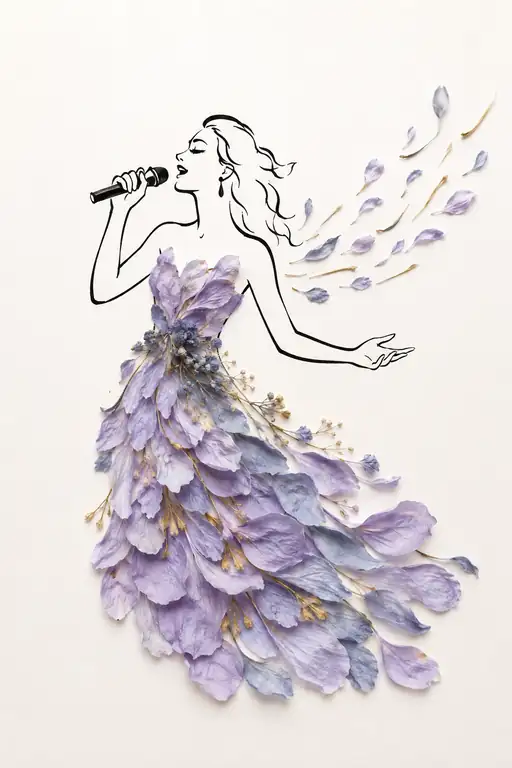 Diva Singing in a Flowing Violet Gown
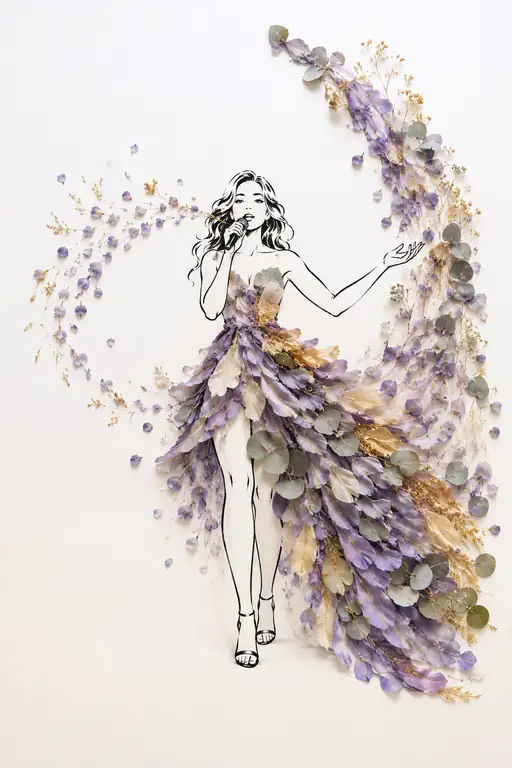 Song of the Lavender Siren
 Resonating Concerto in Rose
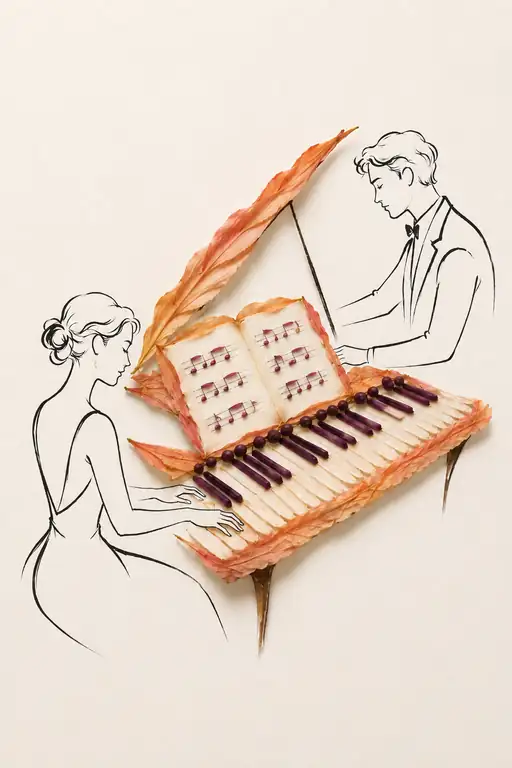 Duet of Blossom Keys and Berry Notes
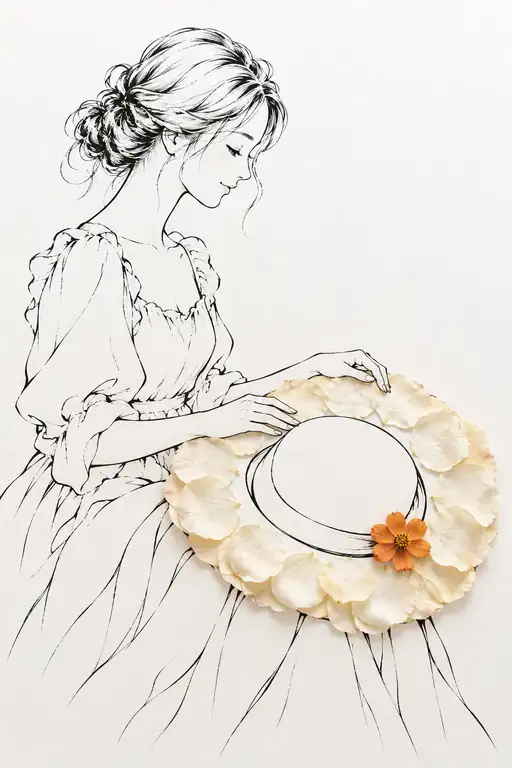 A Quiet Touch Before I Go
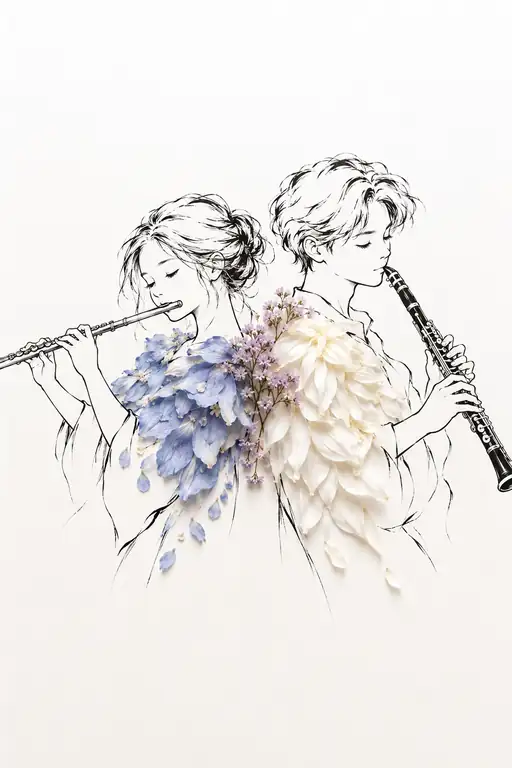 Our Separate Breaths, One Song
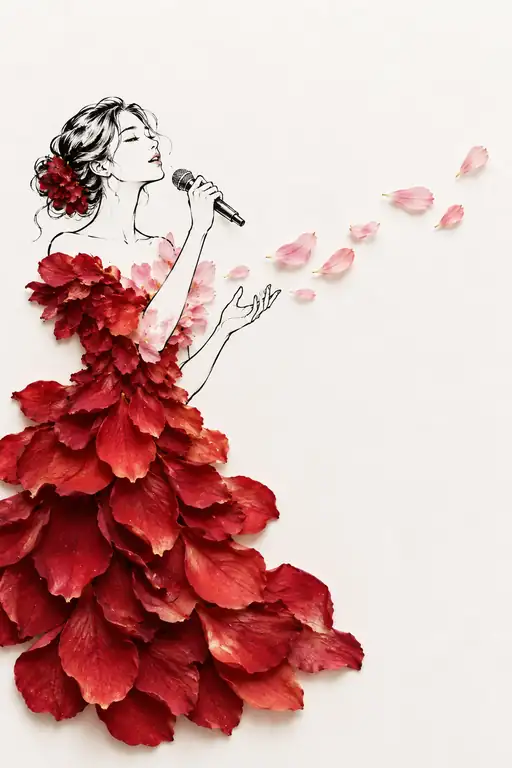 My Voice Reaches Beyond Me
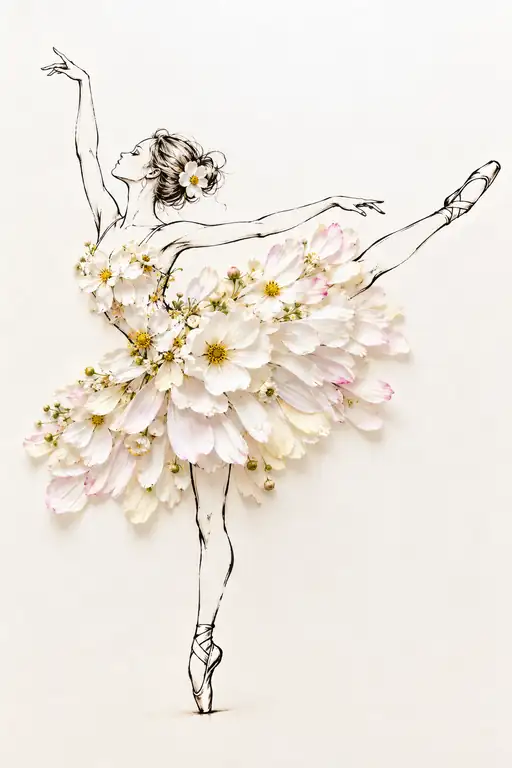 All My Longing on a Single Point