The Day Has Room for Joy
Critique
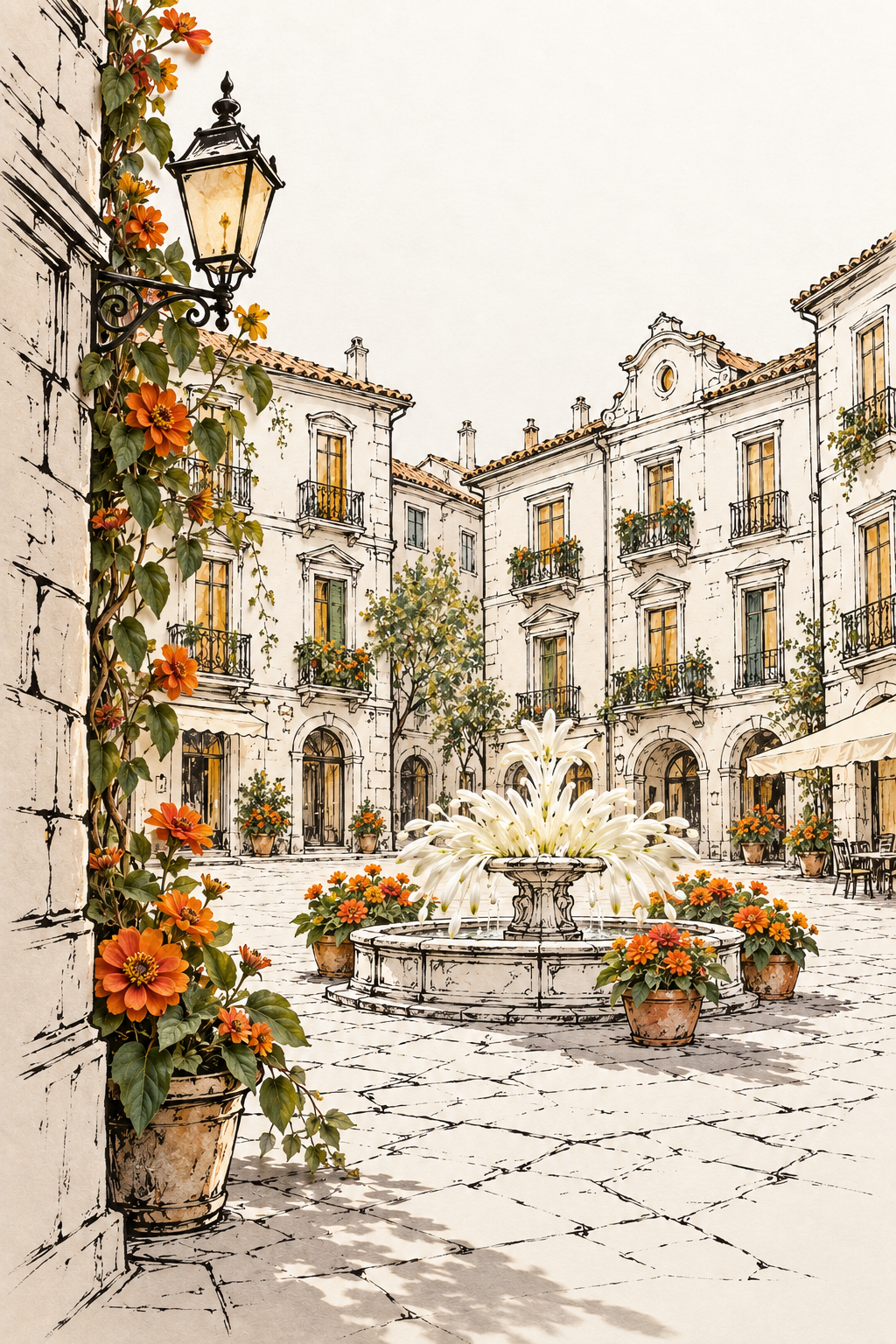
Introduction A sunlit square is surrounded by pale buildings with iron balconies and warm windows. At its center stands a fountain made from long white petals, while orange flowers climb the nearest wall and fill pots around the basin. Description The left edge holds a hanging lantern and a tall climbing vine bearing orange blooms. Across the square, facades show arched doorways, small balconies, tiled roofs, and a few planted windows. A round stone basin sits near the center; white petals spread upward and outward from its raised middle. Several orange flowerpots cluster around it. Analysis The near vine frames the square and establishes scale against the more distant architecture. The white petal spray forms a bright center without obscuring the buildings behind it. Black lines define roof tiles, balcony rails, and paving joints, while warm window tones soften the stone setting. Diagonal shadows reinforce the open ground and suggest a consistent direction of light. Interpretation and Evaluation The square appears welcoming and inhabited even though no people are shown. Chairs, balconies, and planters imply ordinary use, and the fountain gives the open center a gathering point. The composition uses the large foreground vine effectively to lead from intimate detail into a broader civic setting. Orange and white are distributed carefully, and the inventive petal fountain remains readable because its basin and surrounding paving are precisely drawn. Conclusion At first the fountain and orange flowers attract the eye; closer looking reveals a network of architectural details and shadows that supports them. The work joins lively floral texture to a coherent, spacious square.
Same Subcategory
Similar Artworks
 A Stillness at the Turning
 The Town Takes a Quiet Breath
 The Blue Door Knows My Name
 Under a Blue Kindness
 Resurgence in the Rain-Washed Square
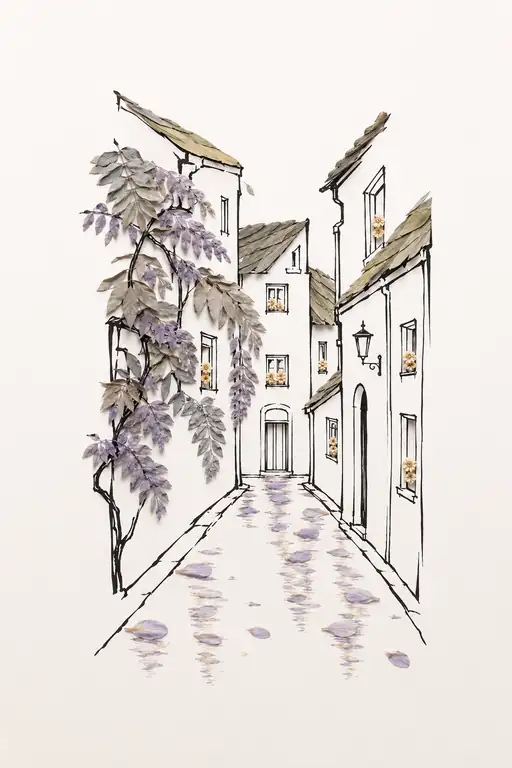 Wisteria Lane Overlooking Cobblestone
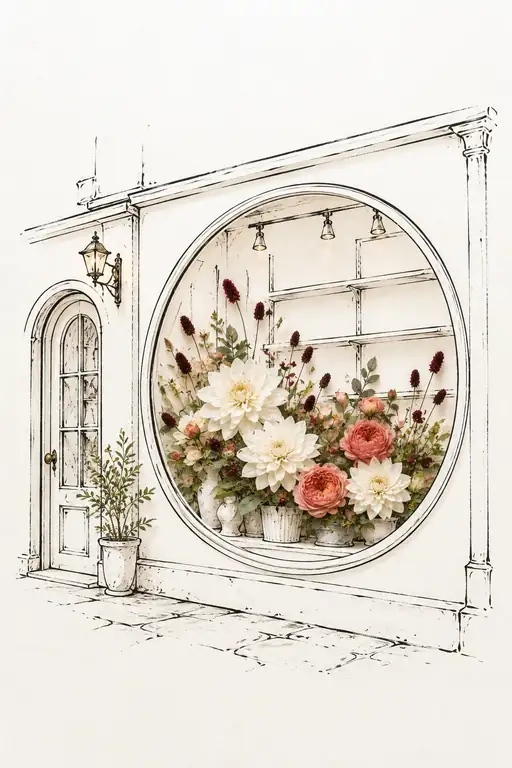 An Ordinary Day Worth Pausing For
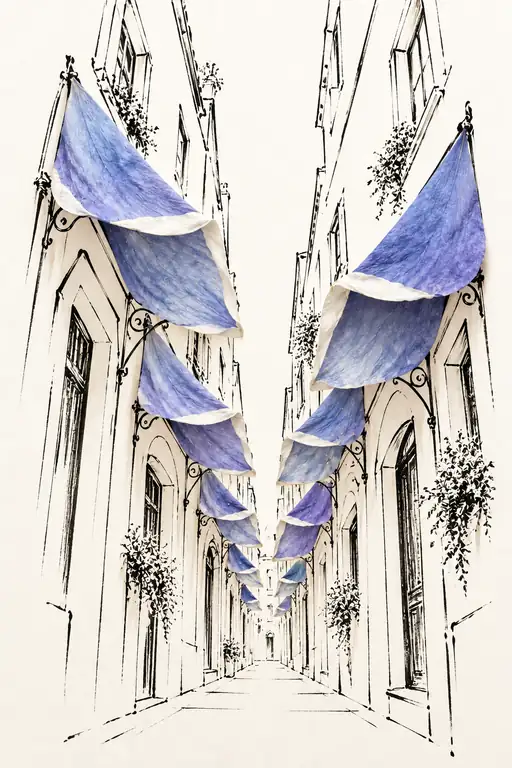 Follow the Blue a Little Further
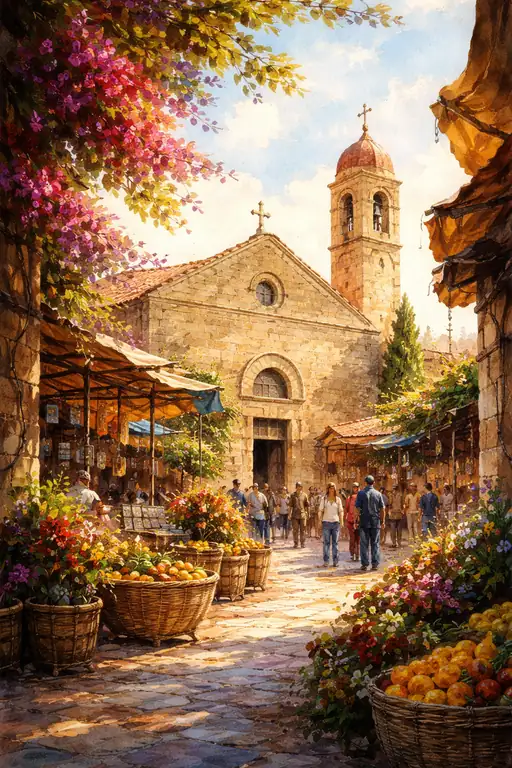 Bustling Marketplace Beside an Old Stone Church
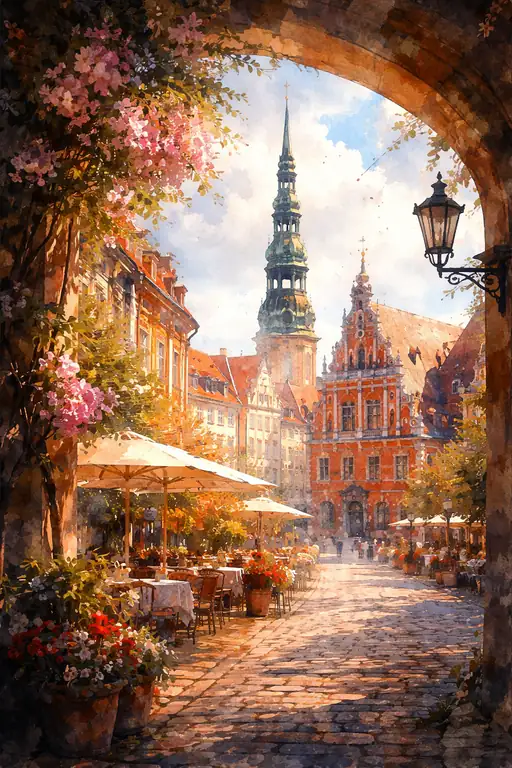 Afternoon at the Square