Where the Last Note Lingers
Critique
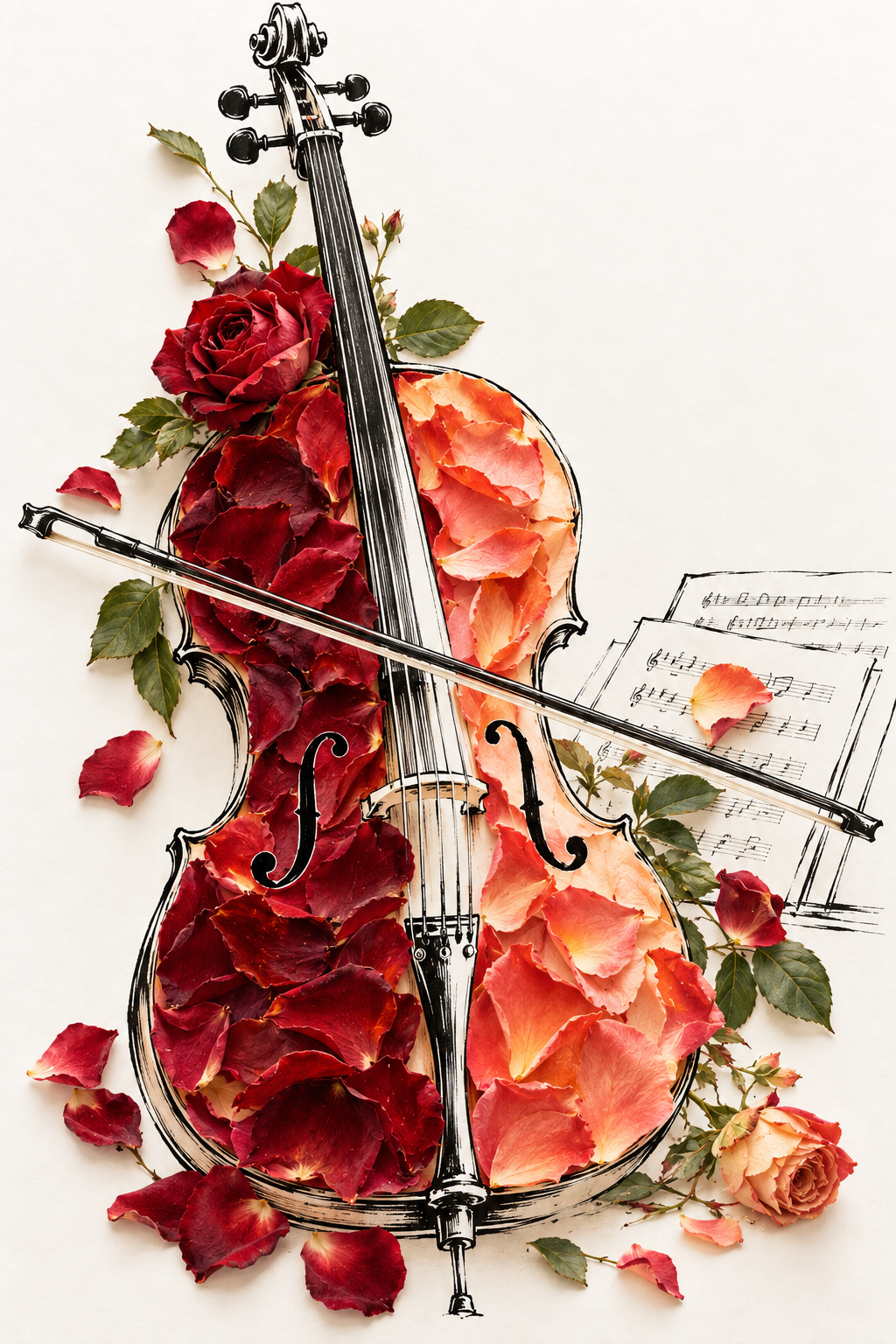
Introduction A cello fills a tall composition, its body covered with red and peach rose petals. A bow crosses the strings diagonally, and sheets of music occupy the right background. The instrument's firm black outlines remain visible beneath the floral treatment, preserving the relationship between decorative surface and recognizable musical structure. Description The scroll and tuning pegs rise above a dark fingerboard that descends through the center. Burgundy petals gather on the left half of the body, while lighter coral petals occupy the right. Black sound holes flank the strings. Roses, buds, green leaves, and detached petals surround the cello, including a peach rose near the lower right. Analysis The central fingerboard divides the warm palette into contrasting tonal fields. The bow interrupts this vertical axis and leads toward the angled music pages. Clear sound holes and bridge prevent dense petals from obscuring the body's organization. Surrounding leaves introduce green accents, while scattered petals soften the boundary between the large instrument and its otherwise pale setting. Interpretation and Evaluation The floral covering turns the cello into an object whose visual richness invites comparison with musical expression. This interpretation is supported by the bow, strings, and notation rather than by flowers alone. Color and composition work effectively together: dark red provides weight, peach introduces lightness, and black lines maintain structural clarity. Peripheral roses extend the surface motif beyond the instrument. Conclusion An initial decorative impression develops into awareness of several coordinated directions: the upright cello, crossing bow, and tilted score. The sharply defined musical parts guide attention through the softer botanical textures. The work achieves coherence by making abundant ornament respond to the instrument's internal divisions and surrounding arrangement.
 Verse of the Antique Cello on Sheet Music
 The Note That Stays Warm
 The Red Between the Notes
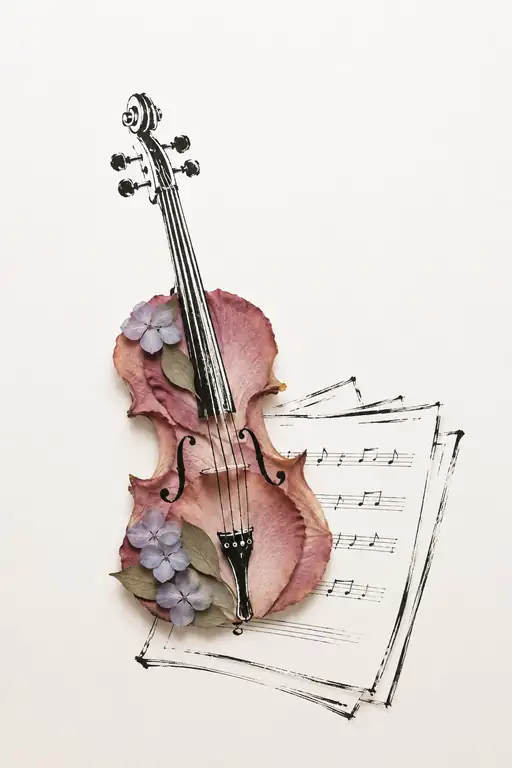 Silent Melody of the Rose Cello
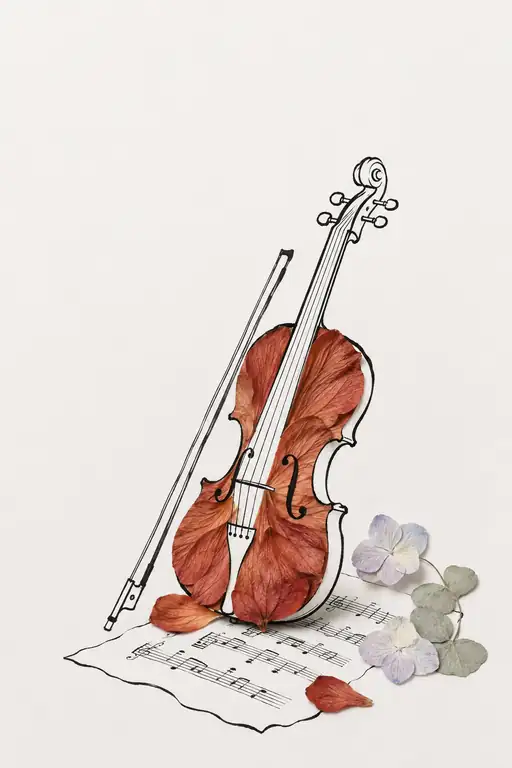 Violin of Resonant Memories
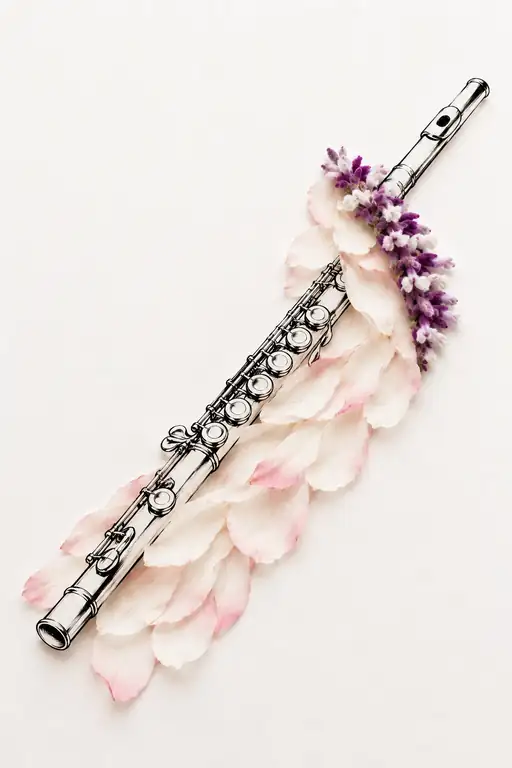 A Melody Soft Enough to Remember
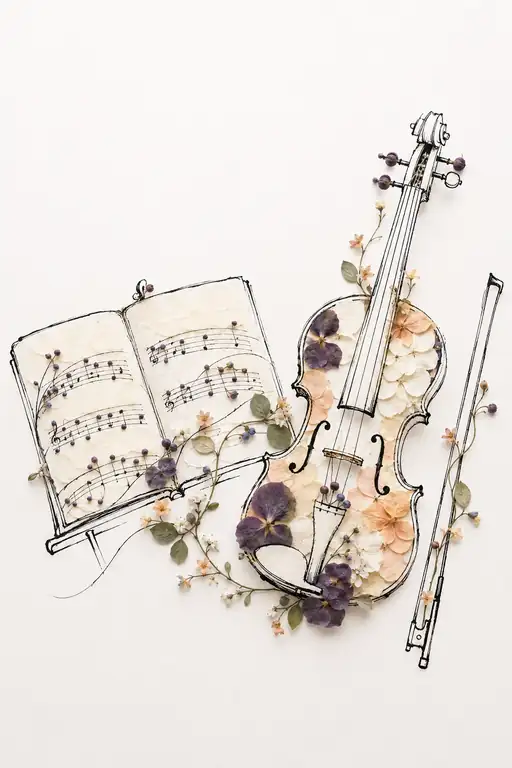 Nocturne in Blossom and Strings
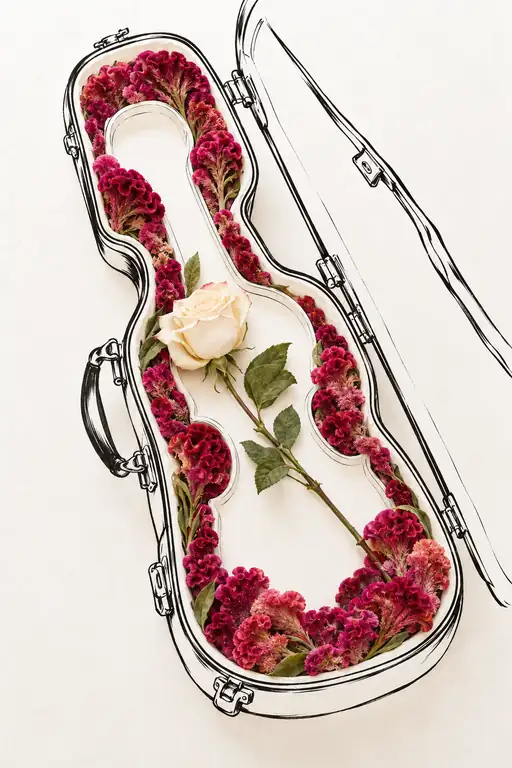 The Note I Kept for You
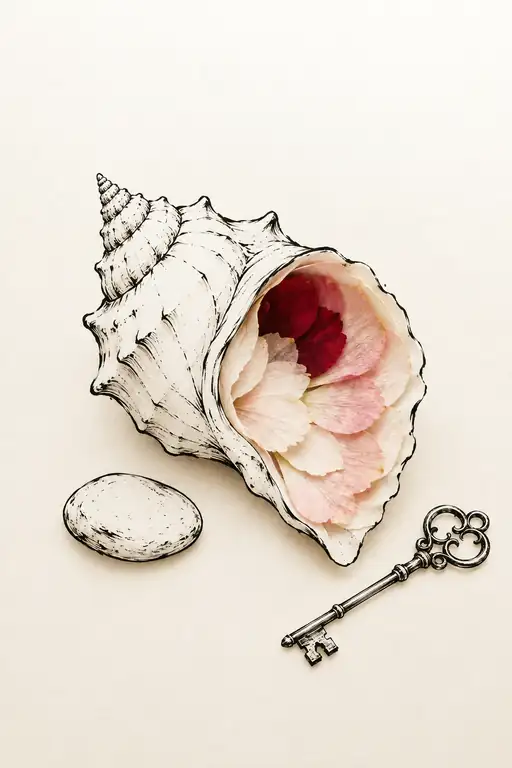 The Secret Has a Crimson Heart
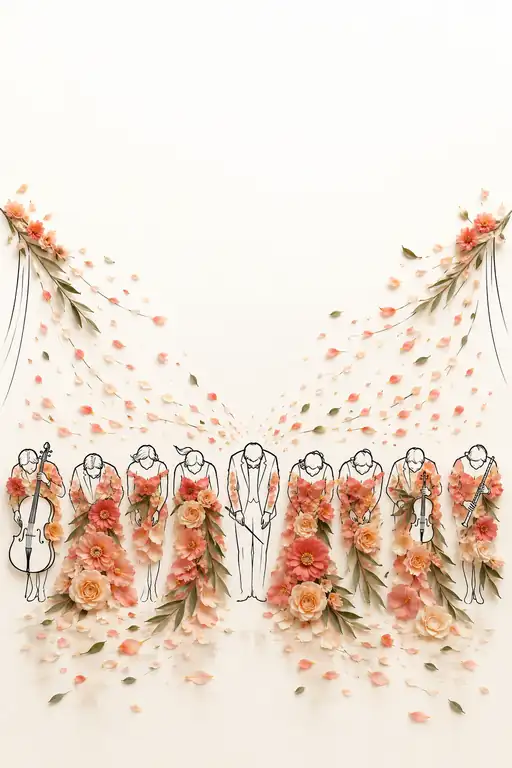 Resonance of the Final Bow