The Long Curve Home
Critique
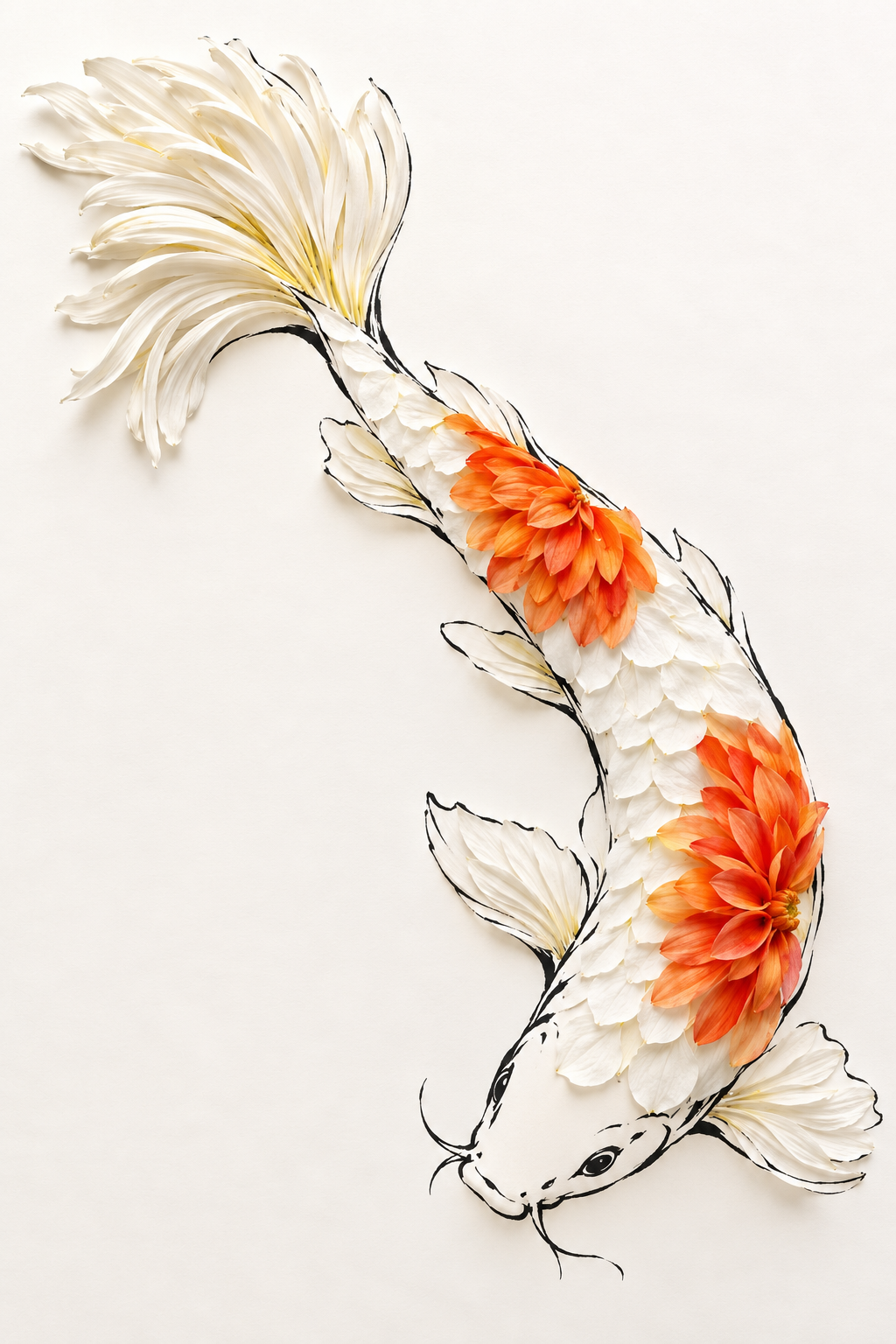
Introduction A koi curves diagonally across a cream ground, its body constructed from white petals and two vivid orange blooms. The head points down toward the lower center, while an expansive tail fans into the upper left. This direction makes the stationary arrangement appear to be swimming. Description Small overlapping white petals cover the fish's long body like scales. One orange flower sits near the middle of its back, and another occupies the broader area close to its head. Black strokes define the eyes, mouth, whiskers, and selected edges of the fins. Analysis The body bends gently between the tail and face, creating a clear path for the eye to follow. Orange flowers punctuate that pale curve at two different scales, bringing attention first to the head and then back toward the center. The dense, layered tail contrasts with the cleaner black marks of the face. Interpretation and Evaluation The work treats botanical forms as a flexible vocabulary for depicting a familiar fish. Flower heads retain their radial structure, yet their placement suggests patterned markings along the koi's back. This visible tension between flower and animal gives the image its inventive character. The precise facial drawing prevents the composition from dissolving into decoration, and the restrained use of orange provides a convincing focal rhythm. Conclusion The first impression is of a graceful koi in motion; a closer look reveals how carefully each petal supports that illusion. Its success rests on a controlled diagonal composition, selective dark lines, and the lively contrast between creamy whites and concentrated orange.
 Let My Heart Unfurl
 Crimson Unfolds Without a Sound
 Slowly Toward the Light
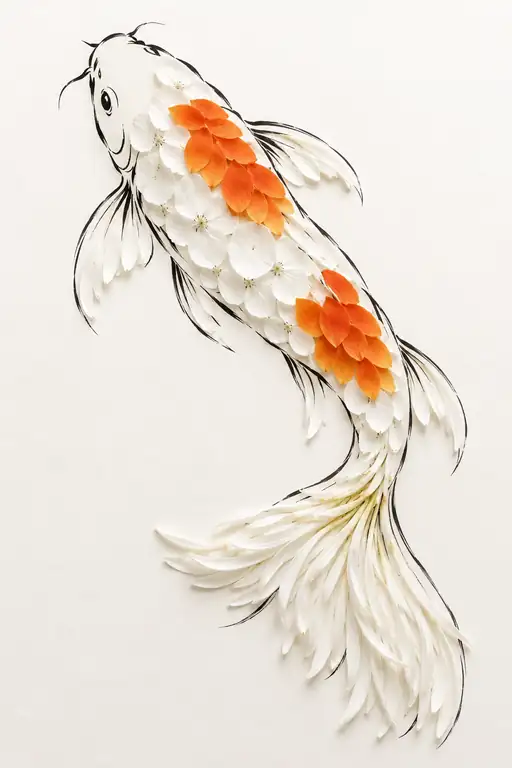 Grace Takes the Unhurried Turn
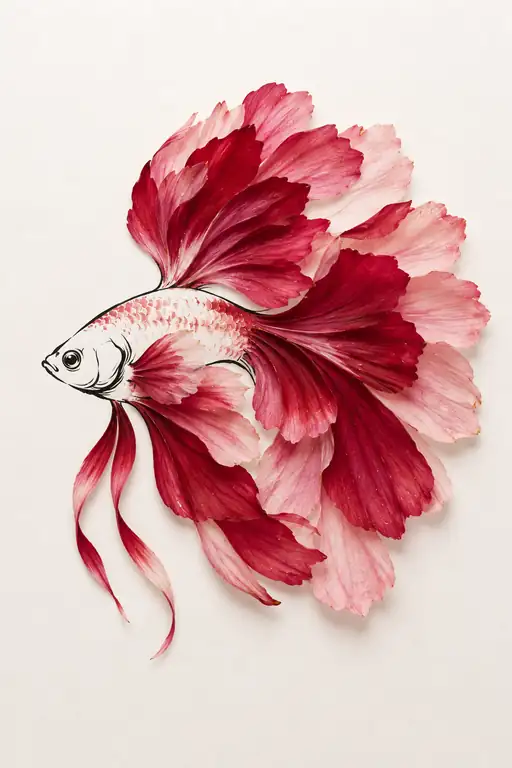 The Crimson I Cannot Hide
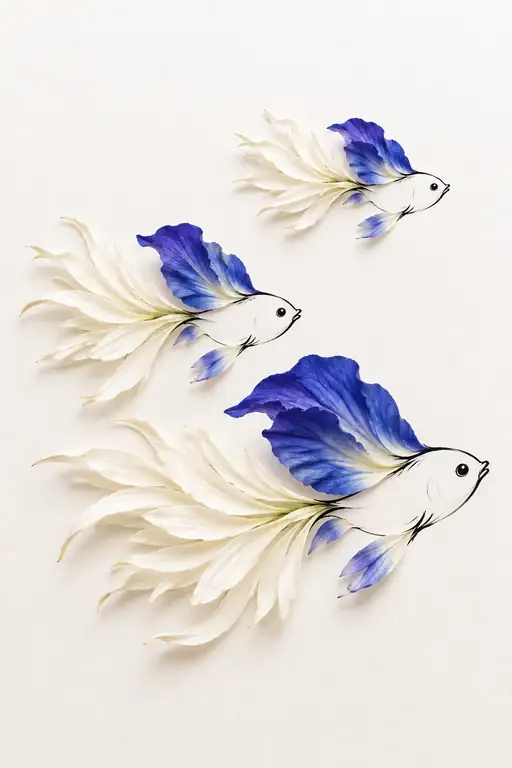 We Travel on a Breath of Blue
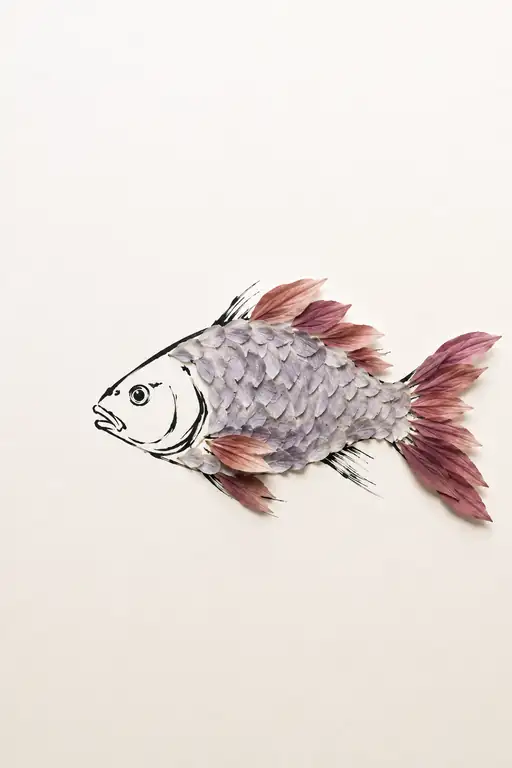 Fish Gliding with Lavender Scales
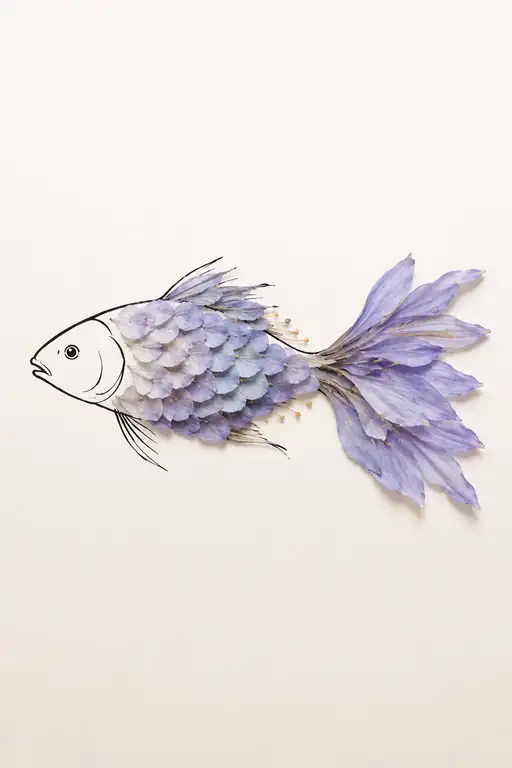 Violet Fin Gliding Through Crystal Depths
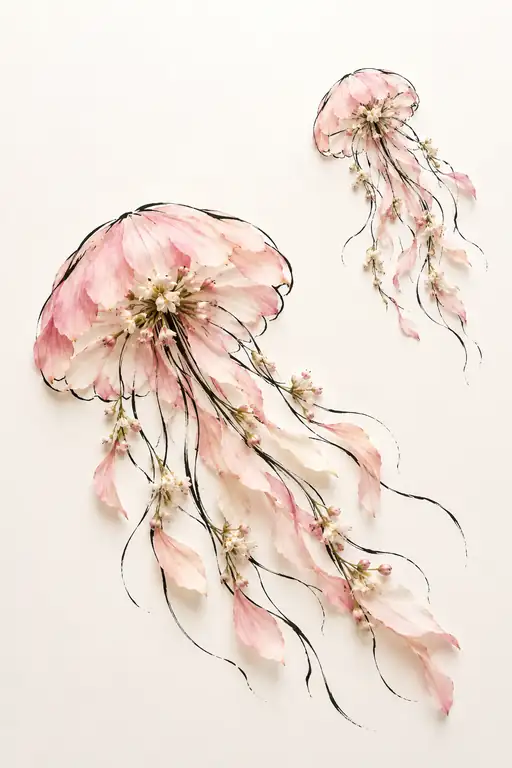 We Drift Beyond the Hours
 Scarlet Dance in the Silent Deep