
An Opening Wide Enough to Breathe
Critique
Introduction Four dark-edged trunks rise from the corners and spread fine green foliage around a tall central opening. The upward view removes the ground entirely. Separate crowns shape the white space. Description The thickest trunks enter from lower left and lower right, while two more descend from the upper corners. Black strokes run along their pale surfaces. Branches split into delicate stems carrying many small, fern-like leaflets. Darker green growth occupies the outer edges; yellow-green clusters extend toward the middle, particularly from the upper left and lower left. The central opening narrows near its middle, then widens above and below. Individual leaves cast slight shadows on the white ground. Analysis The trunks create opposing diagonals that approach but do not meet. Their dark margins establish a strong frame for the finely divided foliage. Smaller branches cross the gap in irregular intervals, preventing strict symmetry. The change from dark outer leaves to bright inner leaves suggests light filtering through thinner growth. Cropping the trunks at every corner makes their size felt through the repeated branching, while the unfilled center keeps the dense textures readable. Interpretation and Evaluation The scene treats an opening in a canopy as a subject in its own right. Each tree has an individual direction, yet their leaves form a shared enclosure. The composition balances this collective pattern with irregular growth. Restrained greens gain variety through different densities and light levels. Precise leaf detail and vigorous bark marks give the scene both delicacy and structural force. Conclusion The first glance sees a symmetrical ring of greenery. Closer viewing finds a less regular space shaped by four separate trunks and their unevenly advancing branches.
 The Sky We Leave Each Other
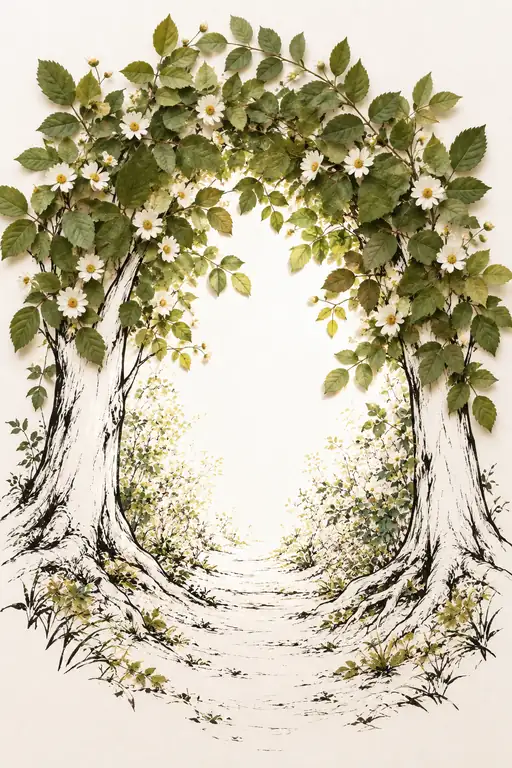 The Light That Lets Me Enter
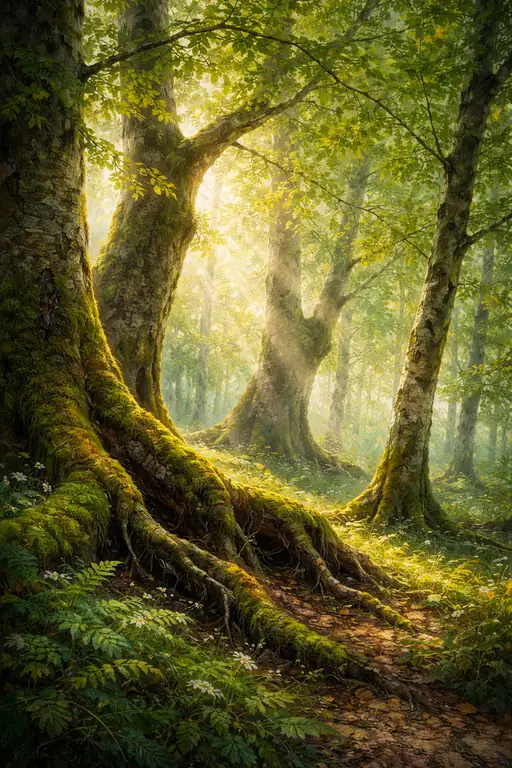 Morning Mist Awakening
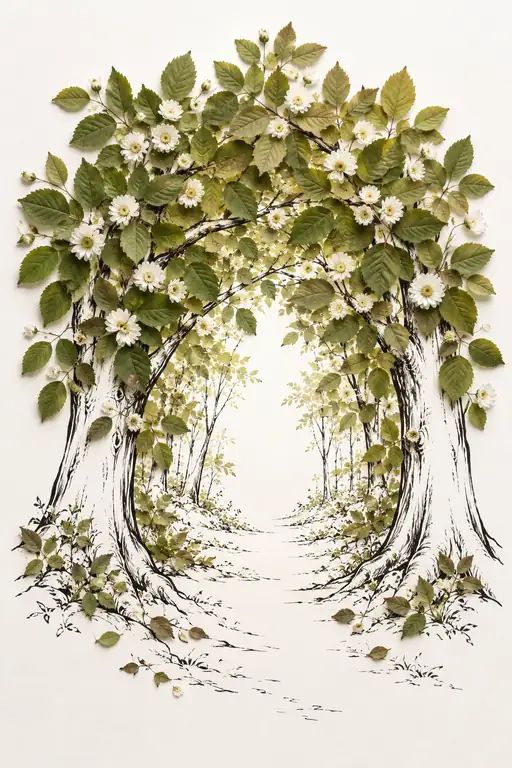 Here the Quiet Lets Me In
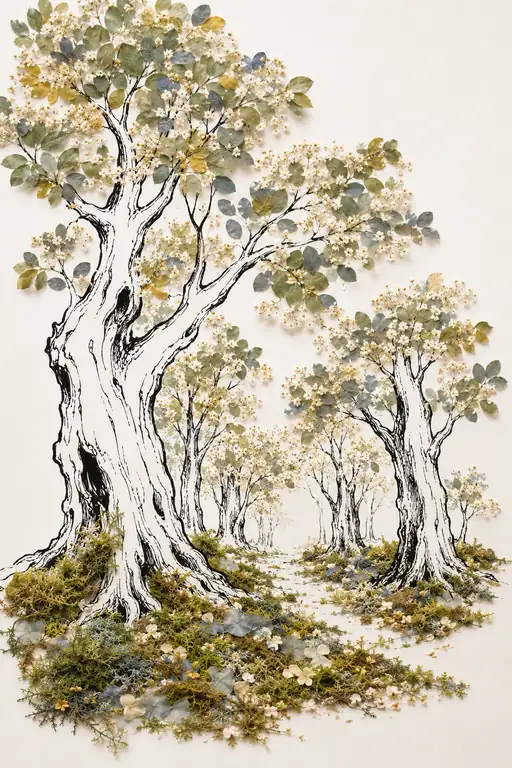 Gateway to the Ancient Grove
 Living Earth of the Autumn Woods
 Grove of Pressed Leaves and Inked Trunks
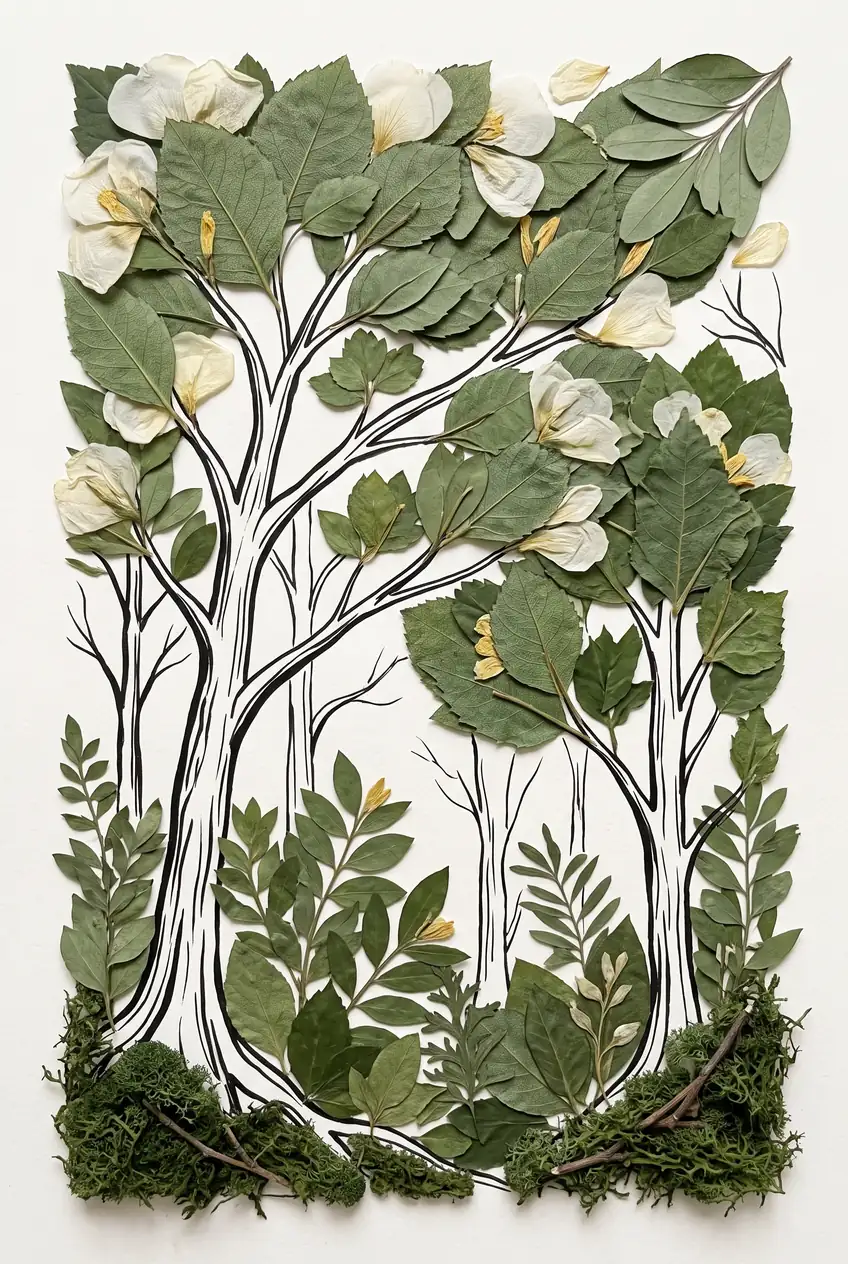 Quiet Sanctuary of Pressed Foliage
 Sanctuary of Eternal Silence
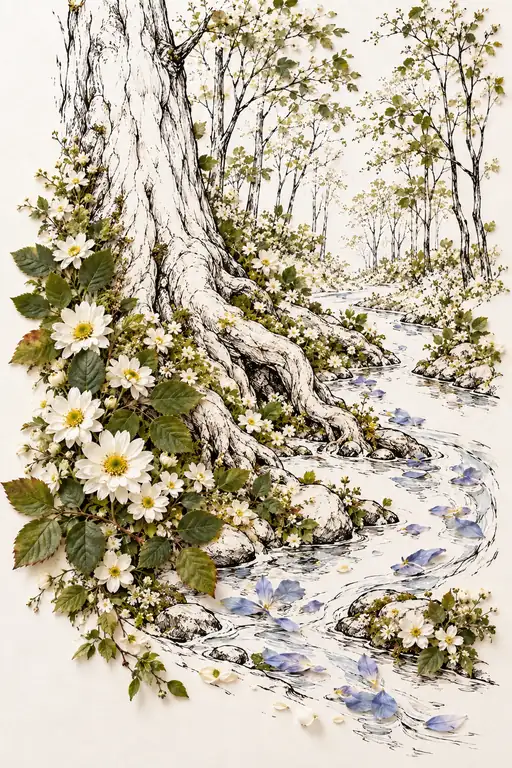 The Old Roots Know My Way