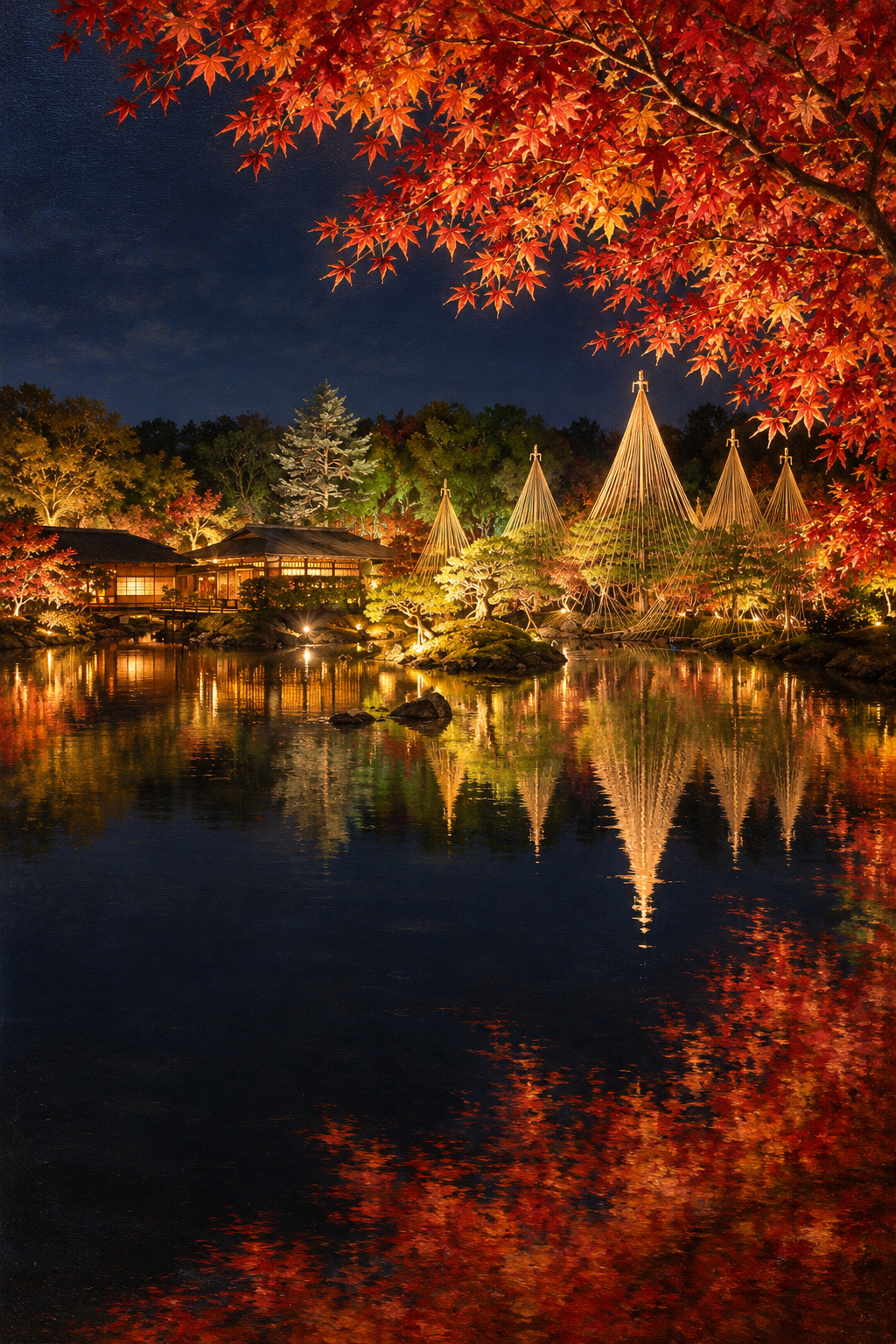
Crimson at the Edge of Silence
Critique
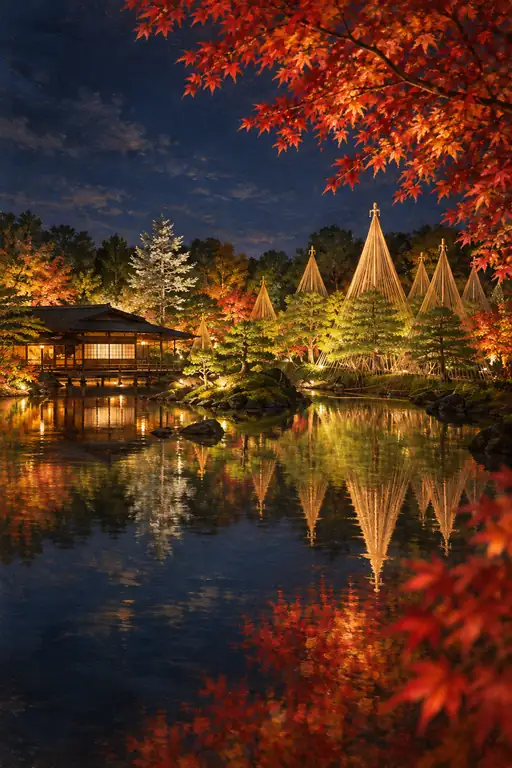
Introduction An illuminated garden stretches across a pond beneath an expansive red maple canopy. A row of rope cones rises beside a low pavilion, and the water gathers their lights into long reflections. The dark foreground establishes distance and quiet. Description Two connected buildings sit at left with warm windows close to the water. A pale tree and rocky island separate the right bank. The tallest cone stands right of center, flanked by several smaller peaks. Red leaves fill the upper right and reflect as an extensive crimson field across the lower right water. A few rocks interrupt the pond near the middle; most of the lower left remains nearly black. Analysis The roofline establishes a low horizontal measure against the pointed rhythm of the cones. Their reflections lengthen into the pond, but ripples separate each set of golden lines. The maple canopy extends farther over the right than the left, countered by the pavilion's mass on the opposite bank. A large unlit portion of water preserves the shapes of the red and gold reflections. The small central rocks mark a transition between built shore and open pond. Interpretation and Evaluation The garden appears carefully illuminated, yet its reflection refuses complete symmetry. This gives the water its own compositional authority. Red below spreads and dissolves into darkness. The palette balances warm leaves and lamps against blue-black water. Precise rope cords and softer reflected forms create an effective distinction between what is maintained and what changes. Conclusion The first glance follows the golden peaks. With time, the broad red reflection and deep dark water become equally important to the scene's measured calm.
Same Subcategory
Similar Artworks
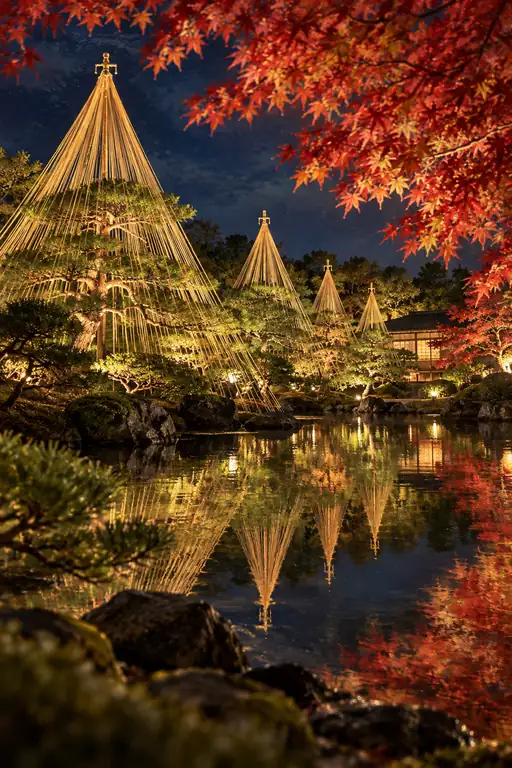 A Thousand Threads Against the Night
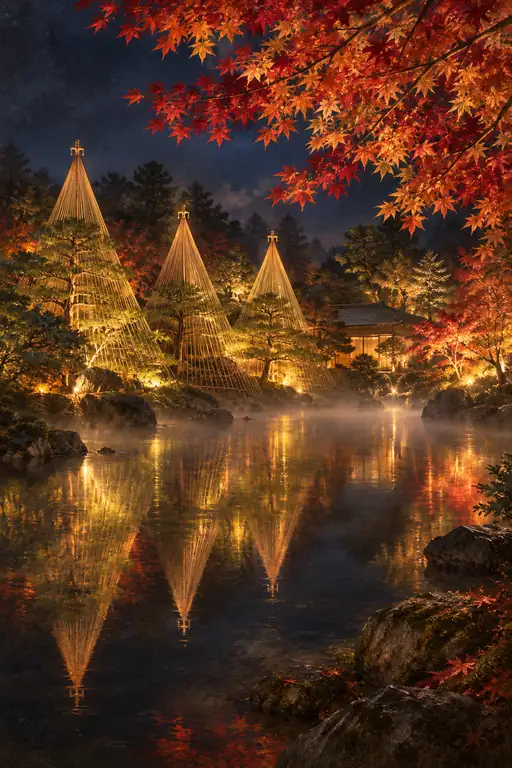 Autumn Breathes Between the Lights
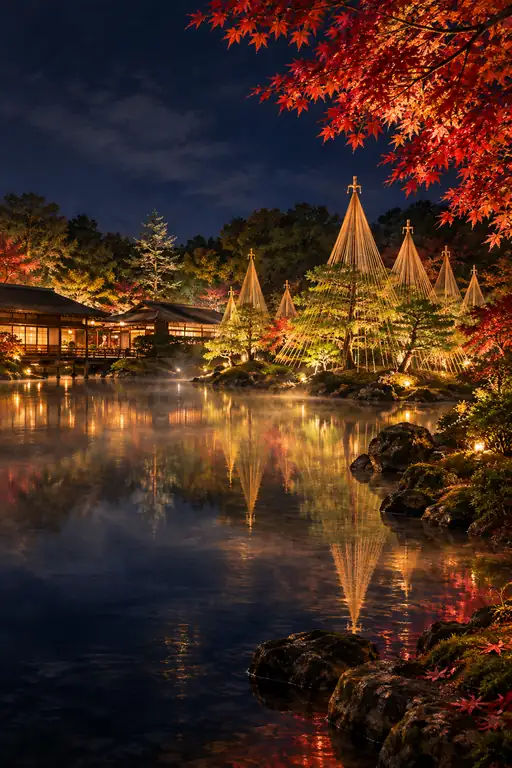 Where Gold Forgets Its Edges
 Across the Water, a Welcome
 Autumn Counts the Hours Afloat
 The Night Holds What We Protect
 From This Shore of Remembering
 The Lantern Remembers Sunset
 Ephemeral Fire of the Autumn Court
 Autumn Whispers from the Veranda