The Quiet We Tend
Critique
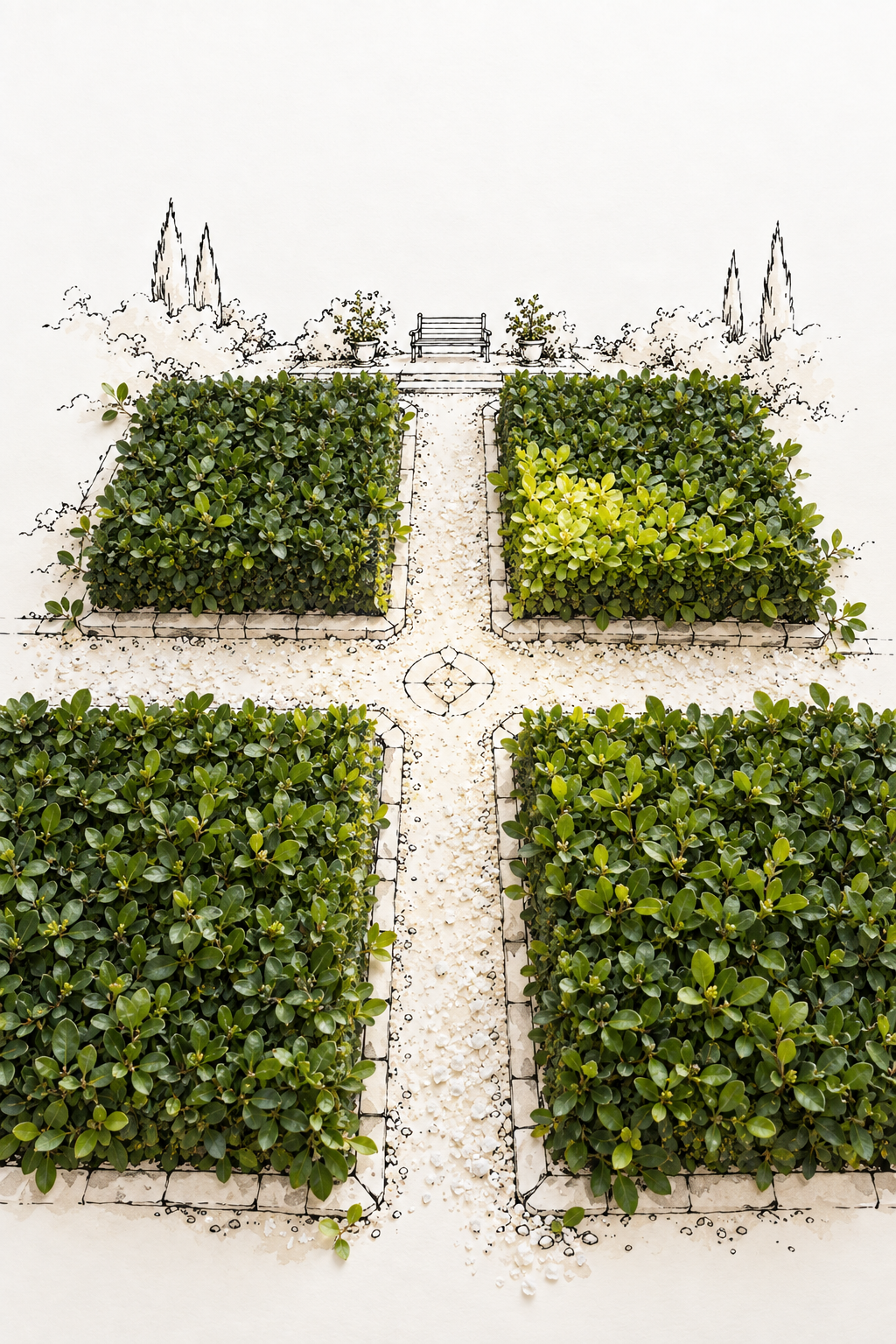
Introduction A formal garden is seen from a raised viewpoint, with four clipped hedges arranged around crossing paths. Dense foliage meets spare black drawing. Its plan directs the eye toward a distant bench. Description Each hedge forms a nearly rectangular block bordered by low pale stones. Gravel paths divide them into quarters and meet around a small circular paving motif. Lower hedges extend beyond the frame. A brighter patch of leaves lights the inner edge of the upper right block. At the far end, a bench sits between two pots, with sketchy shrubs and narrow upright trees behind them. Analysis The central path narrows toward the bench, creating depth through repeated straight borders. The crossing interrupts this pull, making the circle a secondary focus. Dense individual leaves supply varied greens inside rigid outlines, softening the garden's geometry. The luminous leaves at upper right disturb the otherwise even balance and lead the eye briefly away from the center. In the background, sparse lines allow the distant plants to recede. Interpretation and Evaluation The garden presents order as something maintained within living growth. Leaves extend past several stone edges, showing that the rectangular plan does not completely contain them. The composition makes an effective contrast between a measured layout and irregular surfaces. Its color is concentrated in the near hedges, while the distant bench remains a light drawing. This creates a clear route while preserving plant texture. Conclusion At first the image reads as a simple diagram of a garden. Closer attention to varied leaves, stray branches, and changing density reveals a more active relationship between design and growth.
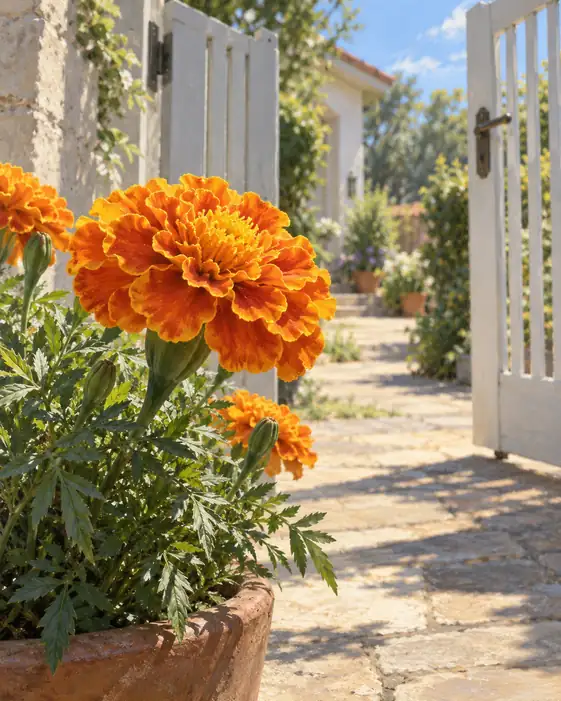 Open Garden Gate and Orange Marigold
 A Still Point Within the Splendor
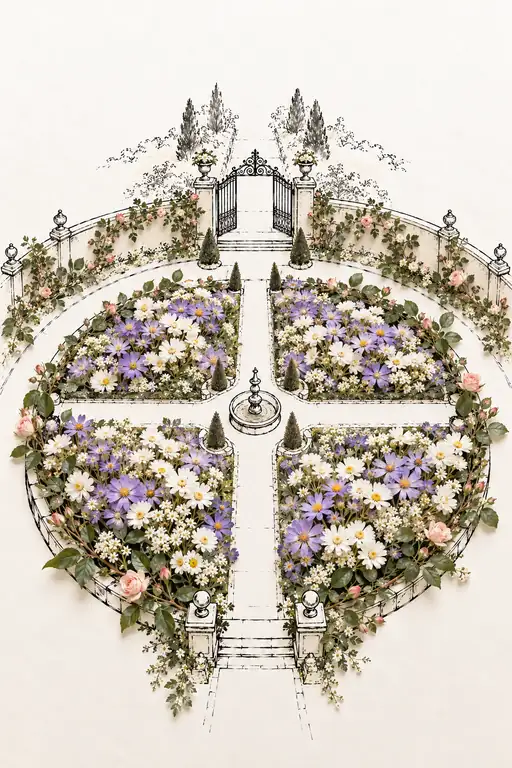 My Heart Leaves the Gate Open
 Symphony of Silent Order
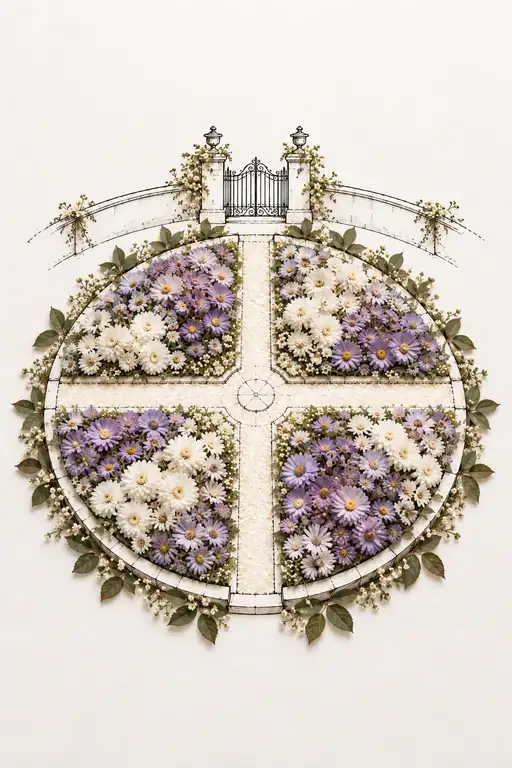 Four Ways to Find My Center
 Symmetric Elegance in the Floral Garden
 Symmetry of a Summer Dream
 Again, the Heart Opens
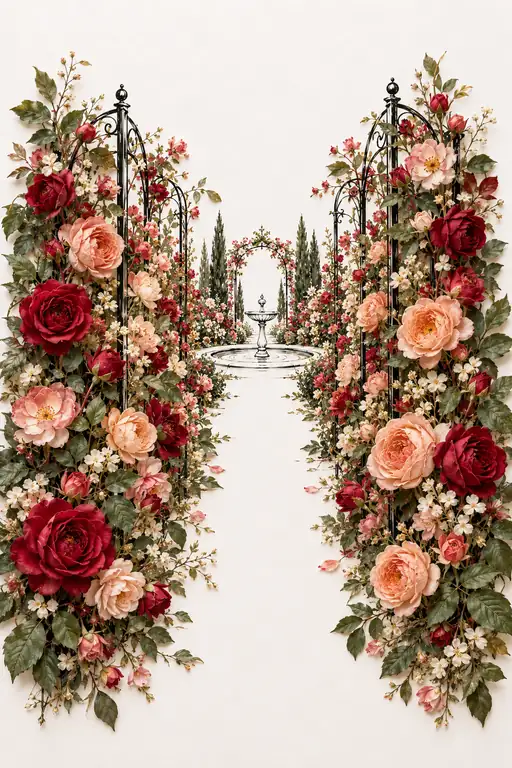 There Is Still a Way In
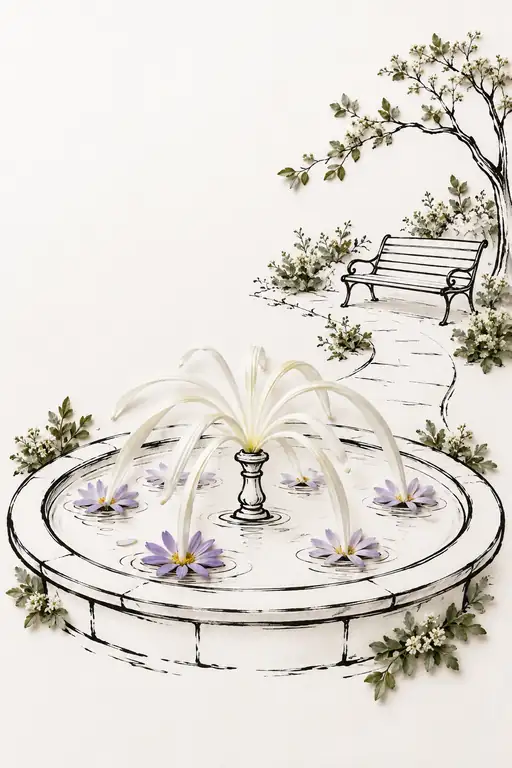 A Place for Unhurried Thoughts
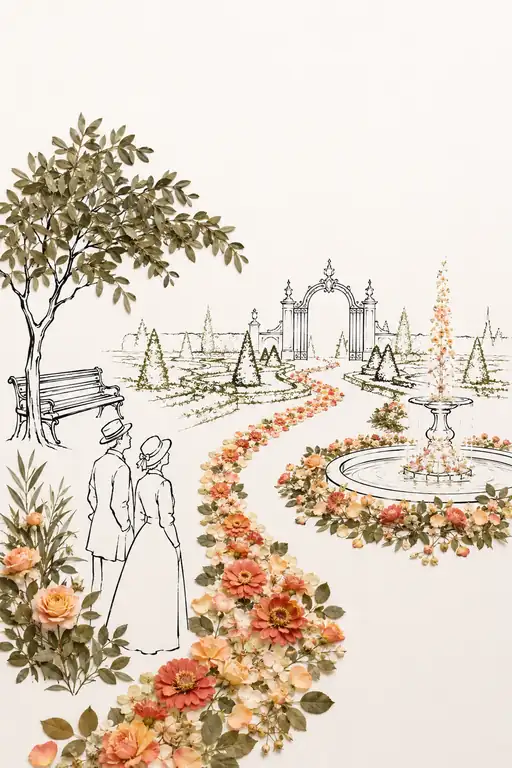 Pathway to the Sunlit Gate