The Faraway Within Reach
Critique
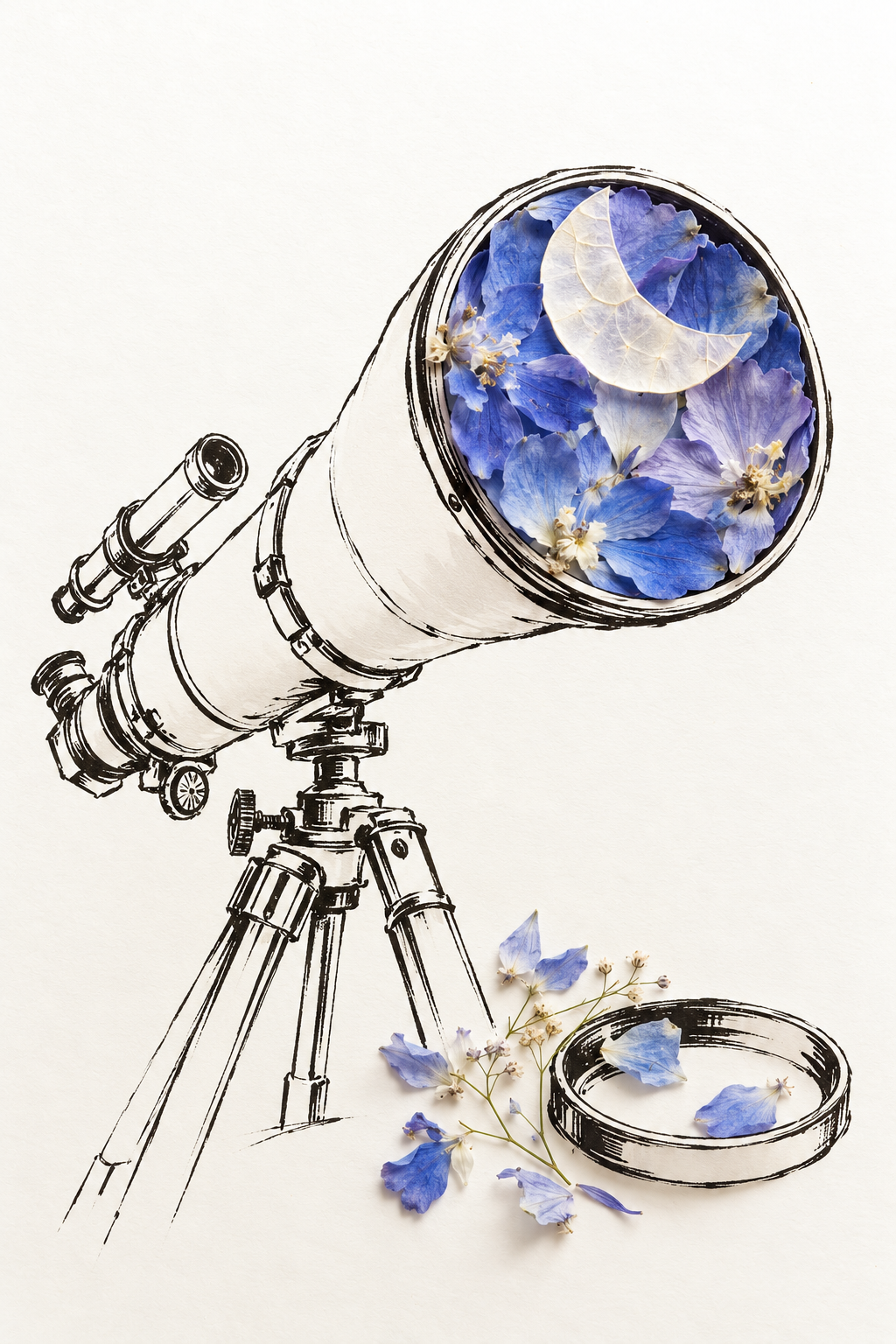
Introduction A telescope occupies this image, yet its wide front aperture contains blue flowers and a pale crescent instead of a distant view. The arrangement joins the instrument's precise outline to fragile botanical forms. The white ground clarifies this substitution and emphasizes the color. Description The telescope rises diagonally from the lower left toward the upper right on a three-legged stand. A smaller viewing tube projects from its side, and several adjustment wheels are described with dense black marks. Blue and violet blossoms crowd the main lens, surrounding a translucent crescent near its upper edge. At the lower right, loose flowers lie beside a shallow circular frame that holds a few fallen petals. Analysis The instrument's long diagonal leads the eye to the round aperture, where layered petals interrupt its mechanical geometry. The crescent overlaps the blossoms rather than floating beyond them, flattening the imagined depth of the lens. Thin stems and detached petals below echo the blue forms above, linking the large circle to the smaller one on the ground. The white spaces between the stand's legs prevent its intricate linework from becoming visually heavy. Interpretation and Evaluation The apparatus for looking outward becomes a place for examining nearby things. This shift is reinforced by the blossoms that spill outside the lens and can be studied without magnification. The composition balances angular supports with rounded frames, while the limited blue palette draws together separated objects. Variation between crisp ink fittings and soft, translucent petals gives the visual conceit convincing material presence. Conclusion The first impression of an astronomical instrument yields to an intimate study of attention itself. Repeated circles and scattered flowers make that change of scale coherent.
Same Subcategory
Similar Artworks
 Infinity Begins Nearby
 Lenses of Petals Gazing into Micro and Macro Cosmos
 Vigil for the Silver Moon
 Eye to the Celestial Spheres
 Arc Toward the Crescent Night
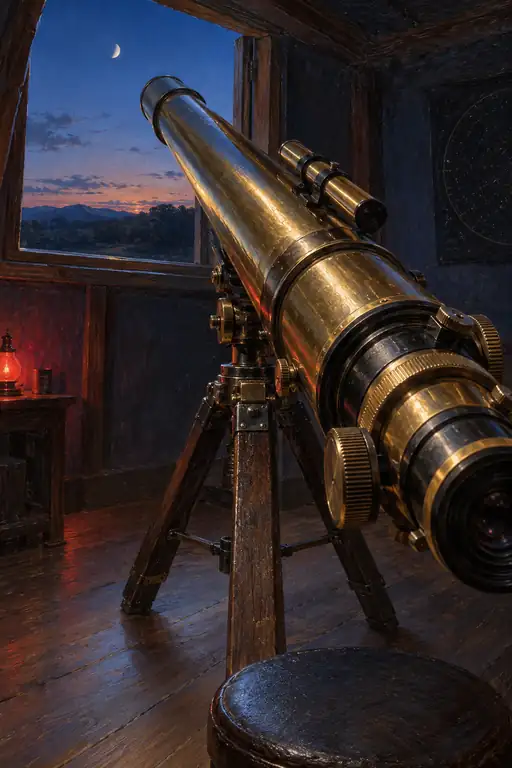 Gazing at the Crescent Silence
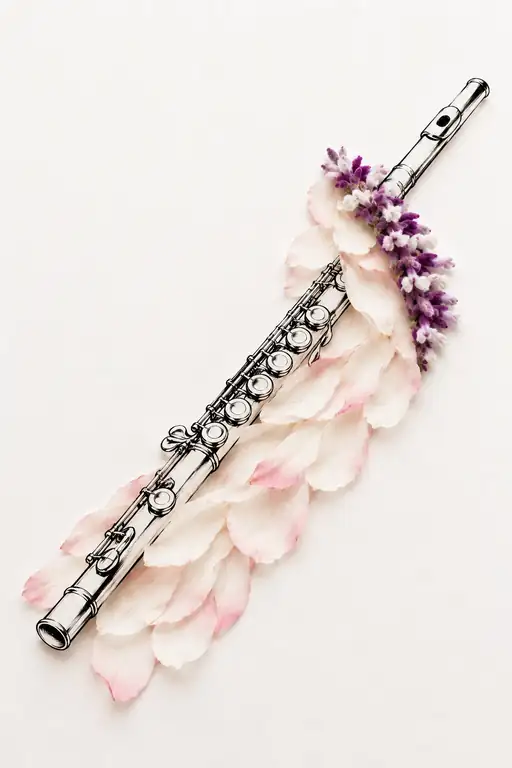 A Melody Soft Enough to Remember
 The Blue I Wear While Waiting
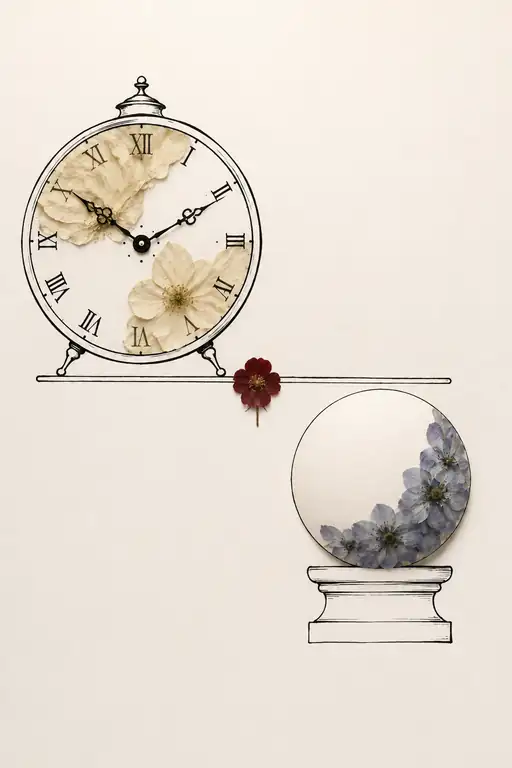 The Geometry of Fleeting Hours
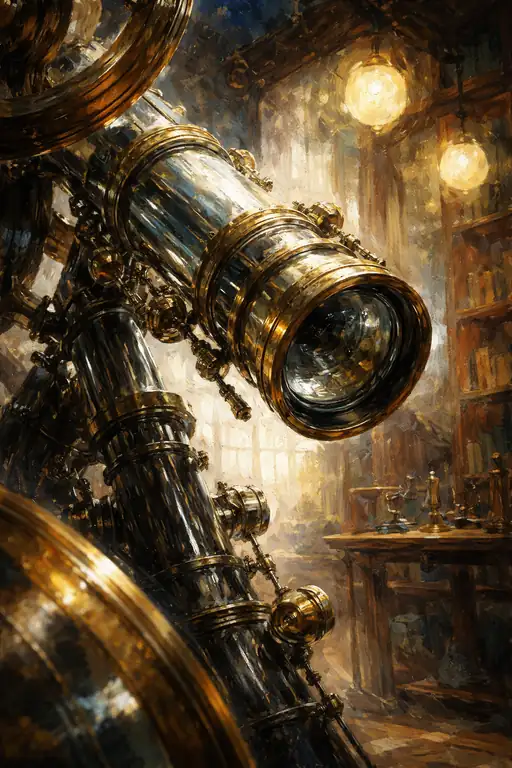 The Scholar's Cosmos