The World Beyond My Bearings
Critique
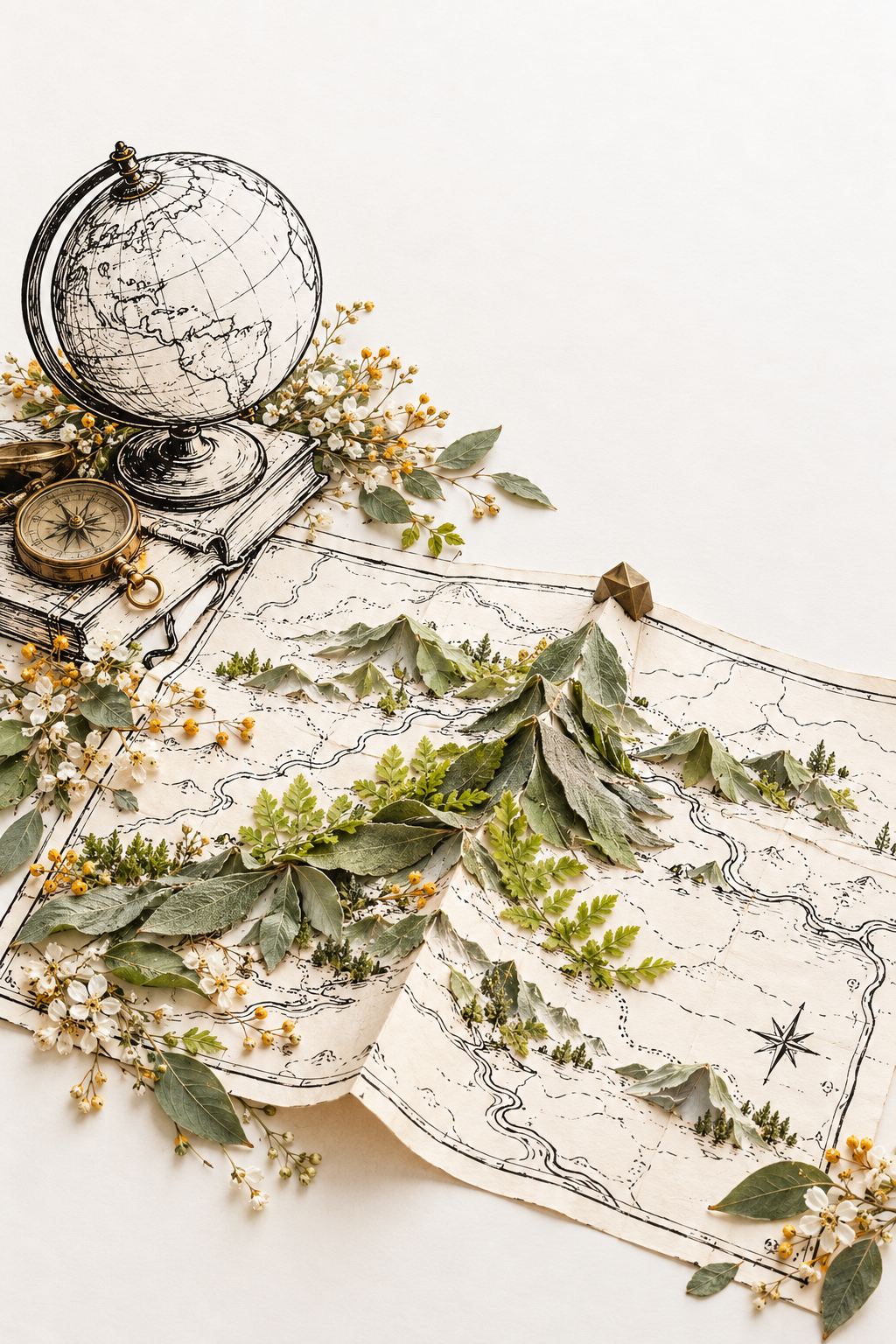
Introduction This map makes geography rise from the page as leaves. Surrounded by a globe, compass, and flowers, it treats travel as both measurement and a living act of imagination. Description A large unfolded map covers the lower half, its fine black lines tracing rivers, paths, and a compass rose. Clusters of green leaves rise into small mountain shapes across it, with minute plants between them. At upper left, a globe rests on stacked books beside a brass compass. White blossoms and yellow buds spill around the objects and over the map. A small folded geometric object sits near its upper edge. Much of the upper right remains blank. Analysis The flat map's diagonals lead inward from the corners toward the raised central leaf peaks. Their real texture contrasts with the thin drawn contour lines, making the terrain seem to emerge from a plan. The globe repeats the subject at a different scale and supplies a large dark circle above the map. The brass compass adds a smaller circle and warm accent. Flowering branches cross the boundary between books and paper, visually joining study and landscape. Broad white space to the right offsets the concentration of objects at left. Interpretation and Evaluation The map may represent an actual route, but its leaf mountains resist precise surveying. It suggests that places are more than coordinates: they grow, change, and have textures a diagram cannot hold. Books and instruments imply careful preparation, while blossoms hint at the discoveries that escape planning. The little folded form can be read as a marker for a destination, though it is too small to settle the story. This openness makes the image an invitation rather than an itinerary. Conclusion The work succeeds by letting physical foliage revise a drawn map. Its strongest contrast is between the compass's confident direction and the organic terrain spreading beneath it.
 The Way Begins in Wonder
 The Cartographer's River
 Continents of Azure Petals
 Where the Last Page Lingers
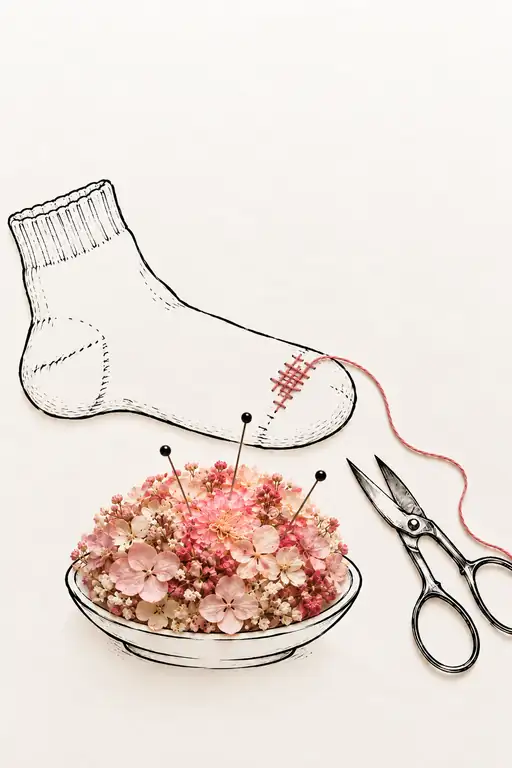 What I Choose to Keep
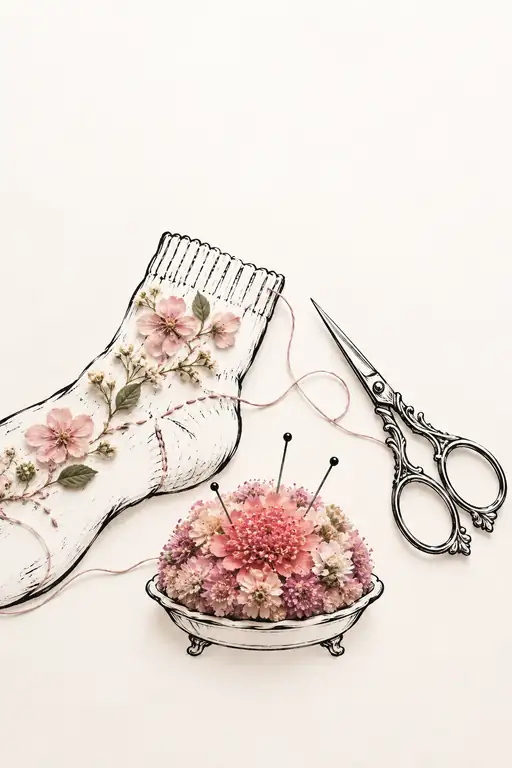 Mending a Little Warmth
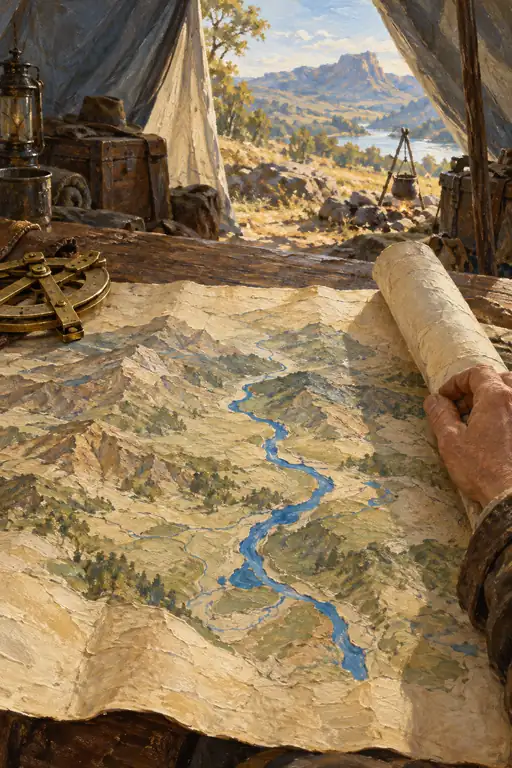 Echo of the Charted Valley
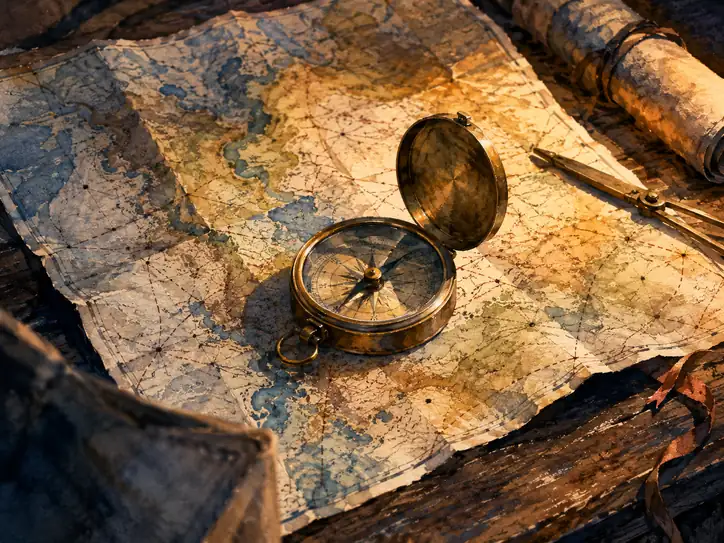 The Voyager's Silent Resolve
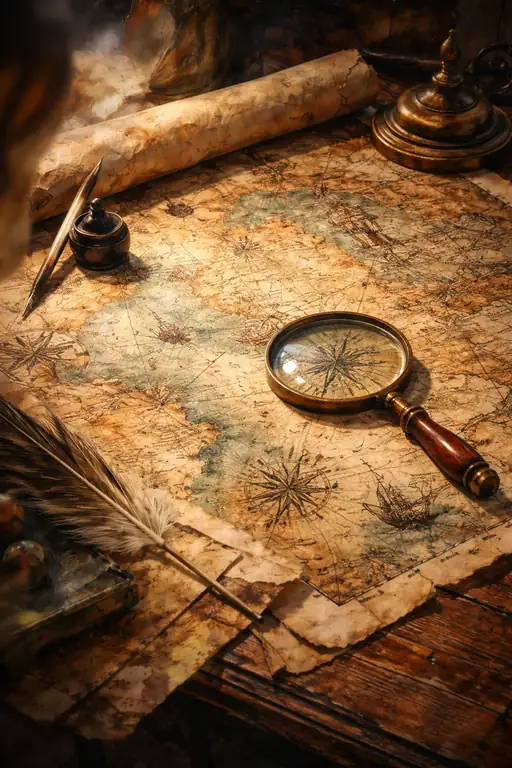 Navigating the Unknown
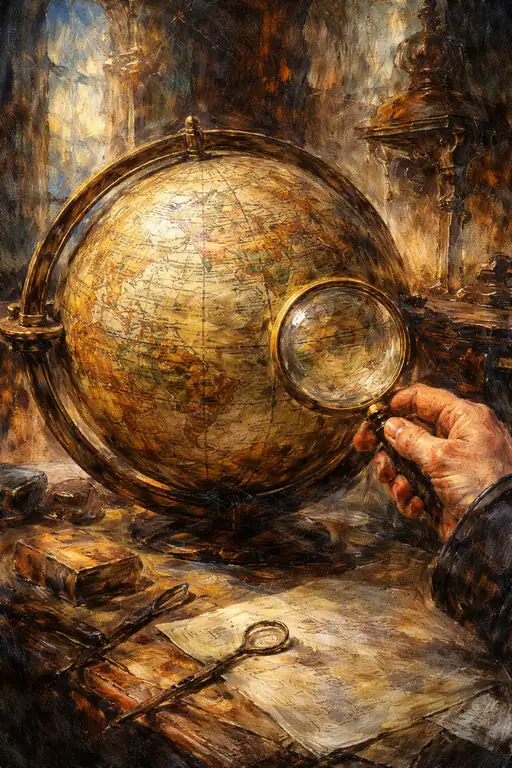 Whispers of the Old Cartographer