Our Hands Know the Same Quiet
Critique
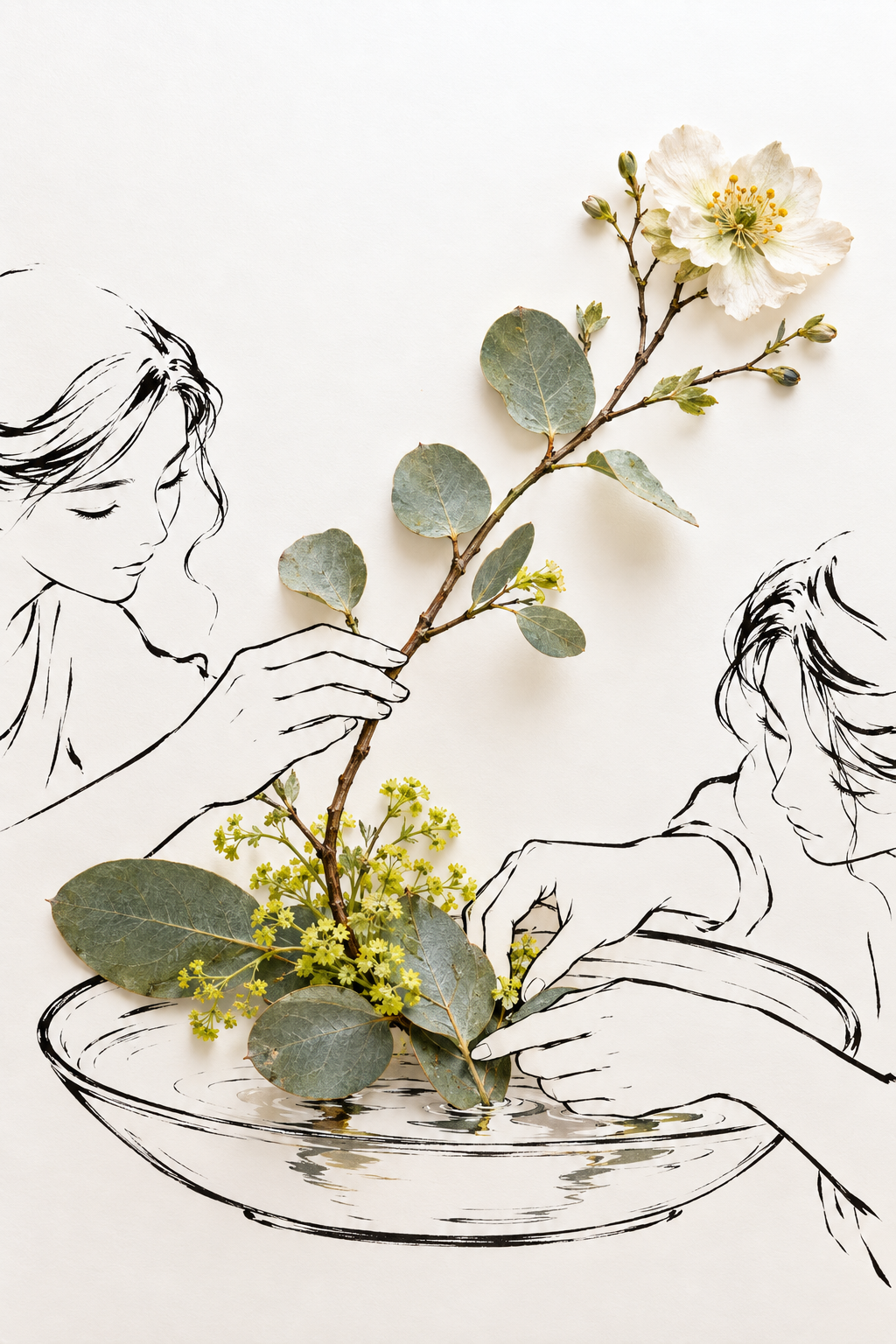
Introduction Two figures tend a shallow bowl of flowers. Their hands convey cooperation without conversation. Description An adult at left holds a branch topped by a white blossom with yellow stamens. A smaller figure uses both hands to arrange stems near the water. Round gray green leaves and tiny yellow flowers fill the lower center. Ripples and faint reflections appear in the black outlined bowl. Both faces are in profile against a pale background. Analysis The main branch rises diagonally from the vessel toward the bloom. The adult's fingers steady its middle; the other hands work at its base. These gestures make the arrangement a shared task. Colored leaves and flowers contrast with ink drawings of skin, hair, and bowl. Broad leaves punctuate thin branch and yellow clusters. White space around the blossom preserves its pale petals. Interpretation and Evaluation The act of arranging is the subject as much as the finished display. The difference in hand positions suggests instruction, assistance, or simply a practiced rhythm between two people. Neither reading is forced; both are grounded in how carefully they attend to the same plant. The water ripples imply that the branches have just been moved, giving the still image a sense of passing time. The flowers' differing sizes and stages also hint at growth and selection. Conclusion The picture finds intimacy in a quiet, practical activity. Its restrained drawing leaves the living materials vivid, while the hands provide the narrative.
Same Subcategory
 Whispers of the Hearth
Similar Artworks
 Before My Hands Decide
 Look, the Quiet Is Alive
 Grove of Pressed Leaves and Inked Trunks
 My Thoughts Go Out Before Me
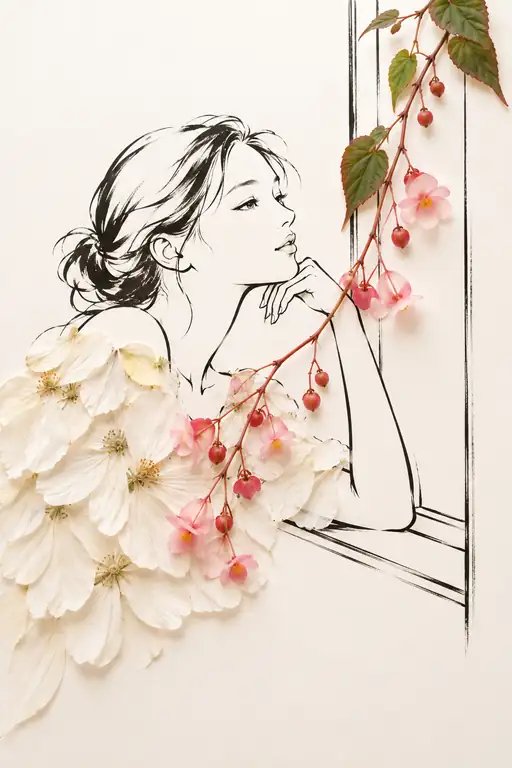 The Outside Comes Close to My Reverie
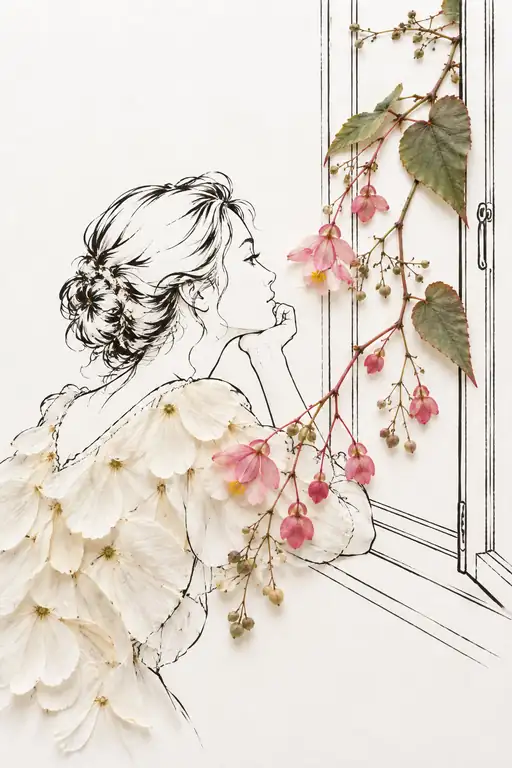 My Thoughts Cross the Window First
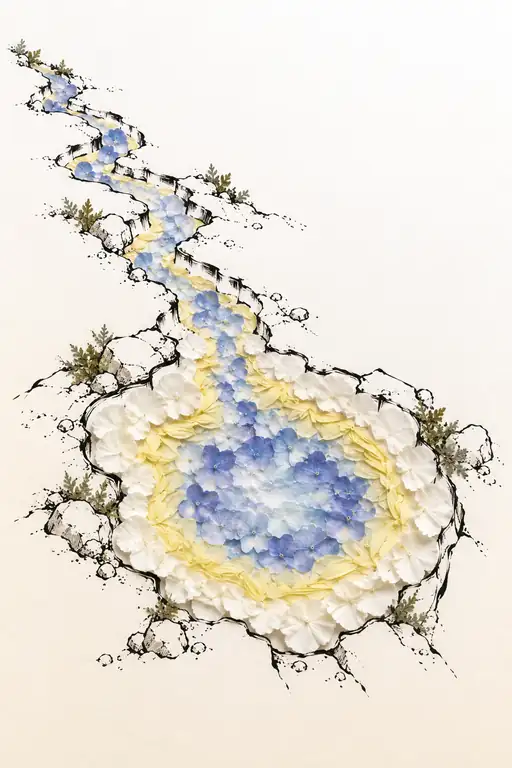 All the Blue Finds Its Way Home
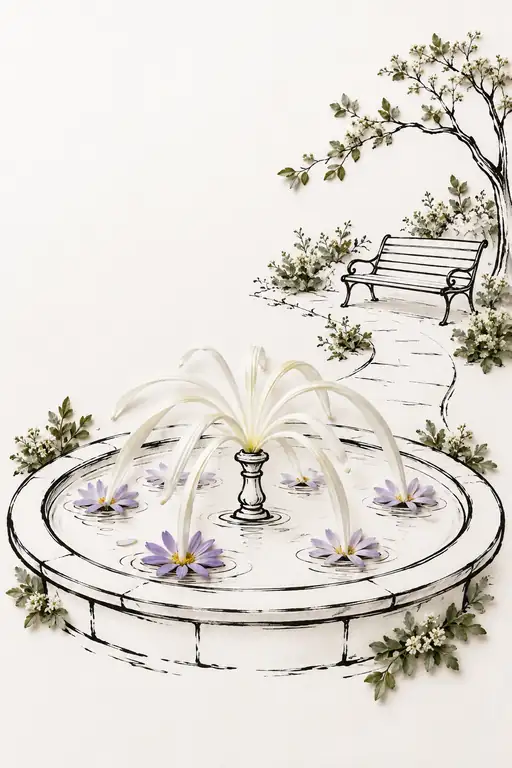 A Place for Unhurried Thoughts
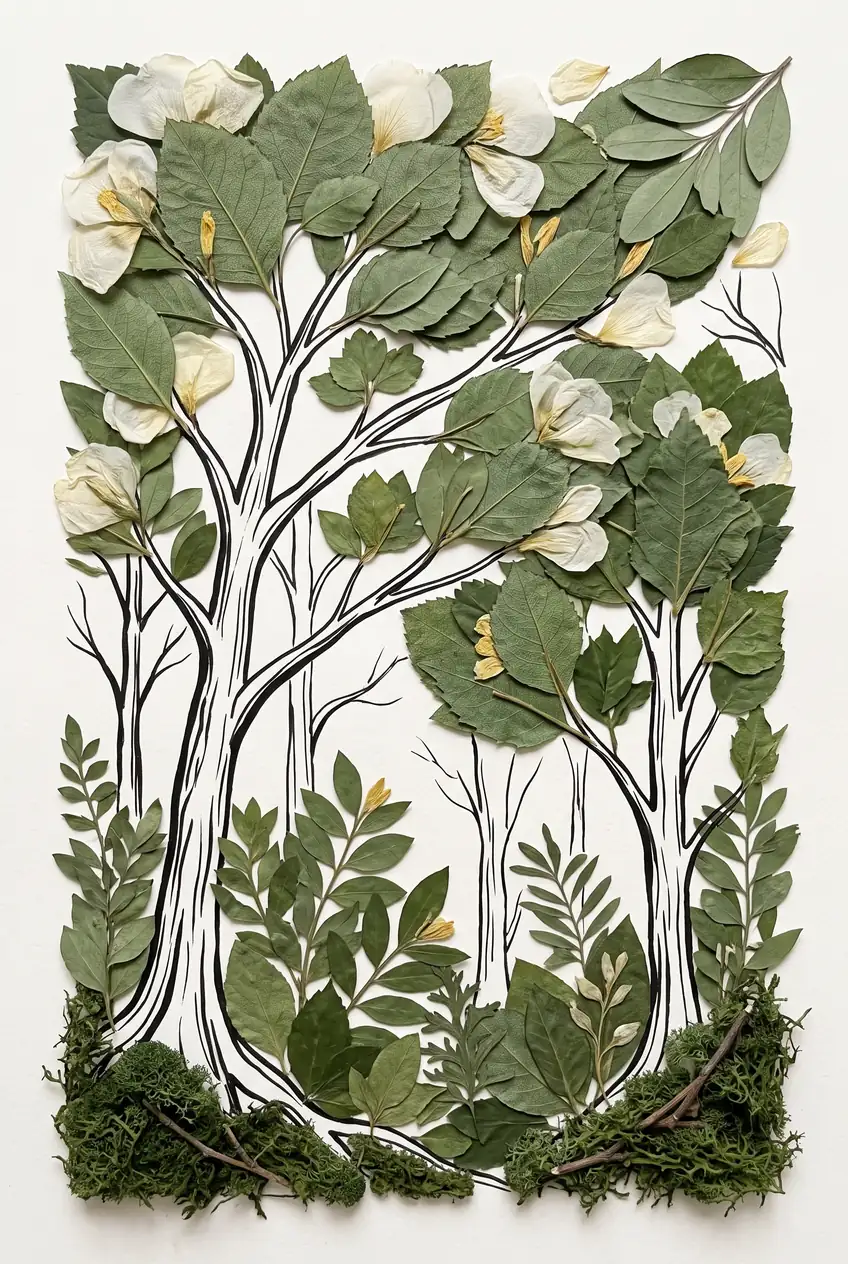 Quiet Sanctuary of Pressed Foliage
 Morning Quiet and the Harvest by the Window