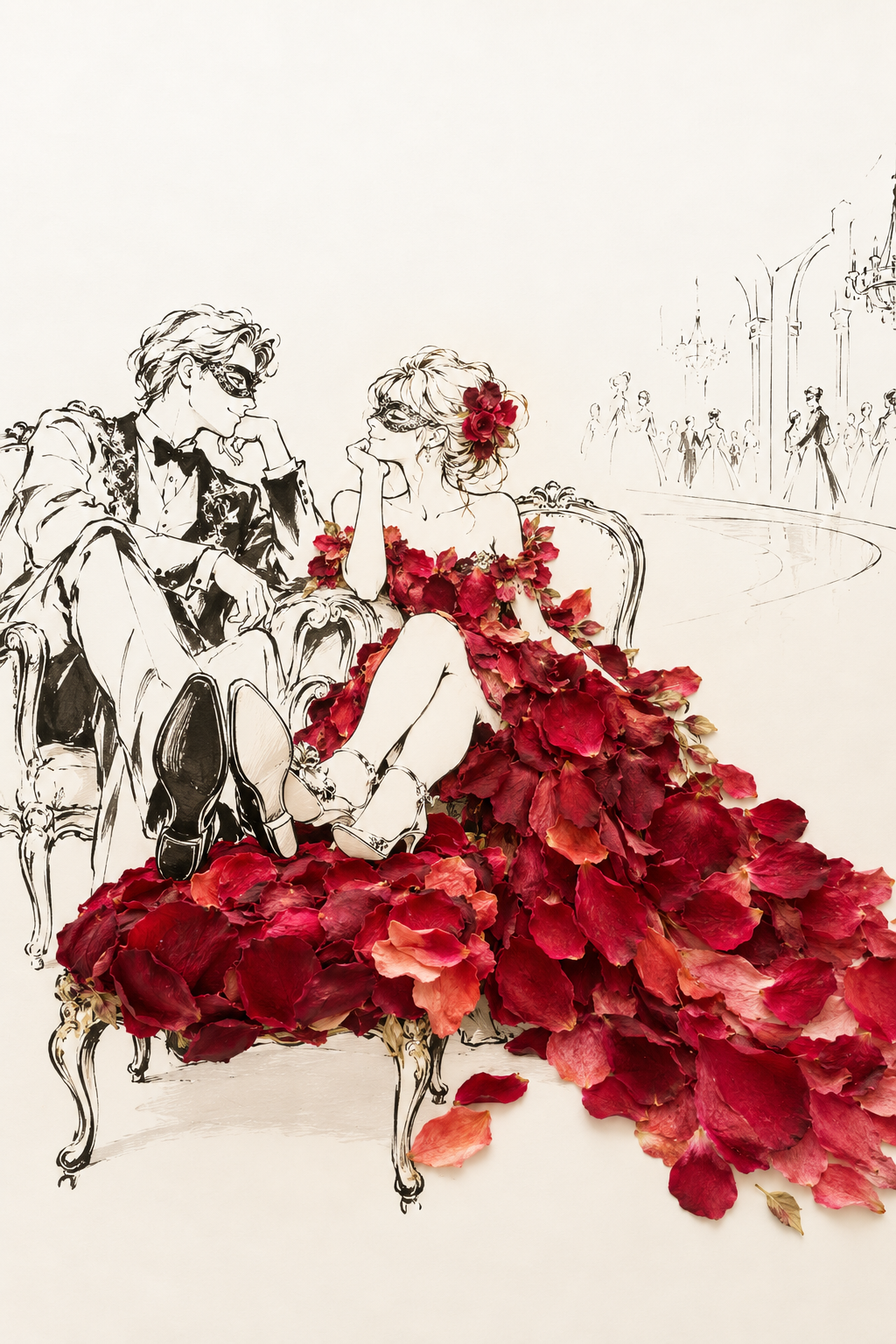
The Ballroom Fades When You Look at Me
Critique
Introduction This ballroom image places a private exchange in a public setting. The red dress expands into a landscape of petals. Description On an ornate sofa, a masked man in black faces a masked woman wearing red flowers in her hair and across her bodice. Each props a chin on one hand, and their gazes meet. Her bent legs and light shoes remain visible above a crimson and coral petal train that spills into the lower right foreground. Faintly drawn dancers, chandeliers, and arches recede behind them. Analysis Dark, assured lines give the two seated figures weight, while the distant ballroom is described with sparse marks. This contrast pulls the encounter forward. The huge area of red provides an opposing visual mass to the pale, open upper half. Petal edges repeat in irregular rhythms, turning the dress into a flowing diagonal that leads away from the couple. Their nearly mirrored poses hold the eye at the point where the opposing gazes meet. The sofa's curves and carved legs add ornamental detail without competing with the saturated fabric. Interpretation and Evaluation The masks establish a world of performance and withheld identity, yet the matching poses make this exchange feel unusually direct. The extravagant train could signal romance, theatrical self presentation, or the emotional intensity projected onto a fleeting conversation. Its scale also gently unsettles the scene: the costume threatens to occupy more space than the ballroom itself. That exaggeration is both its visual pleasure and its central idea. Conclusion By setting delicate background drawing against an exuberant field of petals, the image makes an intimate glance seem momentous. The unresolved identities preserve its sense of invitation.
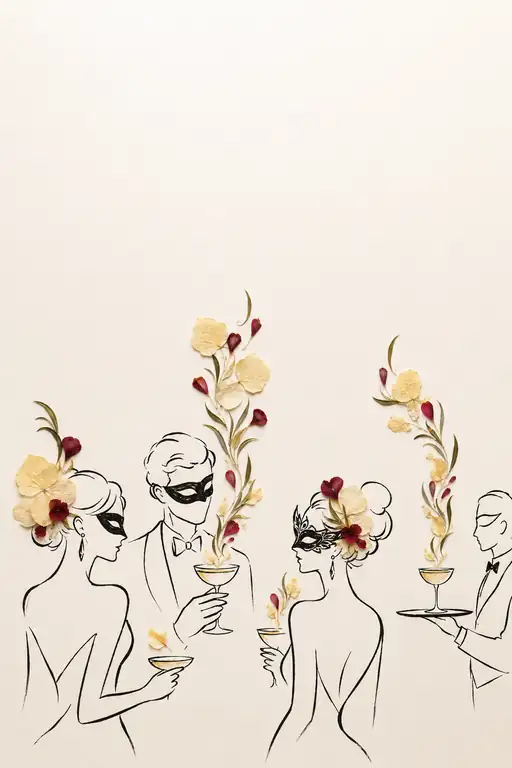 Whispers and Crimson Petals at the Masquerade
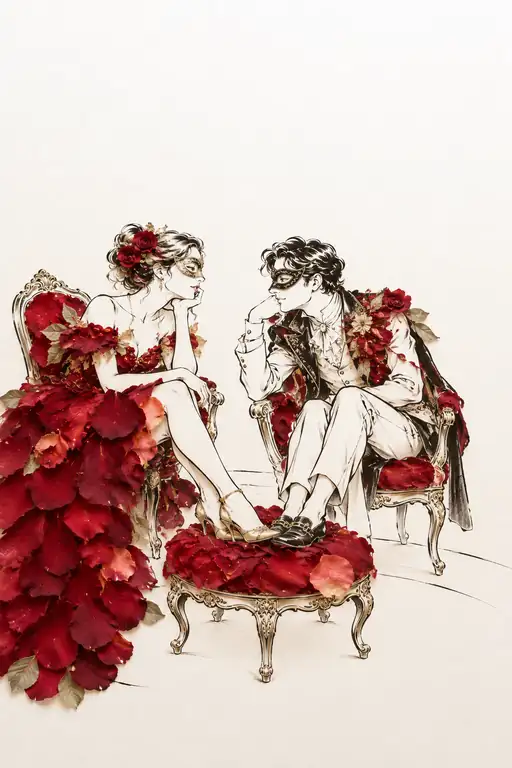 Our Feet Have Already Answered
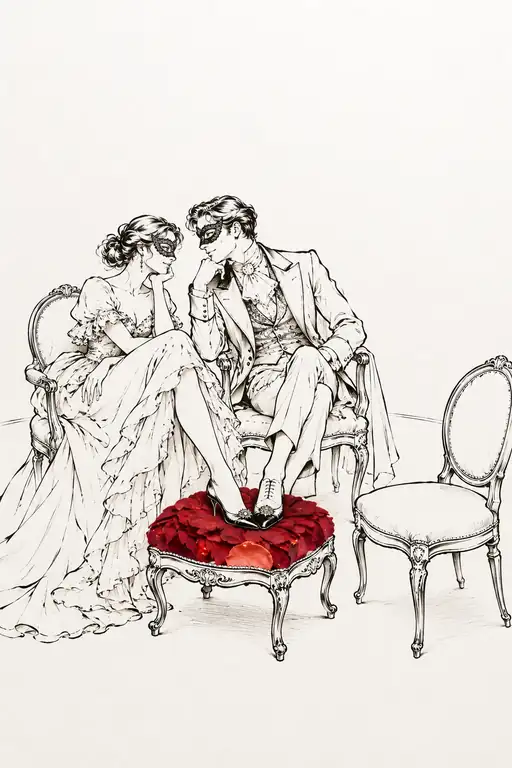 No Room Left for Anyone Else
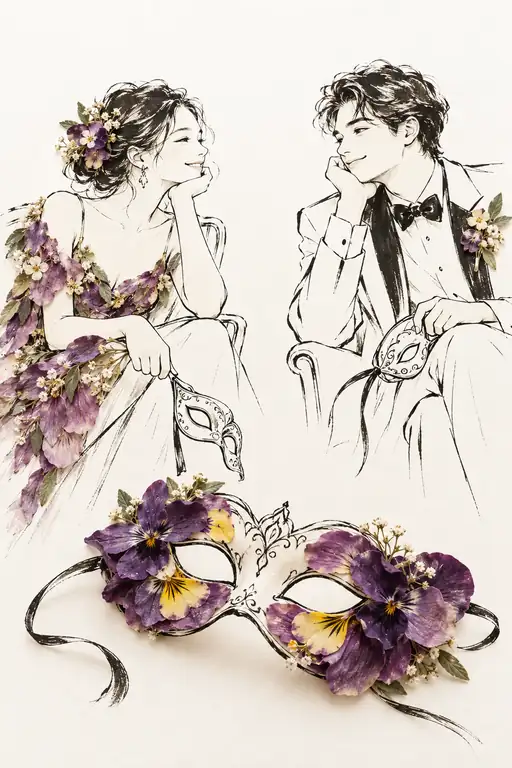 At Last, Your Unmasked Smile
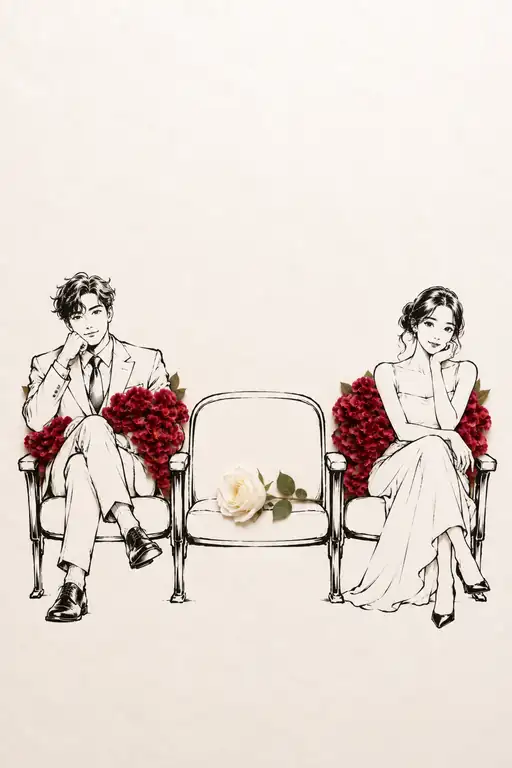 The Seat Between Us
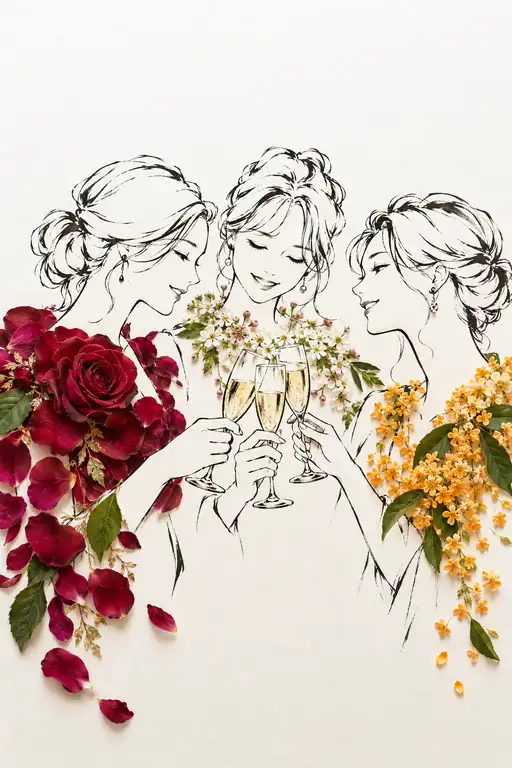 Three Wishes in One Light
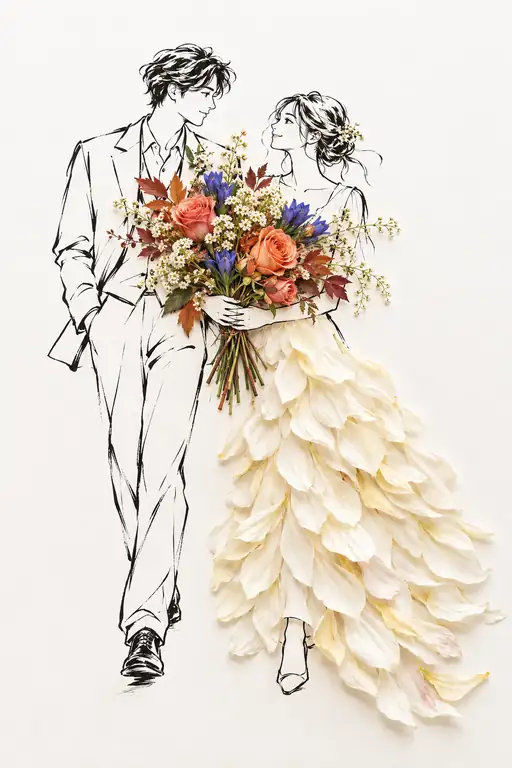 The Future at Your Side
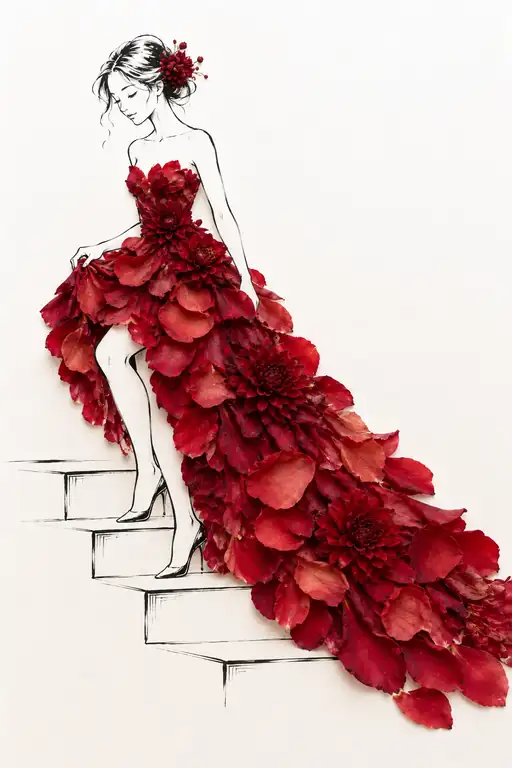 Scarlet Takes Its Time
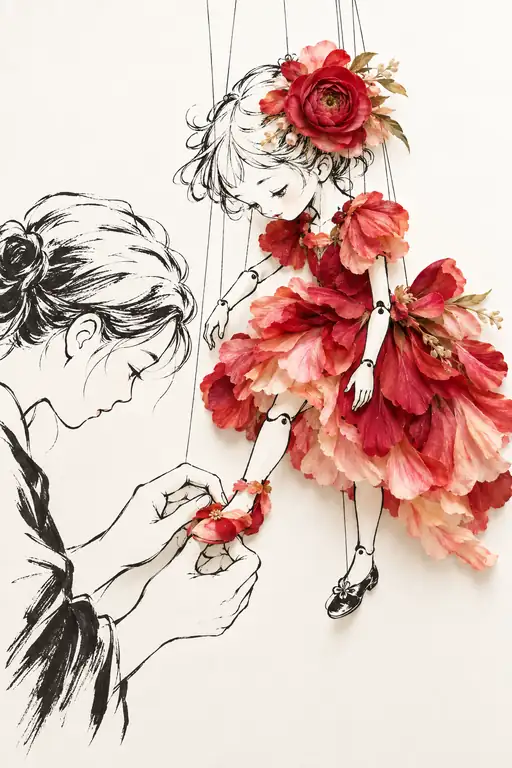 Before You Meet the World
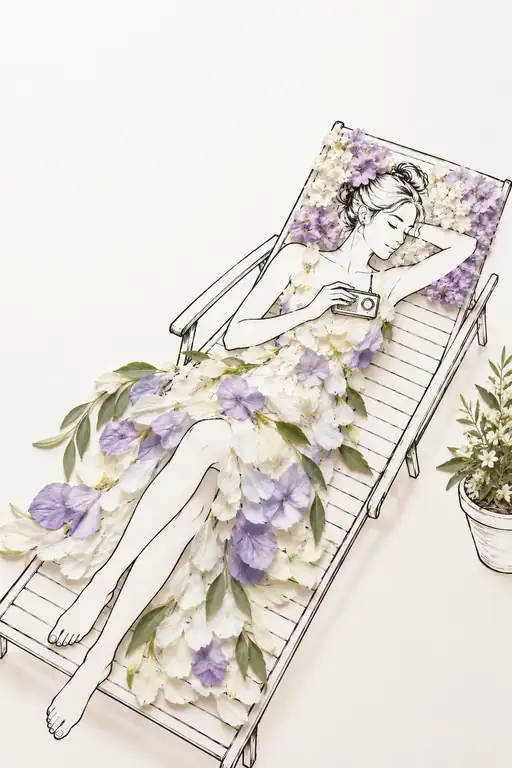 Let the Hours Drift Past Me