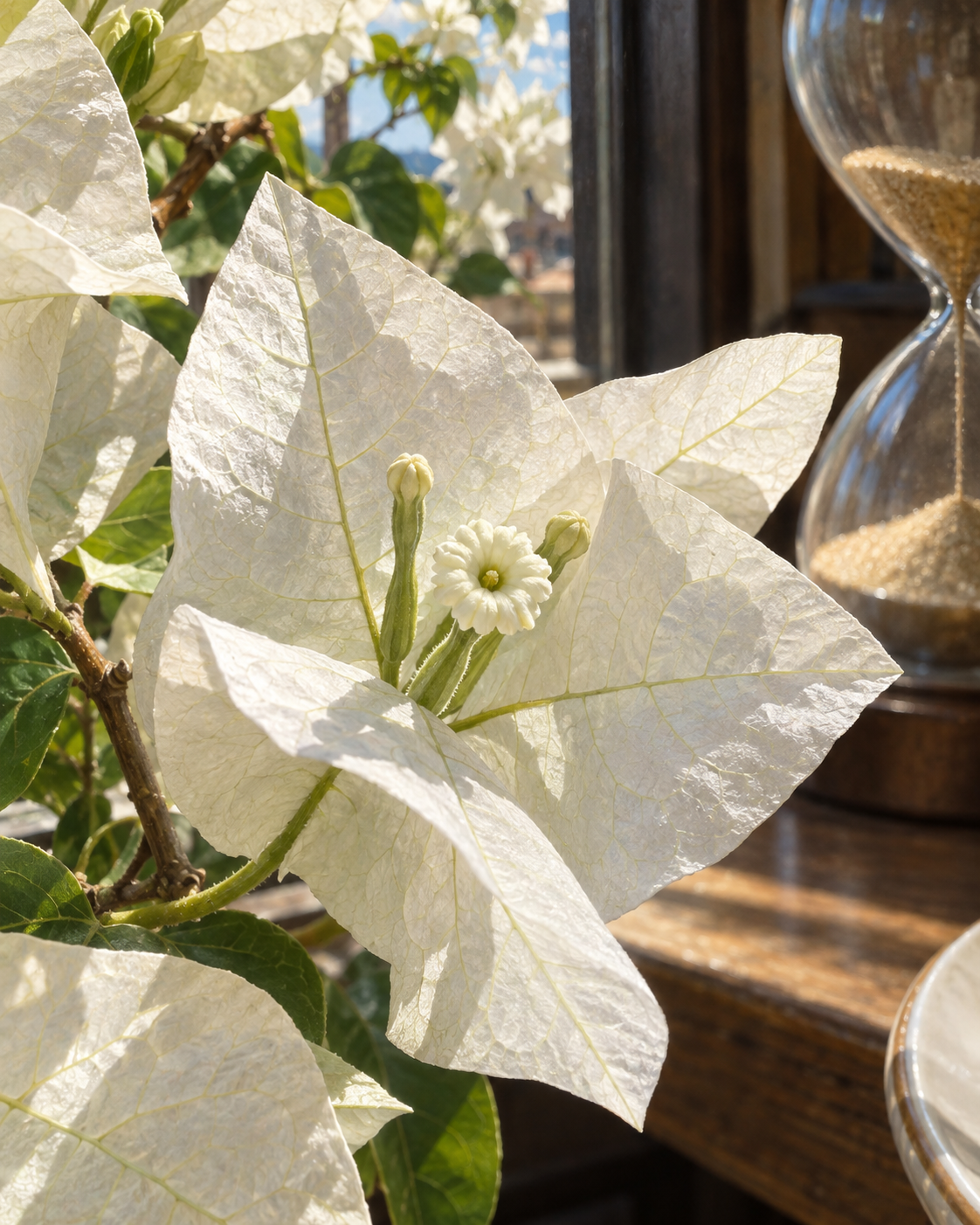
Time Passes through the White
Critique
Introduction White papery bracts surround a small flower beside a glass hourglass. Bright daylight passes through the plant, while fine sand descends in the vessel at right. The image places a living form and a visible measure of passing time within one intimate setting. Description Several broad pointed bracts overlap across the center, their pale veins forming delicate networks. A tiny white flower and two unopened buds rise from green stems in front of them. Dark leaves and woody branches remain at the left. The hourglass occupies the right edge, with grains gathering in its lower bulb. A wooden table and a partial white dish are visible below. Analysis The translucent bracts and clear glass both admit light, but their surfaces behave differently: leaf veins diffuse it, while glass makes sharper reflections. The hourglass's narrow throat contrasts with the bracts' expansive pointed shapes. Green stems lead toward the small central flower, preventing it from disappearing within the surrounding white. Dark wood and leaves give the pale objects depth and support. Interpretation and Evaluation The falling sand adds an explicit sense of duration beside a bloom that is also changing over time. The pairing is thoughtful without relying on a complex story. Cream, green, and brown keep the palette quiet, so fine texture becomes important. Careful rendering of papery folds, glass curvature, and granular sand makes the relationship convincing. Conclusion At first the white bracts appear to be the sole subject; closer viewing gives the hourglass equal significance. Their different kinds of transparency invite comparison. The composition uses light and a restrained arrangement to connect natural growth with measured time.
Same Subcategory
 Old Hands, New Light
 Summer Calls toward the Sea
Similar Artworks
 Red Camellia and the Cobalt Bottle
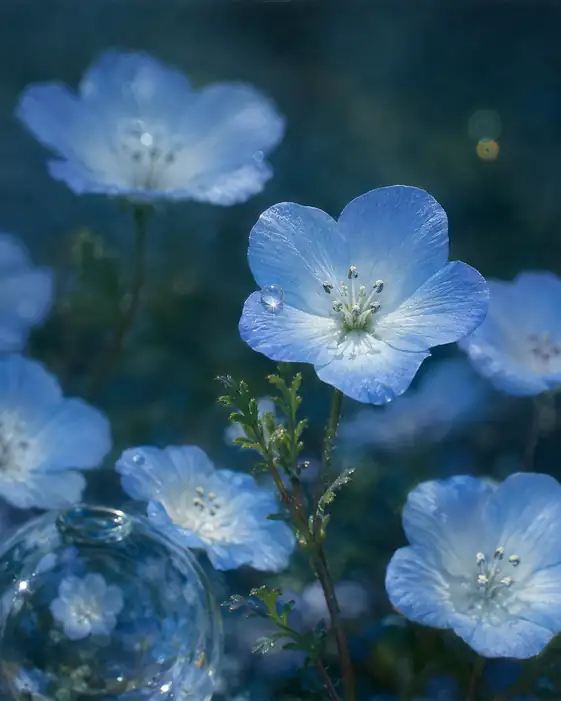 Glass Orb and Dewdrop Reflection
 Spring Plum Blossom and Sparkling Glass
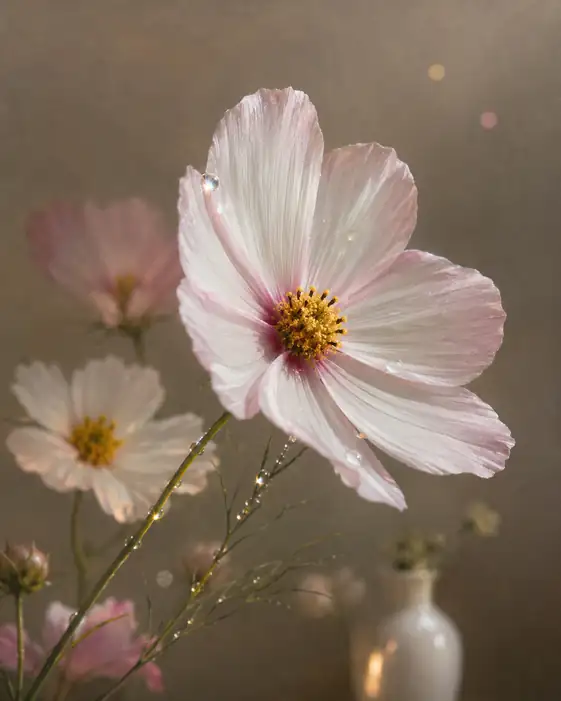 Sparkling Dew on Gentle Cosmos
 Whispering Dew and Porcelain
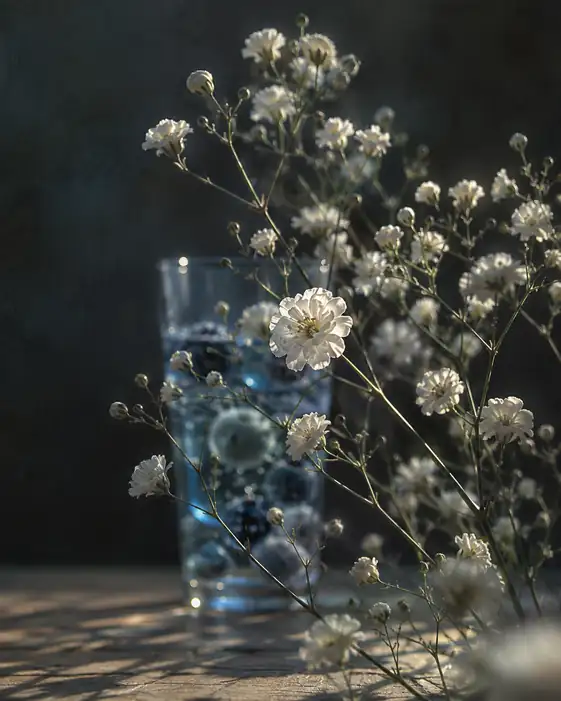 White Baby's Breath and the Blue Glass
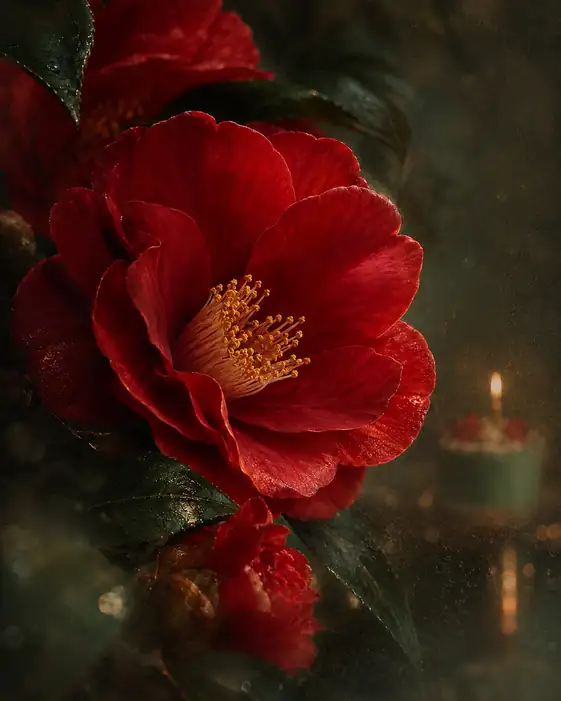 Camellia by Candlelight
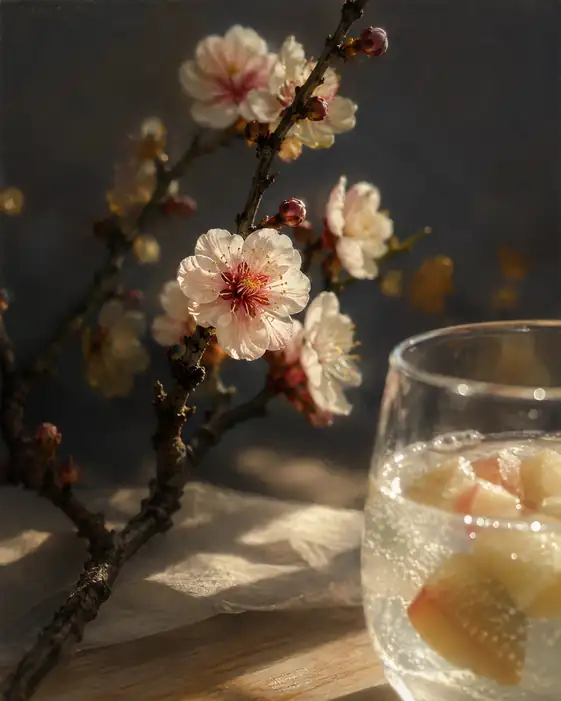 A Toast to a Plum-Scented Afternoon
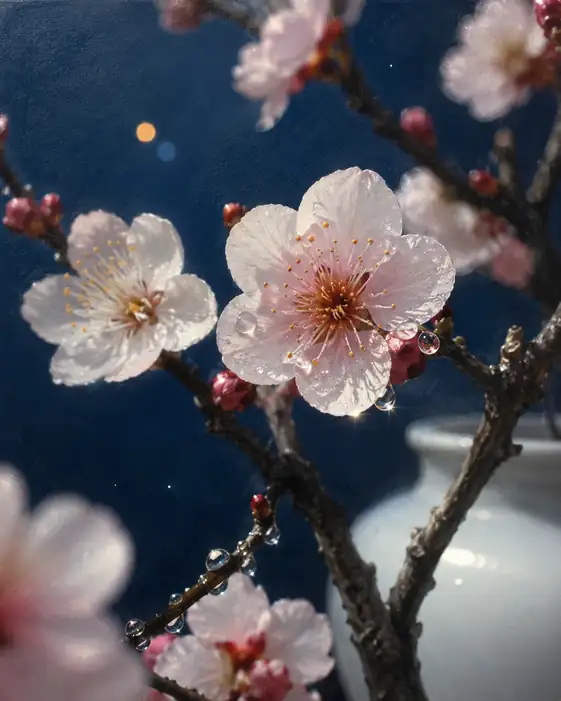 Dew-Kissed Plum Blossoms by White Porcelain
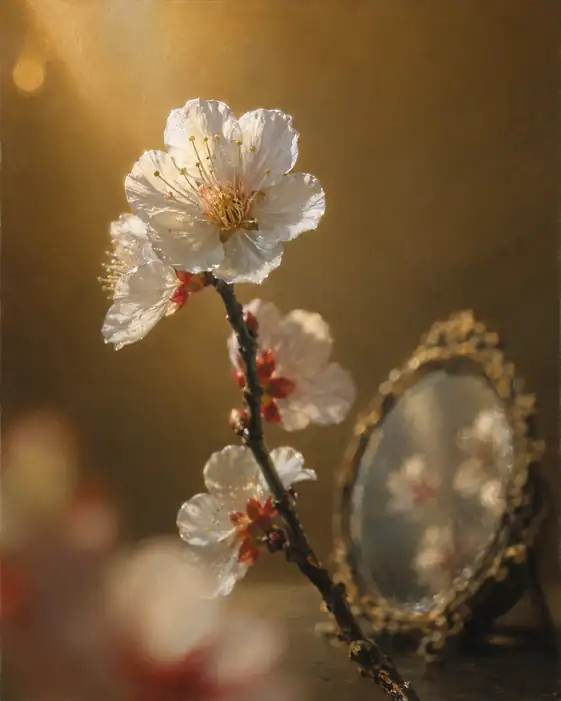 White Plum Blossom and Gilded Mirror