The Wonder Nearest to Us
Critique
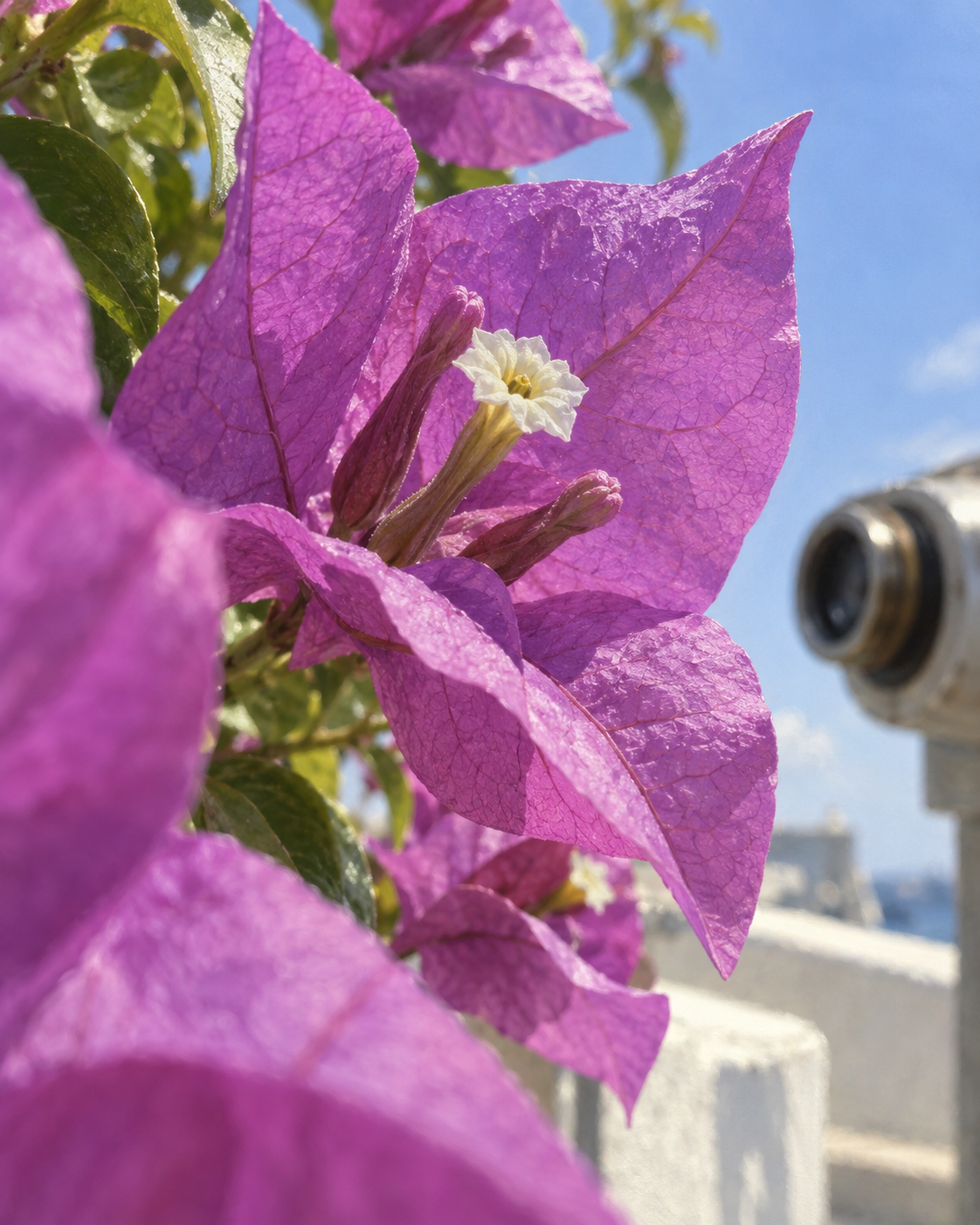
Introduction A white flower appears within violet-pink bracts against blue sky. A telescope stands blurred at the right edge. The near plant and distant-looking instrument contrast in scale and attention. Description Two large pointed bracts open around the flower, their fine veins and slightly crinkled surfaces visible in sunlight. Several long reddish buds rise beside the white bloom. Dark green leaves and more pink bracts cluster on the left, with one large blurred shape near the camera. A pale railing crosses the lower background, while the telescope's dark circular opening faces away at right. Analysis The upper bract reaches toward the bright blue opening, placing the small white flower near its center. Light reveals the network of veins and irregular edges, while the buds form narrow lines against the broad pink planes. The telescope's dark round opening contrasts with the open bloom and leaf shapes. Shallow focus preserves the flower's detail and pushes the instrument and railing into a secondary layer. Interpretation and Evaluation The device suggests looking at distant scenery, yet the image itself asks for close study of what grows nearby. This reversal gives the modest flower a strong visual role. Violet pink, blue, and green form a clear outdoor palette. Careful treatment of translucent bracts and selective focus make the contrast between near plant and distant view convincing. Conclusion At first the pink bracts seem to fill the image; closer viewing discovers the white flower and the telescope beyond. Their relationship makes looking itself part of the subject. The composition uses a clear sky and controlled depth to turn a nearby bloom into an event of attention.
Same Subcategory
 Color Rests beside the Water
 Old Hands, New Light
Similar Artworks
 Pink Cosmos and Brass Desk Lamp
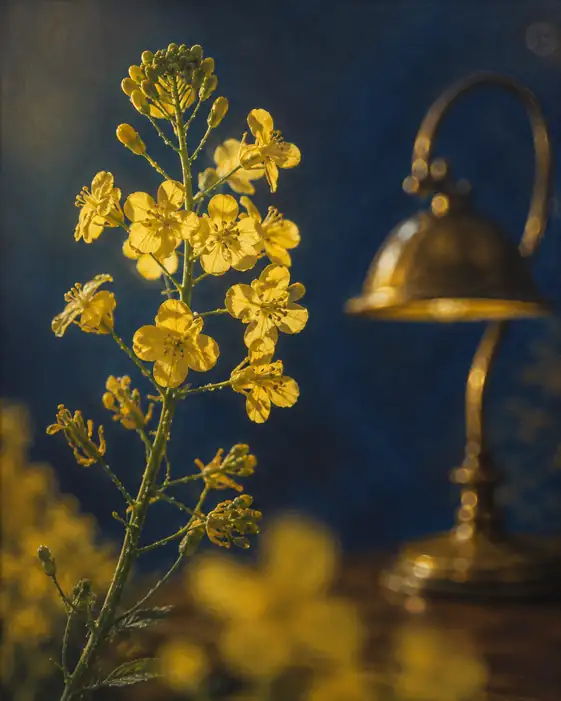 Brass Lamp and Spring Blossom
 Morning Bell and the Waking Bloom
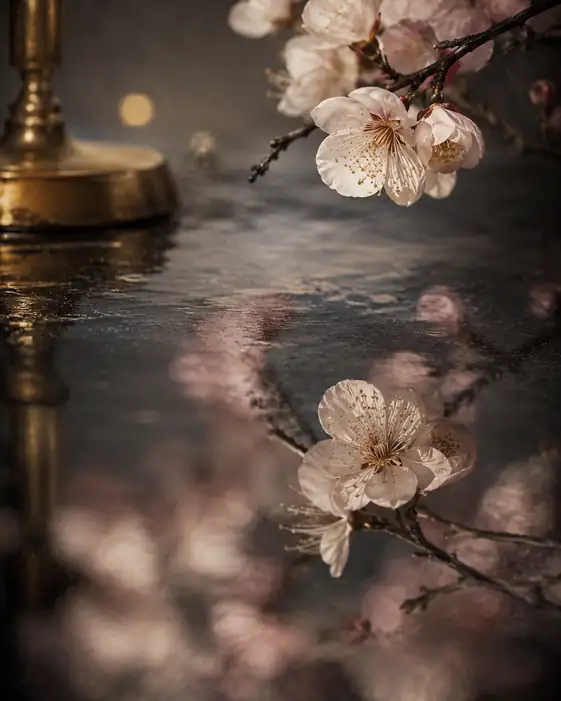 Plum Blossoms Reflected by Candlestick
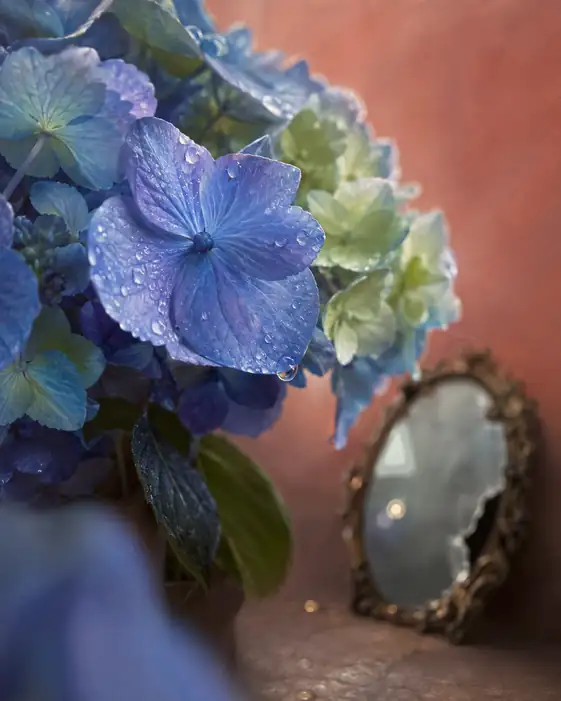 Azure Hydrangeas Beside the Vintage Mirror
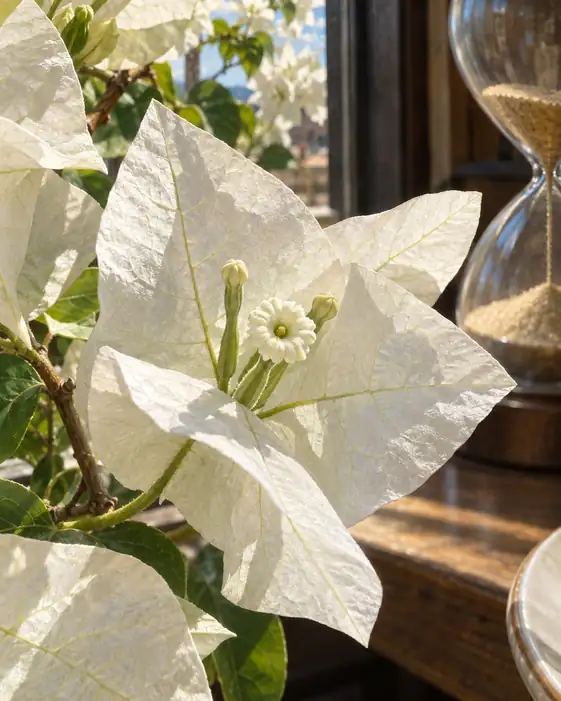 Time Passes through the White
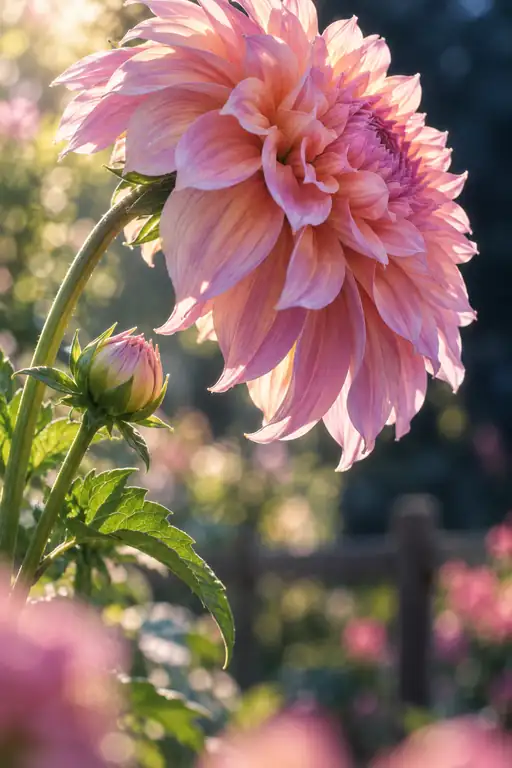 All the Tenderness Yet to Unfold
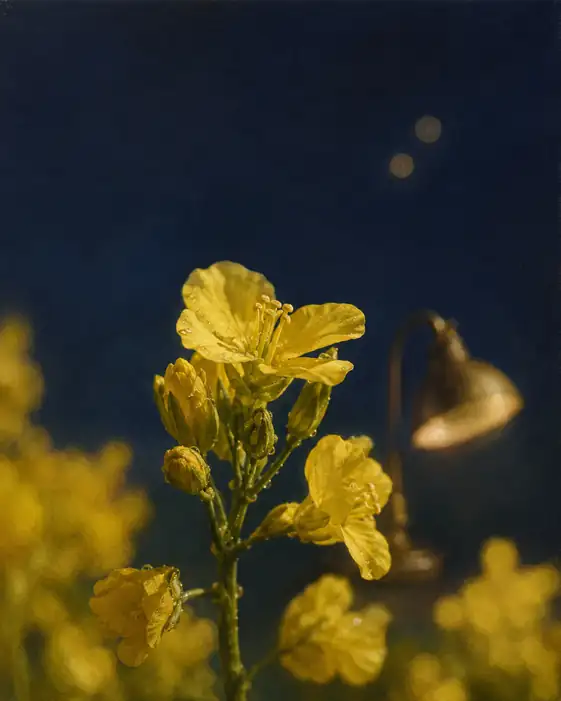 Canola Flower by the Brass Lamp
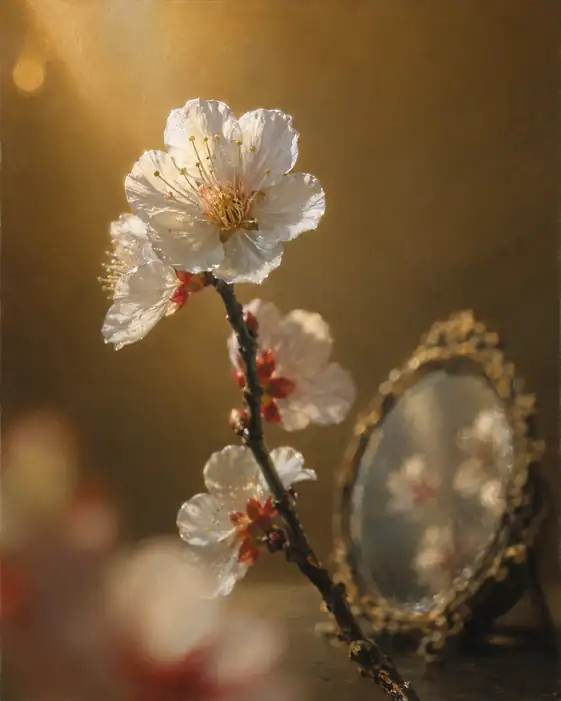 White Plum Blossom and Gilded Mirror
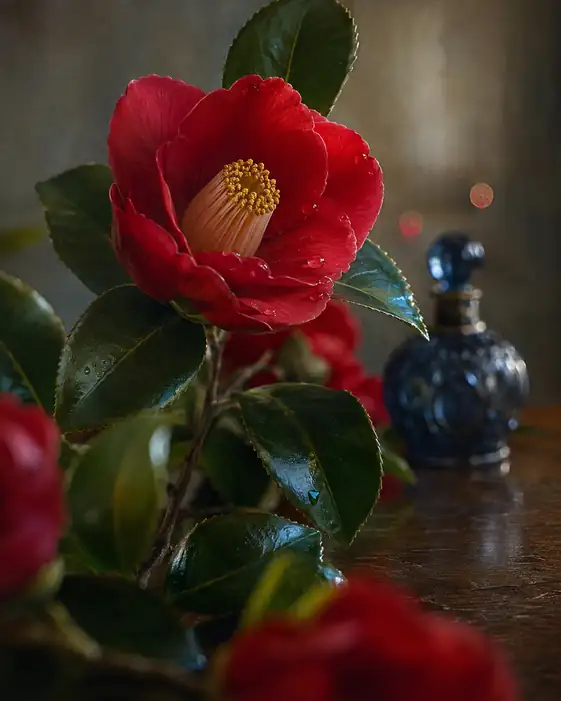 Red Camellia and the Cobalt Bottle