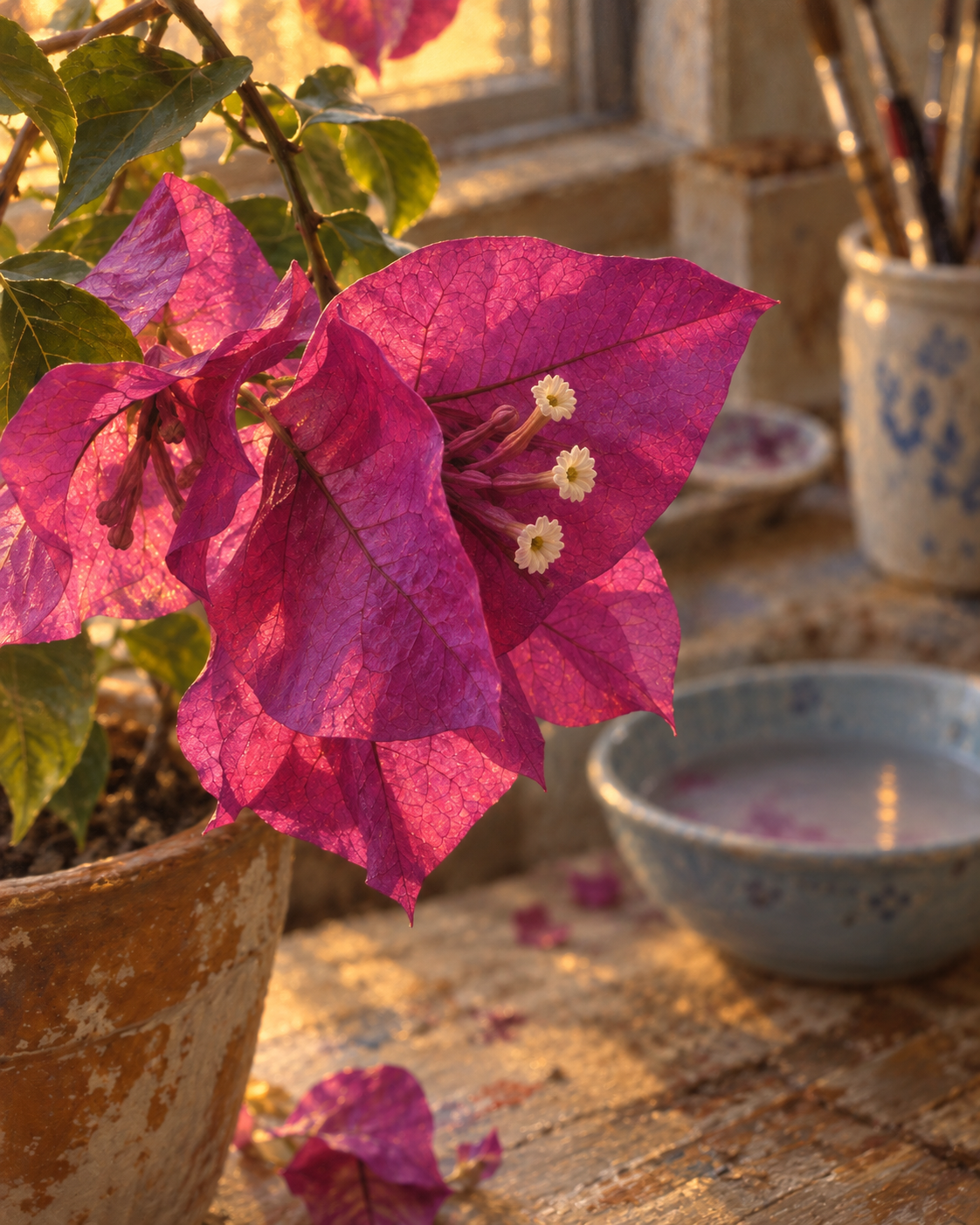
The Light That Teaches My Hands
Critique
Introduction A group of magenta bracts glows beside a worktable in warm window light. Three tiny white flowers emerge from the central cluster. Pots, a pale bowl, and a jar of brushes form a softly focused setting behind the plant. Description The largest pointed bract stretches across the upper center, with darker overlapping ones folding below and to the left. Fine veins run through each thin surface. Green leaves and woody stems rise from a terracotta pot at the lower left. A pale blue bowl sits on the wooden table to the right, holding pink fragments. Behind it stands a patterned jar containing brushes. Analysis The broad bracts create a strong mass of color, while the three small white flowers make precise points within it. Light passes through the magenta surfaces and deepens their veins; darker folds establish depth between layers. The rounded bowl and pot balance the plant's angular leaf shapes. Warm table light connects the near flowers with the quieter vessels, while soft focus keeps the plant dominant. Interpretation and Evaluation The brushes and colored fragments suggest a place where the plant may also be observed for making images. This remains a visible relationship between objects rather than a fixed story. Magenta gains force against olive leaves, blue ceramic, and brown wood. The rendering of translucent veins and worn pottery gives the arrangement a convincing mix of delicacy and use. Conclusion At first the strong pink cluster dominates; closer viewing reveals a worktable with materials and fallen fragments. The white flowers and vessels help measure the plant's scale. The image succeeds by joining vivid growth to a quiet space of looking and making.
Same Subcategory
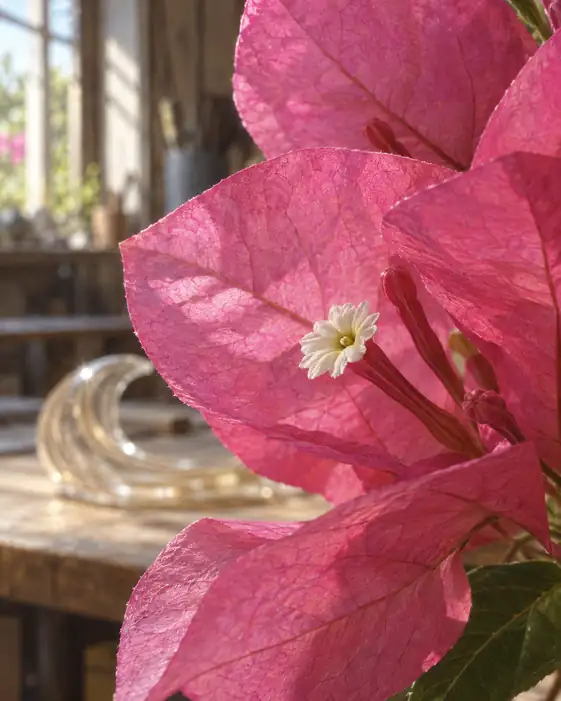 A Little White within the Radiance
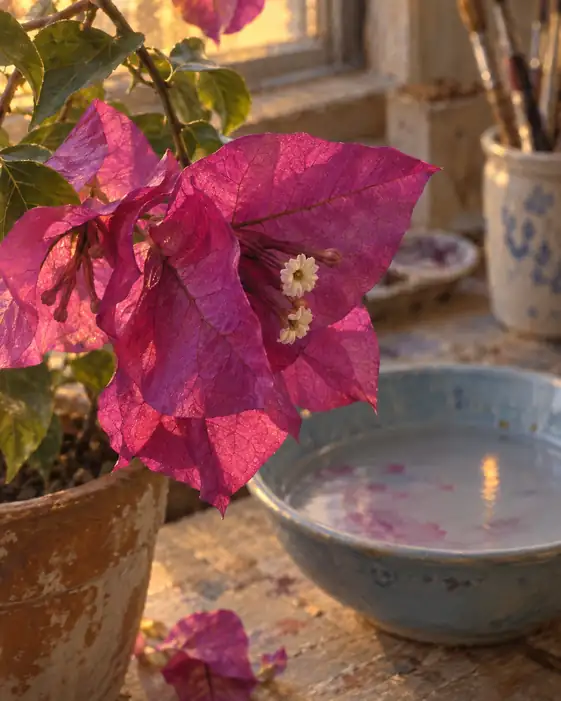 Color Rests beside the Water
Similar Artworks
 Twilight Window Draped in Blossoms
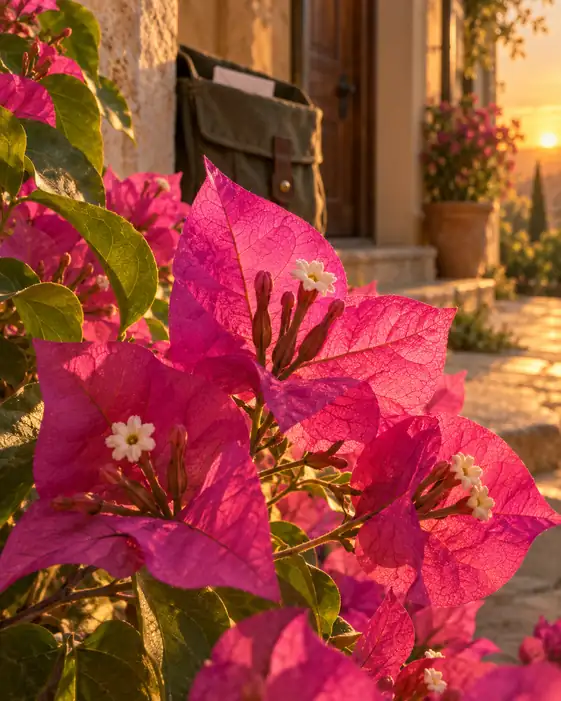 Evening's Letter, Still Unopened
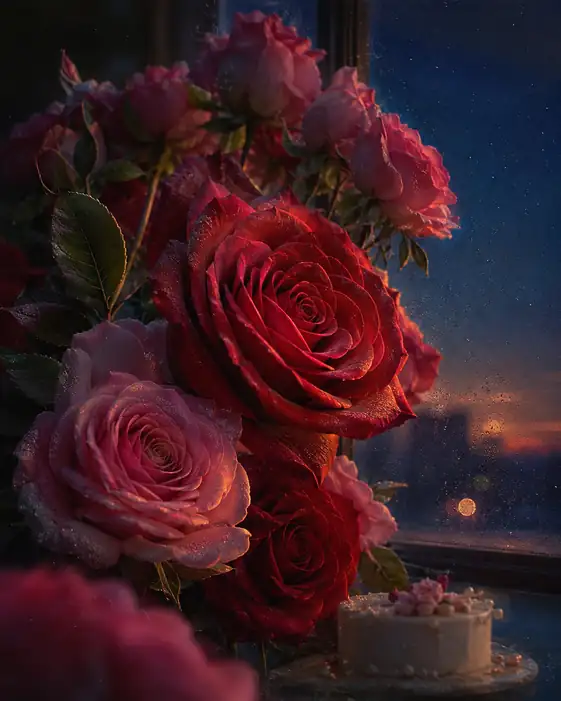 Celebration at the Rain-Veiled Window
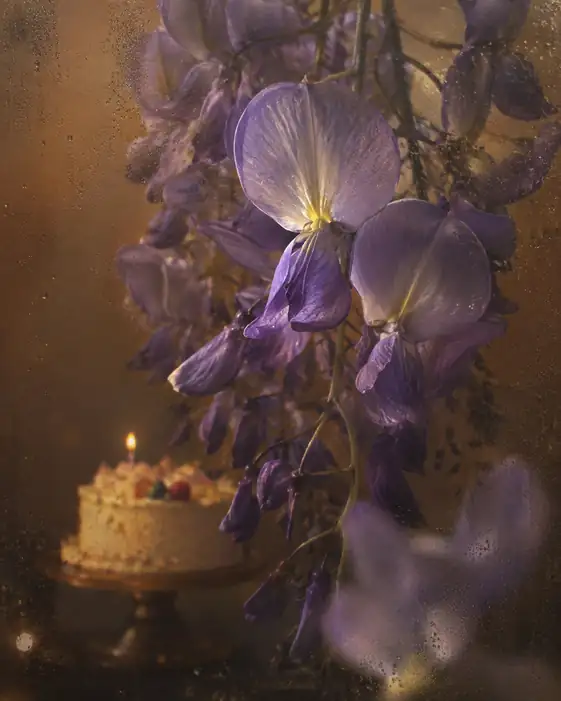 Warm Glow Beyond the Rain-Veiled Glass
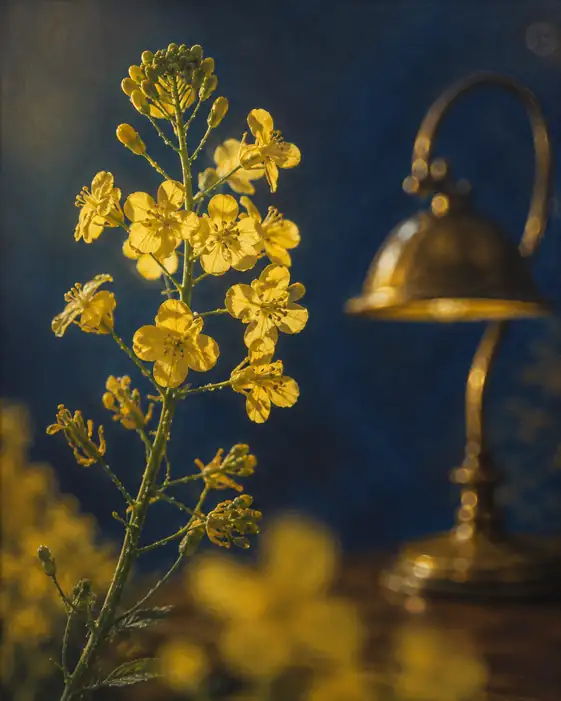 Brass Lamp and Spring Blossom
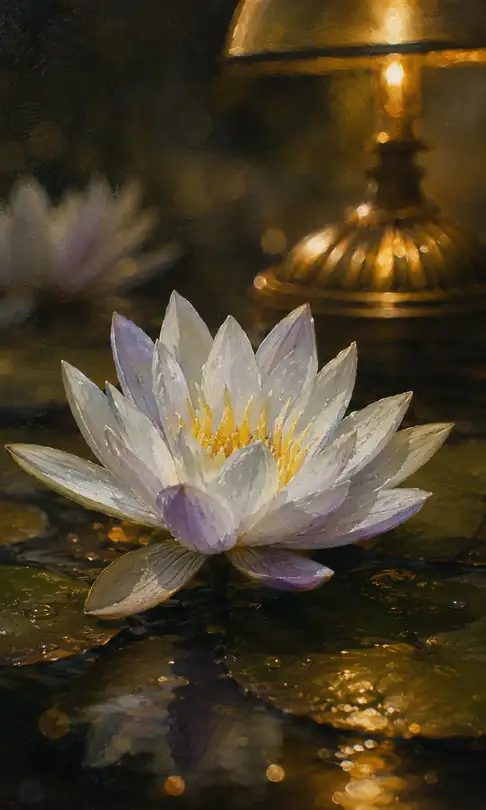 White Lotus and the Golden Lamp
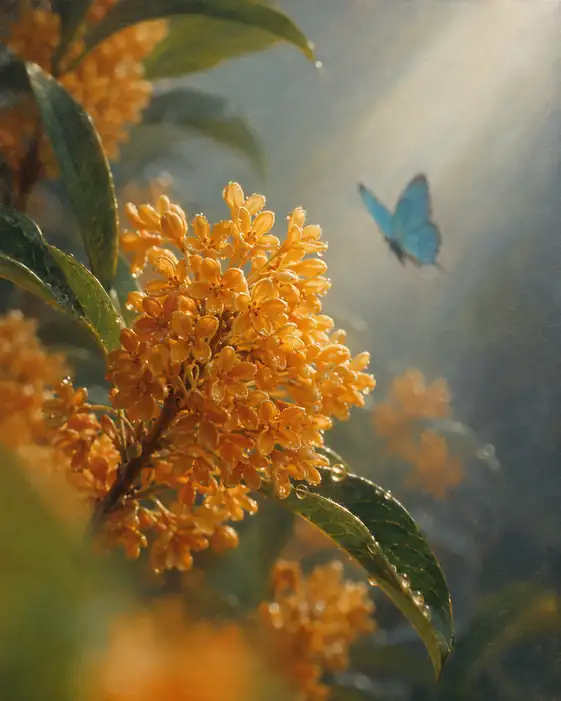 Azure Wings in the Golden Mist
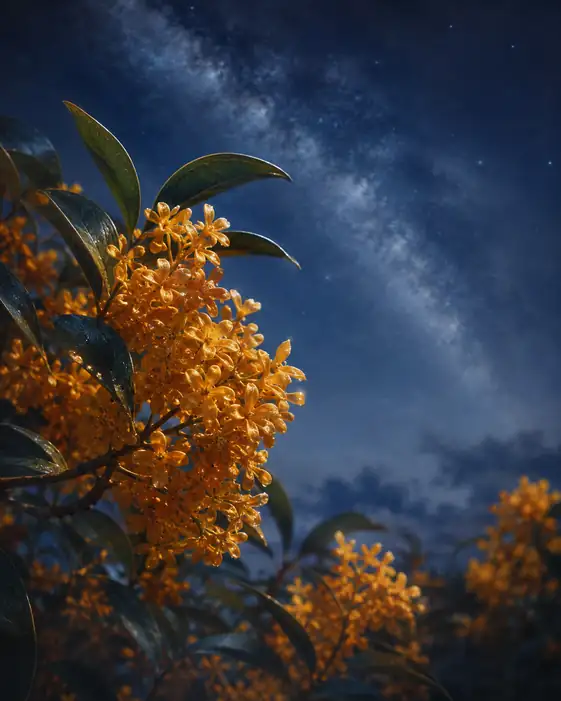 Golden Clusters Beneath the Milky Way
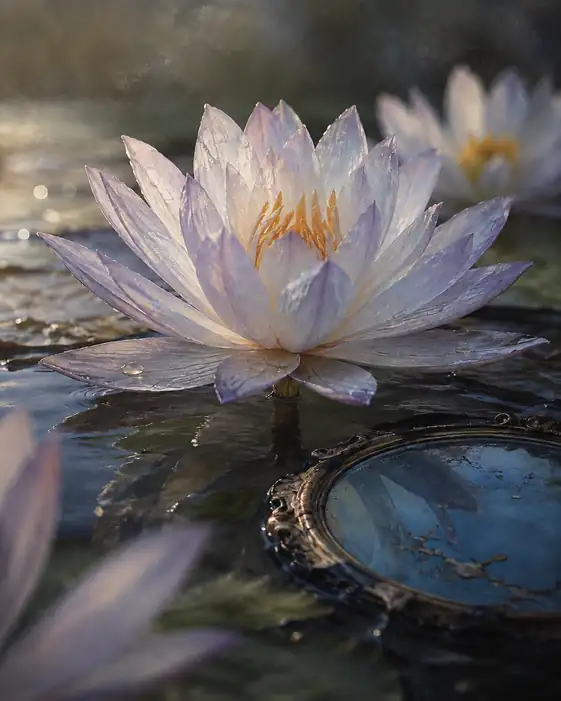 Meditation of Water Lily and Mirror
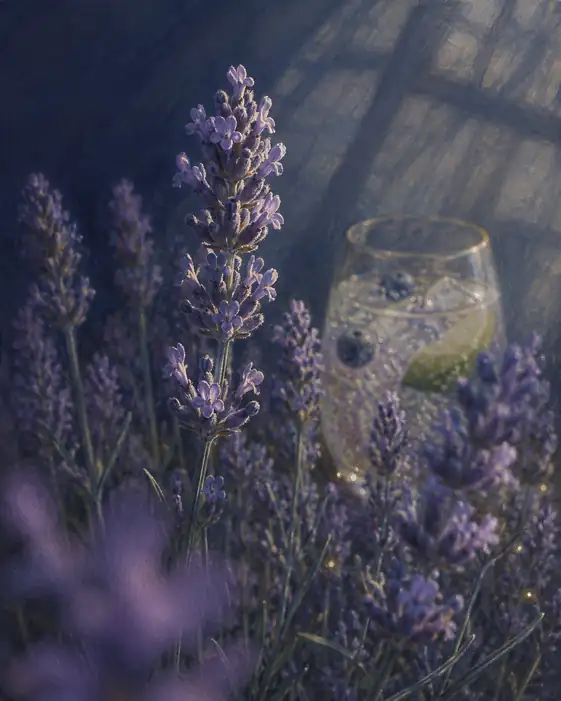 Summer Afternoon with Lavender Fizz