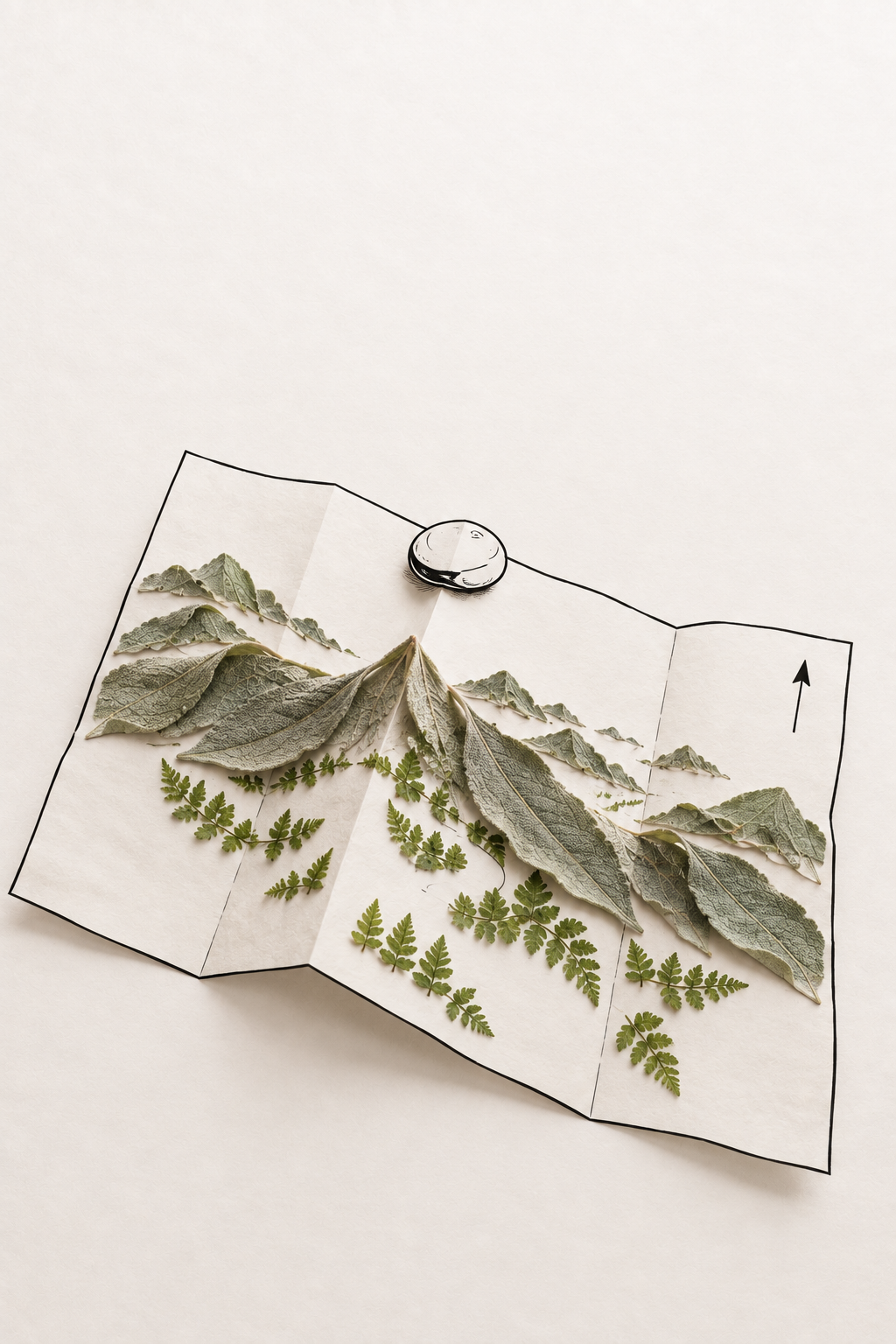
The Way Begins in Wonder
Critique
Introduction An unfolded map is assembled from leaves and green sprigs. A compass rests near an upper fold, and an arrow marks one corner. The white setting makes natural forms a study of direction. Description The map opens in several angled panels outlined by thin black lines. Large gray-green leaves lie along a central ridge like hills, while smaller jagged pieces form a low line toward the right. Delicate fernlike sprigs occupy the lower panels. Near the top, the compass shows a pale circular face. Wide blank space surrounds the folded sheet and emphasizes its irregular edges. Analysis The paper folds establish an ordered geometry, but the leaves cross their boundaries and give the imagined landscape a less rigid shape. Large veined leaves create raised masses, while tiny divided sprigs suggest finer ground cover. The arrow points upward against the horizontal spread of the map. Muted green and gray stand out gently from the white surface, and shadows under the leaves reveal that they are laid upon it. Interpretation and Evaluation The image joins the idea of mapping with materials that resemble terrain without becoming literal scenery. The compass and arrow offer orientation, yet the leaves encourage a more sensory kind of exploration. Its inventive construction is supported by clear scale changes between broad and delicate foliage. Restrained color and precise outlines keep the unusual combination readable. Conclusion At first the sheet seems to be a simple map; closer viewing reveals a relief made of plant fragments. Fold lines, compass, and arrow supply order, while leaf veins and edges complicate it. The composition makes navigation feel both measured and open to discovery.
Same Subcategory
Similar Artworks
 The World Beyond My Bearings
 The Cartographer's River
 Ascent Towards the Sunlit Peak
 I Walk into the Warmth
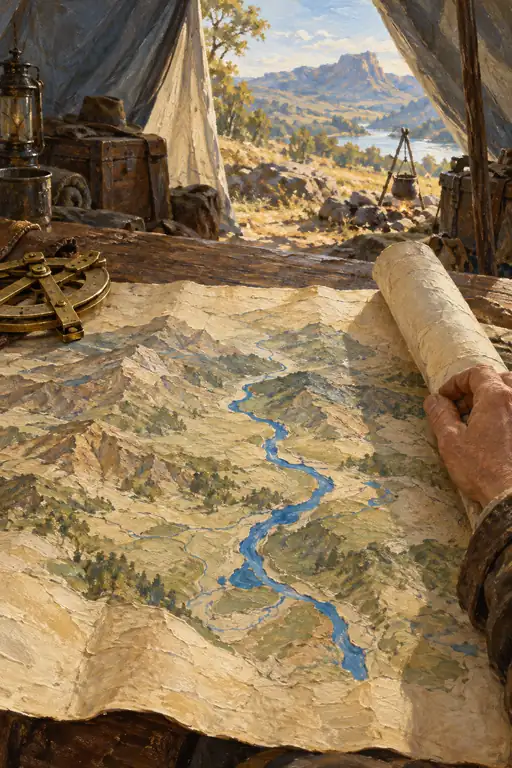 Echo of the Charted Valley
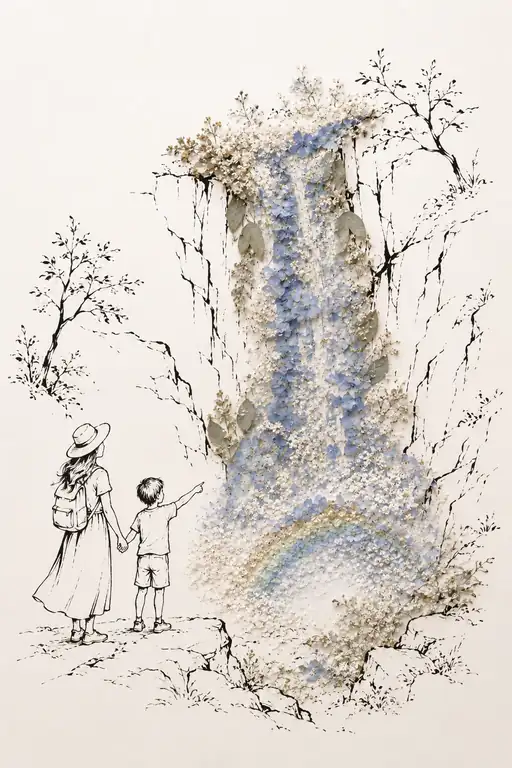 Rainbow at the Foot of the Blue Cascade
 First Light Over the Ridge of Clouds
 Guiding Light in the Amber Grove
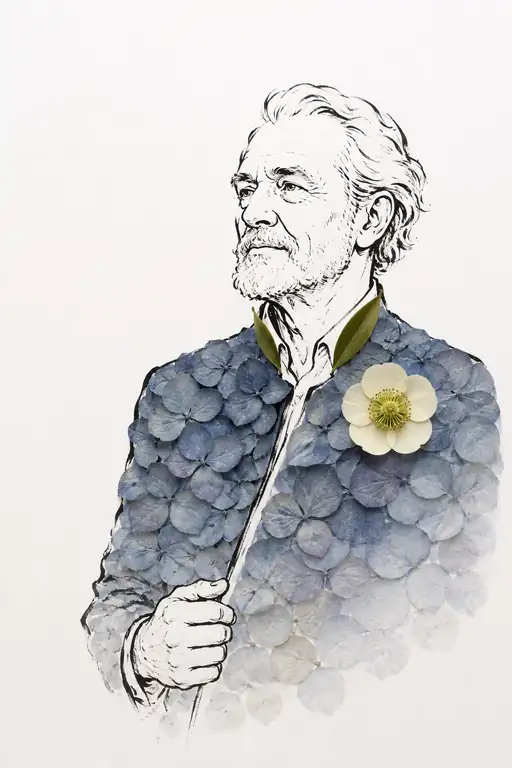 Dignity and the Blue Light of Memory
 Trust Begins with One Step