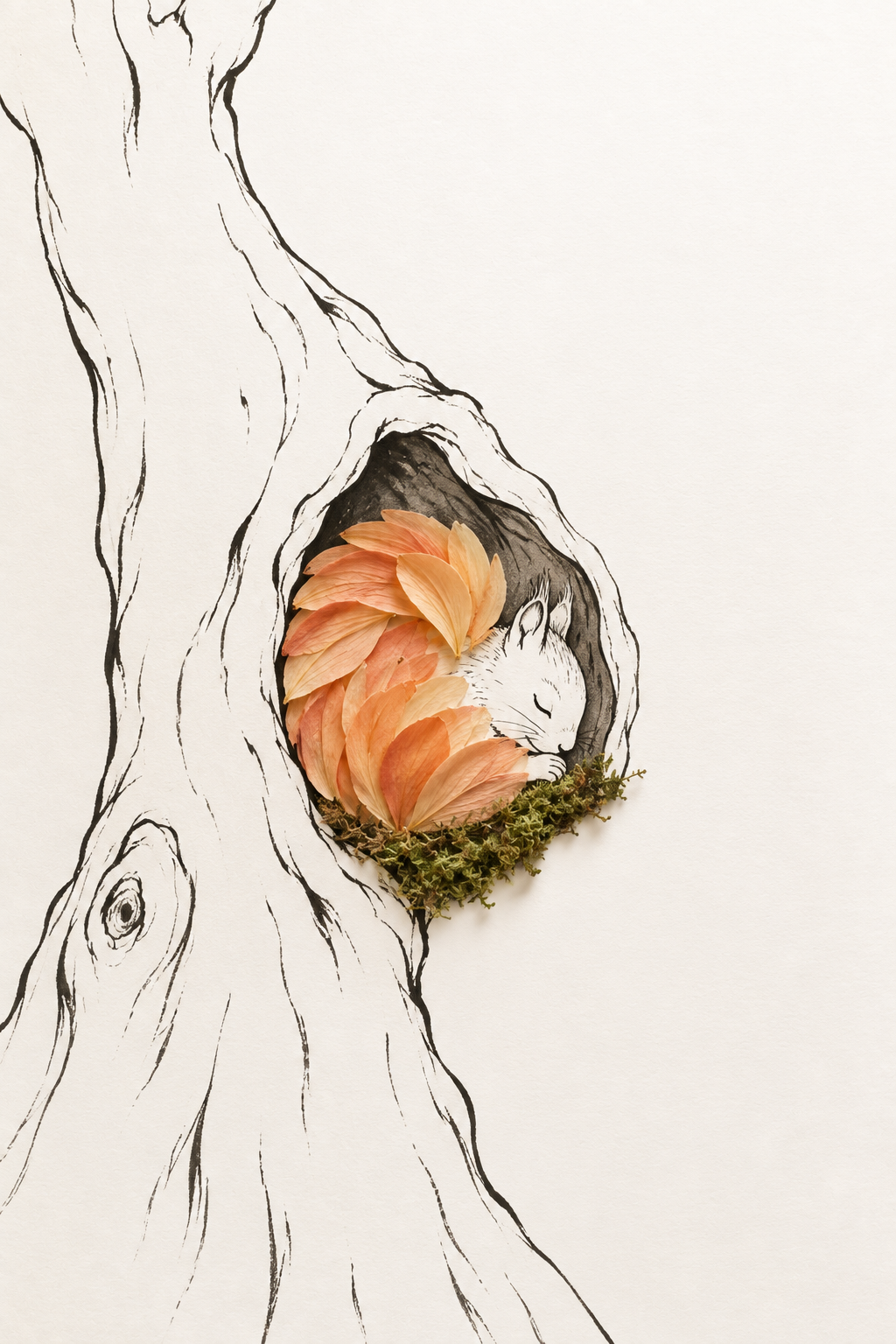
Small Sleep, Sheltering World
Critique
Introduction A small sleeping squirrel curls inside a hollow in a drawn tree trunk. Overlapping peach and apricot petals form its rounded back, while ink lines define its face. Description The trunk occupies the left side and rises beyond the upper and lower edges. A dark oval hollow opens near its center-right. The squirrel faces right with closed eye, pointed ear, and small forepaws near its mouth. Layers of petals cover its back and tail, ranging from pale yellow to orange-pink. A rough strip of green moss rests along the hollow's bottom. Analysis The trunk's long vertical curves lead toward the rounded cavity. Dark shading behind the squirrel makes the warm petals stand out, while the white paper outside keeps the tree light despite its scale. Petal tips overlap like a protective covering and turn inward toward the face. The moss supplies a granular base beneath these smooth surfaces. Interpretation and Evaluation The scene suggests shelter and rest through visible placement: the squirrel is folded into the tree, its eye closed and its body encircled by the cavity. Petals bring a delicate, temporary material to the depiction of fur, making softness more tangible than ink alone could. The composition is strongly asymmetrical, with the occupied hollow balanced by open paper to the right. Conclusion At first the viewer sees a small creature asleep in a tree. Closer attention reveals how the petal layers construct its body and how moss supports it. The image turns a simple woodland moment into a study of sheltering textures.
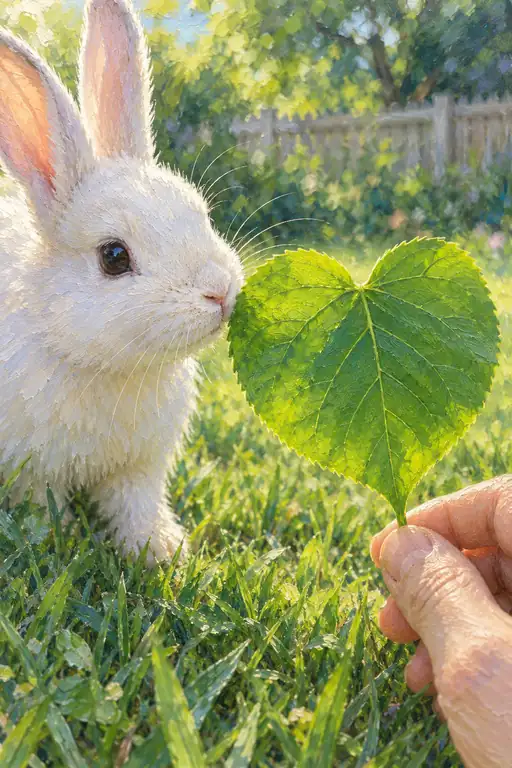 First Scent of the Heart Leaf
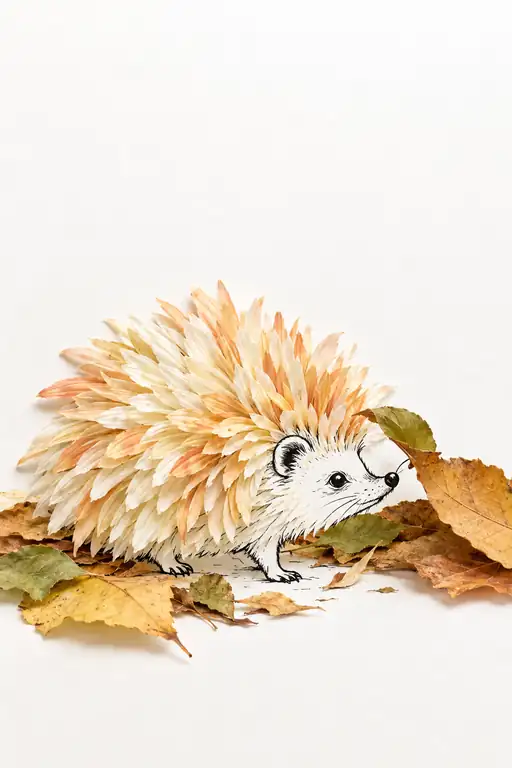 A Brave Nose in a Gentle World
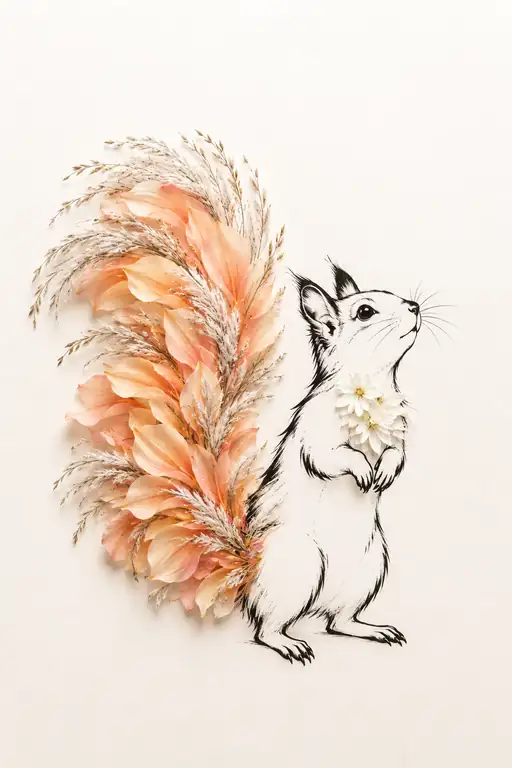 A Small Pause Full of Possibility
 The First Brave Leap
 The Leaping Joy of the Little Squirrel
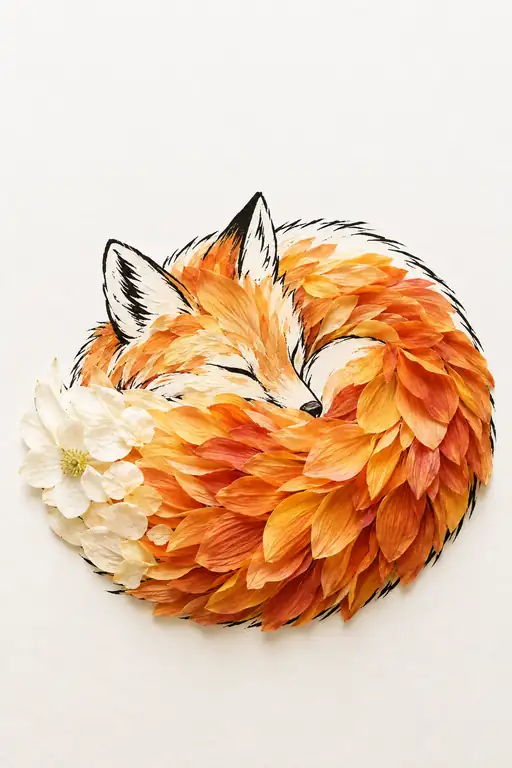 Curled Inside a Quiet Flame
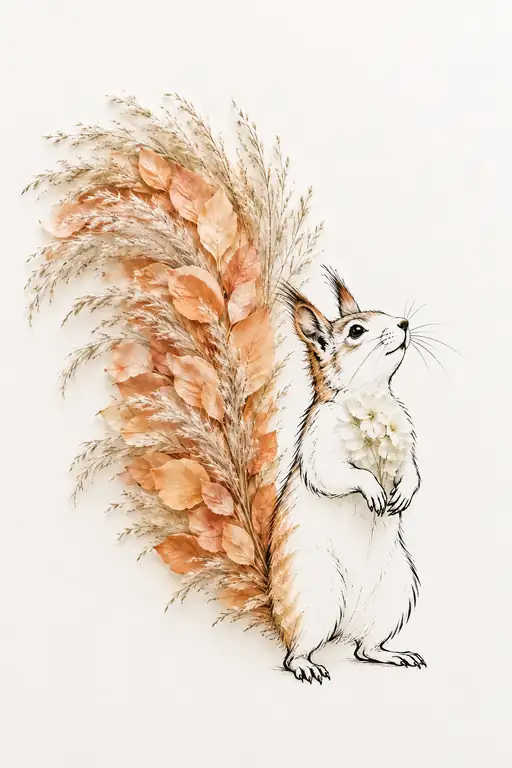 Something Gentle to Give
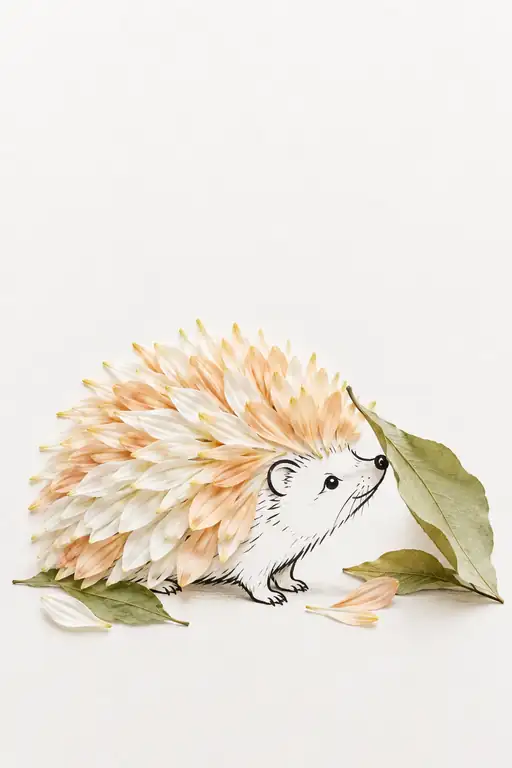 The World, a Nose Away
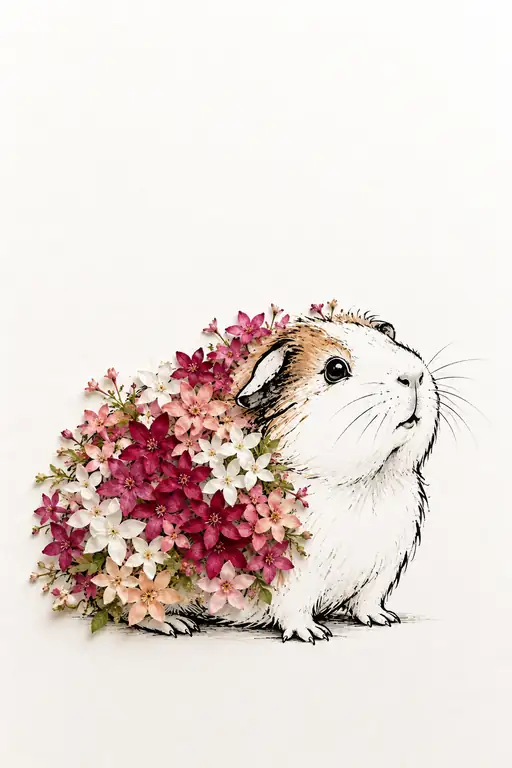 Brave Enough to Be Small
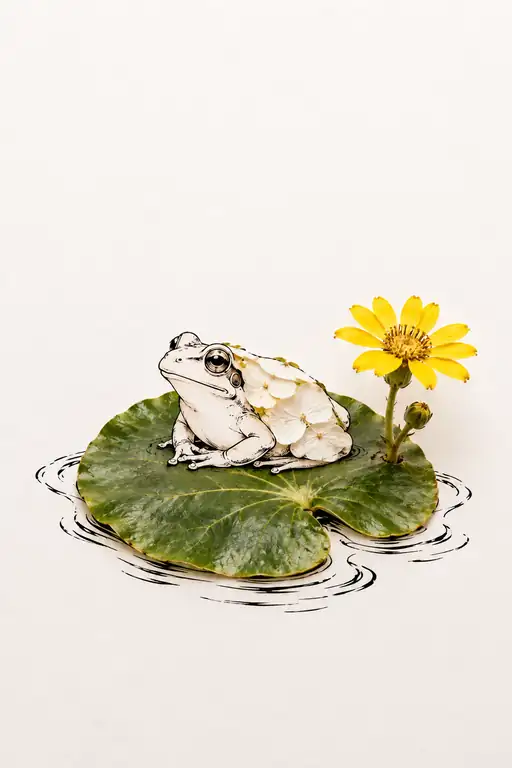 This Small Shore Is Enough
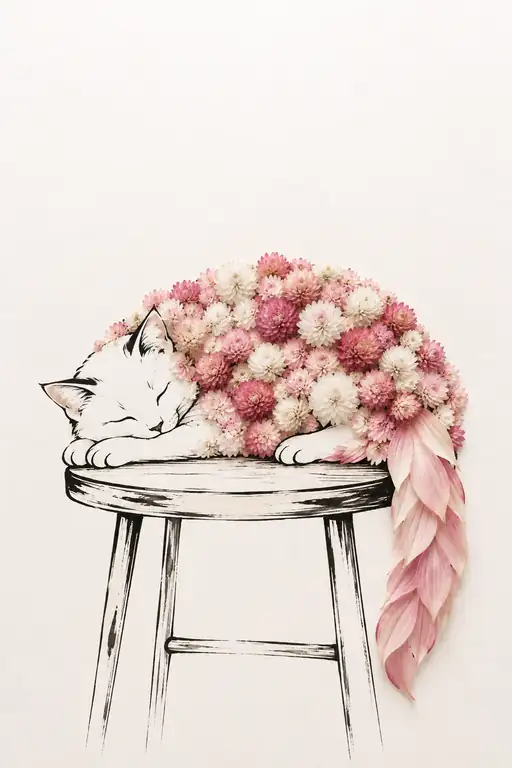 Safe Enough to Dream