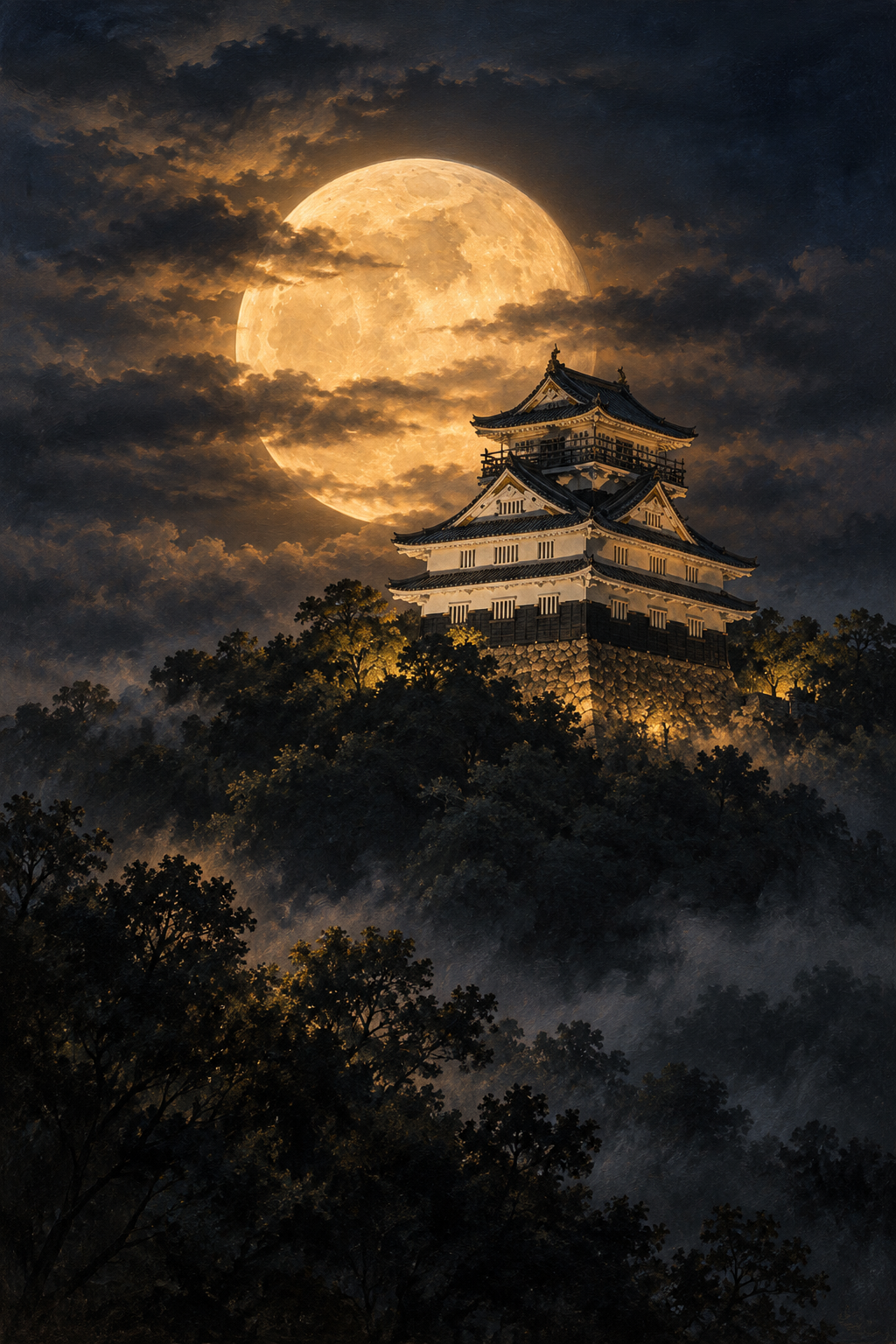
A Light the Centuries Could Not Extinguish
Critique
Introduction A bright moon rises behind the upper left of a castle set on a lit stone platform. Dark forest and bands of mist cover the lower half. Description The castle is right of center and slightly below the moon. Three visible roof levels rise above white walls with narrow vertical windows. Light outlines the eaves and catches the rough blocks of the base. A dark cloud cuts across the moon's middle, while lighter cloud edges glow nearby. Dense trees crowd the platform, and gray mist separates them from darker foliage in front. Analysis The moon's circle sits behind the roof peak but remains largely visible to its left. The castle's stepped roofs interrupt the rounded glow with angular lines. Warm light reaches the stone base more strongly than in the surrounding trees, making the structure seem firmly supported. Receding bands of foliage alternate with mist, creating depth beneath it. Interpretation and Evaluation The scene presents the castle as a sheltered point of light in a vast night landscape. Its architecture is not swallowed by the moon because windows, eaves, and masonry retain distinct rhythms. The arrangement of warm and cool tones is particularly effective around the stone platform, where gold meets deep shadow. Clouds lend motion above, while layered mist slows the eye below. Conclusion At first the moon seems to be the subject. Longer viewing shifts attention to the castle's illuminated foundation and the forest layers around it. The image is strongest where large atmospheric forms meet small, carefully ordered architectural details.
Same Subcategory
Similar Artworks
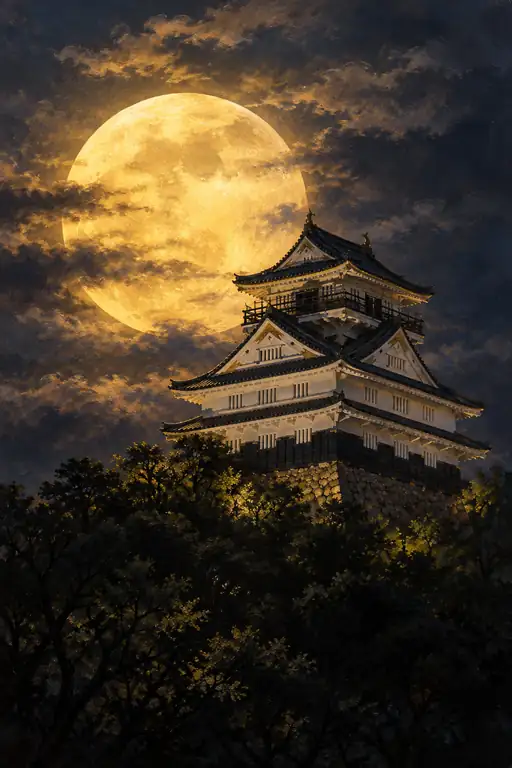 Gold upon the Shoulders of Time
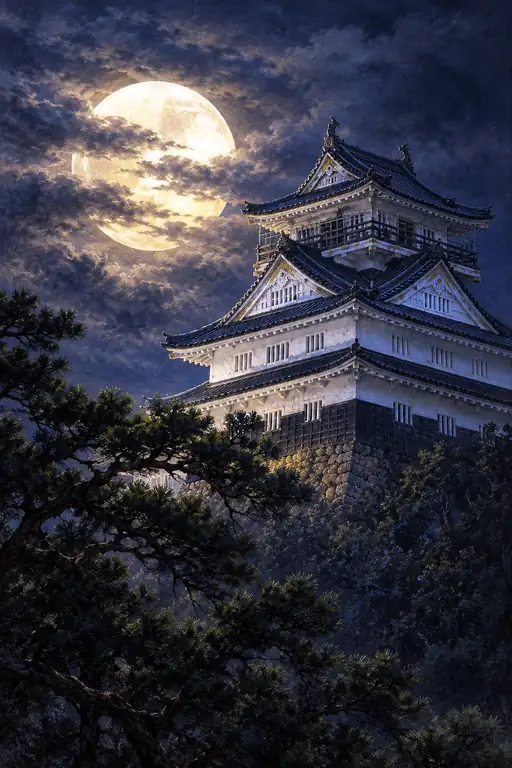 Through the Branches, Eternity
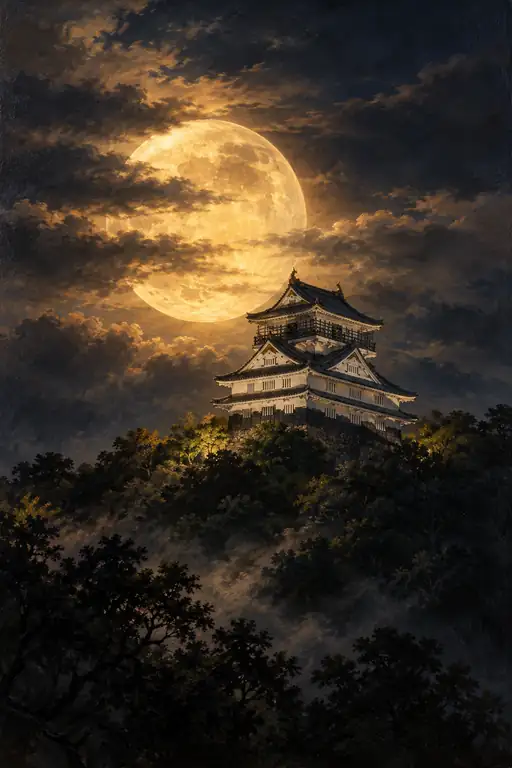 Beyond the Reach of Sleep
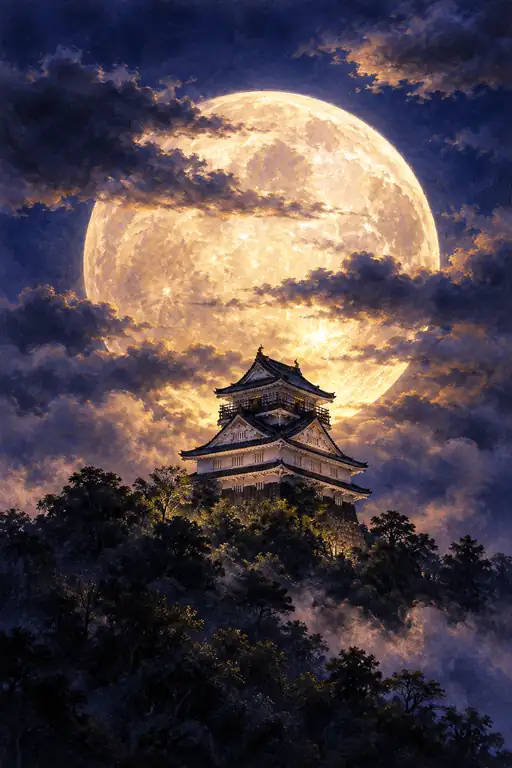 The Night Remembers Its Kingdom
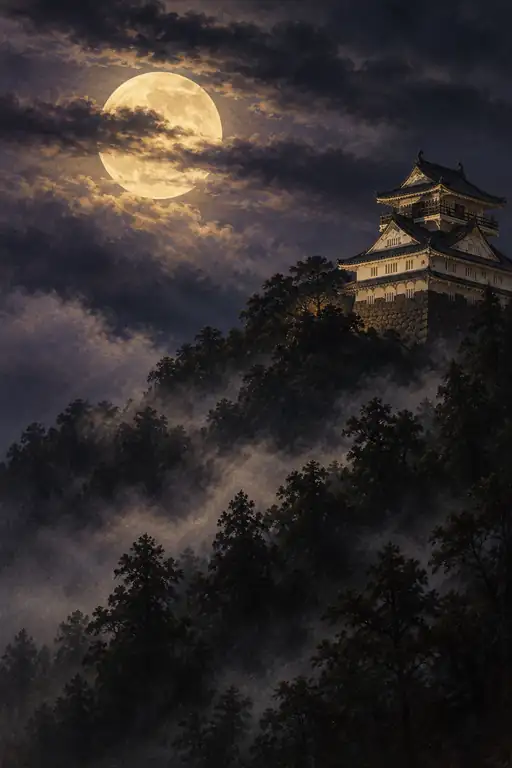 The Long Silence between Watchers
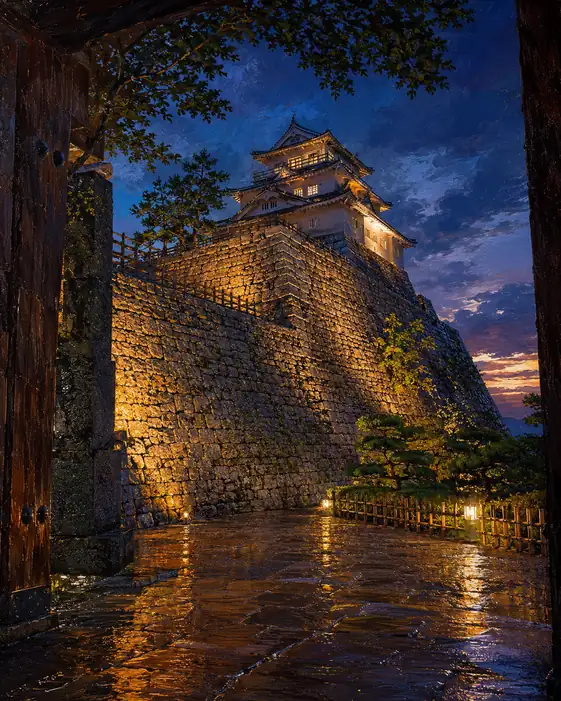 Stone Holds the Night Aloft
 Silent Vigil of the Crow Castle
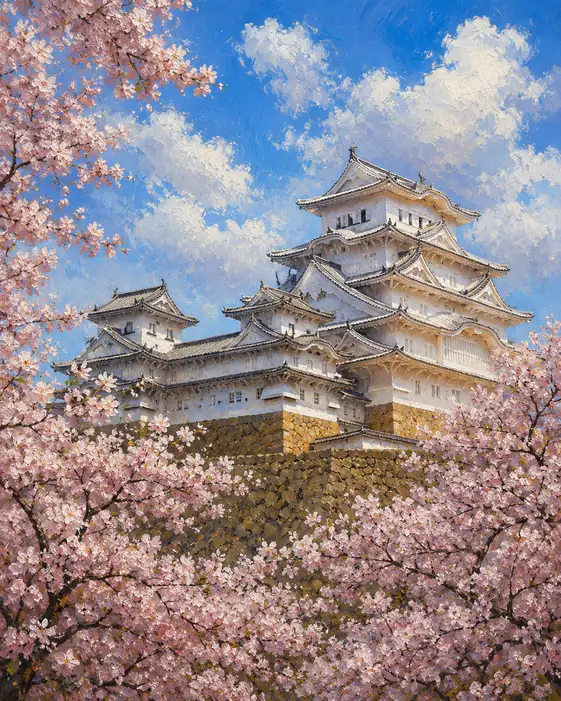 Ancient Stone and Spring Blossom
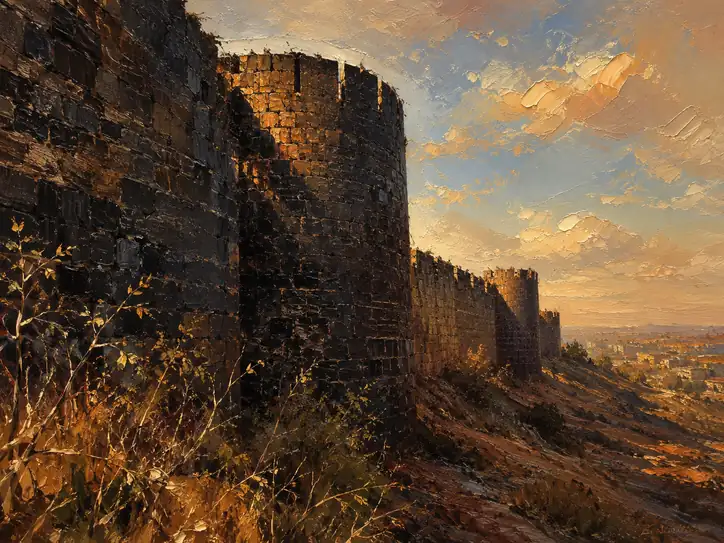 The Last Vigil at Dusk
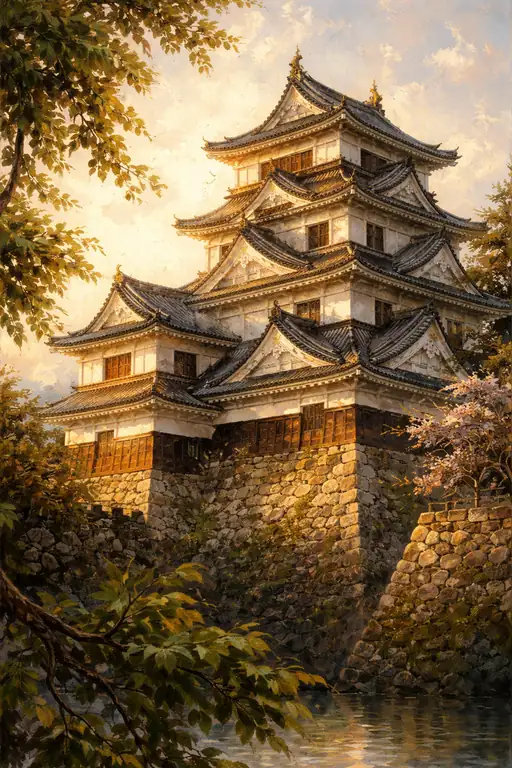 Majestic Fortress in the Golden Hour