The Note We Almost Heard
Critique
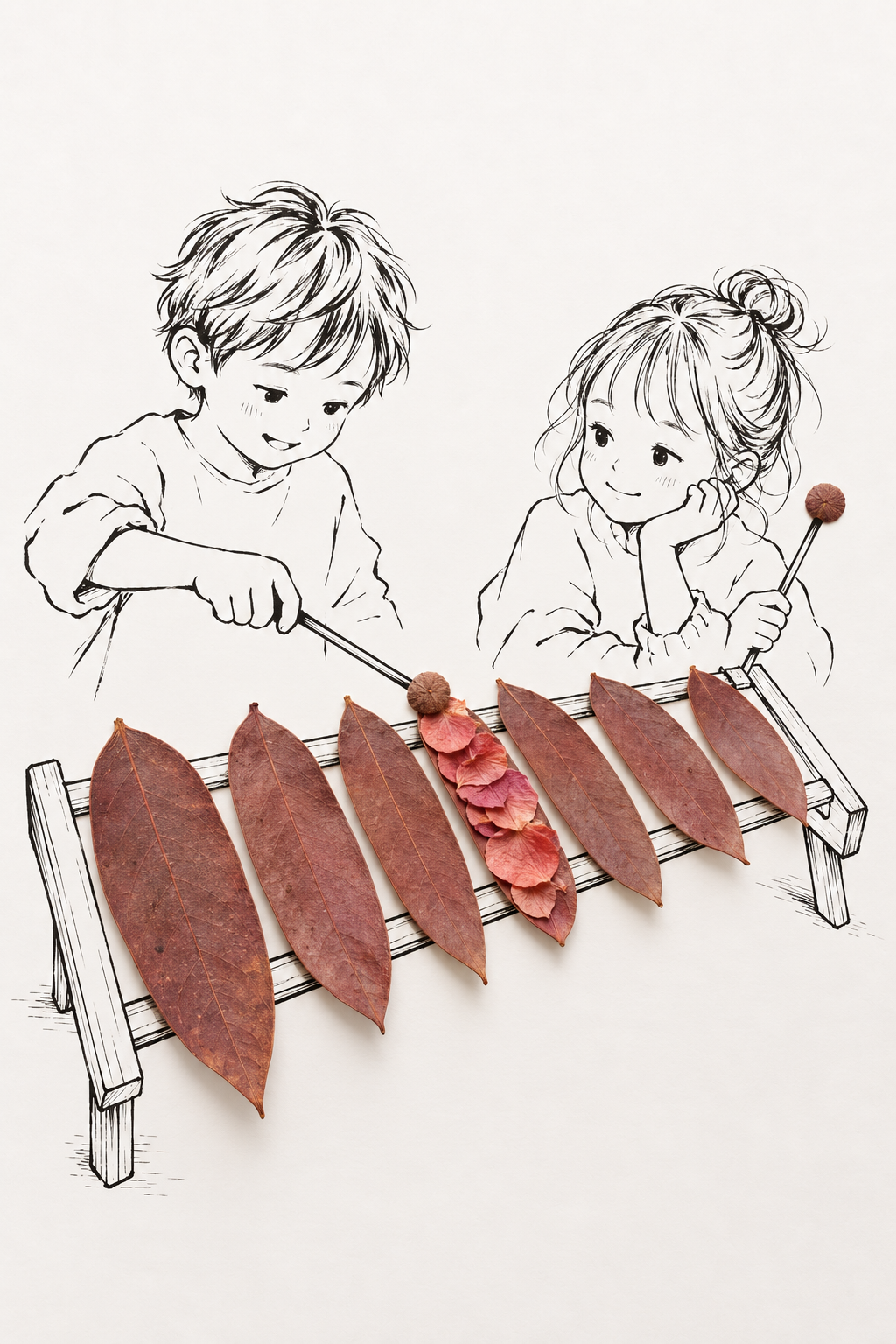
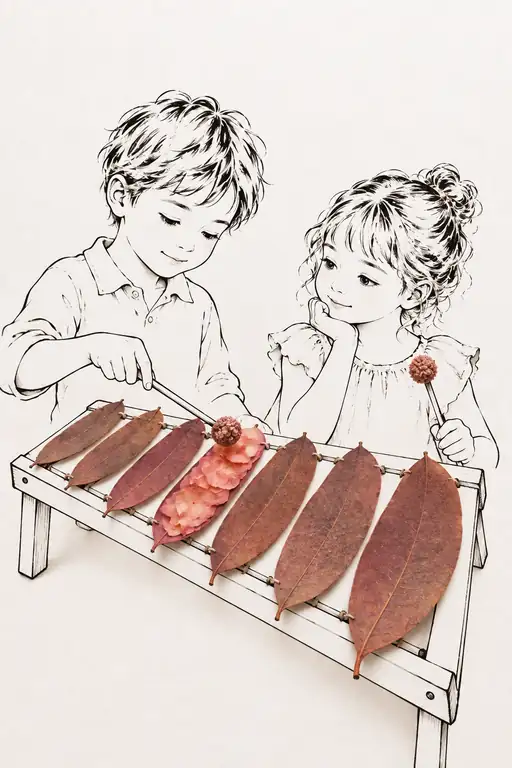
Introduction Two ink-drawn children look down at a row of brown leaves arranged across a simple wooden frame. Each holds a slender mallet, suggesting a musical game. Description The boy on the left leans over the frame and points a mallet toward its center. The girl on the right rests her cheek on one hand while lifting another mallet. Six elongated brown leaves lie across parallel bars, changing slightly in size along the row. A cluster of small pink petals covers the central leaf. The frame's legs and crossbars are rendered with quick, straight ink marks. Analysis The sloping frame leads the eye from the broad near-left leaf toward the narrower far-right end. Repeated leaf veins echo the straight bars beneath them, while their curved outer edges soften the drawn structure. The children's gazes converge near the petal-covered middle. That rose-colored patch interrupts the muted brown sequence and becomes a clear focal point. Interpretation and Evaluation The leaves serve as imagined instrument keys, turning ordinary plant matter into a shared play object. The two mallets make that reading specific rather than merely decorative. Their poised positions imply a sound about to be made, while the girl's resting pose adds a quieter response to the boy's action. The composition balances the figures across the frame, and the restrained color highlights texture and line. Conclusion At first this looks like children playing a small xylophone. Close attention reveals its keys as leaves, with petals accenting the center. The picture joins careful observation of materials to an inventive account of play.
 Our Joy Before It Rings
 Trust Begins with One Step
 A Rhythm Only We Know
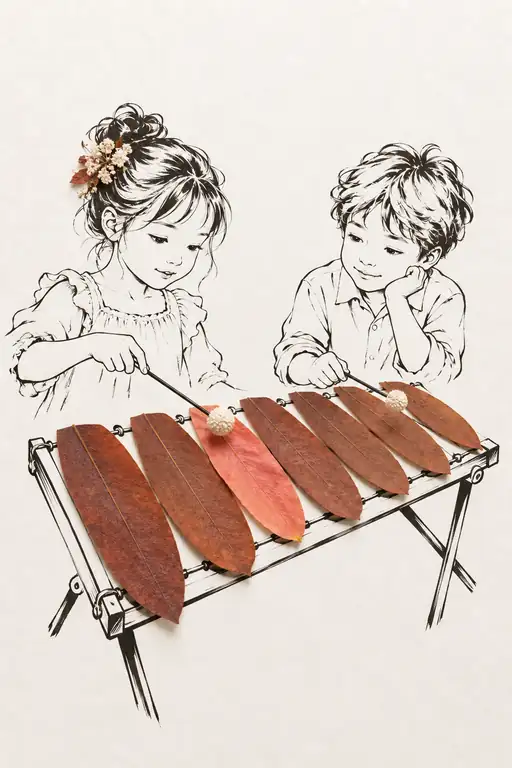 I Hear You in Every Note
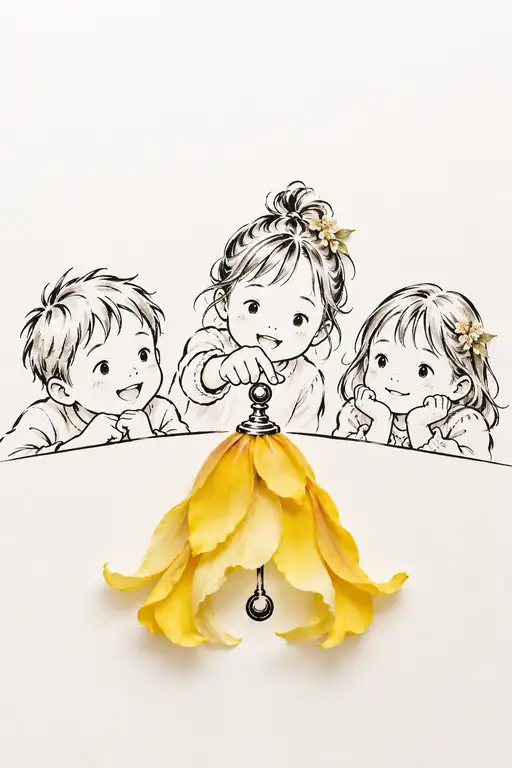 Happiness Waits at Our Fingertips
 Whispering Wishes to the Open Sky
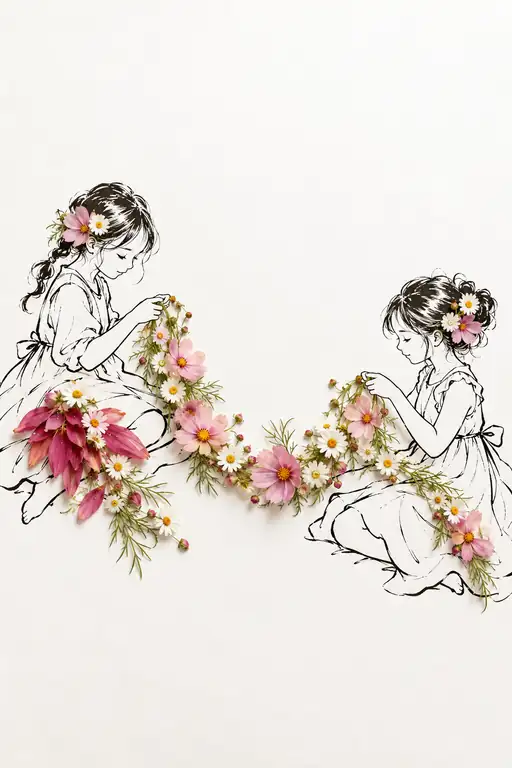 What We Make Between Us
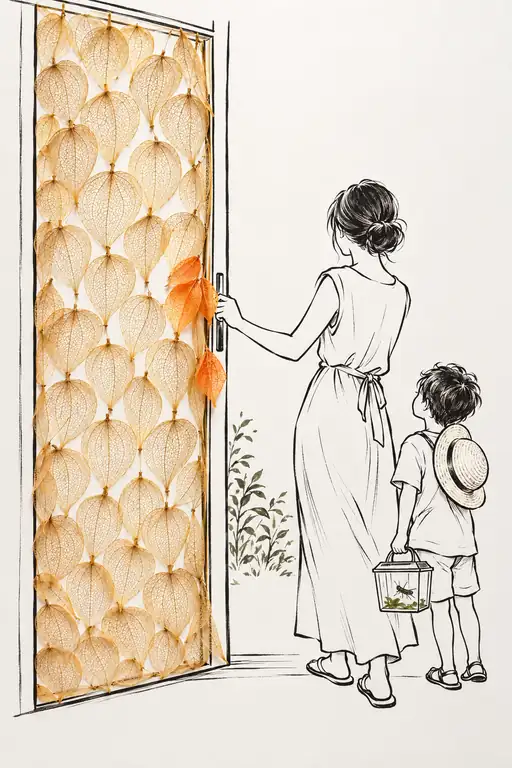 Summer Pauses at the Door
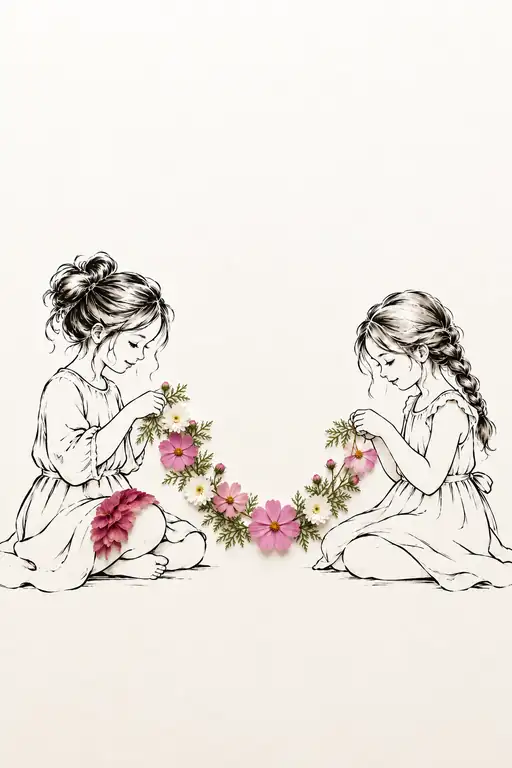 What Our Hands Make Together
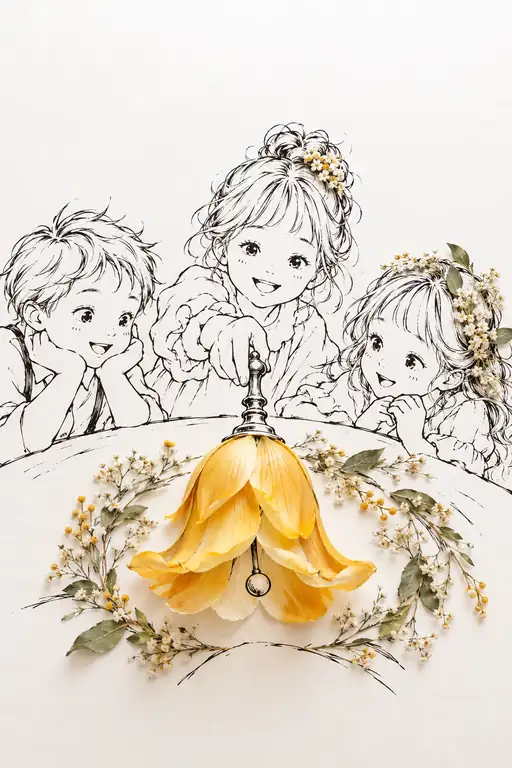 Before the First Joyful Note