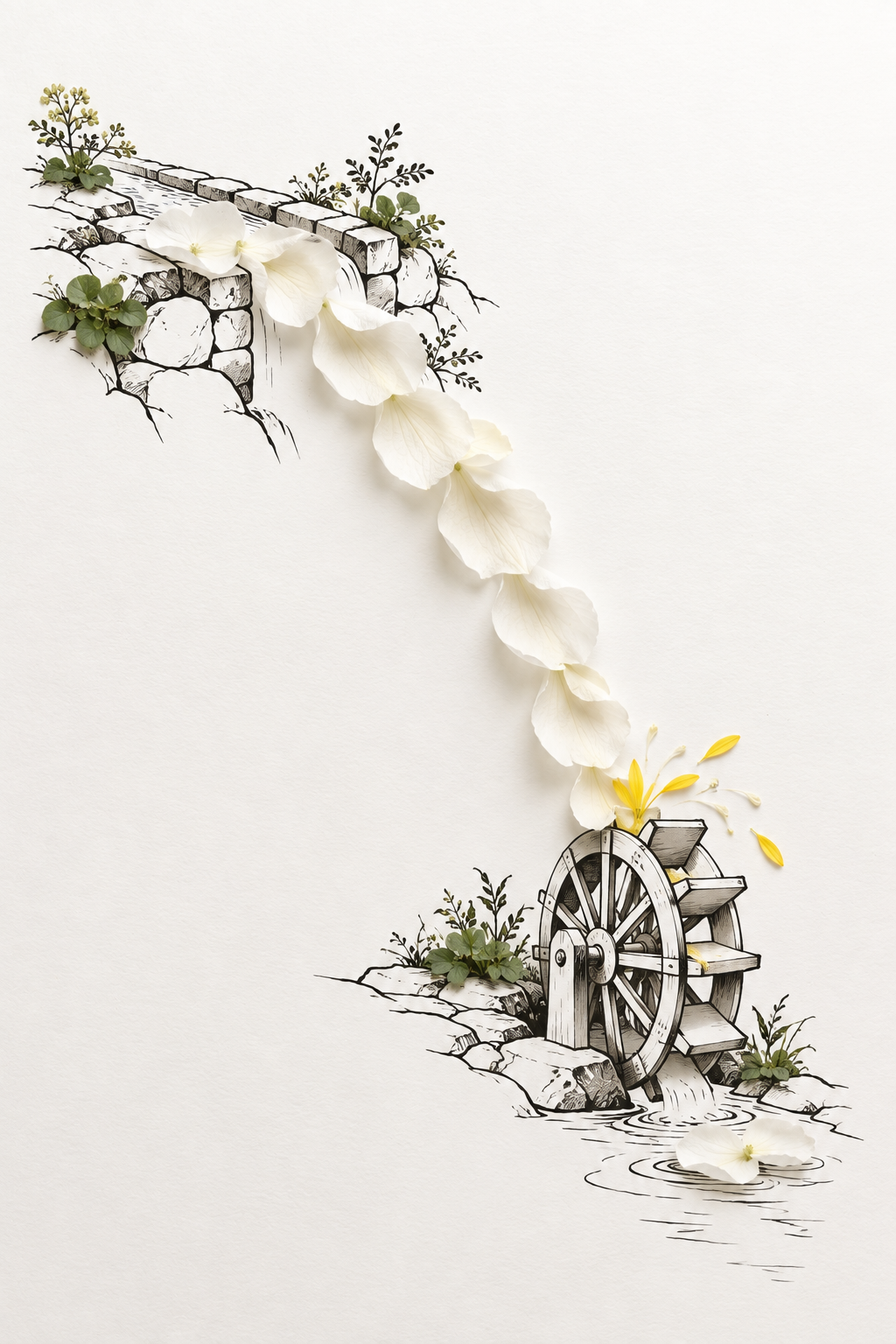
The Quiet Turning of Hours
Critique
Introduction This image combines a black ink drawing of a waterwheel with a descending chain of white petals. A stone-lined channel begins at the upper left, and the wheel occupies the lower right. Description Irregular stones define the raised channel, with small green plants growing from its gaps. White blossoms cluster near the upper ledge, then individual petals cascade diagonally toward the wheel. A few yellow petals mark the point where the falling chain reaches its paddles. Water lines and concentric ripples extend below the wheel, where a single white flower rests. Analysis The downward diagonal links the upper masonry to the round mechanism below. Soft petals replace the expected stream, while the ink lines preserve the weight of stone and wood. Green leaves punctuate the mostly monochrome drawing at several levels, and yellow appears only near the point of impact. The wheel's dense spokes provide a counterweight to the open paper surrounding the floral fall. Interpretation and Evaluation The scene converts water's flow into a sequence of blossoms. This substitution becomes convincing because the petals follow a continuous route from channel to wheel, and the ripples suggest water still present below. The composition's wide empty center emphasizes distance and motion rather than leaving an unfinished space. Delicate petals and detailed mechanical linework are held in productive tension. Conclusion The first impression is of a traditional waterwheel scene. Closer inspection reveals that its most visible current is made from petals. The image invites the viewer to connect physical detail with an imaginative account of movement.
Same Subcategory
Similar Artworks
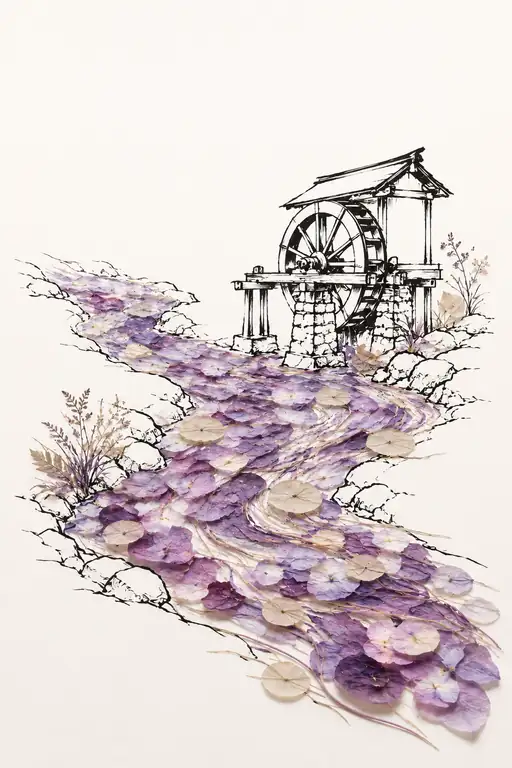 Wheel Turning by the Violet Stream
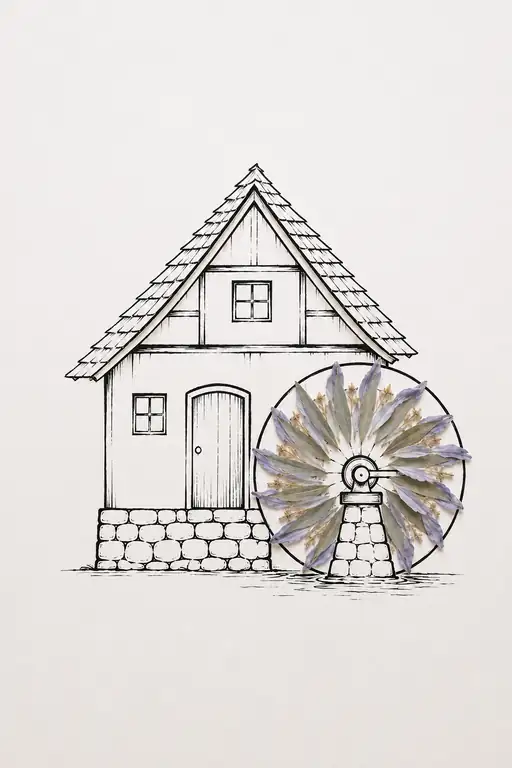 Quiet Turn of the Mill by the River
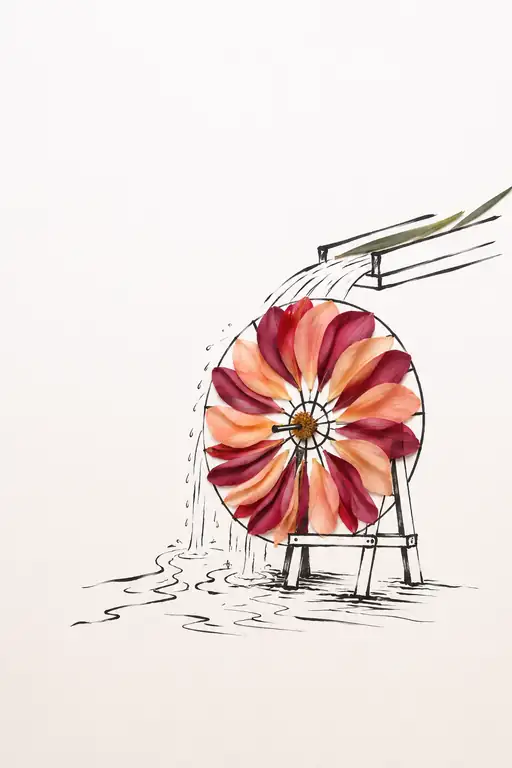 Crimson Flower Wheel Turning in the Stream
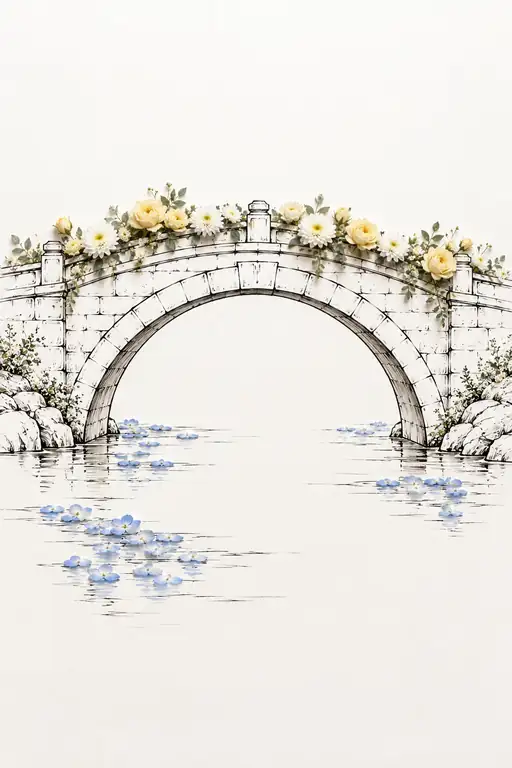 There Is Ease in Crossing Over
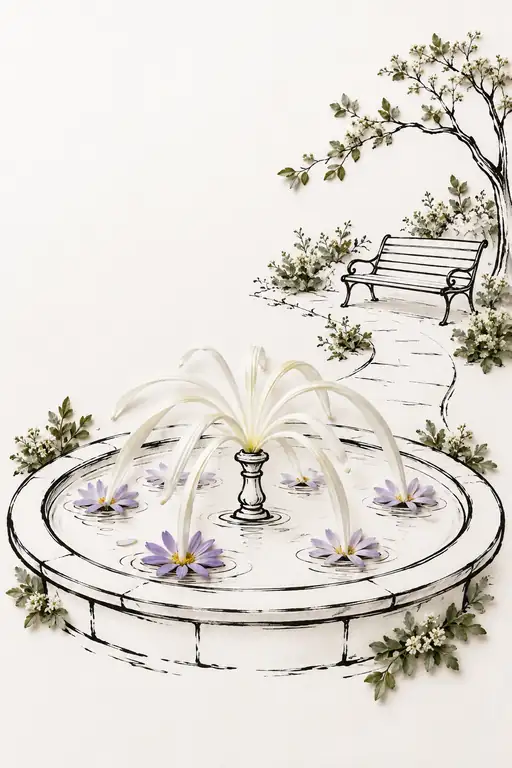 A Place for Unhurried Thoughts
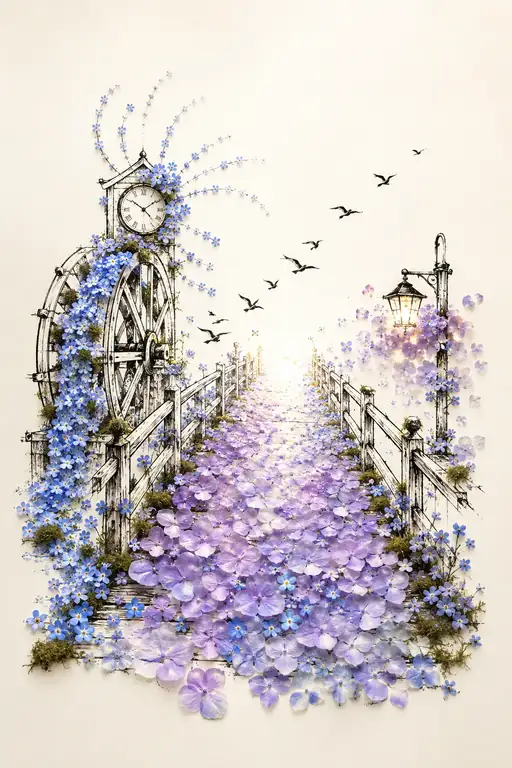 The Waterwheel Clock and the Path of Hydrangeas
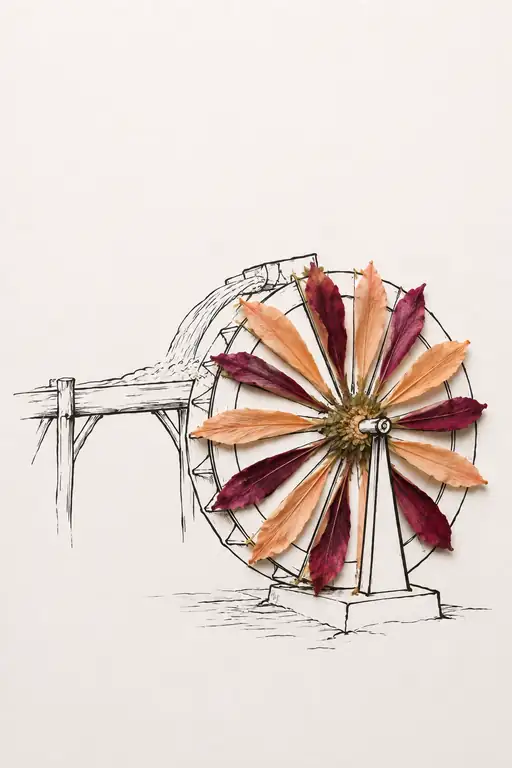 Flower Wheel Turning in Sunlit Waters
 What Waits Across the Quiet
 The Quiet Path to a Waiting Seat
 Flow of Blossoms by the Stone Bridge