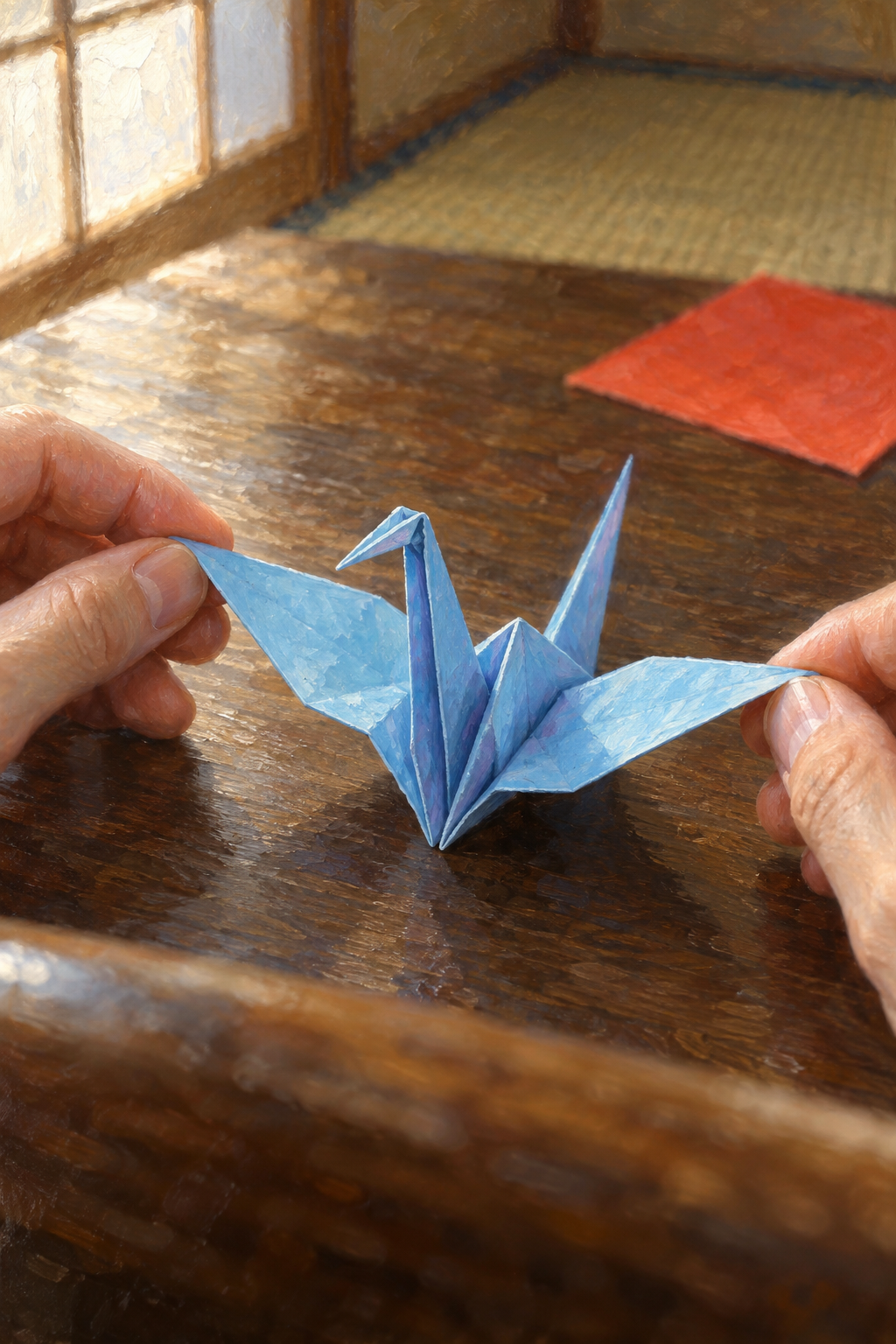
A Wish Learns to Spread Its Wings
Critique
1. Introduction This still life catches two hands steadying a blue origami crane. The paper shape stands out on a dark table in a softly lit room. 2. Description The crane's long neck rises at the center, with wings extended to either side and a pointed tail behind. A hand touches each wingtip. Creases in the blue paper show violet shadows and pale highlights. Sunlight enters through a paneled window at the upper left. A red square of paper lies farther back on the table, and tatami mats extend into the background. 3. Analysis The crane's wings make a wide horizontal span between the two hands, while its neck and tail create vertical accents. Fold lines divide the blue surface into clear planes that catch light differently. The bird's cool color contrasts with warm brown wood and the small red sheet. Low window light rakes across the table, emphasizing its grain and the paper's edges. Soft focus in the room leaves the crane's structure and fingers sharply legible. 4. Interpretation and Evaluation The hands suggest the bird has just been completed or is being adjusted. Their gentle contact makes the fragile paper object feel cared for. The red sheet implies that folding may continue, placing this crane within a longer practice rather than a single display. The orderly geometry of the folded bird gains warmth from the sunlight and human touch. The quiet room setting supports concentration without explaining who made the figure or why. 5. Conclusion The work finds beauty in the precise meeting of fingers and folded paper. Its blue form, warm table, and red paper create a clear, memorable balance of craft and setting.
Same Subcategory
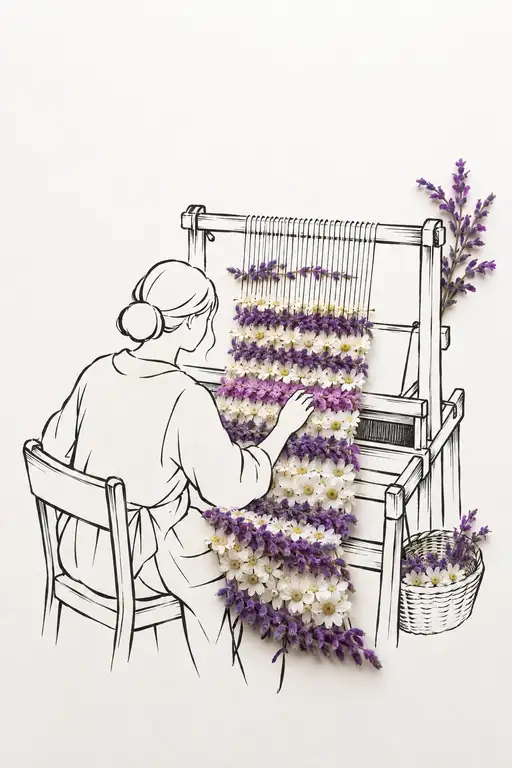 Patient Hours in Violet and White
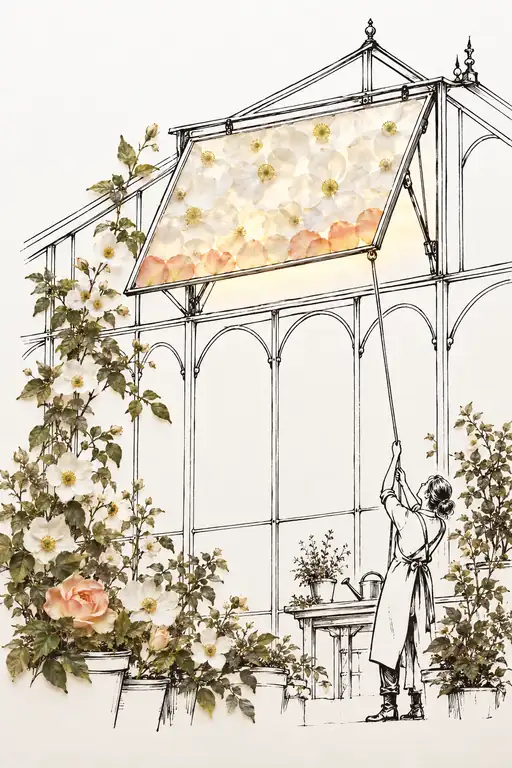 Making Room for the Daylight
Similar Artworks
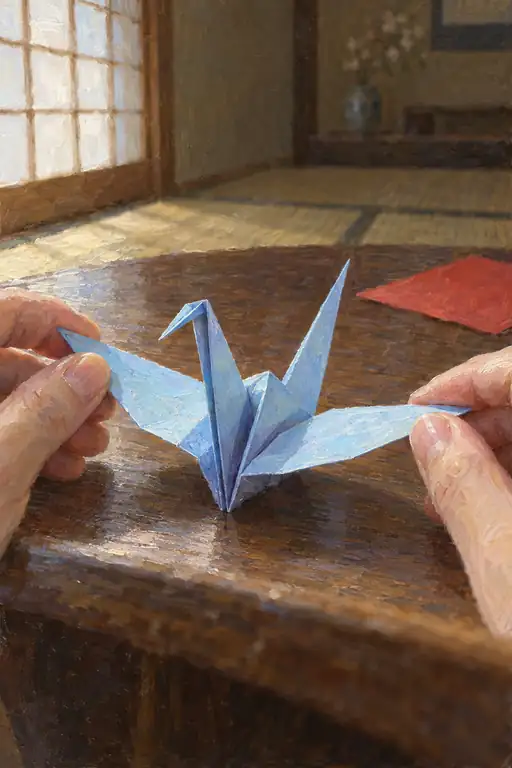 A Little Sky Between My Hands
 Folding Love into Wings
 Stitching the Afternoon Slowly
 The Swordsmith's Soul Bathed in Warm Light
 Crimson Woven with Gold
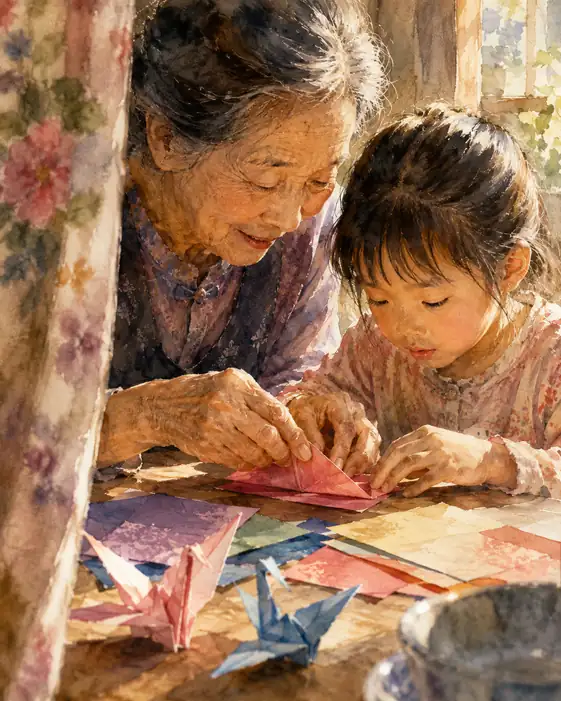 Memories Folded in Warm Hands
 Thread of My Silent Hours
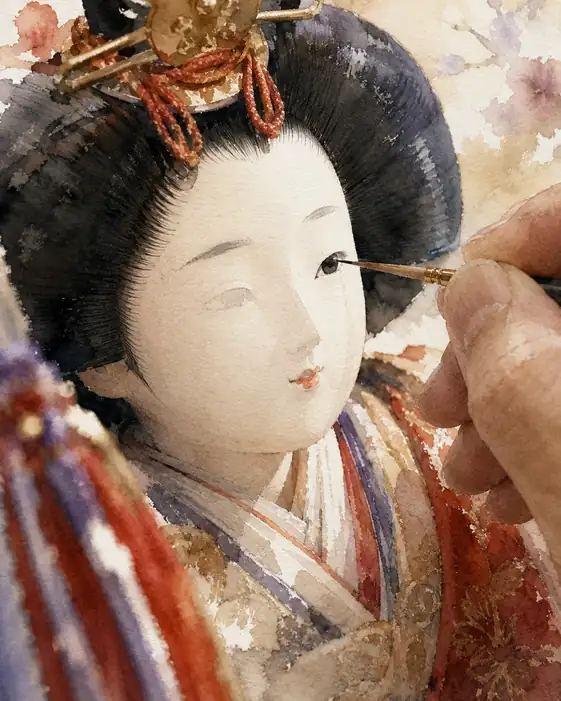 Breathing Soul into the Figure
 Weaving Fragrance into Crimson
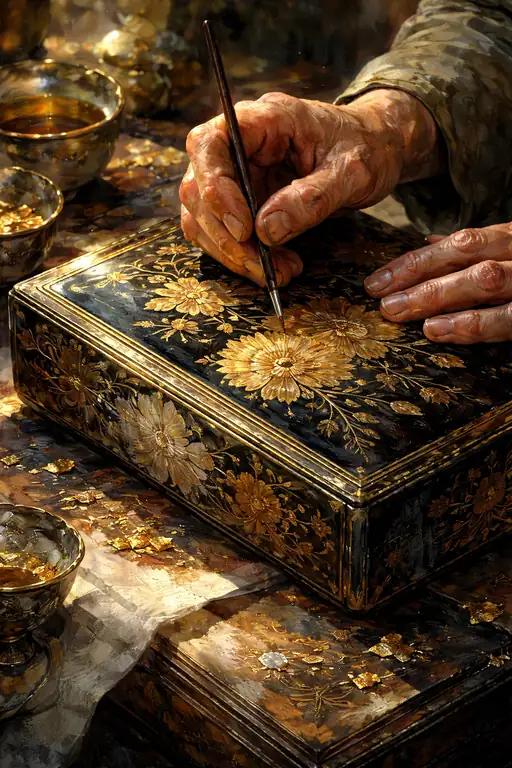 Golden Petals Born of Weathered Hands