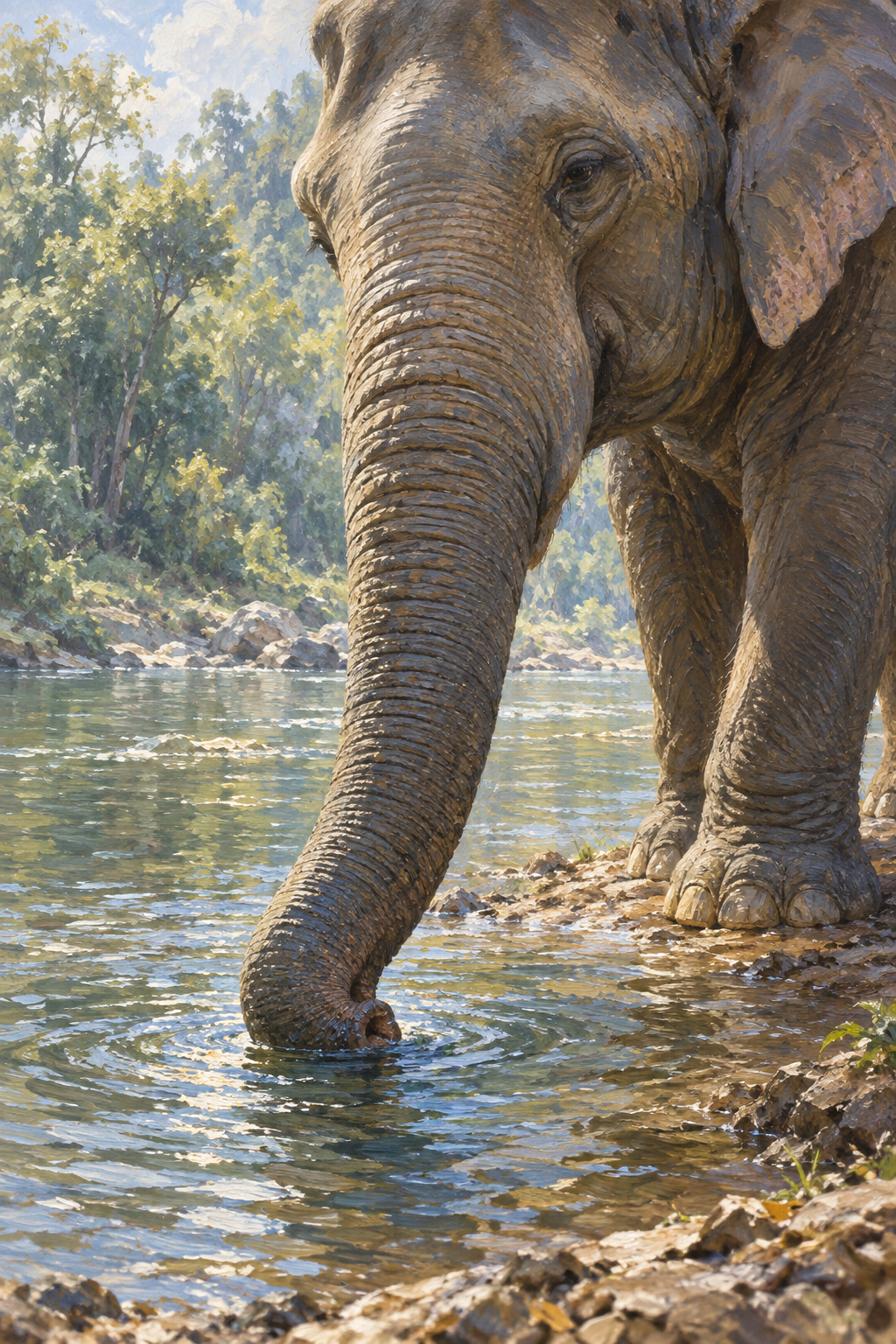
The River Feels a Gentle Weight
Critique
1. Introduction This close landscape portrait presents an elephant at the water's edge. Its long trunk reaches into the river, joining the animal's immense textured body to the small rings spreading across the surface. 2. Description The elephant fills the right and upper frame, with one eye, a broad ear, heavy legs, and deeply wrinkled skin clearly visible. Its trunk curves down to touch shallow water near the lower center. Ripples radiate from the contact point. Across the river stand sunlit trees and pale rocks beneath a bright sky. The near bank is muddy and strewn with stones. 3. Analysis The trunk makes a strong descending line from the massive head to a precise point on the water. That line connects the animal to the wider landscape. Dense, short marks describe skin folds; looser horizontal strokes describe the river. Warm brown-gray on the elephant contrasts with cool blue-green water and distant foliage. Light catches the trunk's ridges and the water's small waves, preventing the large body from becoming a flat dark mass. 4. Interpretation and Evaluation The image emphasizes a gentle action within a powerful form. The elephant's scale is unmistakable, but its lowered trunk and quiet eye make the moment calm rather than imposing. The ripples give a visible consequence to a tiny touch, anchoring the animal in its environment. Close cropping lets the viewer study the body's weight and age-like texture, while the open river keeps the scene breathable. Its attention to contact between skin and water is especially effective. 5. Conclusion The work balances grandeur with intimacy. The trunk's path to the river gives the whole composition purpose, and the varied textures make that simple contact memorable.
Same Subcategory
 Strength at Ease in Its Own Light
Similar Artworks
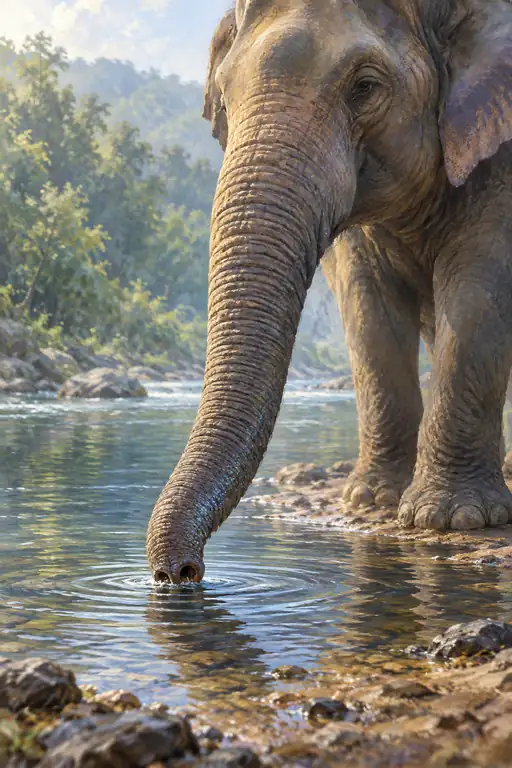 The River Answers a Gentle Giant
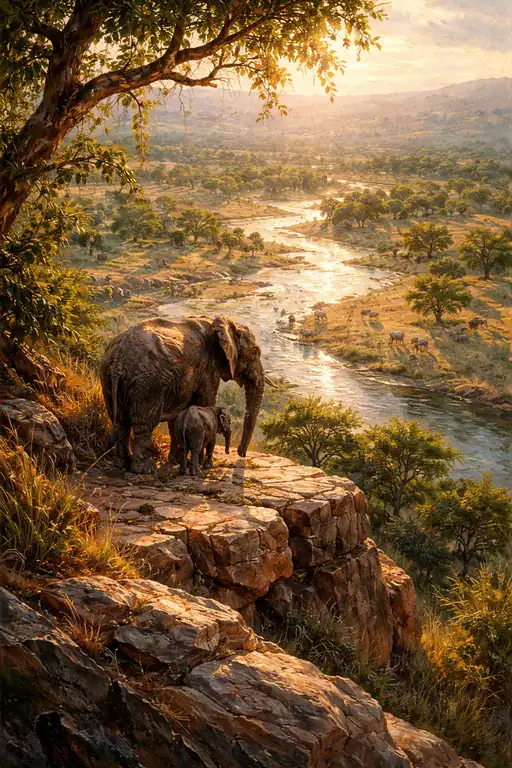 The Golden Savanna: A Mother Elephant's Gaze
 Eyes of the Wild, Heart of the Stream
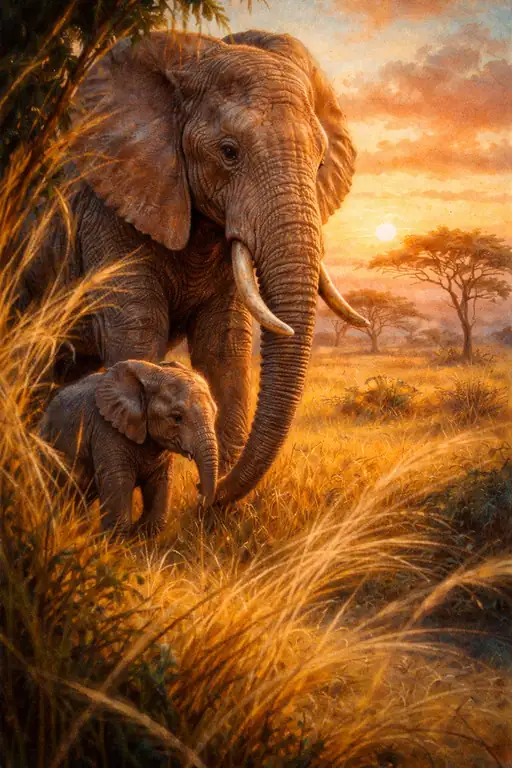 Golden Bonds Under the Savanna Sun
 River Stone Kept in Little Paws
 Treasure of the Clear Shallows
 Sovereign of the Golden Forest
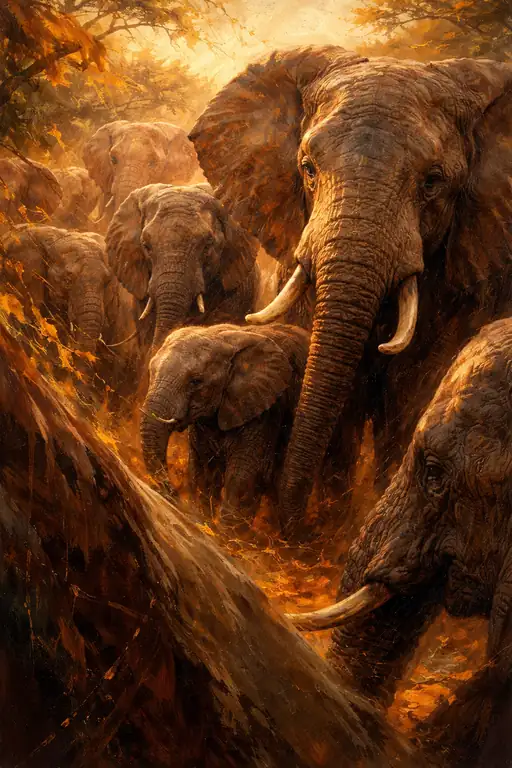 The Gentle Gaze of the Innocent
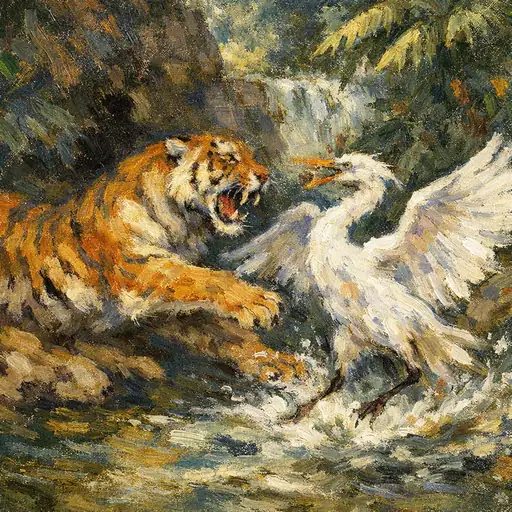 The Roar of Life Amidst the Crashing Falls
 Gentle Visitor at the Pier