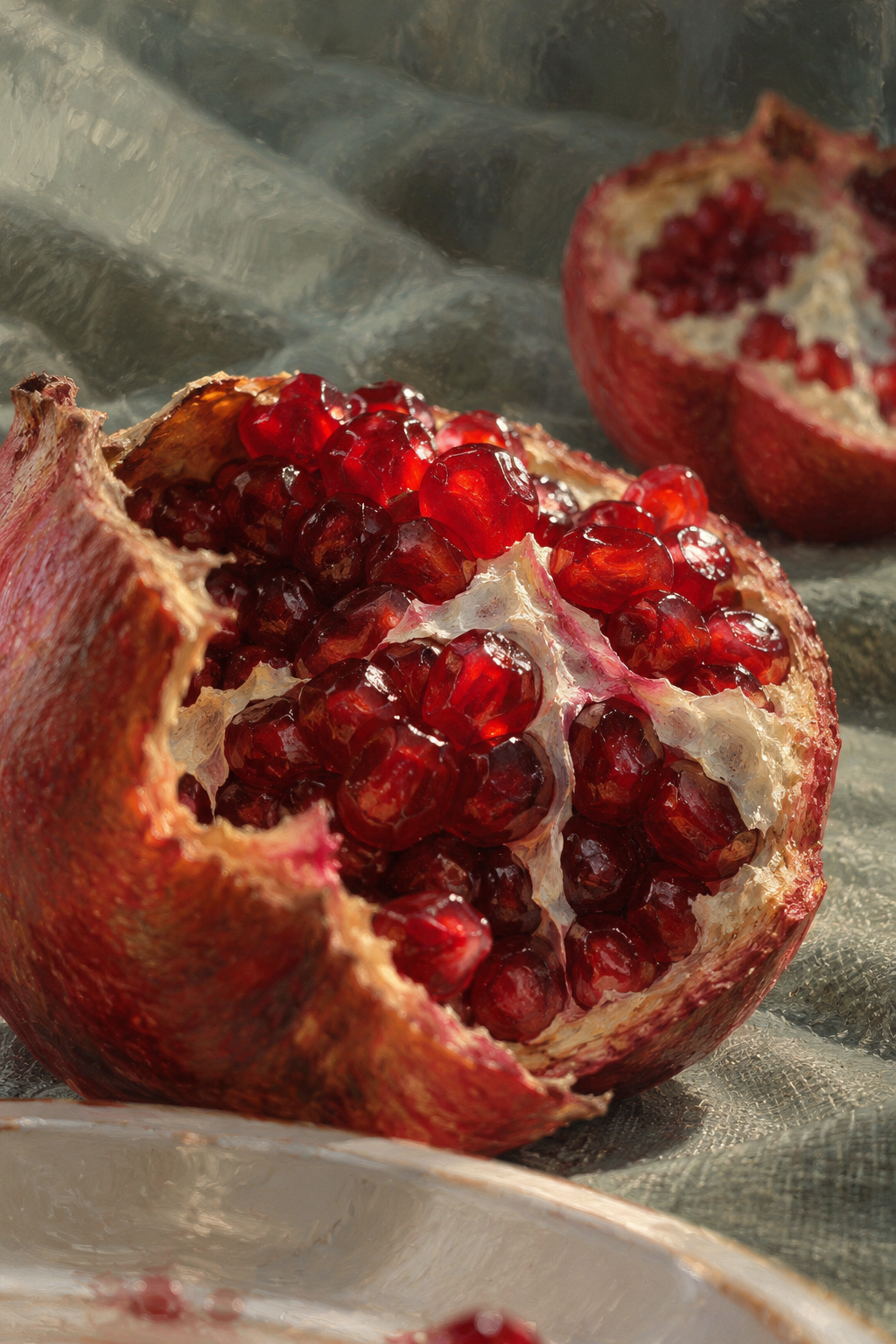
A Heart with Room for Many Suns
Critique
1. Introduction This close still life opens a pomegranate to reveal its crowded interior. Glossy red seeds shine inside a rough rind, turning a familiar fruit into a study of abundance and texture. 2. Description A cut section of pomegranate fills the foreground, its deep red seeds separated by pale, torn membranes. The rind curves around them with warm brown-red skin and irregular edges. Another opened fruit sits softly out of focus at the upper right. A light dish enters along the bottom, and muted gray-green cloth or surface surrounds the fruit. 3. Analysis The near fruit occupies most of the frame, creating a strong contrast between small repeated seeds and the broad curve of its rind. Highlights on individual seeds make them appear translucent and wet. Cream-colored membranes interrupt the dense red pattern, giving the eye paths through the interior. The secondary fruit is blurred, so it reinforces the subject without competing. A subdued background allows the saturated crimson to carry the image. 4. Interpretation and Evaluation The cut fruit reveals an inner complexity that its intact skin conceals. Repetition suggests plenty, but the torn membranes and uneven rind keep the scene physical rather than decorative. The extreme closeness invites attention to the distinct shape of each seed and to the work of opening the fruit. Warm light turns some seeds nearly amber and others almost black, enriching the red without losing coherence. The cropped dish hints at preparation or eating, while the composition remains focused on seeing. 5. Conclusion Scale and light make the pomegranate vivid and tactile. The painting finds visual richness in the difference between protective rind, delicate membrane, and shining seeds.
 Spiral of Sunlit Hours
 Yellow Beyond the Edge
 The Bursting Secret of Life
 Life’s Spiraling Radiance
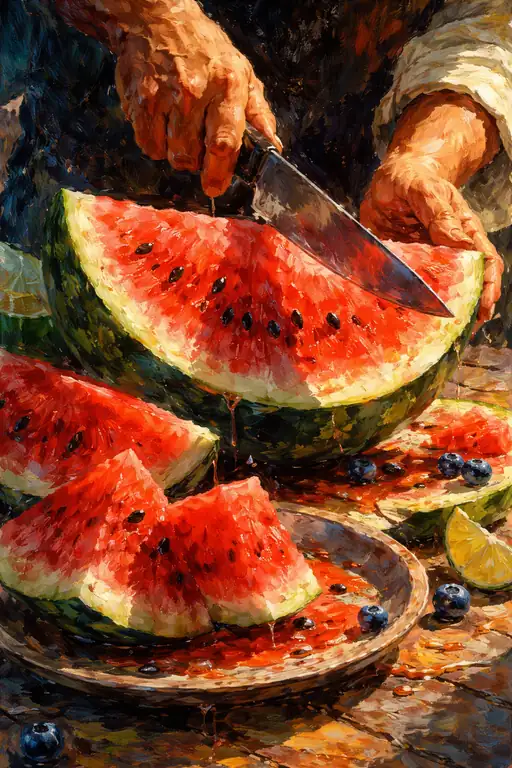 Vibrant Burst of a Summer's Heart
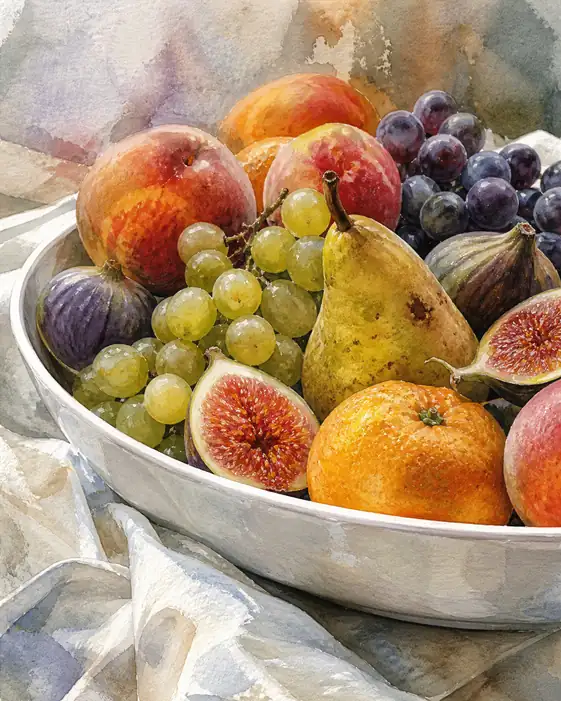 Symphony of Nature's Bounty
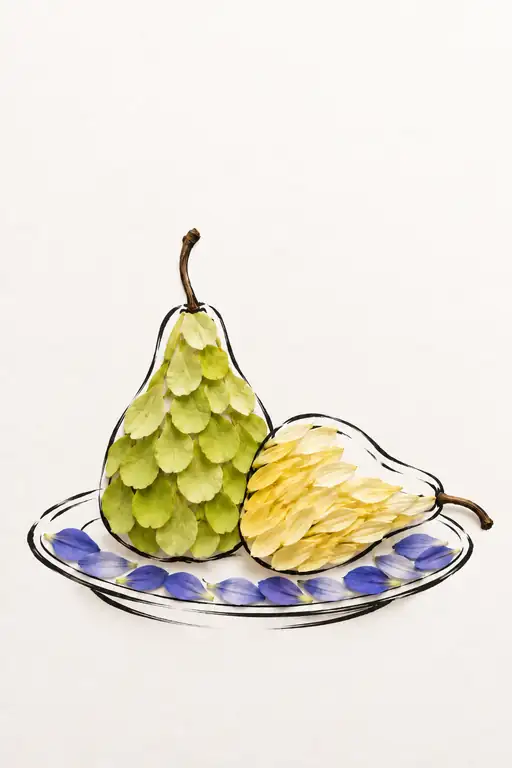 Two Ways to Rest in Light
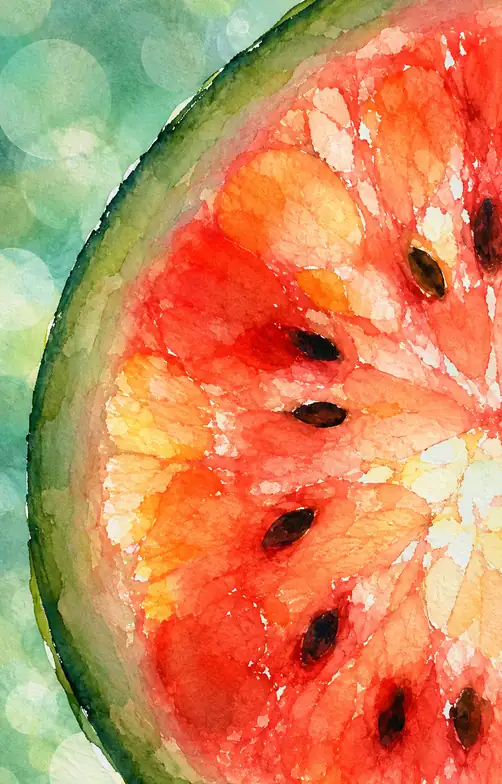 Summer's Crimson Beat
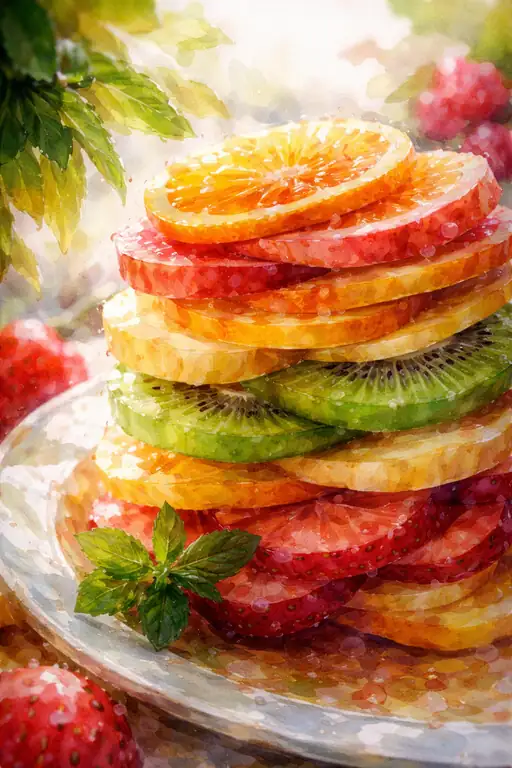 Vibrant Citrus Tower
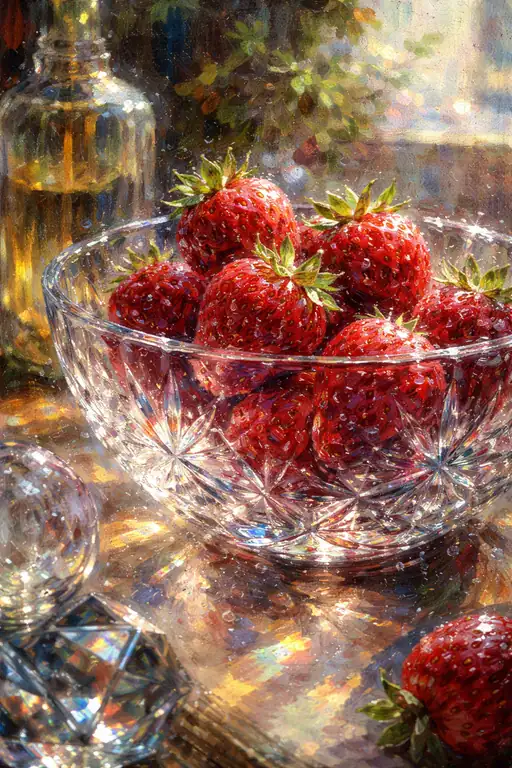 Crimson Gems of Summer's Zenith
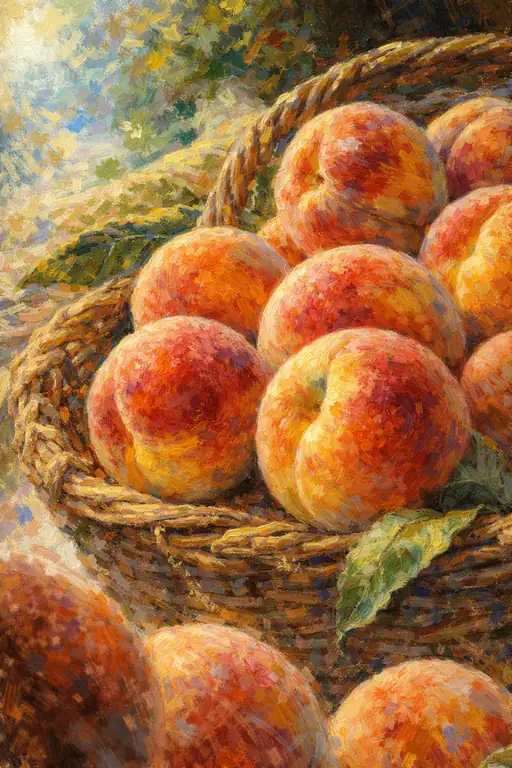 The Woven Bounty of Summer Peaches