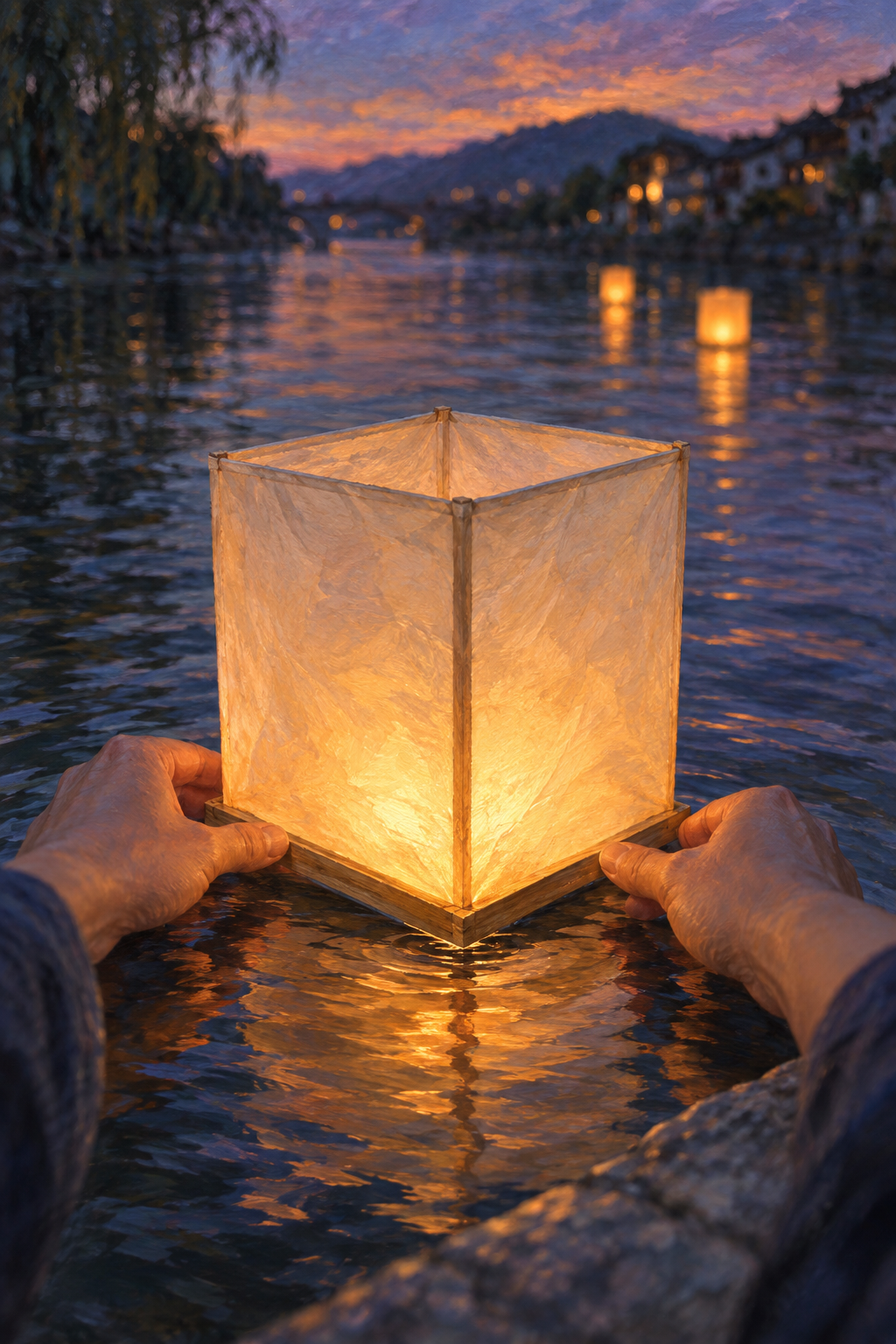
What I Cannot Say, I Give the River
Critique
1. Introduction This twilight scene shows a lantern about to enter the water. Two hands steady its frame, while other lights drift beneath a colorful sky. 2. Description A glowing paper lantern sits on the river directly in front of the viewer. Hands at left and right touch its wooden base. Its warm light spreads through thin paper and reflects on the rippled water below. Two more lanterns float farther away. Dark trees and buildings line the banks, with mountains beyond them and bands of orange, pink, and blue in the sky. 3. Analysis The central lantern is large and sharply defined, while the distant ones shrink into small bright rectangles. This change of scale leads the eye down the river. Warm yellow light contrasts with blue-violet water and the dark banks. The lantern's straight edges and triangular roof provide a stable form against restless reflections. The hands frame the near object symmetrically, making the act of release the visual and emotional center. 4. Interpretation and Evaluation The image suggests a shared ritual or private wish without specifying either. The hands remain in contact with the lantern, so its departure is imminent rather than complete. Other lights already on the water imply that this action belongs to a larger gathering, even though no other people are visible. The sunset colors connect the lantern's glow to the wider sky, blending human-made light with the day's last illumination. Reflections extend the fragile object into the river and make its movement feel possible. 5. Conclusion The painting draws strength from a simple threshold: holding and letting go. Warm light, receding lanterns, and dark water give that brief action a spacious, contemplative atmosphere.
Same Subcategory
 Sparks Across Her Summer Night
Similar Artworks
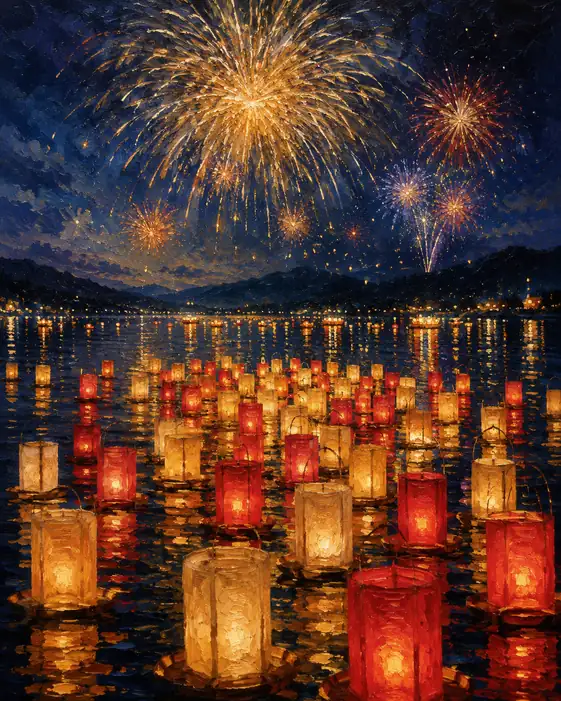 Floating Lanterns and Fireworks Over Lake
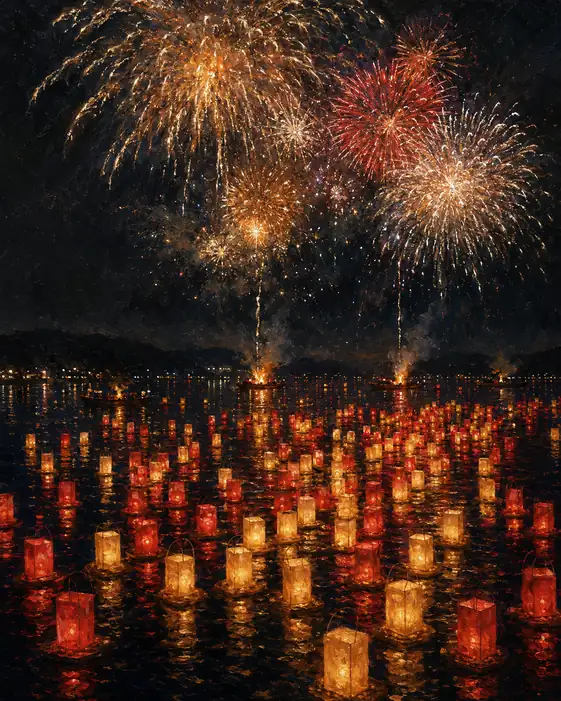 Golden Canopy Over Lake Lanterns
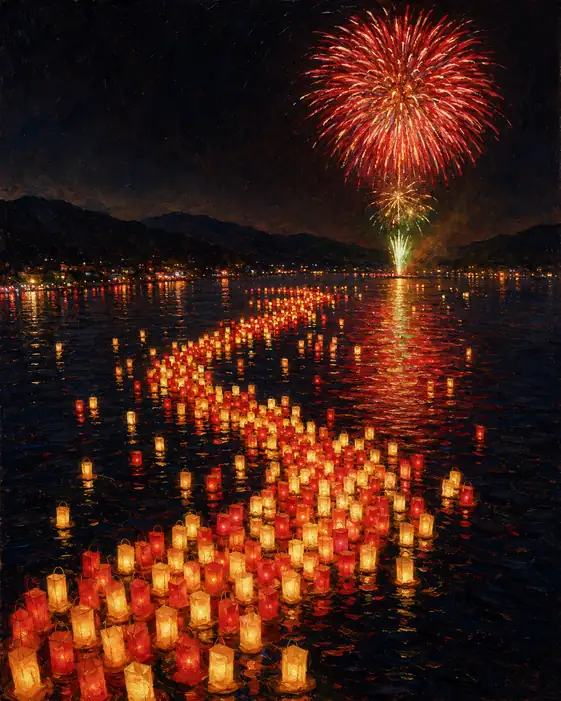 Scarlet Fireworks and the Flow of Light
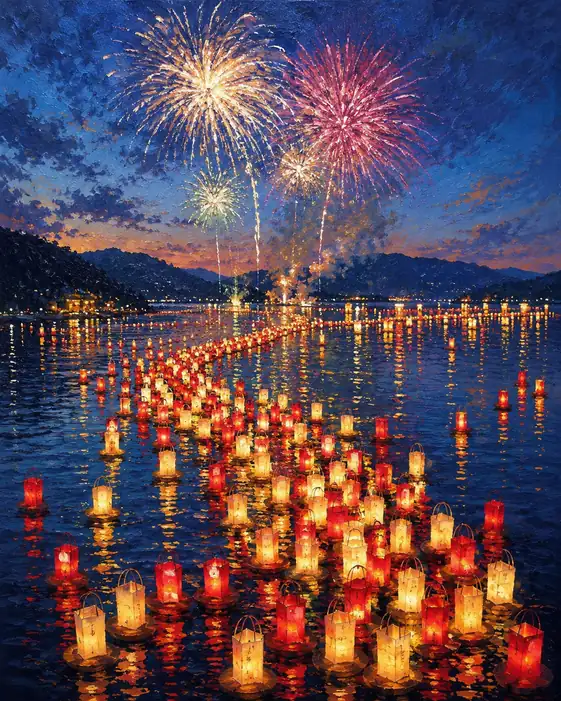 River of Lanterns and Summer Fireworks
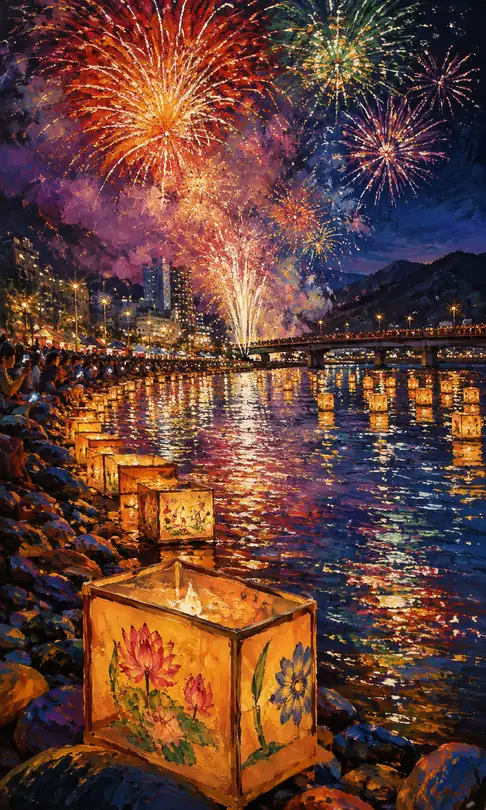 Silent Night Journey Guided by Lotus Lanterns
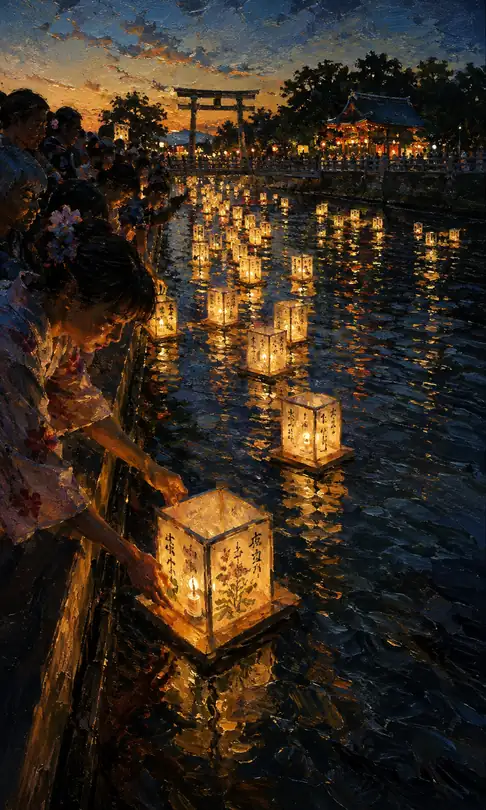 Silent Prayers Floating Past the Sacred Gate
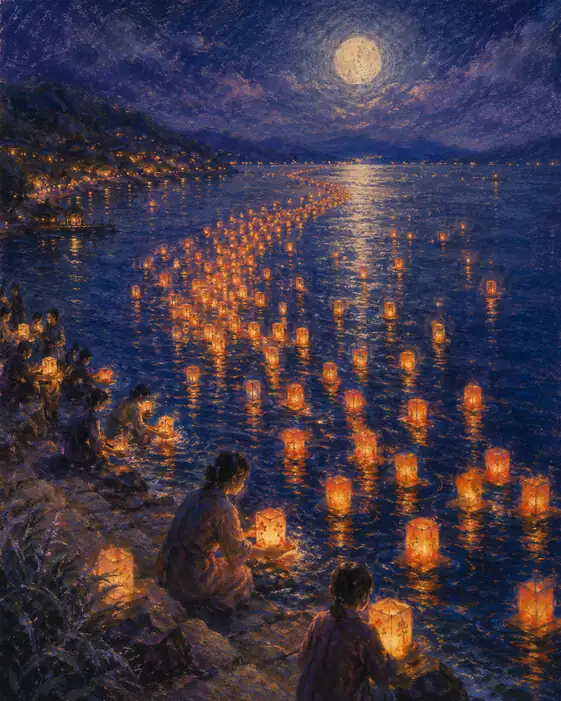 A River of Whispered Prayers
 Lilies of the Twilight Harbor
 Clear Stream Lanterns and Sky Splendor
 A Thousand Prayers Bloom in the Silver Night