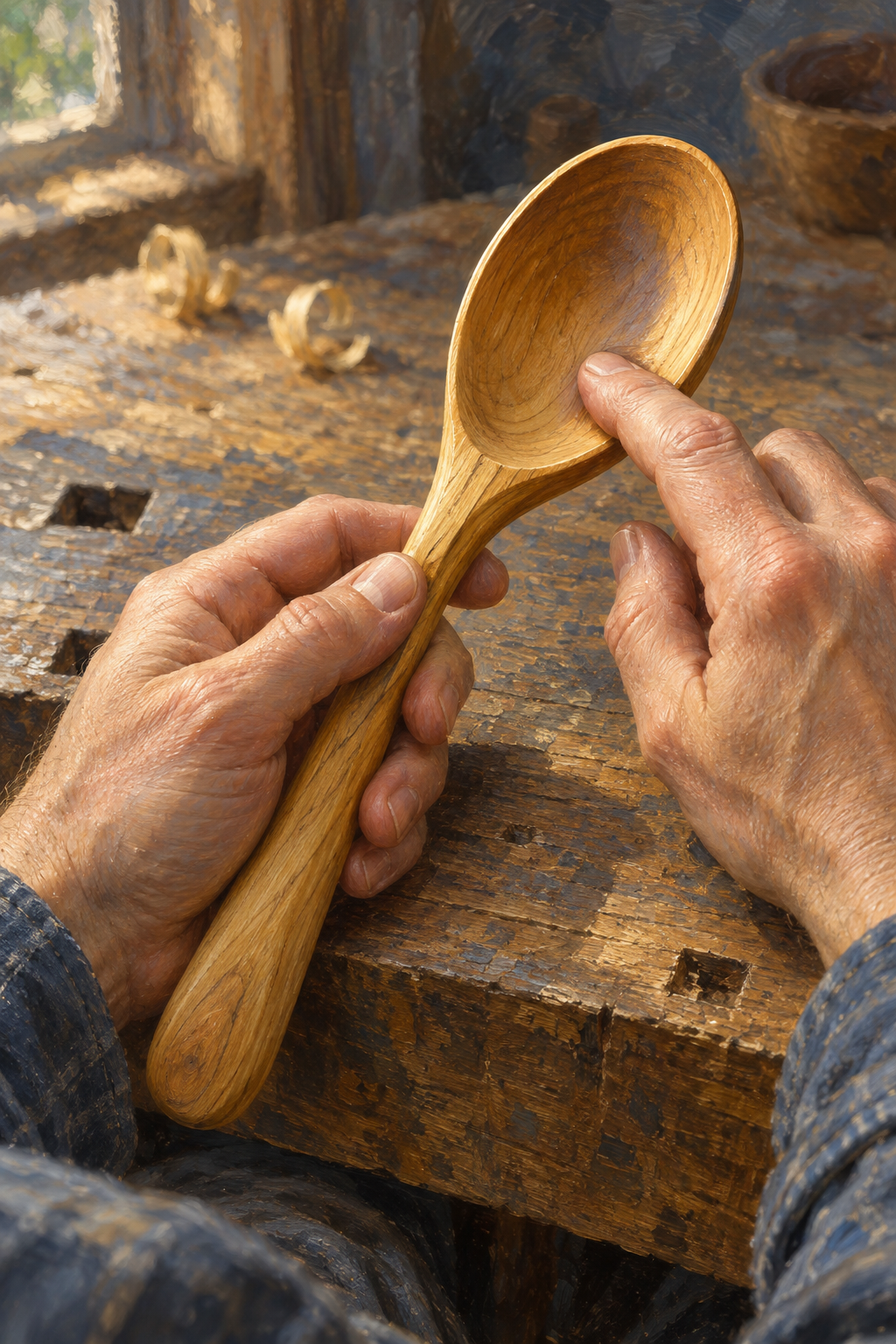
The Tree Still Speaks to My Fingers
Critique
1. Introduction Two hands hold a carved spoon over a workbench. One grips its handle; the other touches its bowl. Shavings and sunlight establish handwork and inspection. 2. Description The spoon's broad oval bowl tilts toward the viewer, showing concentric carving marks and a darker center. Its handle runs diagonally to the lower left hand. A finger from the right touches the inner surface near the rim. Fine wrinkles and short nails are visible on both hands. Pale wood curls lie across the bench behind the spoon, and another carved vessel sits at the upper right. Window light enters from the left. 3. Analysis The spoon connects the hands along a diagonal, making touch the central action. Its light wood stands out against the workbench's dark, scratched boards. A bright edge traces the oval opening, while the hollow interior holds warm shadow. The finger touching it directs attention to the carved surface rather than the utensil's outline alone. Loose shavings echo the spoon's curves at a smaller scale. 4. Interpretation and Evaluation The gesture suggests checking the finished surface or continuing the work, though no tool is shown in use. The composition gives the object and the maker's attention equal weight. Browns and golds remain varied through light and grain, avoiding a flat monochrome. Precise hand positions and carving marks support a tactile reading. The softly handled background keeps the immediate inspection clear. 5. Conclusion The spoon first reads as a completed object, but the touching finger reveals a continuing relation to its making. Hands, wood grain, and shavings connect result and process. The work finds dignity in careful attention to a small useful form.
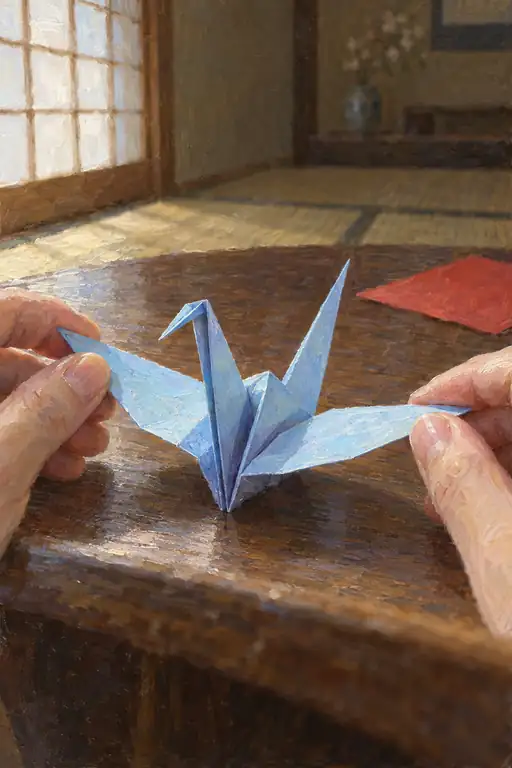 A Little Sky Between My Hands
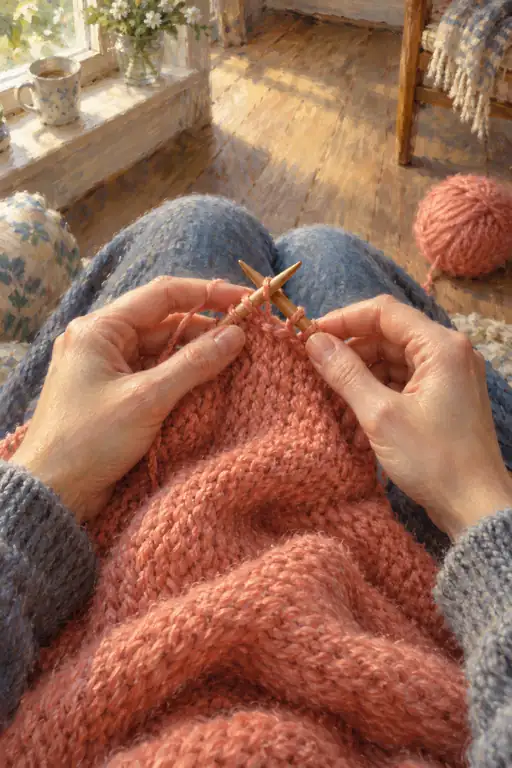 One Stitch Nearer to Warmth
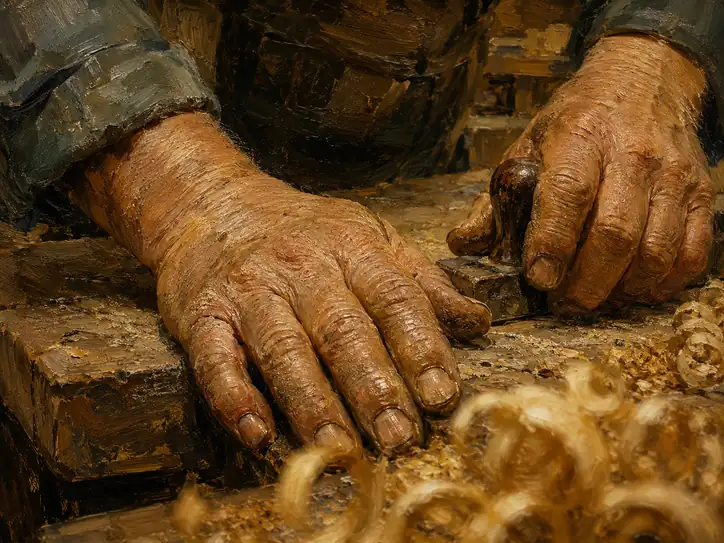 Prayer in the Grain
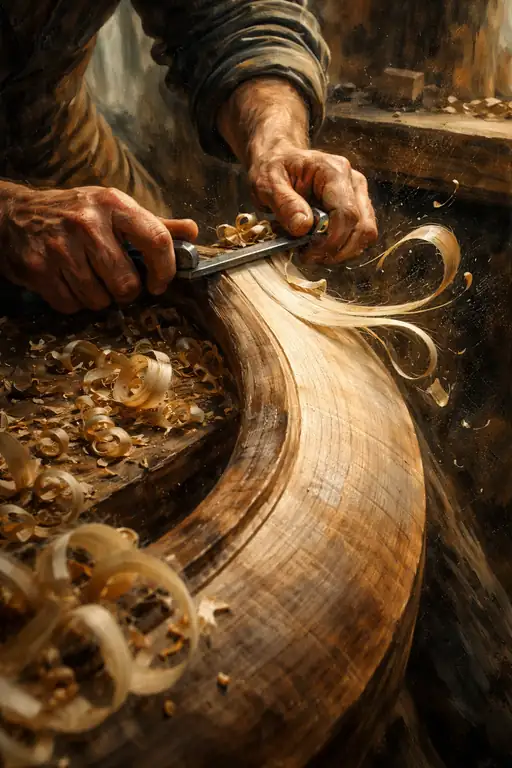 Whispers of the Wood
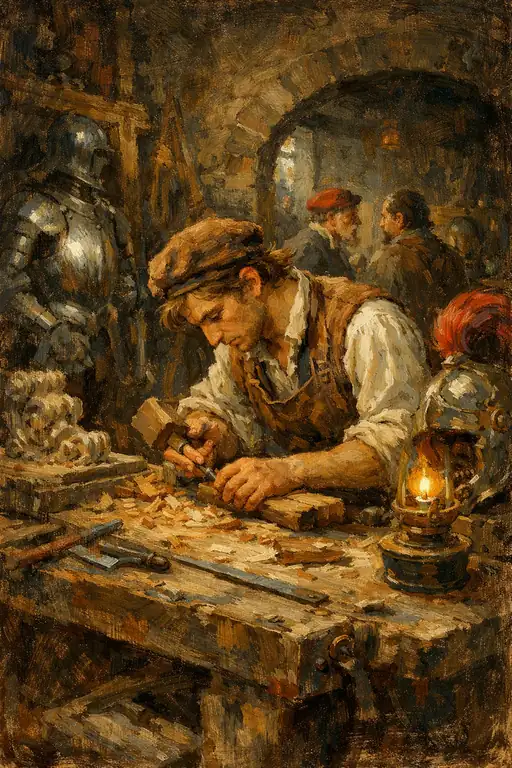 The Artisan's Light
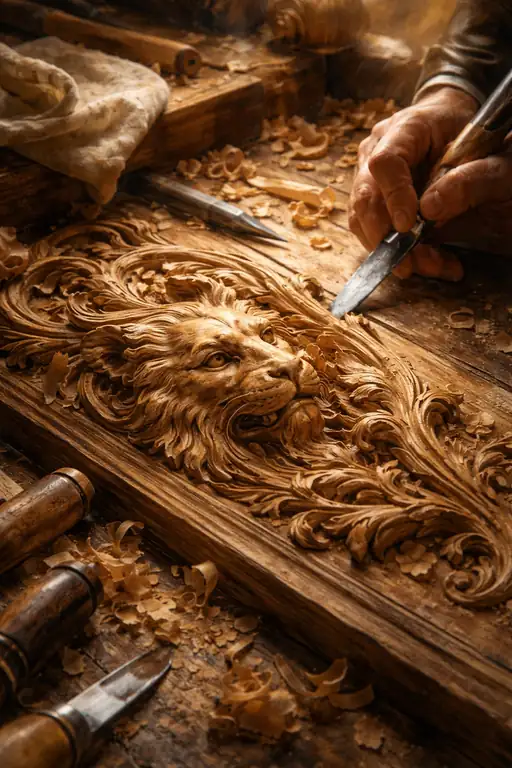 The Artisan's Devotion Etched in Wood
 A Sun Still Learning Its Shape
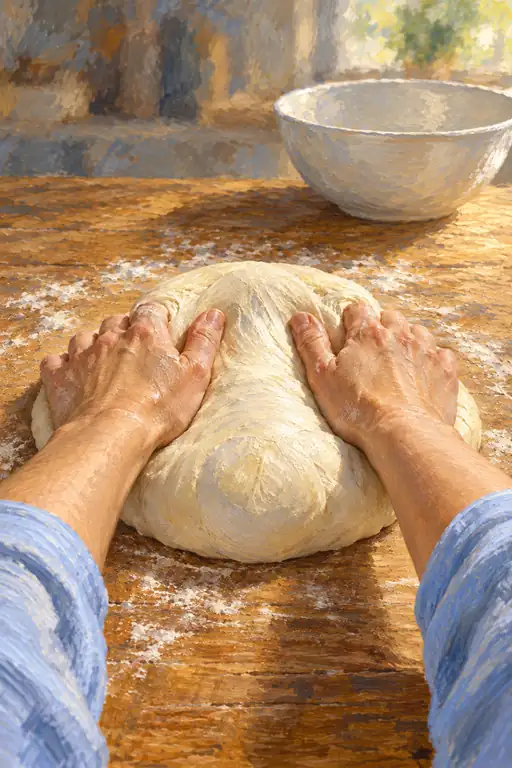 Tomorrow Takes Shape Beneath My Hands
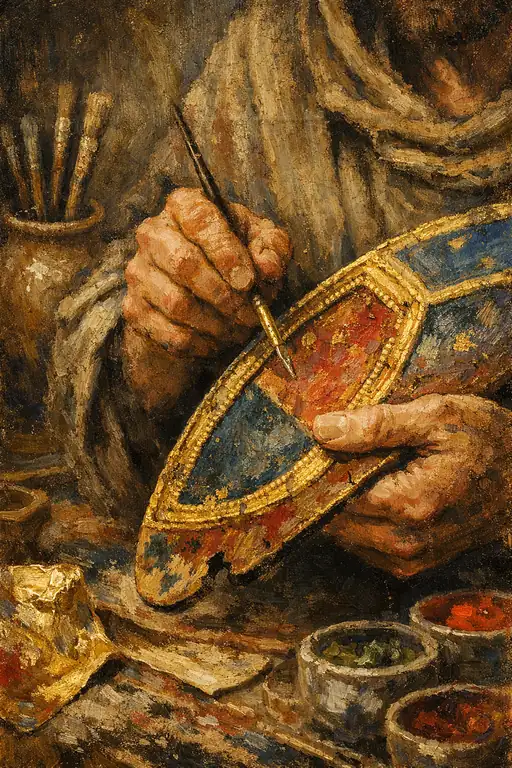 The Devotion of an Artisan's Touch
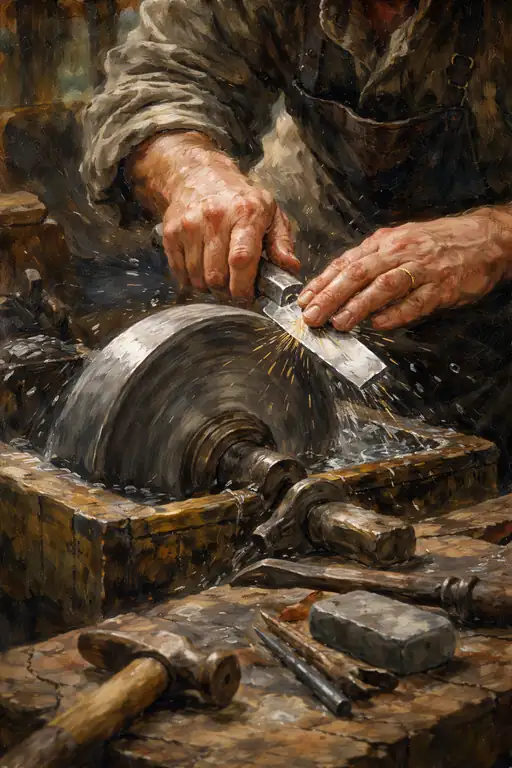 Sparks of the Iron Soul
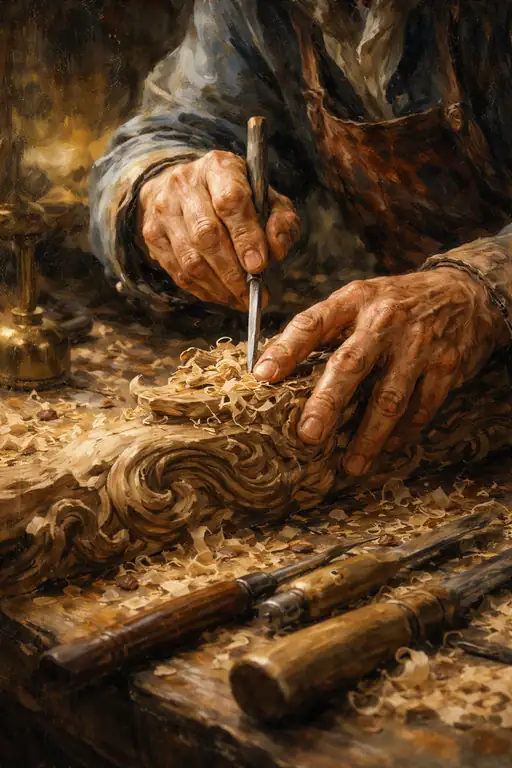 The Soul Carved in Wood