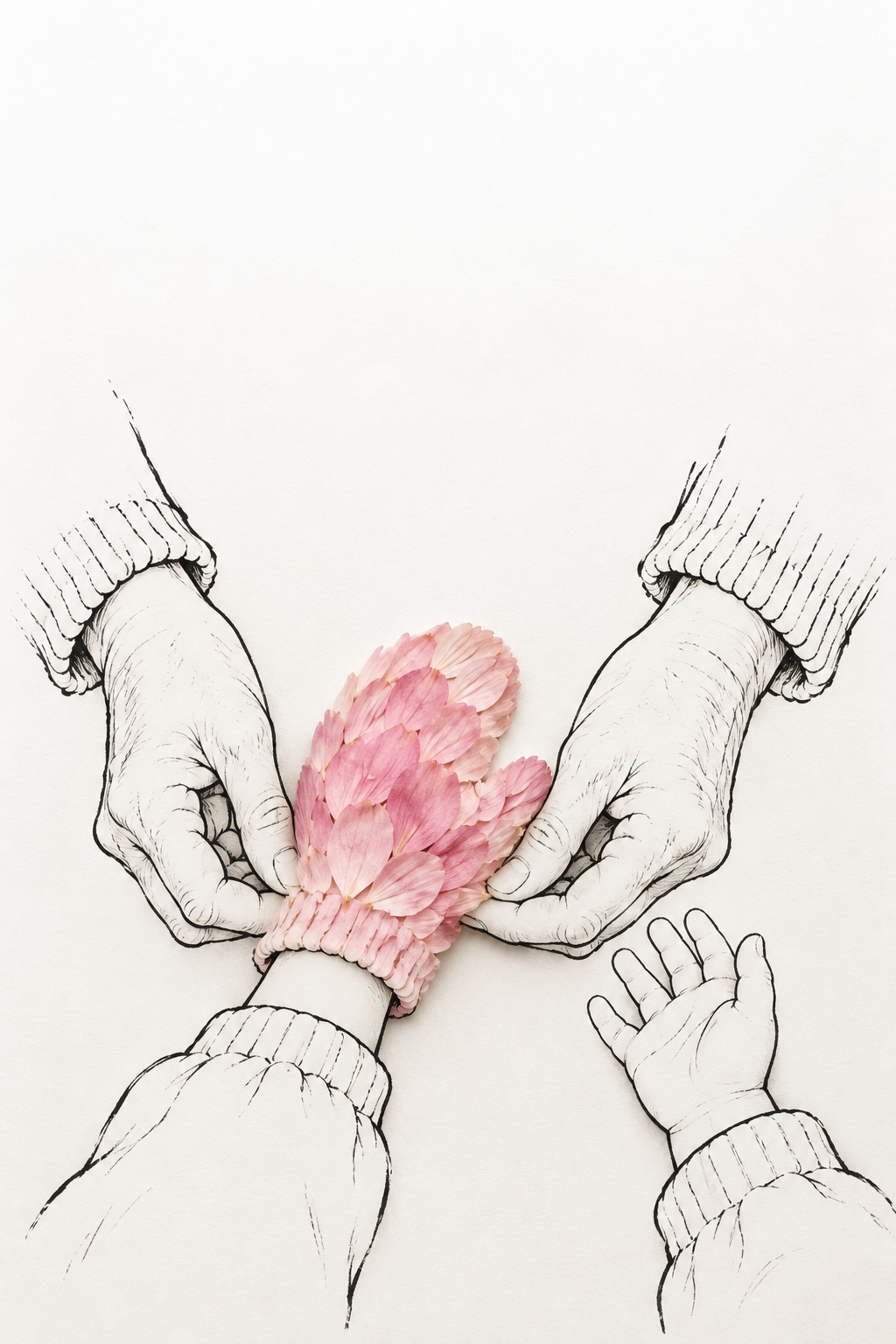
Tenderness Finds Its Smallest Measure
Critique
1. Introduction Black lines show two large hands placing a pink floral band around a smaller wrist. Another small hand opens at right. Colored petals center the exchange. 2. Description Large arms descend from upper corners, ending in cupped fingers. A small forearm rises from lower left beneath a ribbed sleeve. Pink petals gather around its wrist and fan upward. Another small arm enters at lower right, palm up. Varied dark lines describe hands and sleeves against blank space. 3. Analysis The adult hands form a broad arch around the flower band, directing attention to the point of contact. The child's two arms make a lower opening that echoes this enclosure. Fine contour marks describe fingers and fabric; layered pink petals supply a fuller texture and the only strong color. White space separates the hands clearly and gives the small gesture visual weight. 4. Interpretation and Evaluation The visible action suggests giving, fitting, or adjusting an ornament, but the precise relationship between the figures is not specified. The open second palm may indicate readiness or response. The composition concentrates meaning in the meeting of hands. Economical black lines keep the gesture readable, while the carefully layered pink form adds warmth without filling the page. The restraint of the palette supports attention to contact. 5. Conclusion The pink petals first attract the eye, but the arrangement of hands explains their role in an exchange. Sparse drawing leaves room for the gesture to remain open in meaning. The work balances precise contact, expressive line, and focused color.
Same Subcategory
 A Letter in the Evening Light
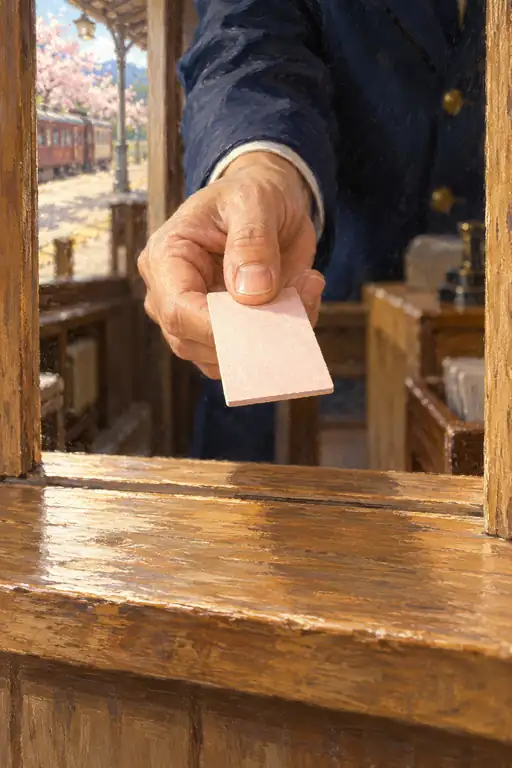 Spring Fits in a Small Ticket
Similar Artworks
 Crimson Heart of Maternal Devotion
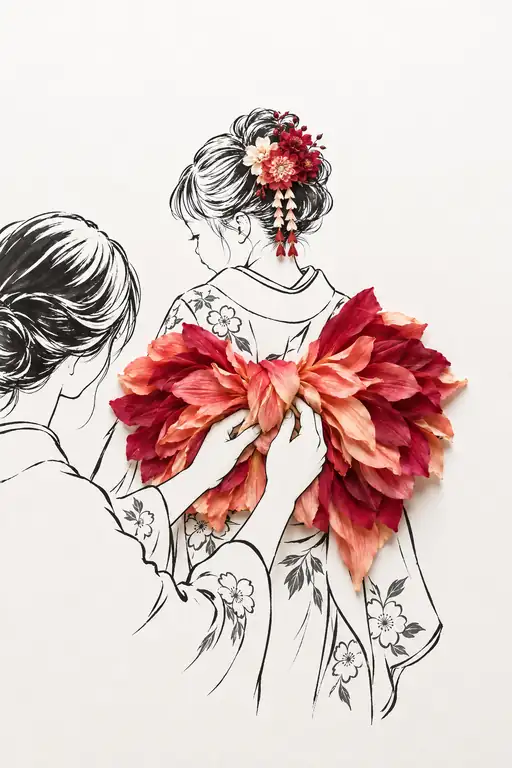 Crimson Wishes Tied with Care
 Quilt of Gentle Blue Slumber
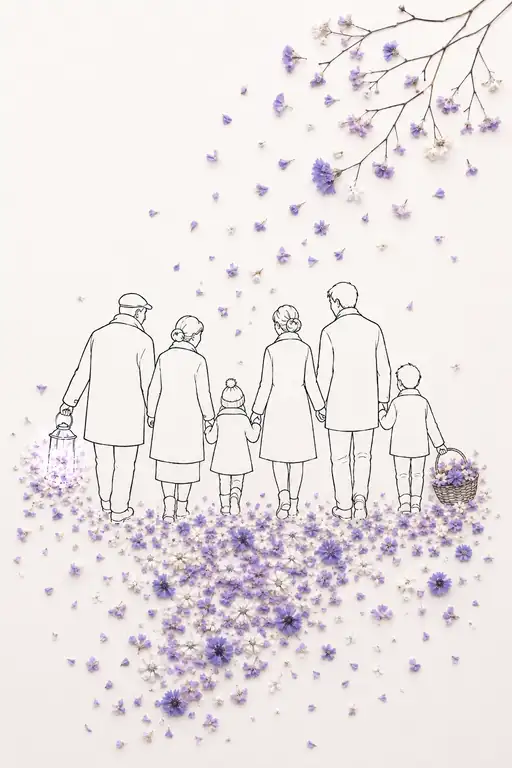 Walking Together Through the Seasons
 Whispers of Spring on Feathered Wings
 The Gentle Nuzzle of Mother and Lamb
 Maternal Embrace in Pink and White Blossoms
 Patience Takes a Coral Shape
 Slumber Under Azure Petals
 A Handful of Innocent Joy