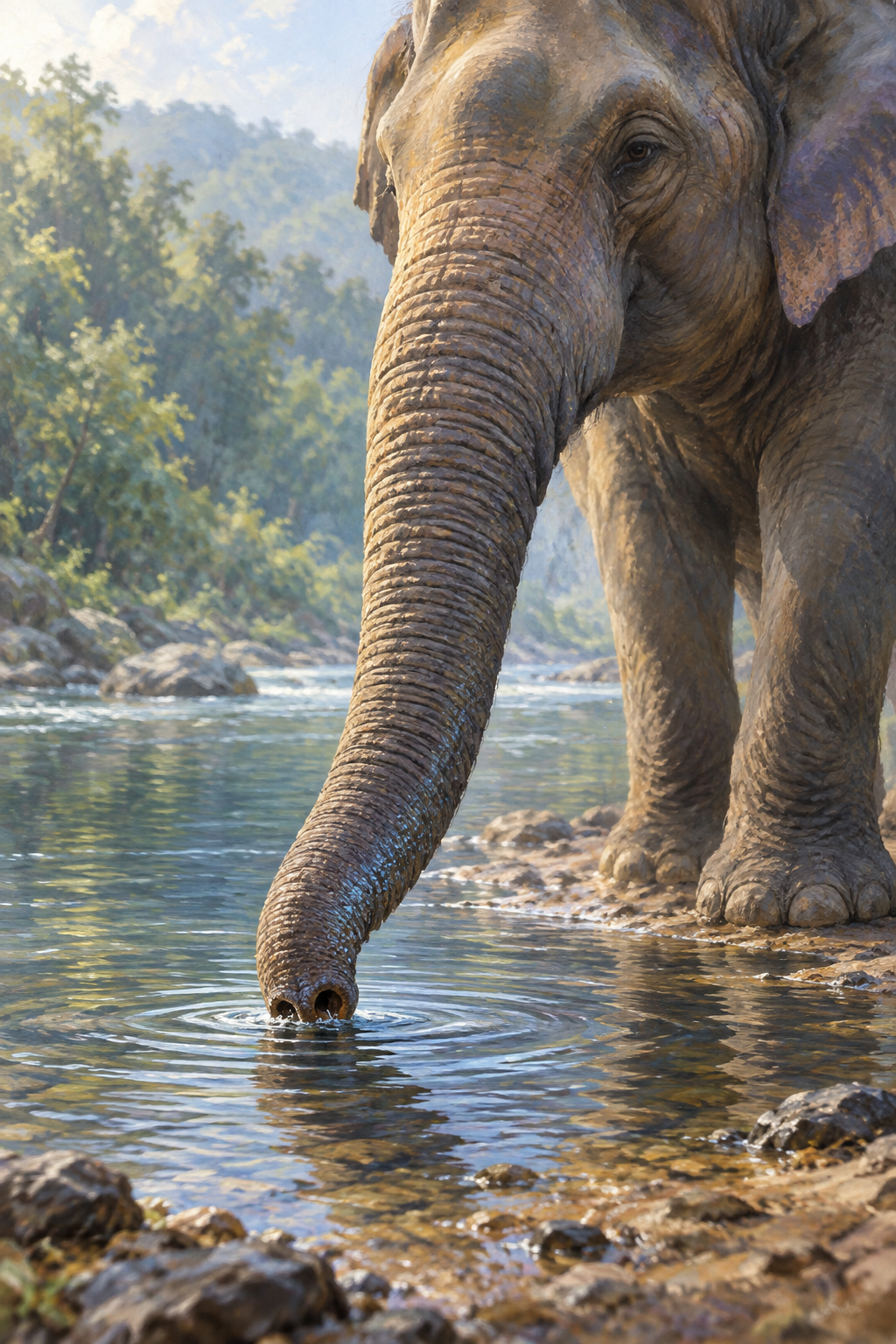
The River Answers a Gentle Giant
Critique
Introduction An elephant lowers its trunk to a shallow river. Its head fills the right half, while trees and rocks recede leftward. A quiet action receives the scale of a close portrait. Description The elephant's eye is visible beneath a deeply folded brow, and a broad ear extends toward the right edge. Its trunk hangs in a long curve to the lower center, where the tip touches the water and sends out circular ripples. Thick legs stand on the wet bank behind it. Pebbles, larger stones, and reflections occupy the foreground, with sunlit foliage across the stream. Analysis The descending trunk is the strongest line, joining the animal's face to the ringed water. Repeated wrinkles give its surface a dense rhythm, contrasted with the broad, shifting reflections below. Warm light catches the ridges of skin and the distant leaves, while blue shadows settle in the folds and river. The cropped ear and body make the animal feel close, but the open left side preserves the setting. Interpretation and Evaluation The lowered trunk suggests drinking or investigating the surface, turning a small movement into the focal event. The ripples show its effect more clearly than a dramatic gesture would. Brown and blue tones describe both the animal and the water without flattening their differences. Careful texture in the skin, stones, and reflections gives the composition physical weight, while the eye keeps the large form attentive and calm. Conclusion At first the elephant's size dominates; closer viewing centers on the trunk's delicate contact with water. The ripples, rocks, and shaded bank explain the action within a believable space. The image balances monumental form with a precise observation of a modest moment.
Same Subcategory
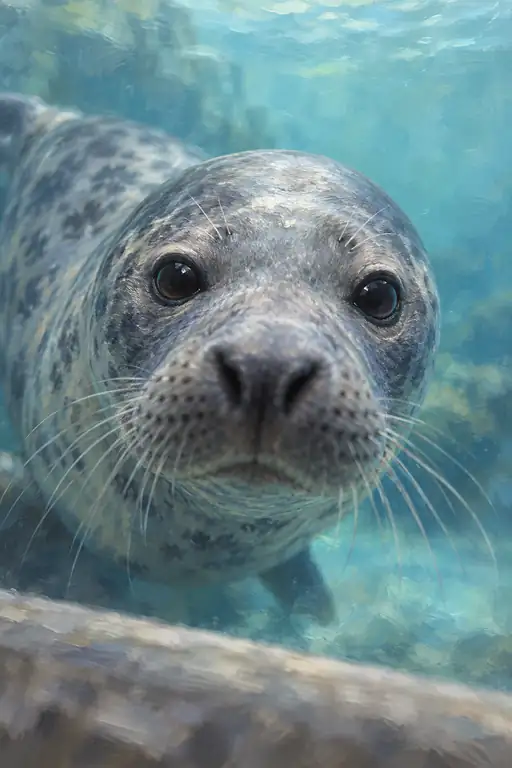 You Found Me in the Blue
Similar Artworks
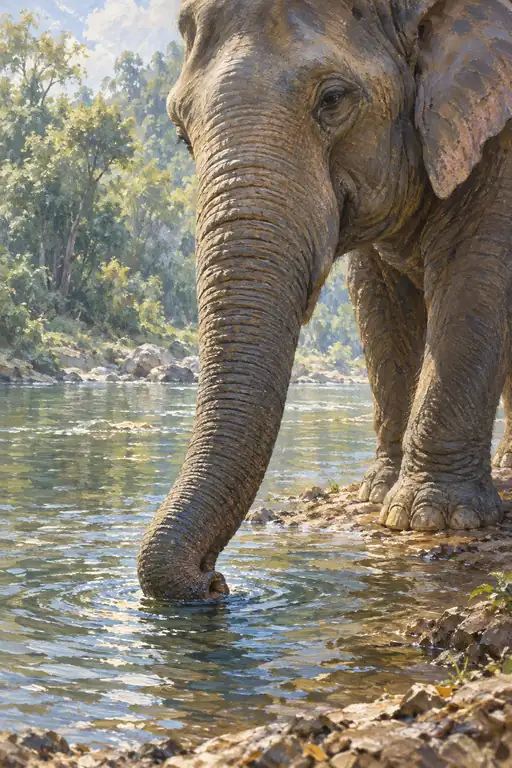 The River Feels a Gentle Weight
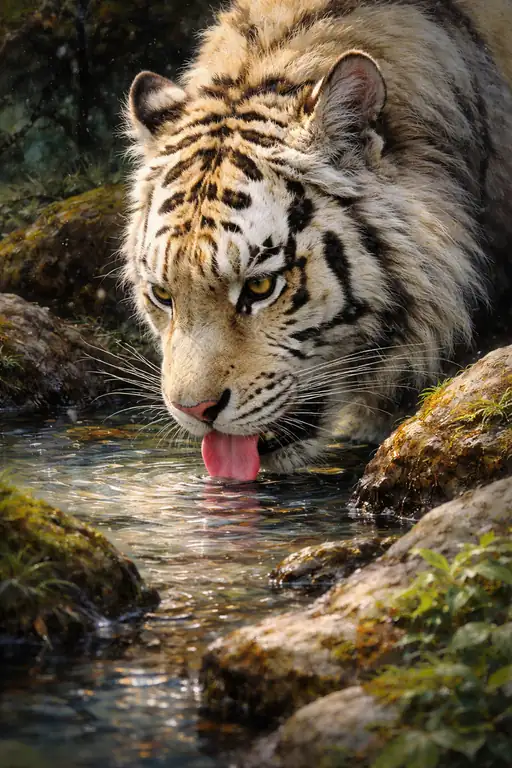 Eyes of the Wild, Heart of the Stream
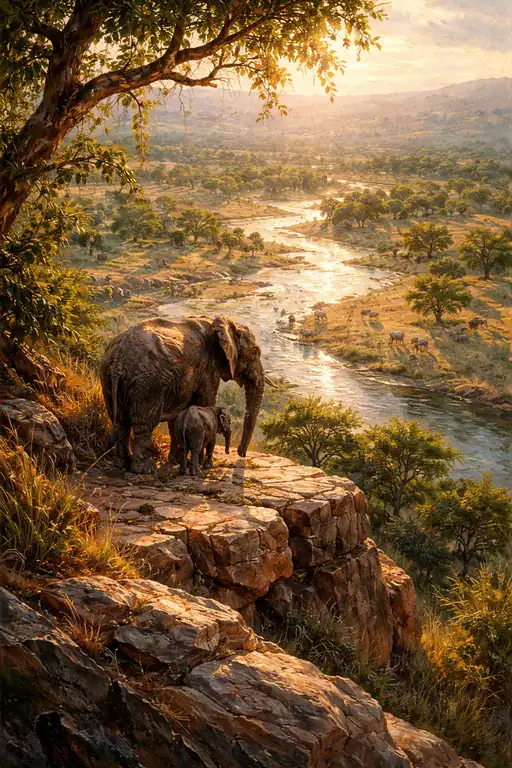 The Golden Savanna: A Mother Elephant's Gaze
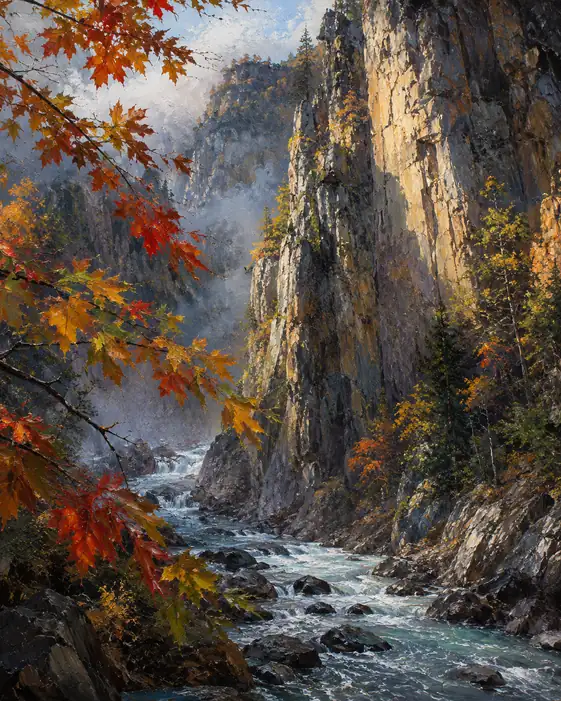 Autumn Whispers in the Sunlit Gorge
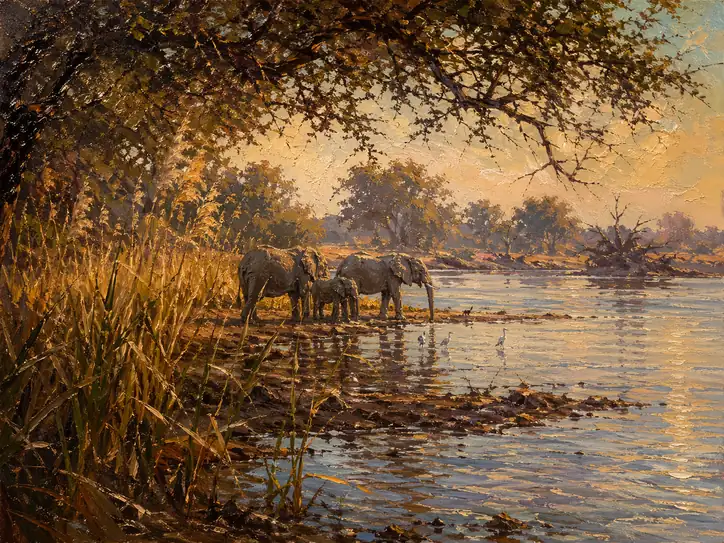 Gentle Spirits of the Riverbank
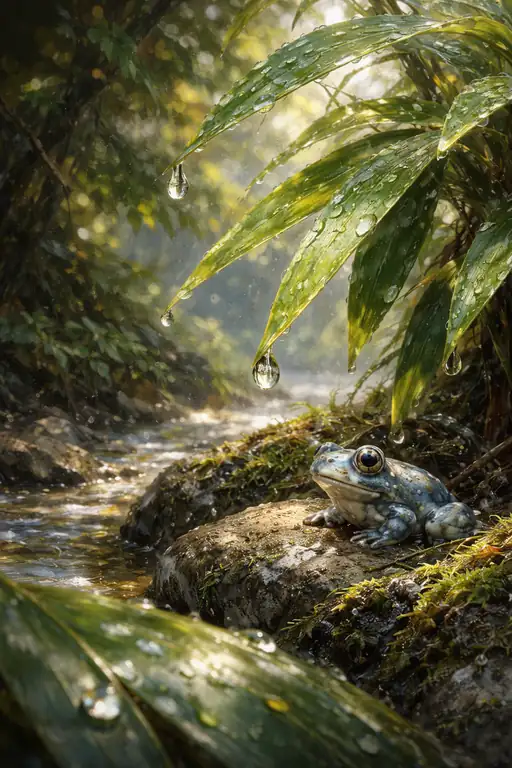 Patient Guardian of the Emerald Flow
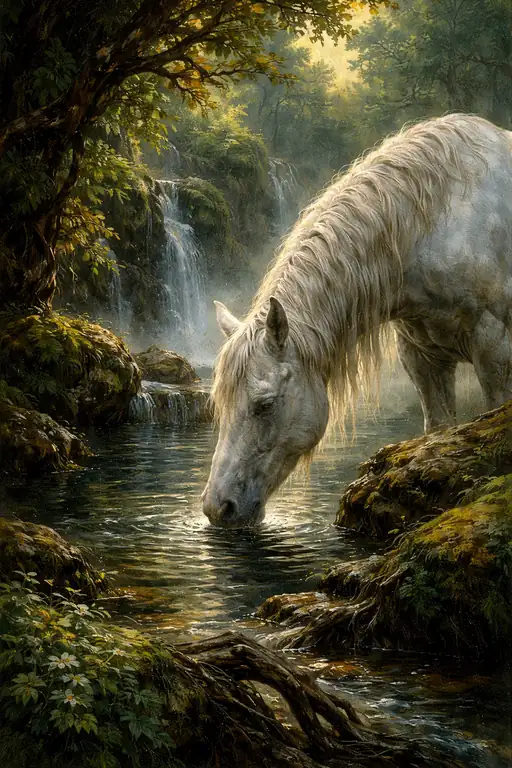 Sanctuary of the Silent Stream
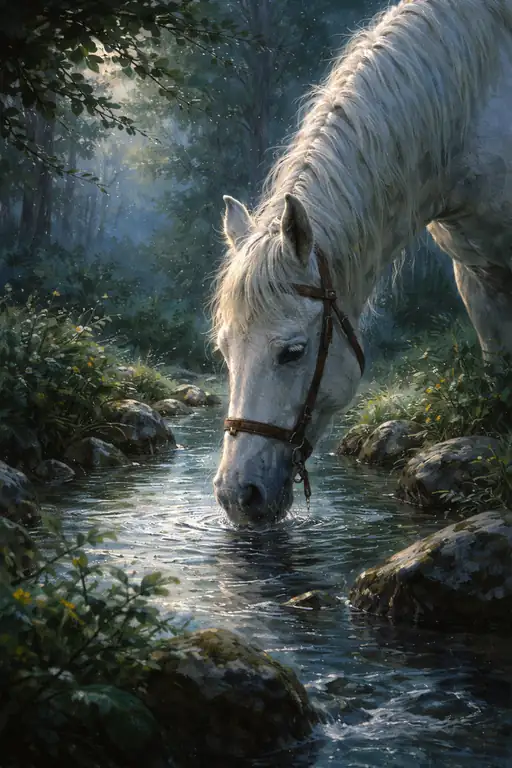 The Silent Drink of the Forest
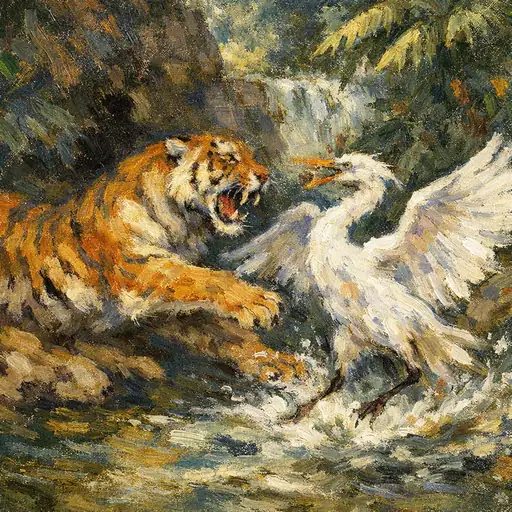 The Roar of Life Amidst the Crashing Falls
 River Stone Kept in Little Paws