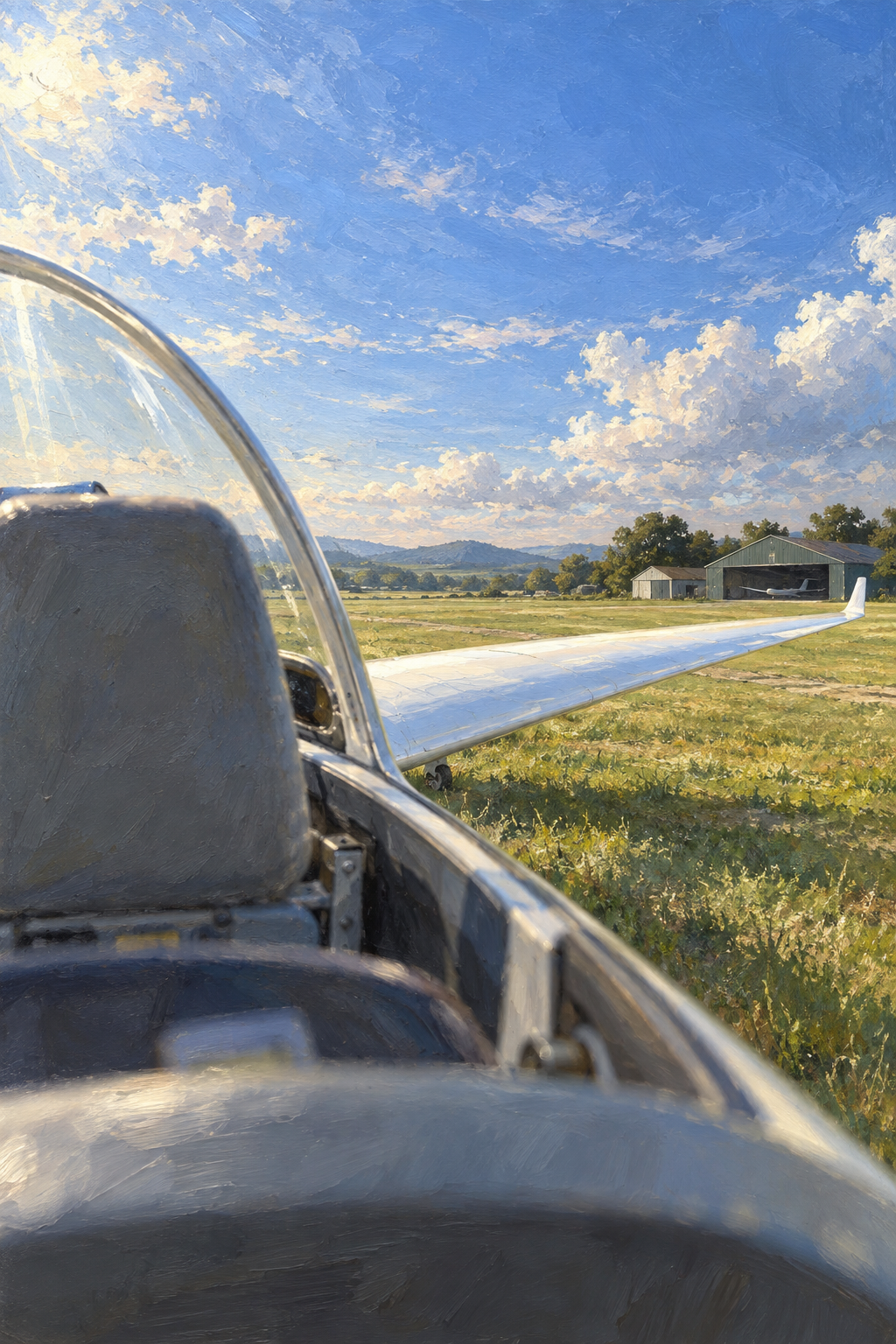
The Sky Is Already Calling
Critique
Introduction The view looks past a small aircraft's seat and canopy toward its wing and distant hangars. A wide blue sky with pale clouds dominates. The viewpoint places the viewer beside the aircraft and opens the landscape beyond. Description The dark seat and cockpit rim fill the left foreground. A transparent canopy arcs upward, catching streaks of light along its edge. The pale wing extends from near the center toward a hangar at the far right, ending in a small upright tip. Grass covers the airfield, with buildings, trees, and low blue hills lining the horizon beneath the clouds. Analysis The wing forms a strong diagonal that draws the eye from the enclosed foreground into open distance. Its straight, bright plane contrasts with the curved canopy and shadowed seat. Clouds occupy much of the upper frame, their broken brushwork echoing the rougher grass below. The hangar aligns with the wing's end, giving the distant structures a clear place within the composition. Interpretation and Evaluation The aircraft appears at rest, yet the wing's direction suggests the possibility of flight. The empty seat makes the viewpoint personal without showing a figure. Blue, cream, and green are balanced by dark cockpit tones, which keep the expansive sky from overwhelming the near details. The painting's varied strokes distinguish glass, metal, grass, and cloud while retaining a coherent, sunlit atmosphere. Conclusion At first the sky seems to be the main subject; closer viewing reveals how the cockpit and wing organize the whole landscape. The long diagonal joins the viewer's near position to the hangar and hills. The work succeeds in making a quiet airfield feel spatially open and full of expectation.
Same Subcategory
 Latent Thunder of the Polished Turbine
Similar Artworks
 Already Airborne in My Thoughts
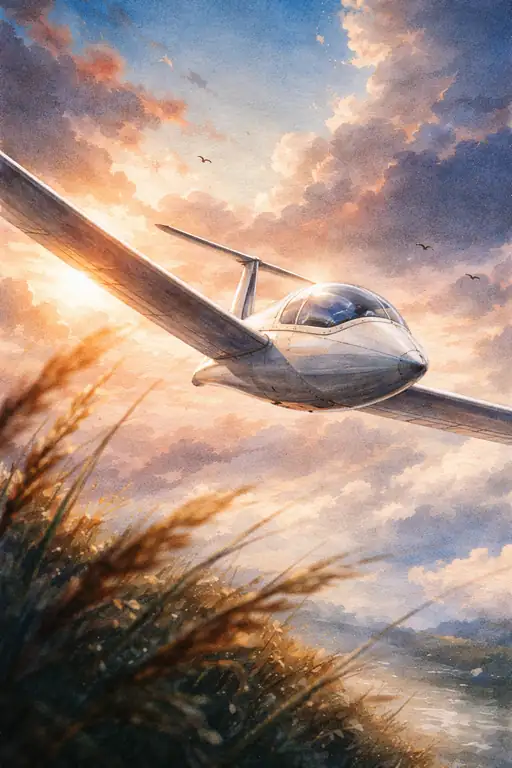 Golden Glide: The Silent Wings of Dusk
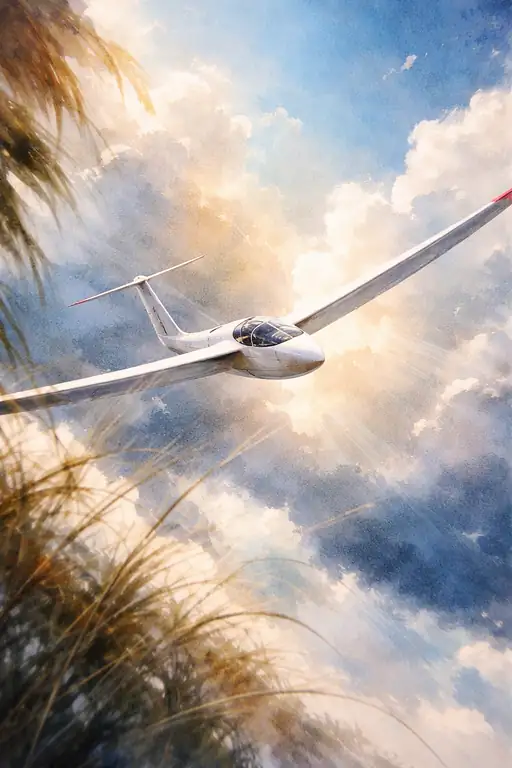 Silent Dance Among the Clouds
 The Dreamliner Waiting for Tomorrow
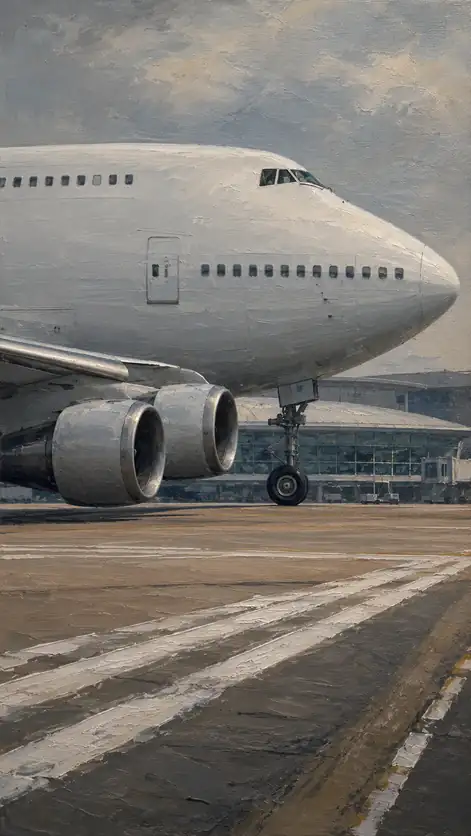 The Quiet Face Before Flight
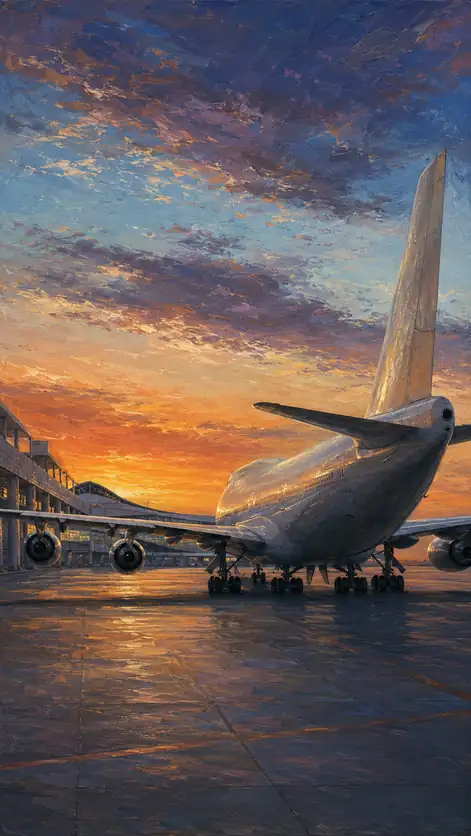 Sunset Waiting Behind the Tail
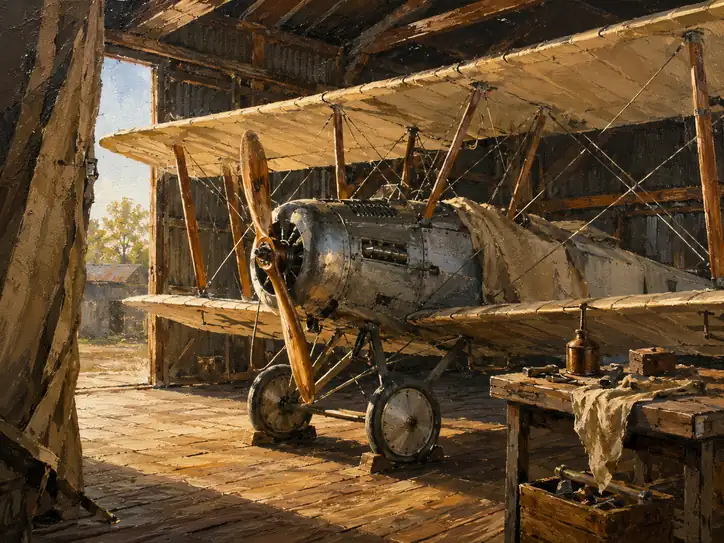 The Cradle of Flight
 Taking the Wide Blue Sky Along
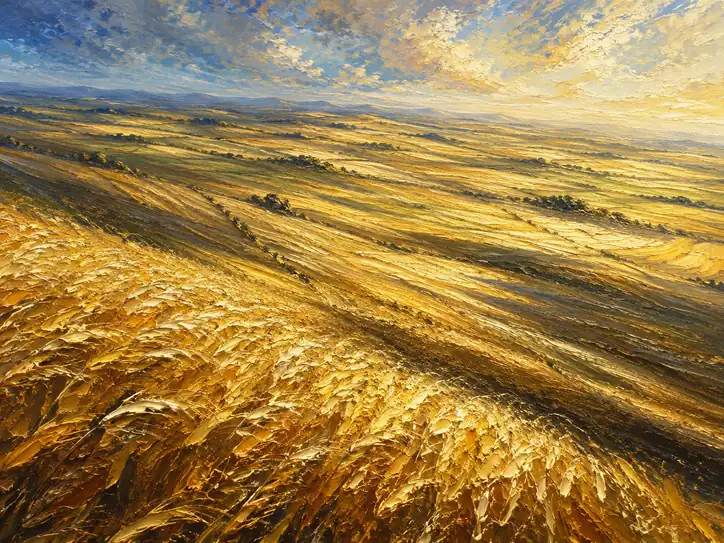 Symphony of the Golden Wind
 A Rainbow Journey to the Horizon