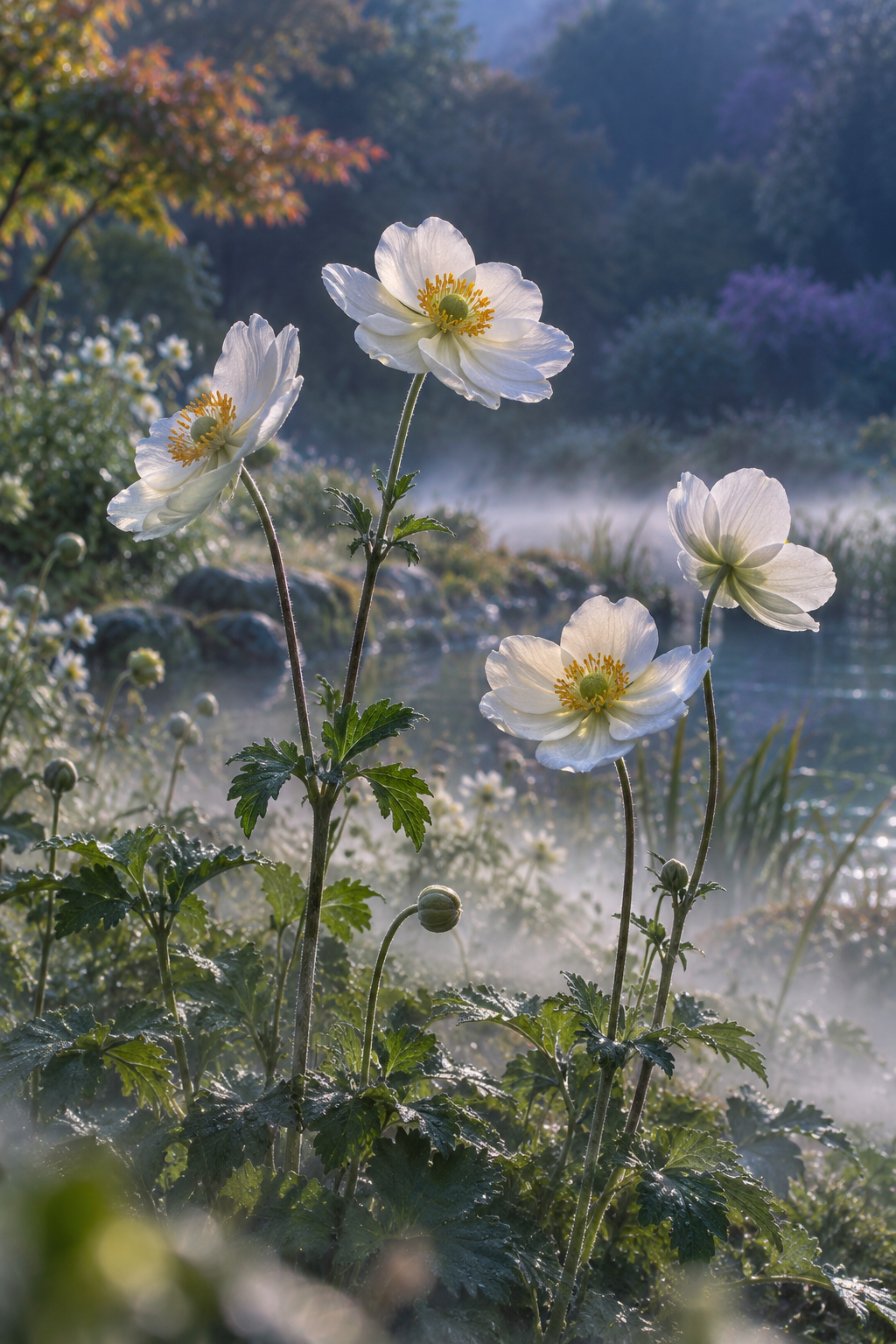
Where Morning Learns to Whisper
Critique
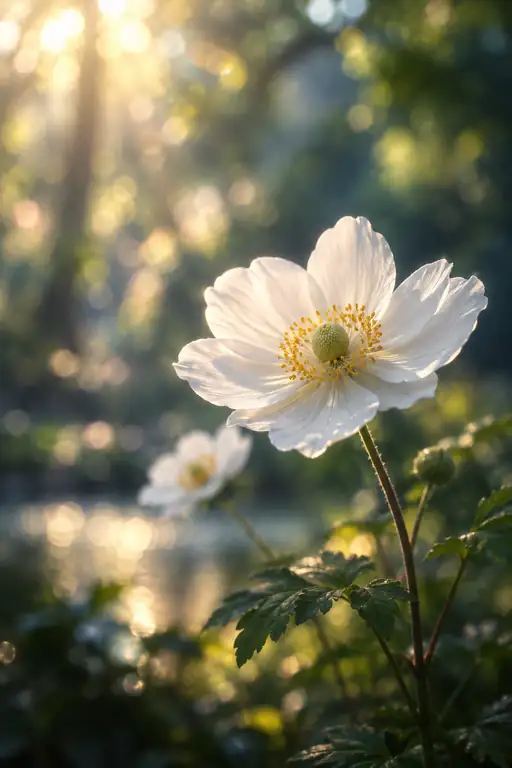
1. Introduction This luminous botanical painting captures a cluster of pure white anemones blossoming in serene solitude beside a mist-shrouded autumn lake. Bathed in the ethereal radiance of dawn, the composition articulates the pristine purity of nature and the poetic transience of an early morning landscape. 2. Description Four immaculate white anemones occupy the immediate foreground, their porcelain-like petals surrounding intricate golden stamens. Crystalline dewdrops cling delicately to the petals and slender stems, sparkling like micro-gems under backlighting. In the tranquil background, a calm body of water recedes into soft morning fog, bordered by faintly tinted autumnal foliage along distant slopes. 3. Analysis The palette is governed by cool, atmospheric harmonies: immaculate whites and fresh viridians in the foreground are cushioned by the muted teals, soft ambers, and smoky indigos of the distant shore. Atmospheric perspective is deployed masterfully, contrasting crisp foreground botanical realism with the painterly sfumato of the misty lake. Delicate rim lighting traces the petal margins, lending them an ethereal translucency. 4. Interpretation and Evaluation The painting embodies a contemplative reverence for quiet natural miracles. By freezing the fleeting interaction between early condensation, morning sunlight, and botanical form, the artist transforms an everyday lakeside view into a meditative sanctuary. The composition avoids theatrical excess, relying instead on understated elegance and spatial clarity to convey themes of purity, renewal, and seasonal transition. 5. Conclusion With its exquisite handling of morning light, crystalline water droplets, and atmospheric depth, this work stands as a triumph of lyrical botanical realism. It invites the audience into a profound space of tranquility and pristine natural wonder.
Same Subcategory
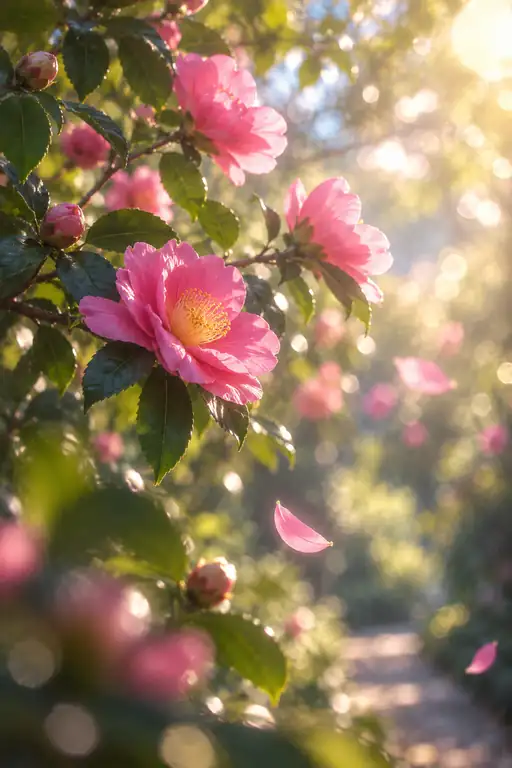 One Petal Takes the Sunlit Path
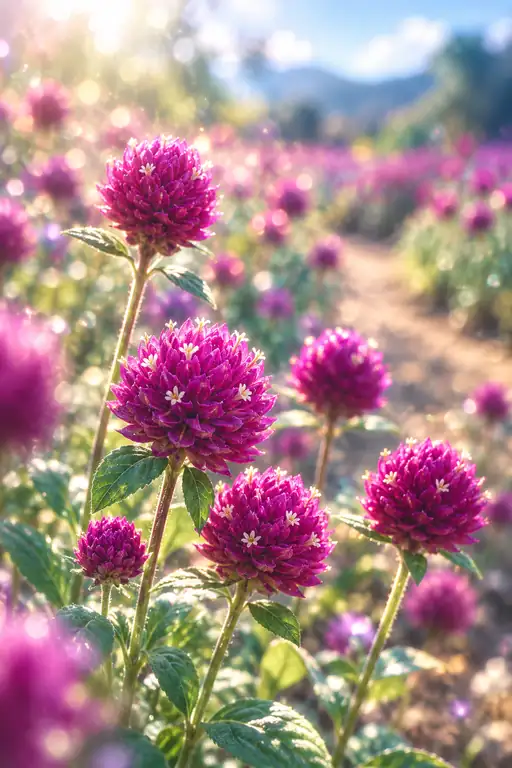 The Path Through Pink Light
Similar Artworks
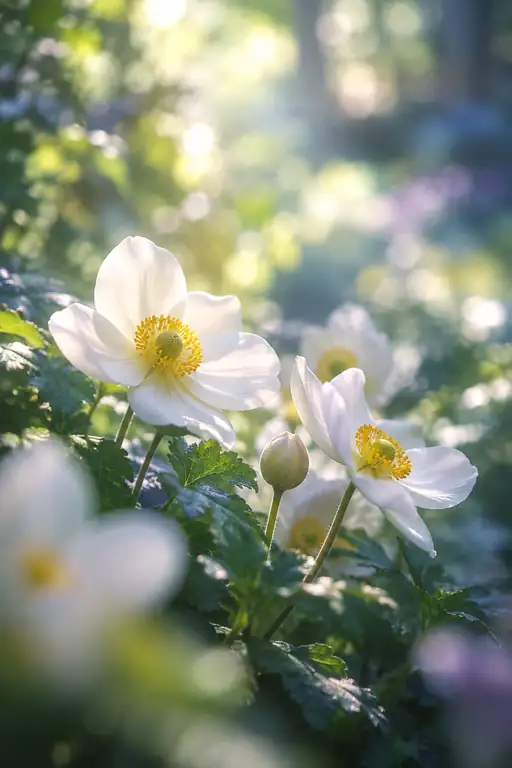 The Small Silence Between Petals
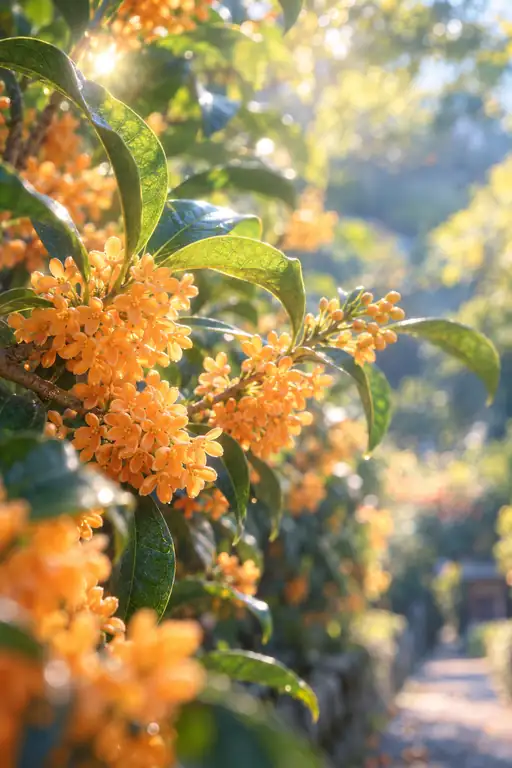 The Fragrance That Led Me Home
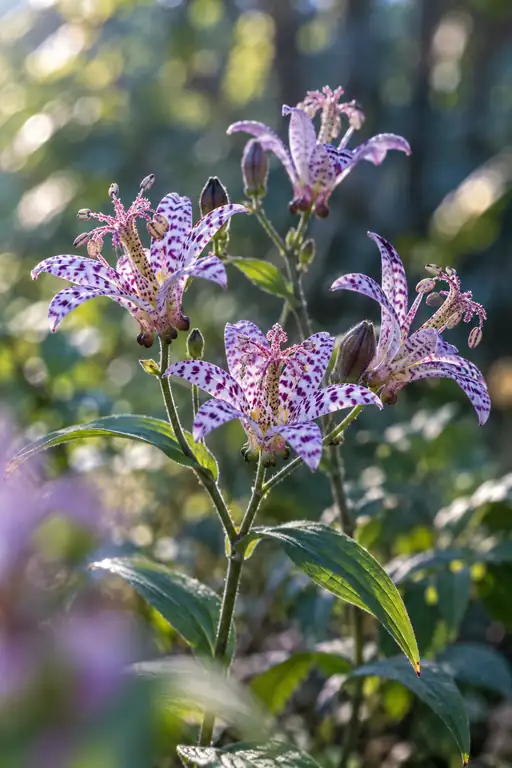 My Quiet Resolve to Bloom
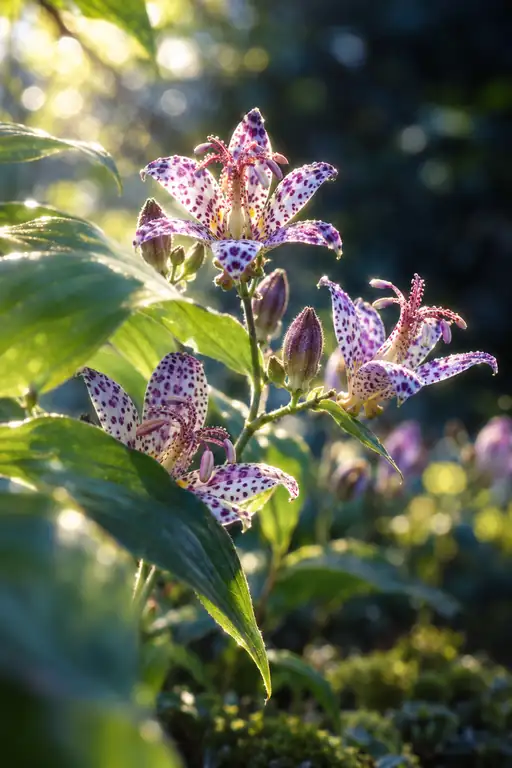 The Secret Geometry of Shade
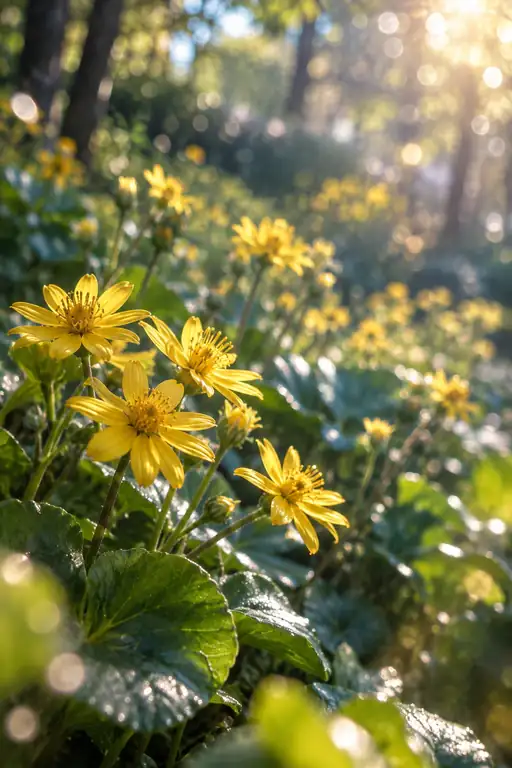 The Forest Keeps a Little Sun
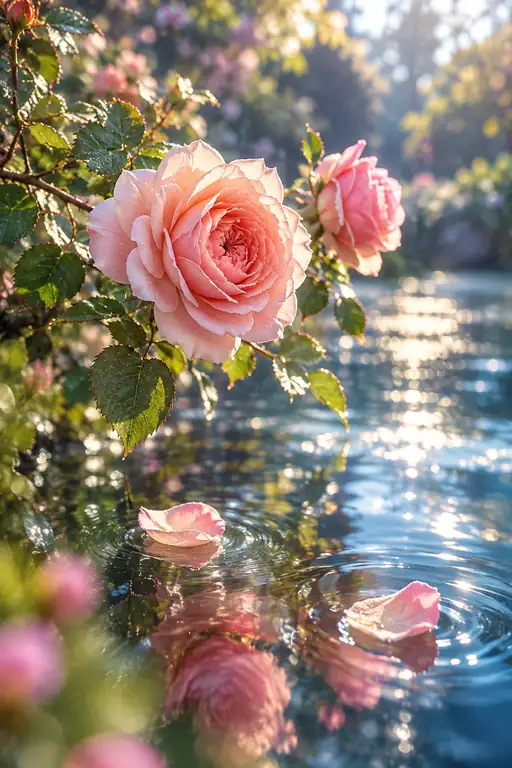 What the Water Remembers
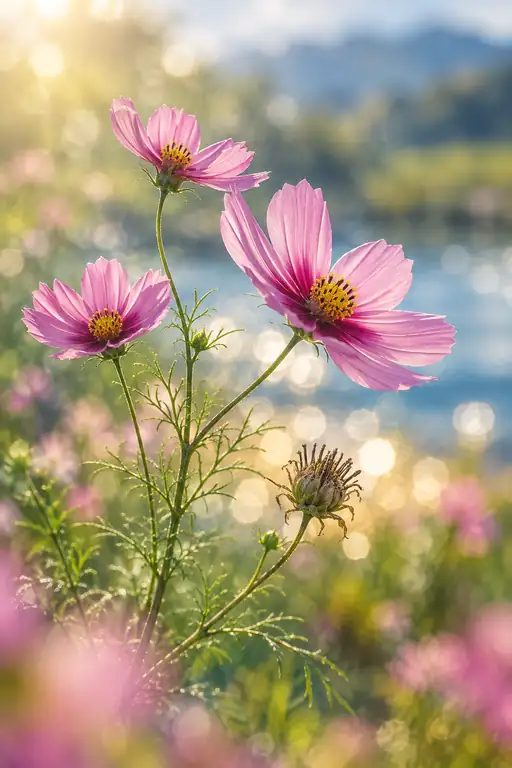 The Bloom and What Comes After
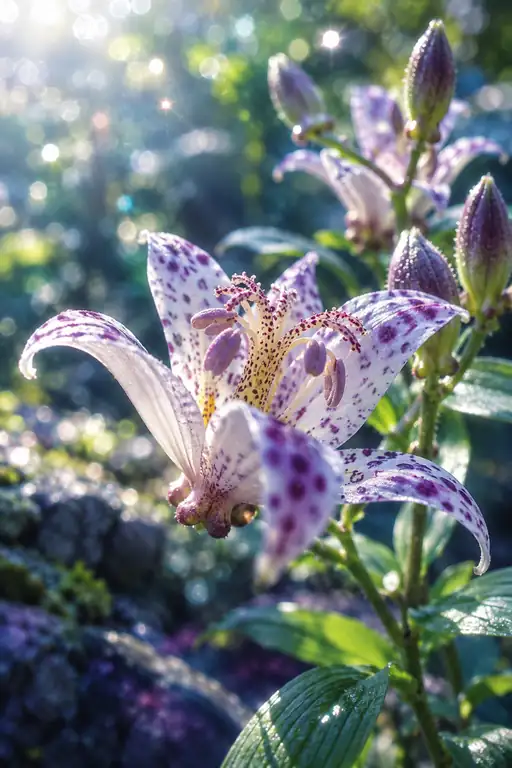 An Unwritten Pattern of Light
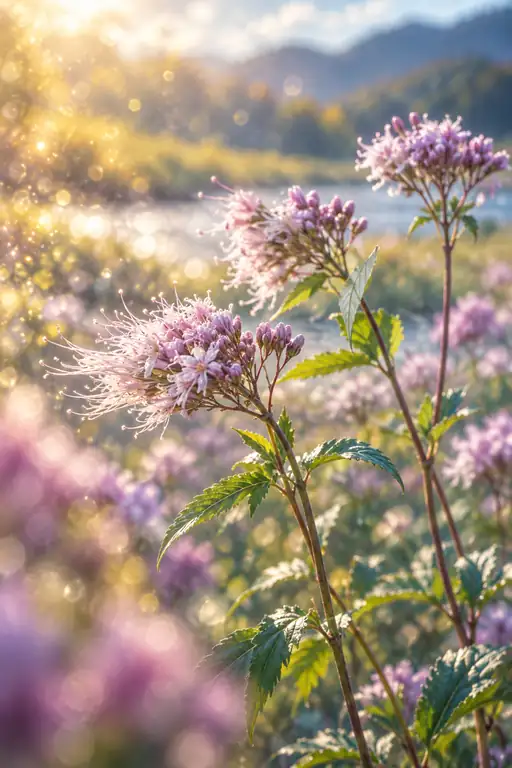 When the Meadow Caught Fire with Light
 Sunset Sparkles and the White Anemone