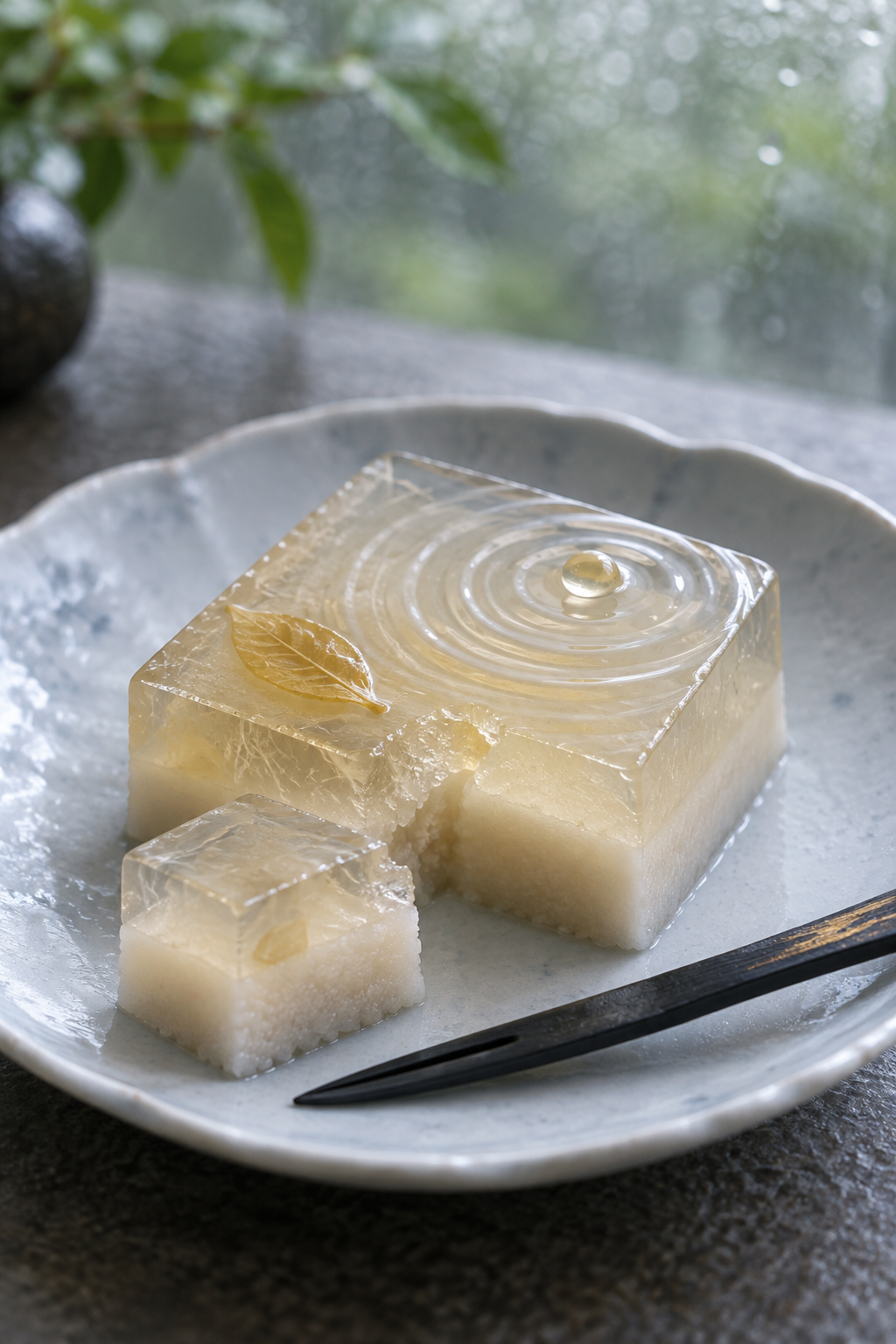
The First Ripple of Rain
Critique
Introduction A translucent square confection rests on a pale plate. A raised drop, circular ridges, and an amber leaf animate its upper surface. Quiet light makes transparency the chief subject. Description The block stands near the center. A portion cut from its front exposes a cloudy lower layer under the clear top. Thin threads appear inside it. A black pick crosses the plate, while blurred leaves and a rain marked window soften the background. Analysis Straight edges establish weight, while circular marks introduce movement. Light passes through the clear layer and gathers along cut edges, separating transparent and opaque regions. The leaf supplies warmth within a cool setting. The dark pick balances the pale mass above it. Interpretation and Evaluation The surface recalls the rings made by a drop on water, yet the precise cut keeps the object tangible. This combination of fluid imagery and solid form gives the confection a restrained imaginative quality. The composition is carefully spaced: the detached piece makes the interior visible without hiding the ripples. Delicate rendering of reflections, trapped threads, and granular lower layer distinguishes materials that might otherwise merge in such a limited palette. Conclusion The first impression is of a transparent, almost weightless square. Looking longer reveals the substantial lower layer and the carefully opened front edge. Through this shift, the still life turns a simple serving into a measured study of light passing through different surfaces.
Same Subcategory
 Where Chestnut Ridges Part
Similar Artworks
 An Autumn Leaf Beside the Ripple
 A Crescent Full of Autumn
 Moonlit Gifts Tied in Clear Silk
 The Moon Keeps a Chestnut Secret
 Autumn Hidden in a White Moon
 Three Small Lanterns for Autumn Night
 A Crescent Carved from Autumn
 Three Steps into Spring Green
 A Path of Moonlight to Me
 Moonlight on a Quiet Shore