The Sweetest Way Down
Critique
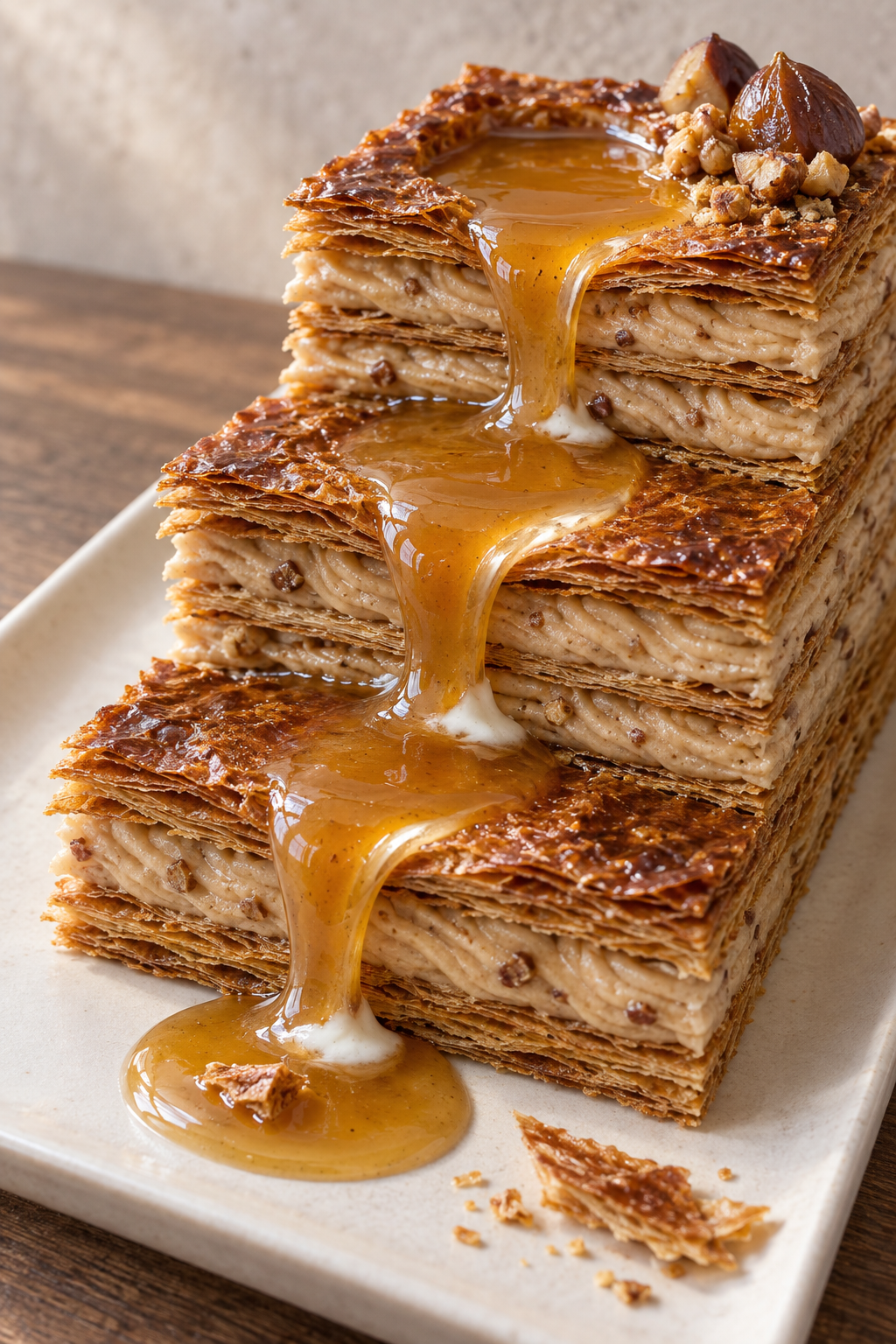
Introduction This chestnut pastry forms a broad three-step terrace down which thick amber glaze flows. The close view emphasizes crisp sheets and piped filling as much as the liquid motion. Description Three rectangular tiers descend toward the front of a pale platter. Each contains thin toasted pastry layers and tan chestnut cream flecked with darker pieces. Two glossy chestnuts and chopped nuts sit on the highest tier. Pools of golden sauce cover the tops, then fall in wide ribbons from one step to the next, finally collecting at the front. The wooden table and neutral wall remain softly blurred. Analysis Parallel horizontal sheets give the tower a precise architectural rhythm. The syrup crosses those lines vertically, connecting the separate tiers into a continuous path. Its transparent amber body catches highlights at the curved edges and appears thicker where it pools. Cream swirls between the rigid sheets, adding a softer middle texture. The staircase recedes diagonally, and the chestnuts at the back mark its highest point. Interpretation and Evaluation The dessert suggests a terraced waterfall without needing a literal landscape setting. The sensation of movement comes from glaze bending over the edges while the pastry stays rigid. The repeated cream bands make the stack appetizing and prevent the flowing surface from hiding its construction. Two chestnuts at the top give a clear visual cue to flavor and balance the large pool at the bottom. Conclusion The composition succeeds by allowing each material a different role. Pastry holds shape, cream fills it, and glaze moves across it. The close framing makes the small cascade feel generous while keeping the layered craft in view.
Same Subcategory
 A Journey Held in Blue
Similar Artworks
 Amber Descending, Layer by Layer
 A Waterfall Between a Thousand Layers
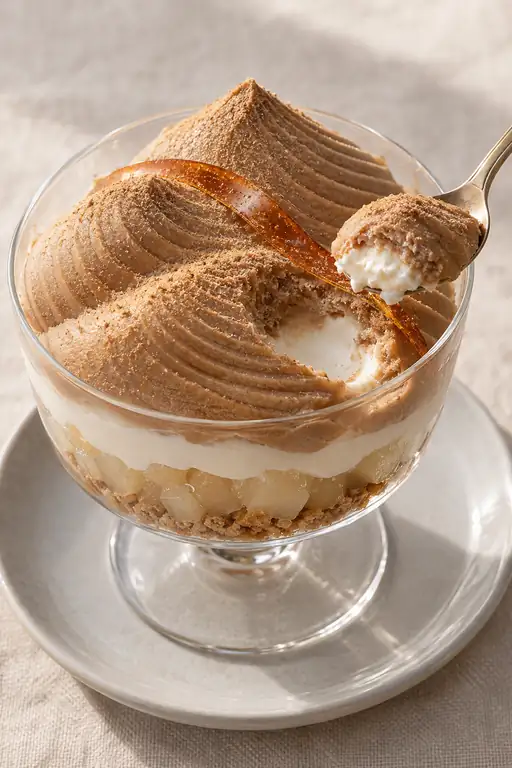 The Summit Beneath the Spoon
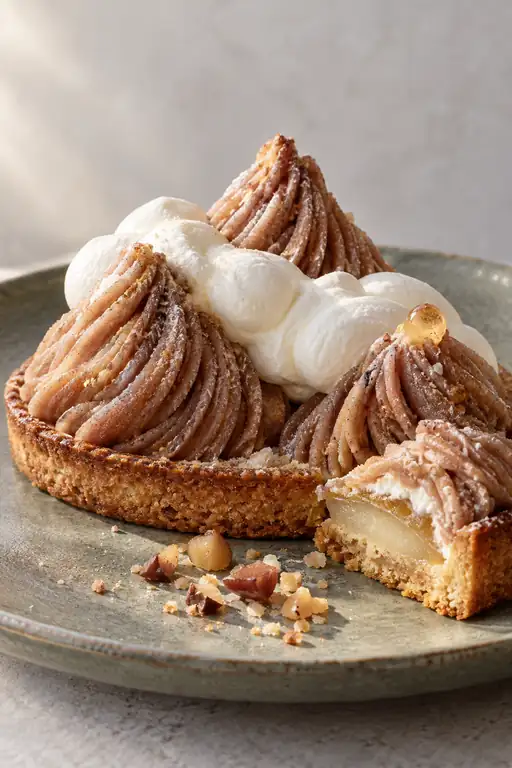 Clouds Between Chestnut Peaks
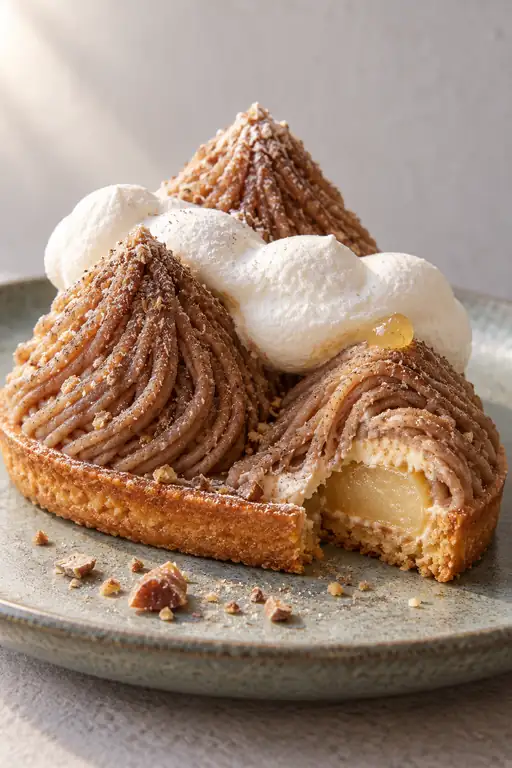 The Sweet Peaks of Early Autumn
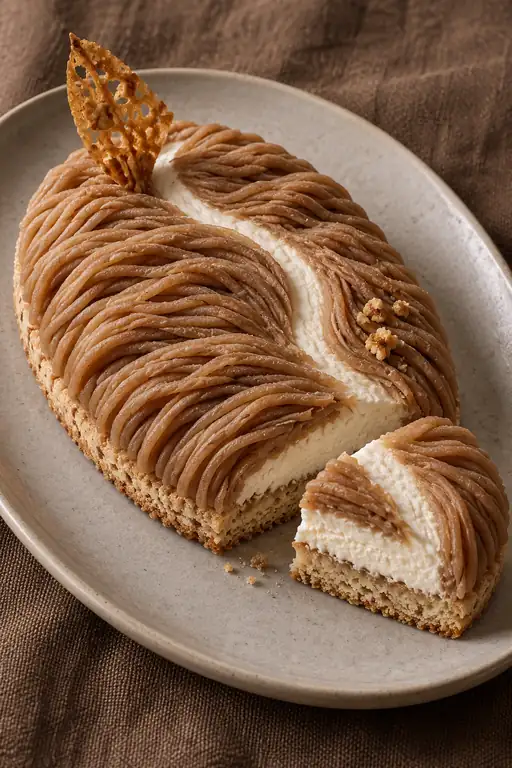 Where Chestnut Ridges Part
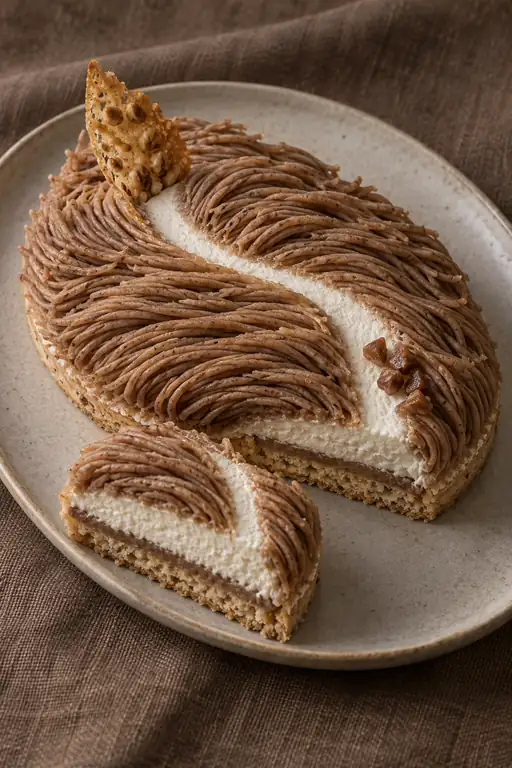 The White Path Through Autumn
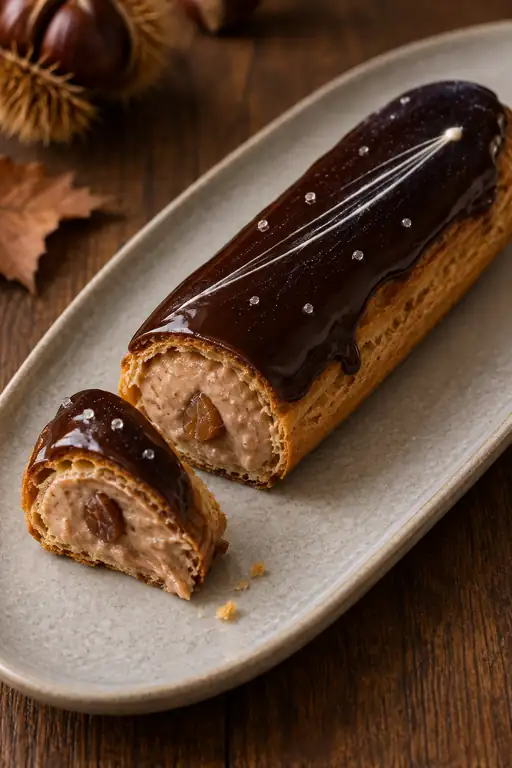 Make a Wish on the Dark Glaze
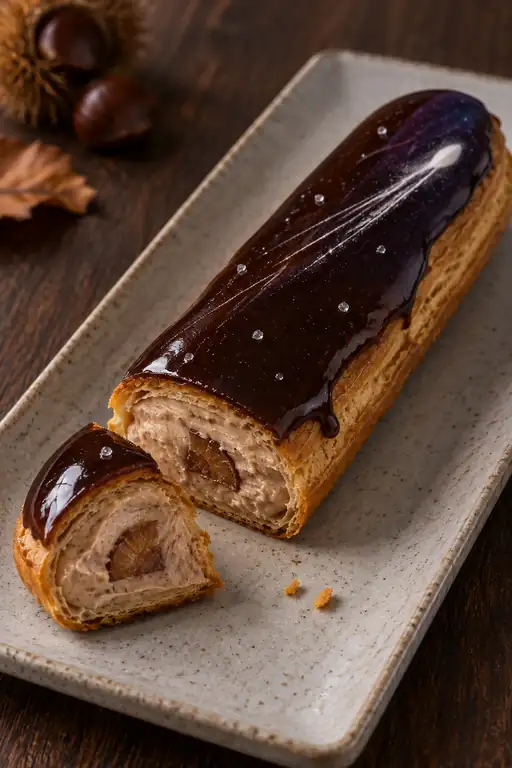 The Sweet Tail of a Falling Star
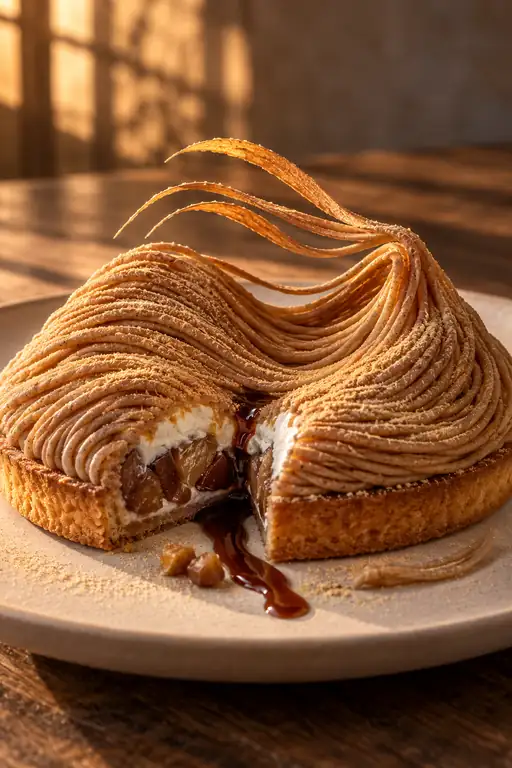 When the Chestnut Wind Rises