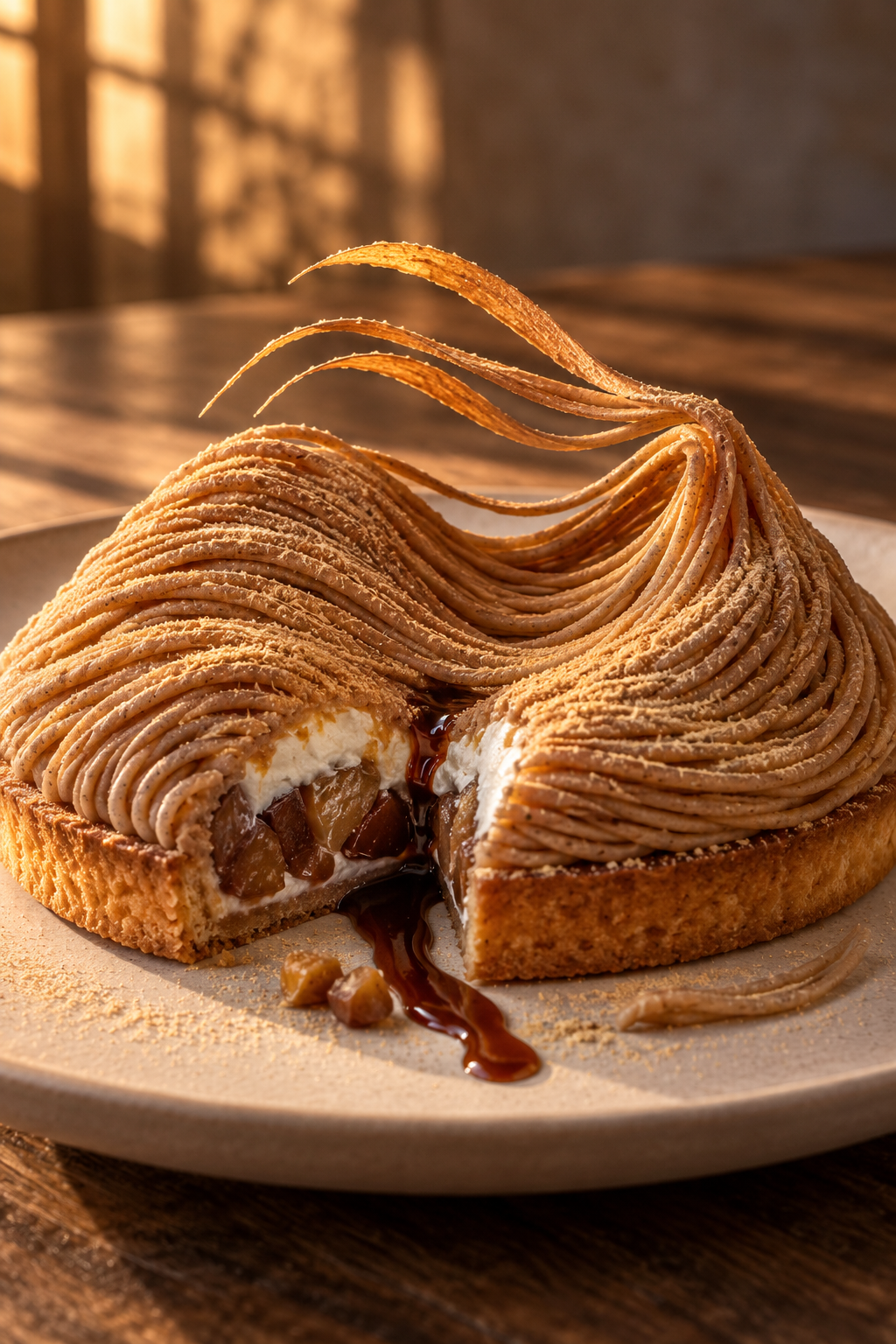
When the Chestnut Wind Rises
Critique
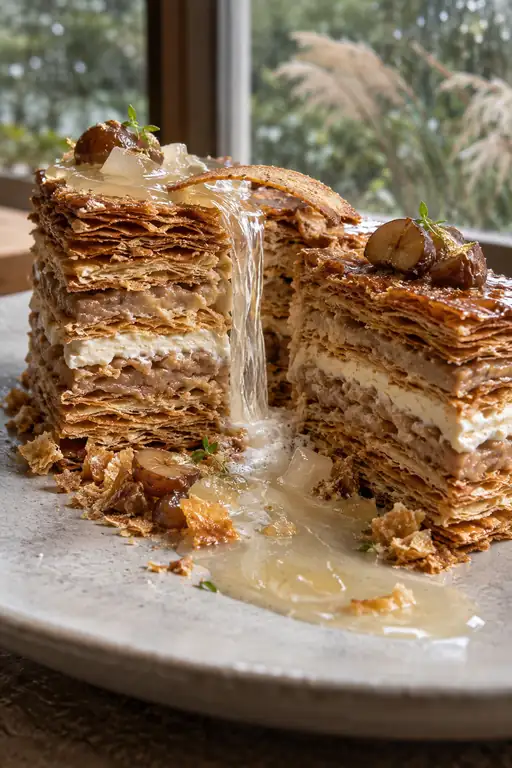
Introduction This chestnut tart turns piped cream into a sweeping wave. Fine brown strands rise from two sides and bridge a cut opening above glossy sauce. Description Two rounded portions of tart sit apart on a pale plate. Their tops carry closely packed ribbons of tan chestnut cream that curve upward and flick into thin free ends. The opening between them reveals white cream, chunky brown fruit, and a dark syrup that flows forward across the plate. Warm late-day light enters from a window, casting broad patterns over the wooden table and wall. Analysis The repeated piping lines create a rhythmic surface that rises into open air, turning a dense topping into apparent motion. The two halves mirror one another loosely, framing the dark gap as the visual center. Brown cream and golden crust share a warm palette, but differences in grain and gloss keep them distinct. The syrup's downward path counters the upward sweep of the thin strands. Interpretation and Evaluation The wave form may suggest wind or flowing hair, yet the image does not require a fixed story. Its strength is the physical contrast between strands that seem impossibly light and a heavy fruit-filled base. The broken center makes that contrast accessible by showing how the layers meet. Strong side light catches every ridge and makes the piping technique legible rather than merely decorative. Conclusion The dessert succeeds as a study of movement made from texture. Rising threads, flowing sauce, and a stable tart shell pull in different directions while remaining one composition. The open cut rewards close attention to the edible structure beneath the flourish.
Same Subcategory
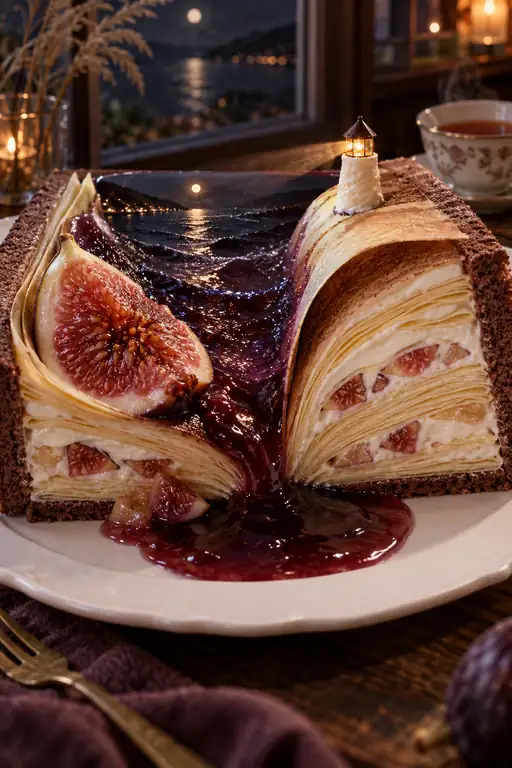 A Beacon Across the Fig Sea
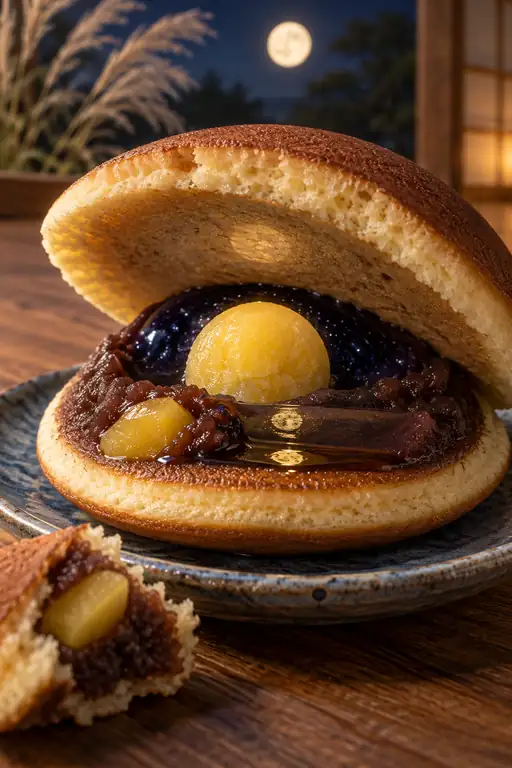 A Second Moon Beneath the Pancake Sky
Similar Artworks
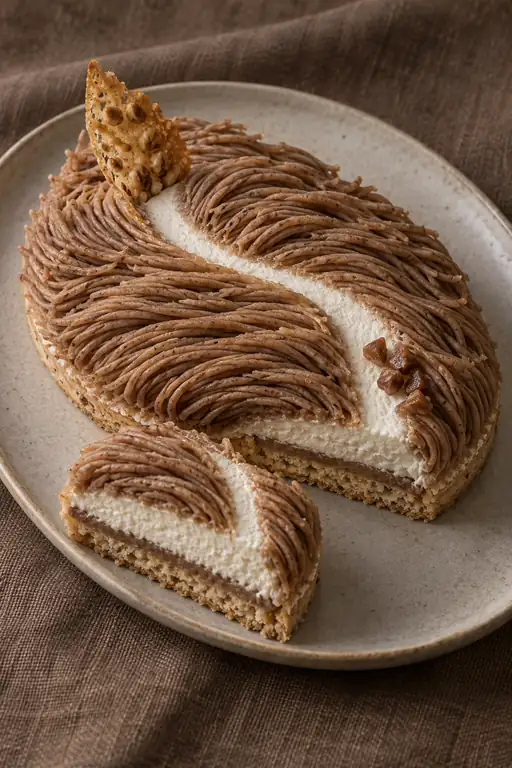 The White Path Through Autumn
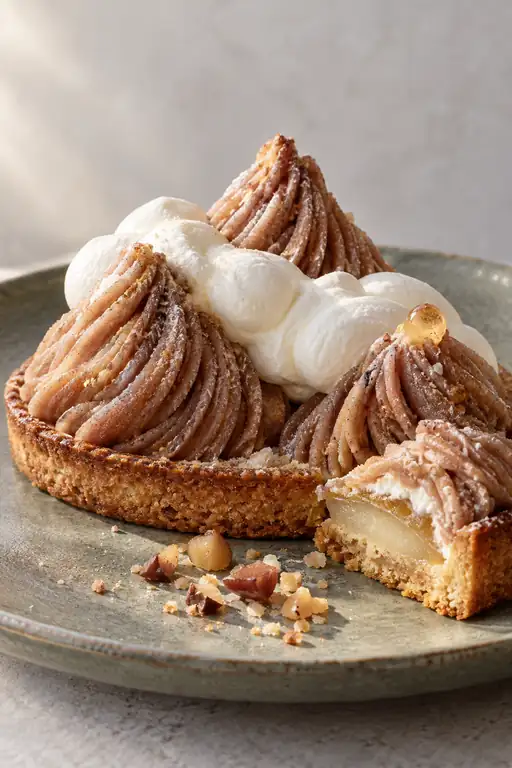 Clouds Between Chestnut Peaks
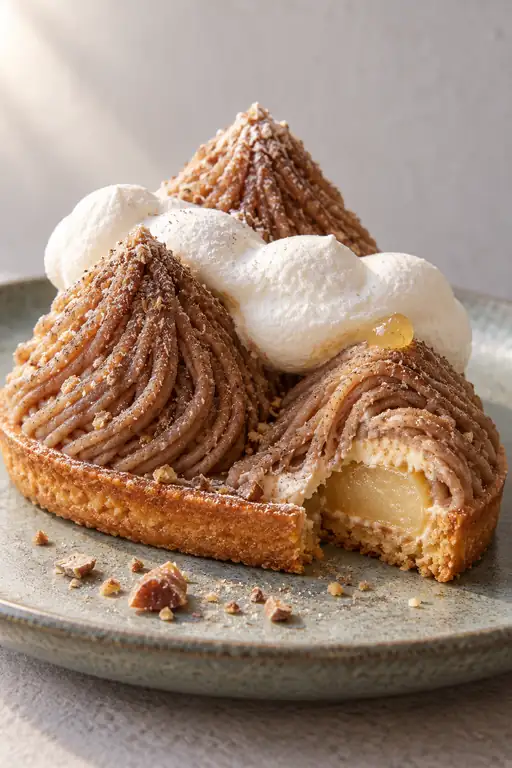 The Sweet Peaks of Early Autumn
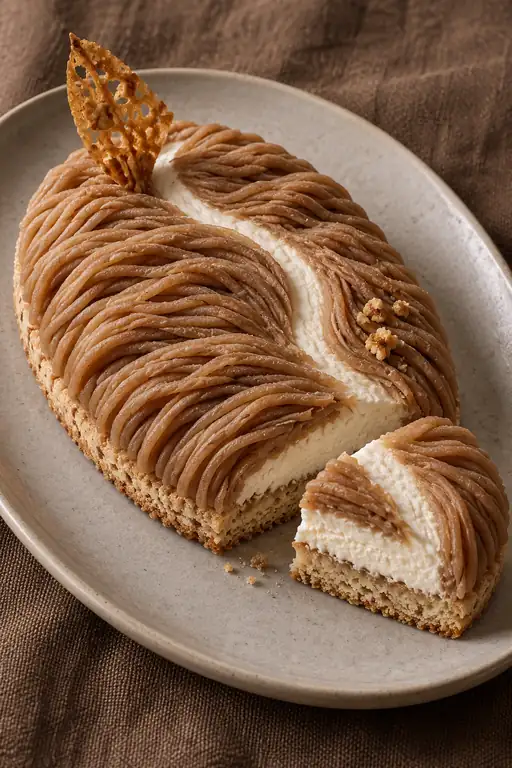 Where Chestnut Ridges Part
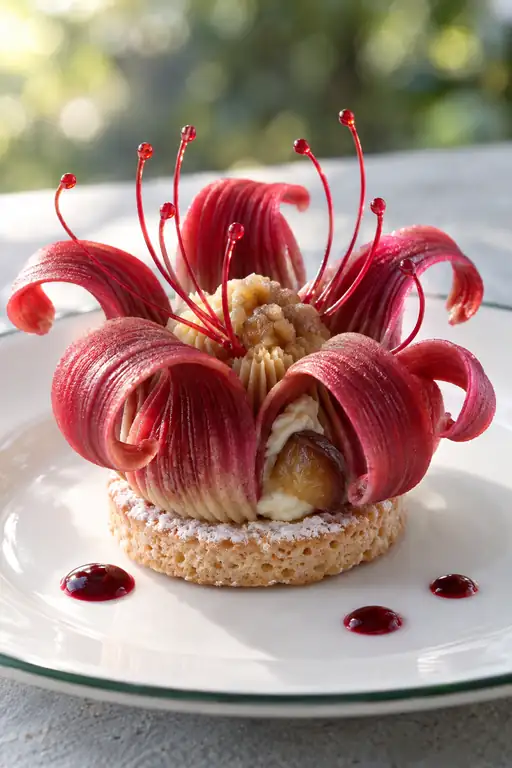 A Crimson Bloom Before the First Bite
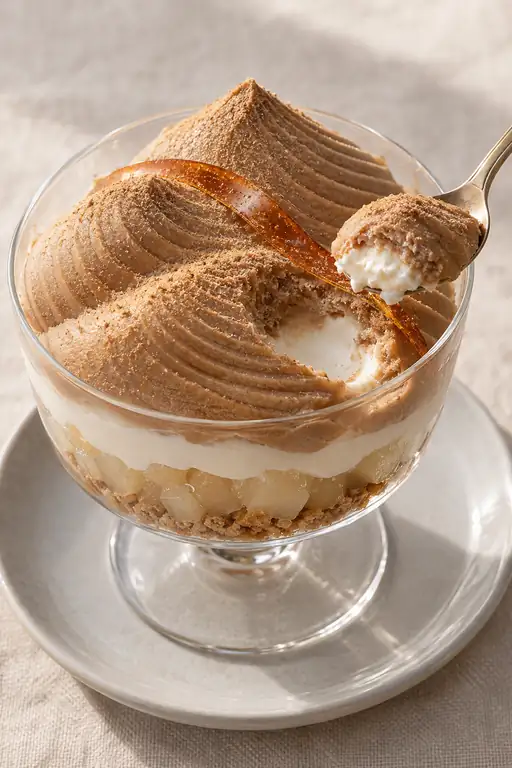 The Summit Beneath the Spoon
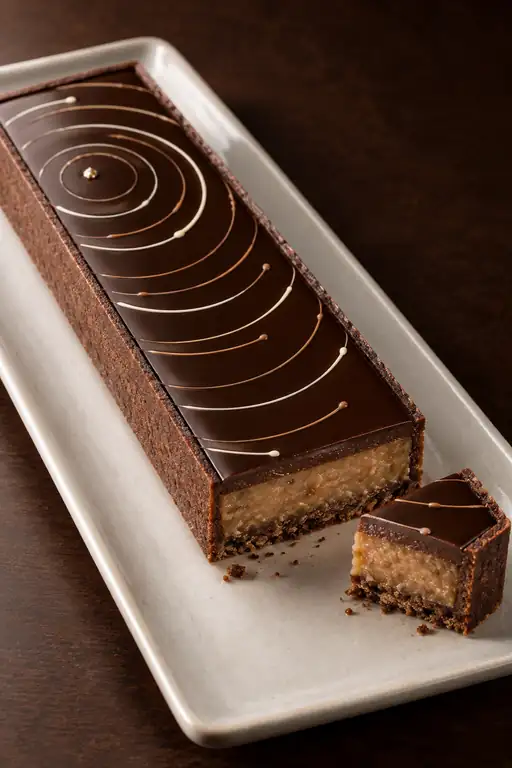 Circles Around a Golden Secret
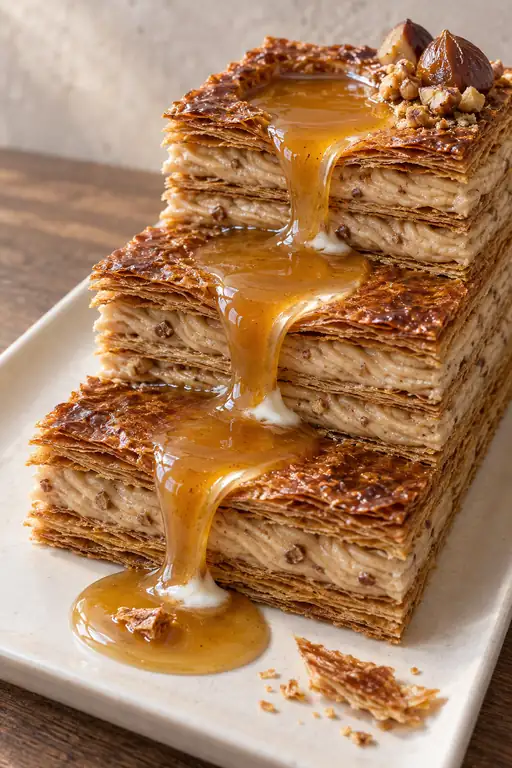 The Sweetest Way Down
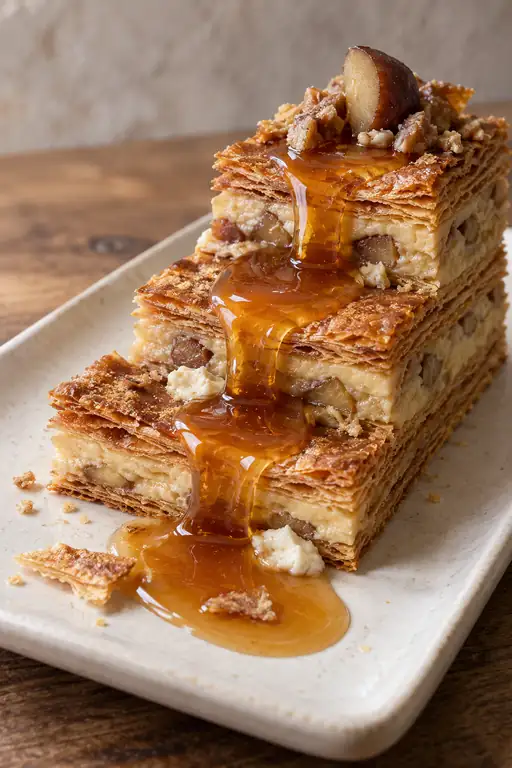 Amber Descending, Layer by Layer
 A Waterfall Between a Thousand Layers