
Autumn Learns to Fly
Critique
Introduction A large translucent orange leaf rises above three pale round sweets on a white plate. Two small red-edged bows hang along its thin stem. One sweet has been cut open, revealing orange fruit in cream. Airy ornament balances the filled sweets below. Description The leaf fills the upper half against blue sky. Pale branching veins remain visible through its amber surface, and a small broken fragment floats nearby. Its stem descends through the two bows toward the plate. Powdered sweets show orange cubes outside and within. A faint blue pattern circles the plate's rim, while the table beneath is pale and weathered. Analysis The high leaf contrasts with the low, rounded sweets. Its branching veins spread movement outward, whereas the bows draw the eye back down the stem. Orange unites suspended leaf and exposed filling. The leaf catches light at its thin edges; the powdered shells diffuse it. The blue background and plate accents cool the arrangement and make the amber tones more luminous. Interpretation and Evaluation The leaf suggests autumn, but its glasslike transparency also makes it seem exceptionally light. Dense fruit and cream ground the scene. The composition is effective because the stem joins the elevated ornament to the edible base. Clear veins, small bows, and distinct fruit cubes show careful attention to scale and detail. Restrained blue and white leave the orange forms in command. Conclusion The leaf first appears to be the main subject; closer viewing shows how it directs attention to the fruit inside the sweets. The work's strength lies in the contrast of floating transparency and substantial filling.
Same Subcategory
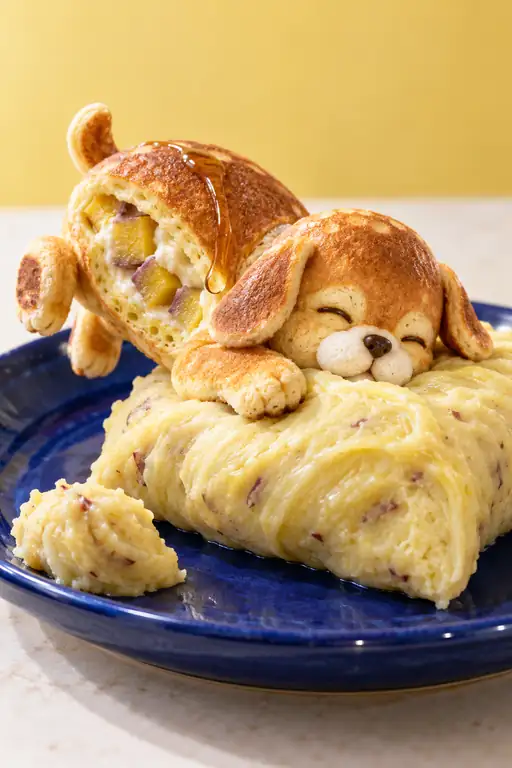 Dreaming on a Golden Pillow
Similar Artworks
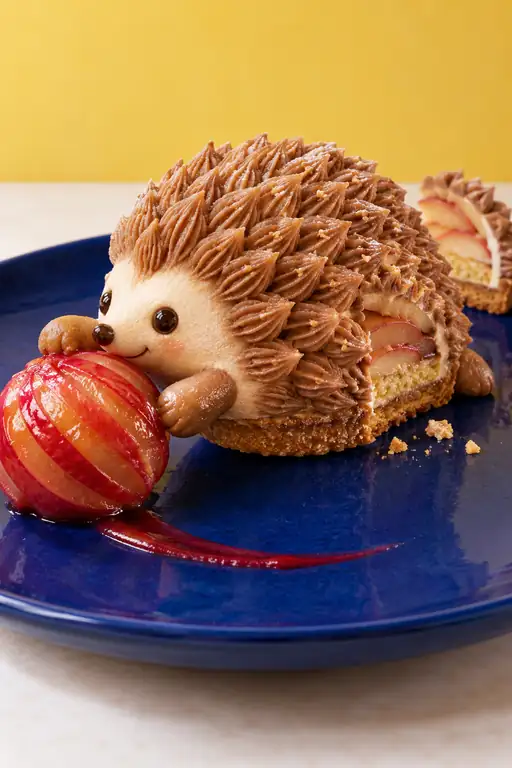 The Roundest Treasure of Fall
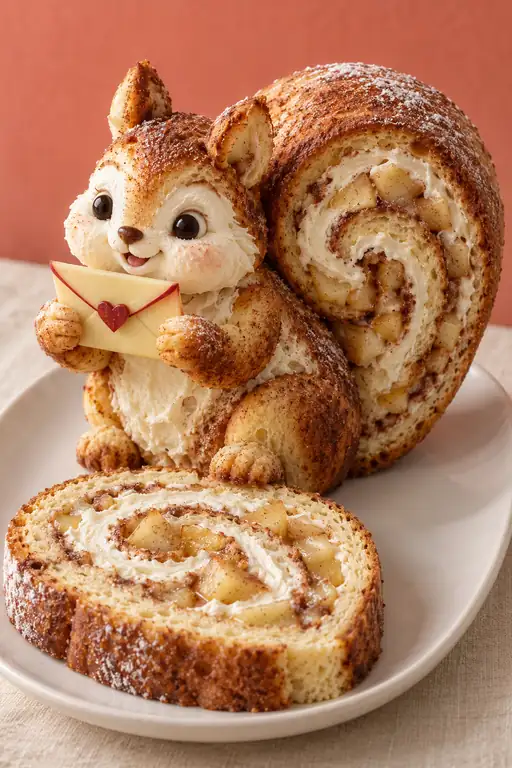 The Letter I Saved for You
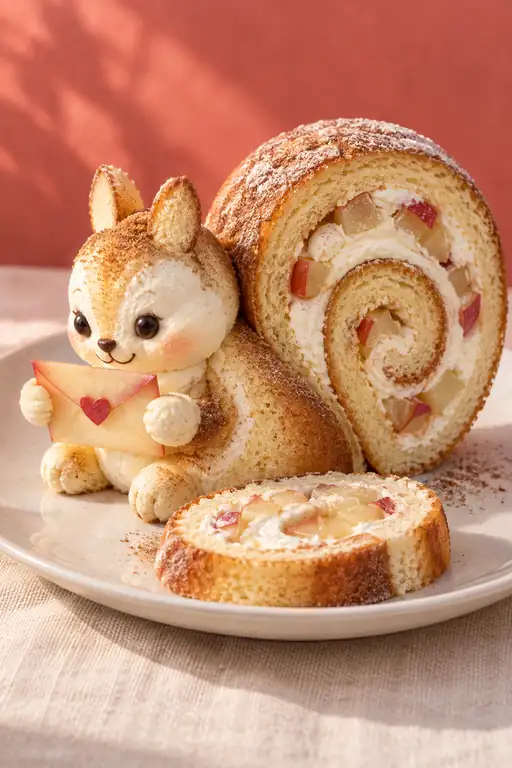 Squirrel’s Apple Letter and Cinnamon Spiral
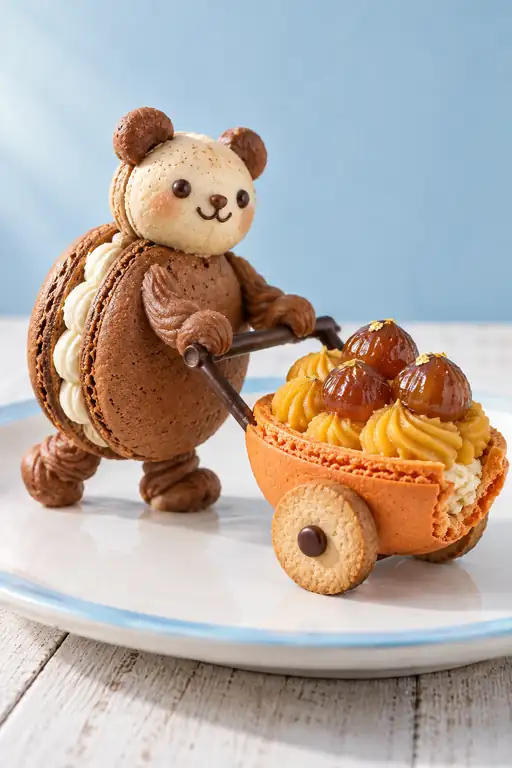 Bringing Home the Autumn Treasure
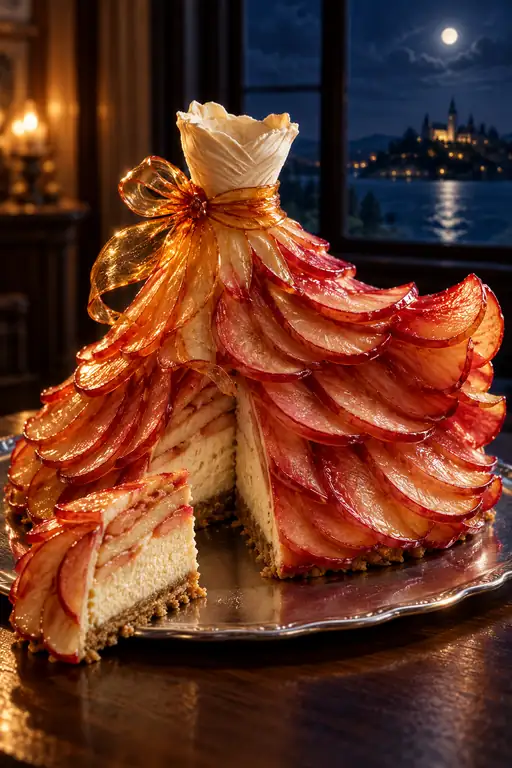 Dressed for the Moonlit Ball
 The Sweet Thing We Found Together
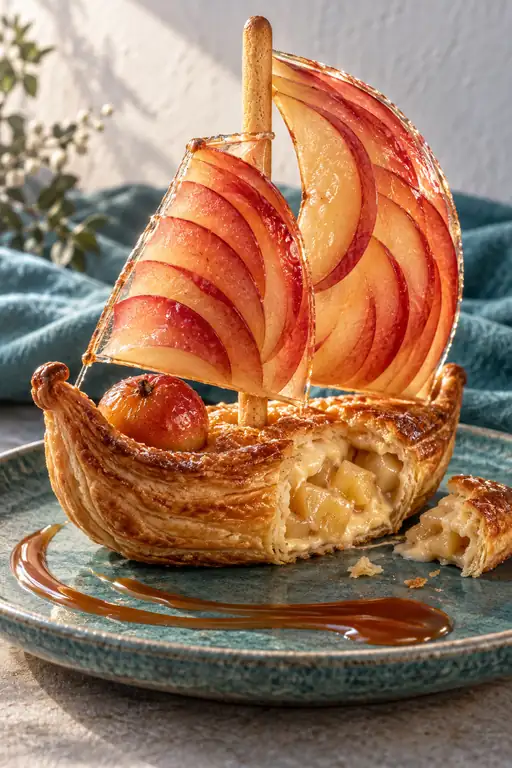 Sailing Toward the Last Light
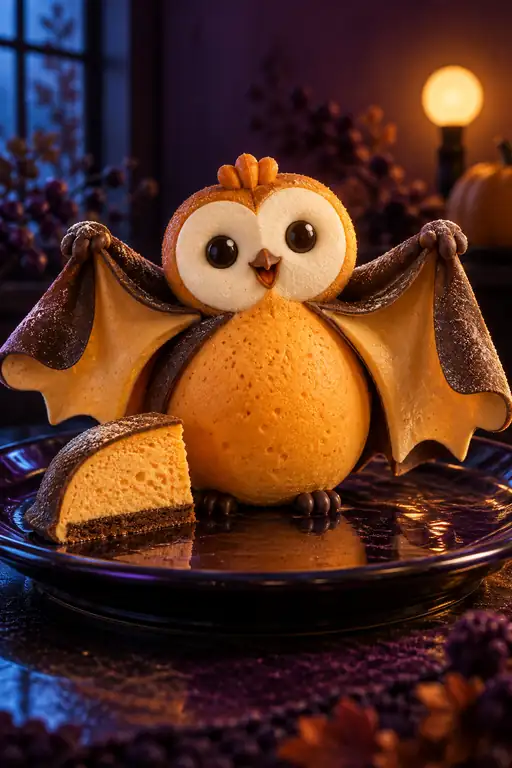 Tonight I Spread My Wings
 Carried Gently into Autumn
 Before the Midnight Bell