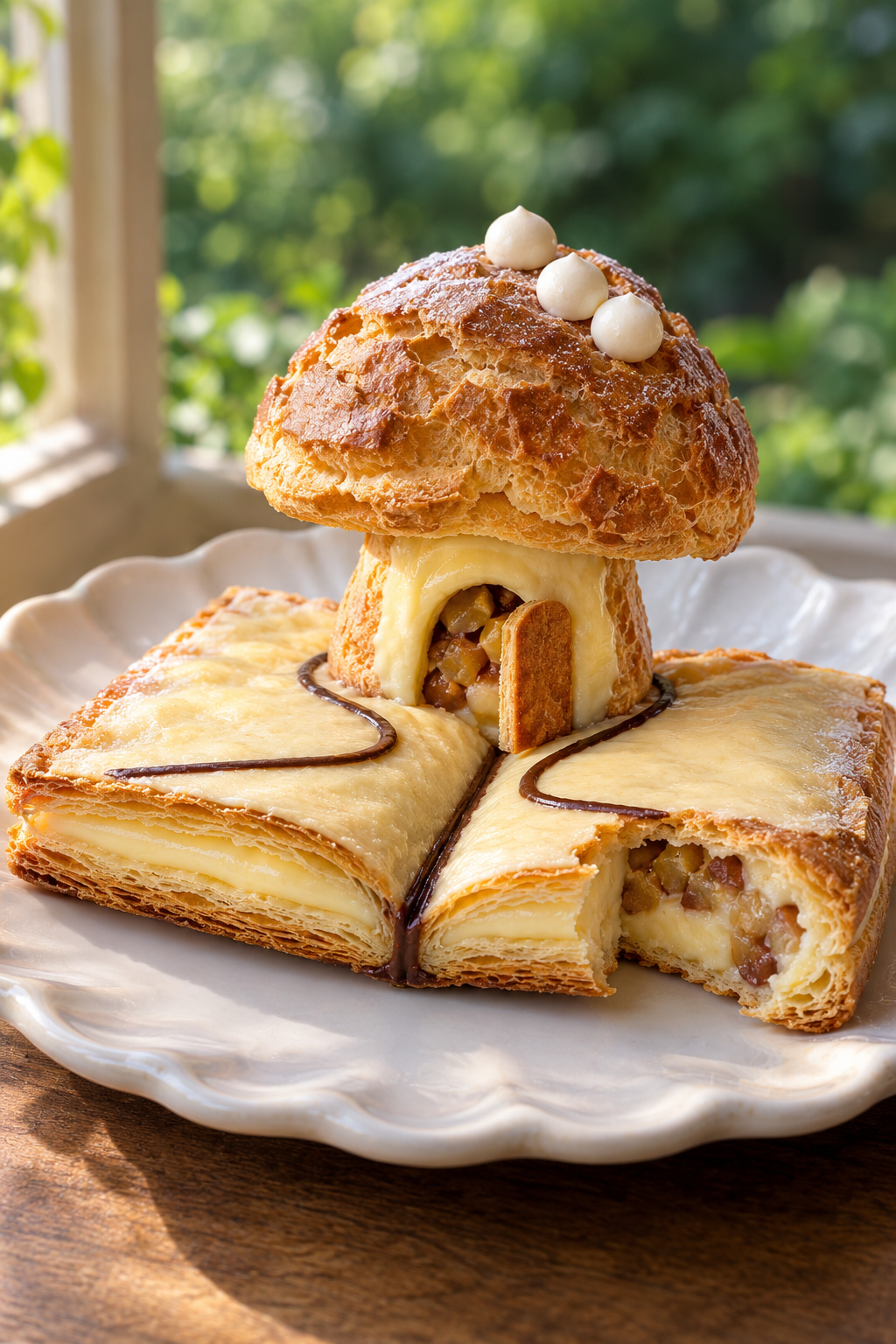
The Story Begins at the Little Door
Critique
Introduction This pastry arrangement places a mushroom-shaped sweet above two rectangular slices. Its cracked golden cap, pale filling, and open doorway turn a familiar dessert into a house. The imagined shelter highlights baked textures. Description The cap rests on a narrow base at the plate's center. Three small white drops sit on top. Cream flows over the base around a dark opening filled with diced fruit; a brown door stands partly open. Two flat pastries spread outward below it, with pale glazed tops and thin dark lines. Their cut edges show numerous crisp layers, while the right slice exposes more fruit. Sunlit green leaves blur beyond a window. Analysis The cap's broad overhang gives the small house a strong silhouette. Its rough broken crust contrasts with the smooth cream, and the crisp horizontal layers of the lower pastries contrast with the cap's irregular surface. The dark doorway anchors the center, while curving brown lines on the flat pieces lead toward it. Warm side light makes the exposed layers and cream glisten. The scalloped plate bounds the forms without crowding them. Interpretation and Evaluation The house idea connects the baked elements. The opened door and visible fruit suggest an interior, but the edible construction remains plainly visible. This is an effective balance of decorative invention and material description. Golden crust, ivory filling, and narrow chocolate marks create a restrained palette, letting texture carry much of the visual interest. Thin layers suggest weight and fragility together. Conclusion The mushroom roof attracts the eye first; the sliced pastries then reveal the construction that makes the scene convincing. The composition succeeds by connecting playful scale with a clear account of crust, cream, and fruit.
Same Subcategory
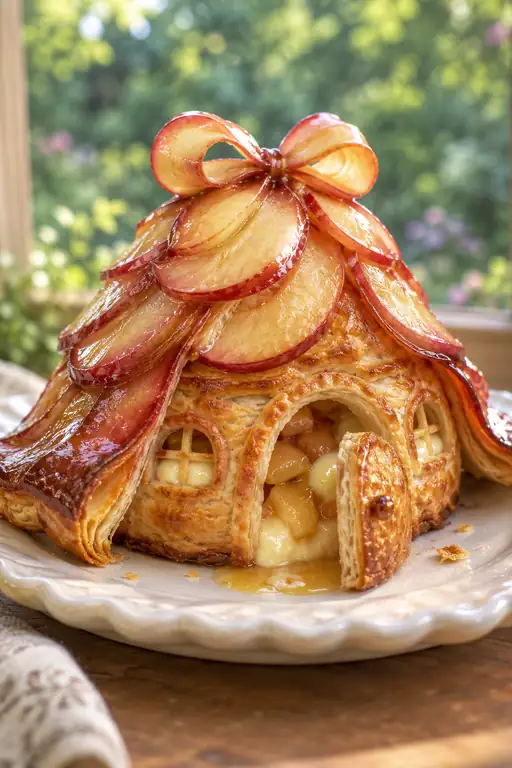 The Door Is Open for Autumn
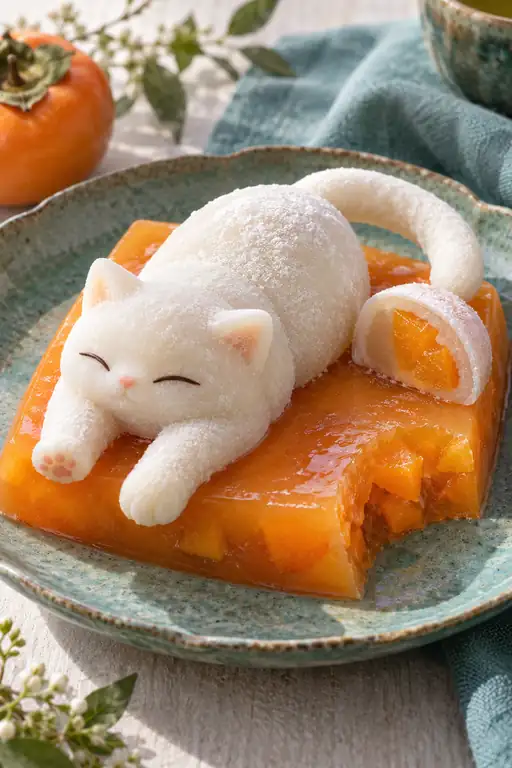 Let Me Sleep in the Autumn Sun
Similar Artworks
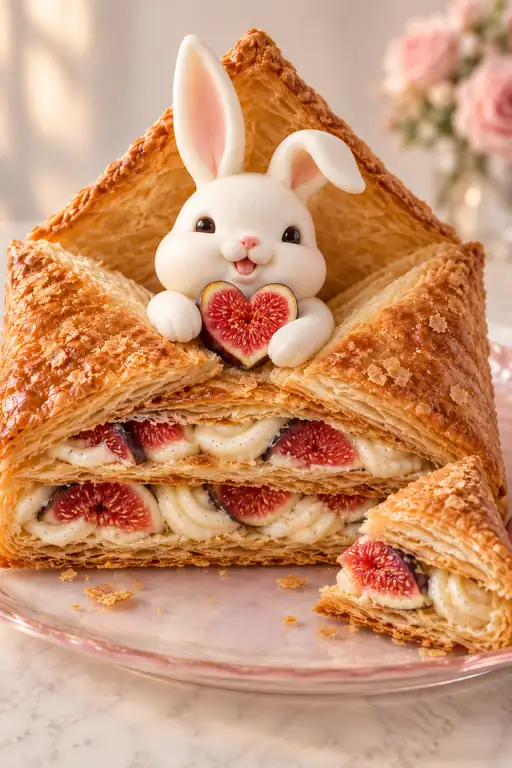 The Heart Kept Between Layers
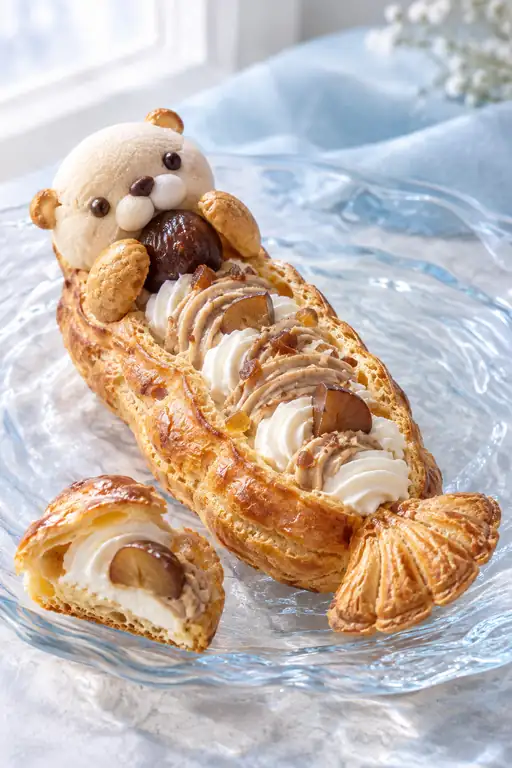 Sea Otter’s Slumber on Chestnut Waters
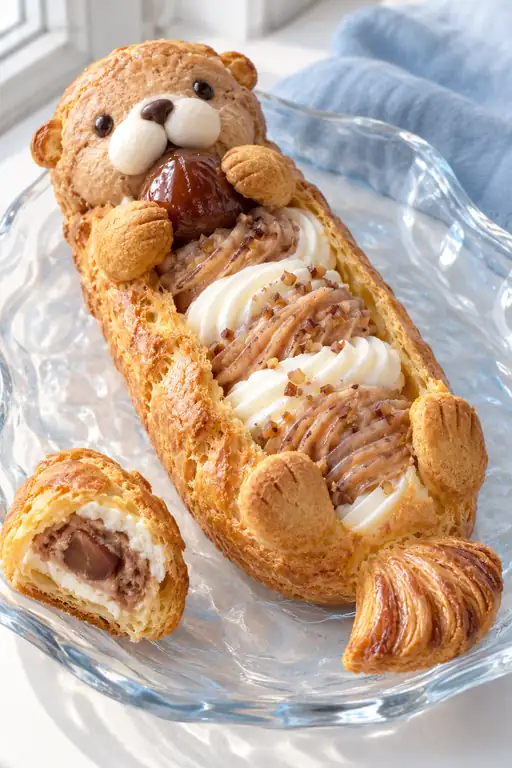 Sea Otter Drifting on Mont Blanc Waters
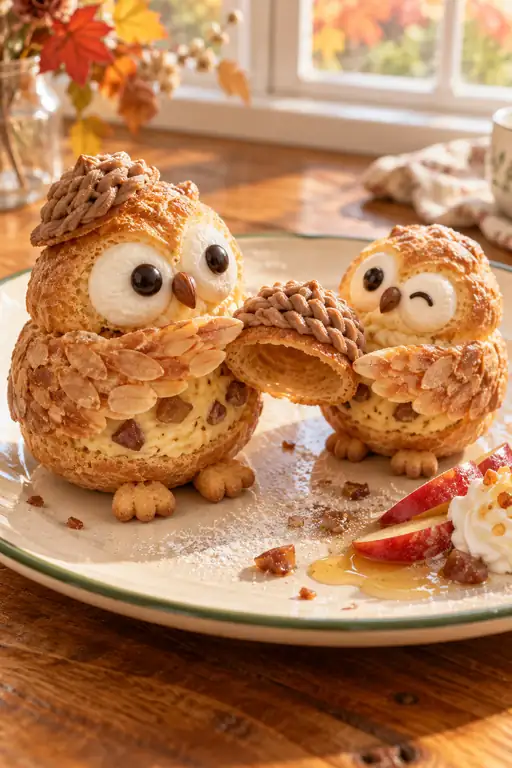 One Look, One Wink
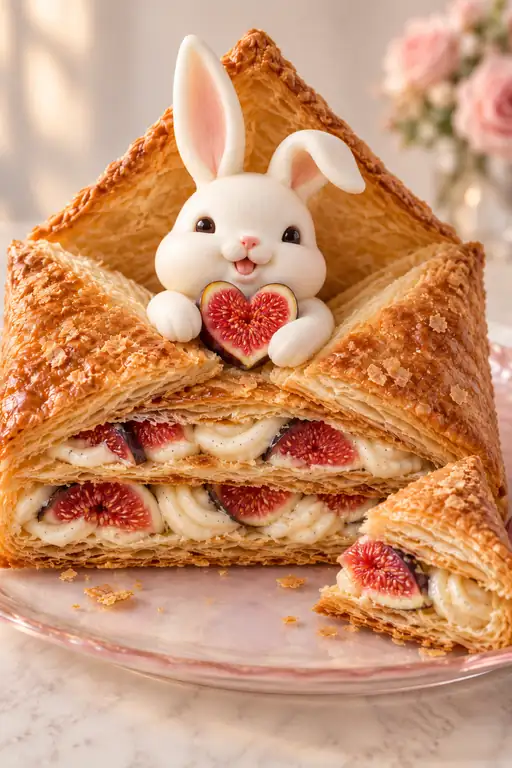 A Heart from the Fold
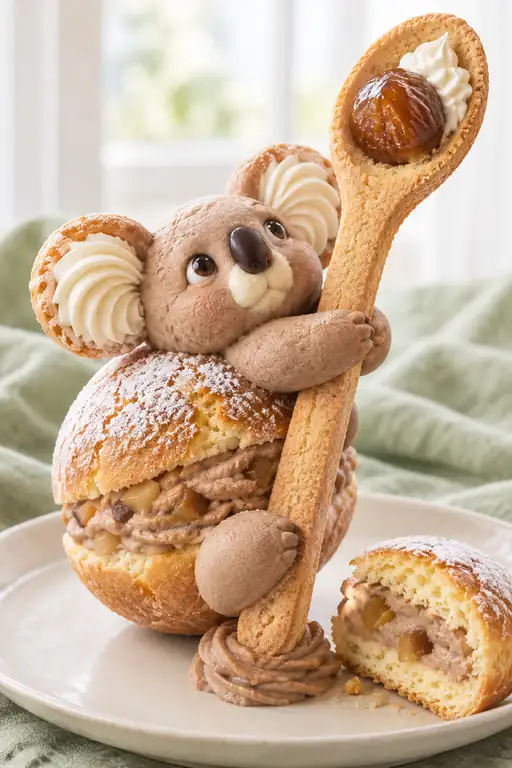 Almost Within Reach
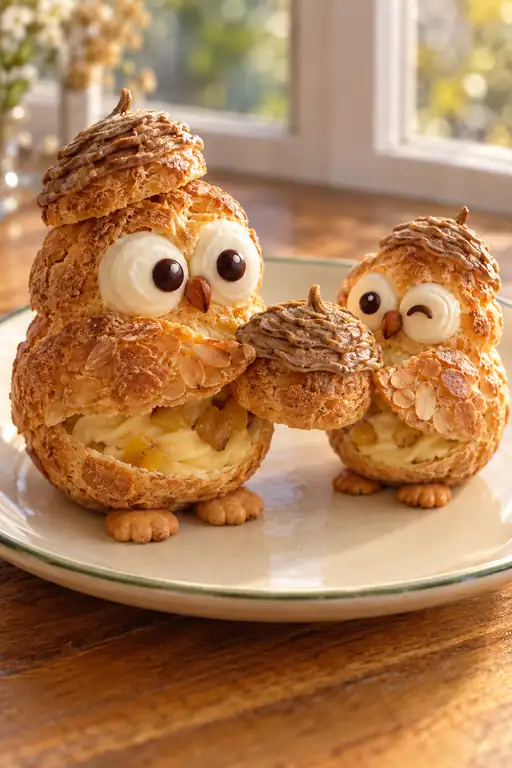 Two Owls Sharing an Acorn Choux
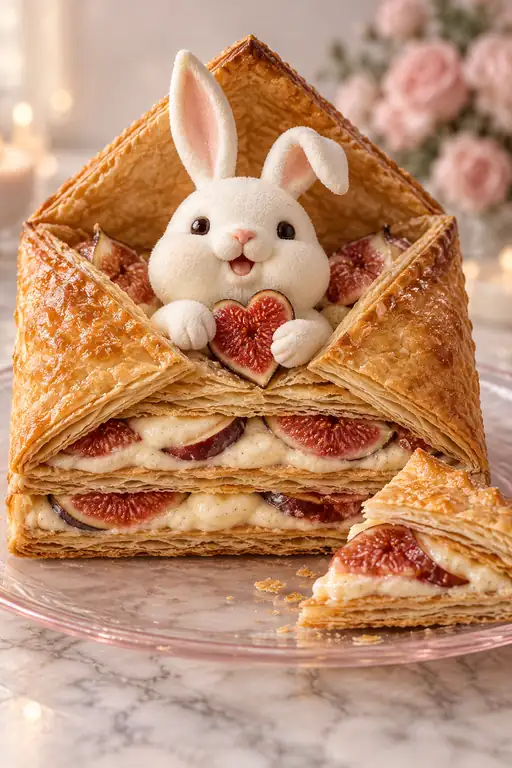 Heartfelt Letter from the Pastry Burrow
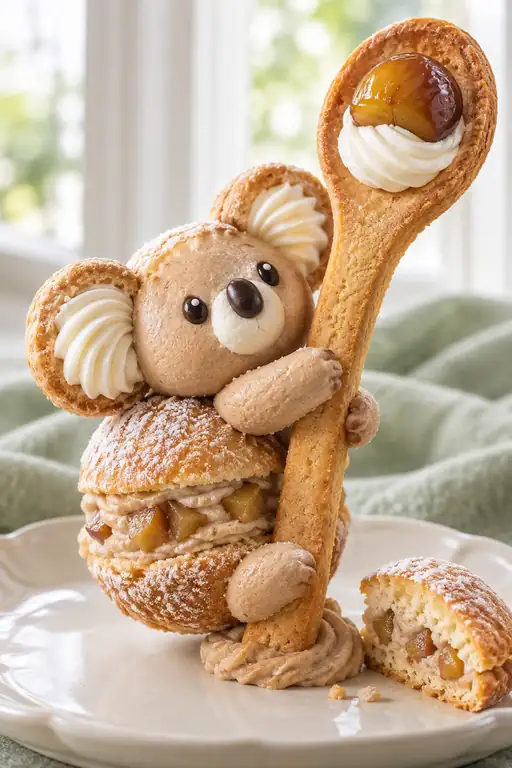 Koala with Gilded Spoon and Chestnut
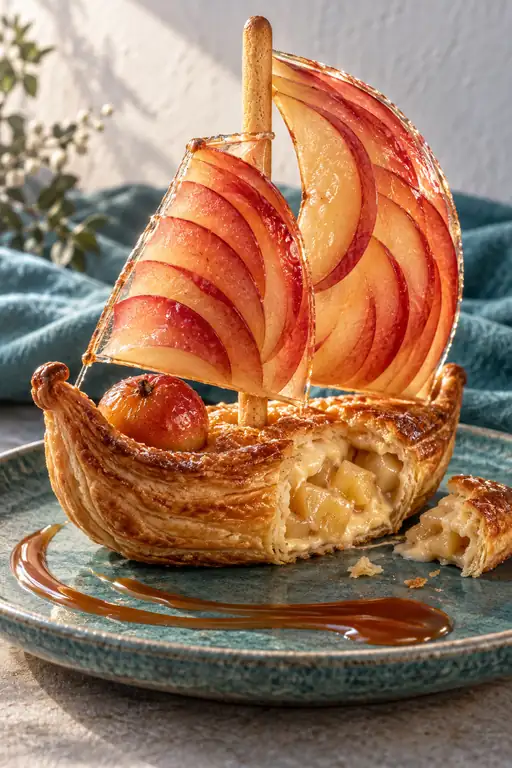 Sailing Toward the Last Light