The Door Is Open for Autumn
Critique
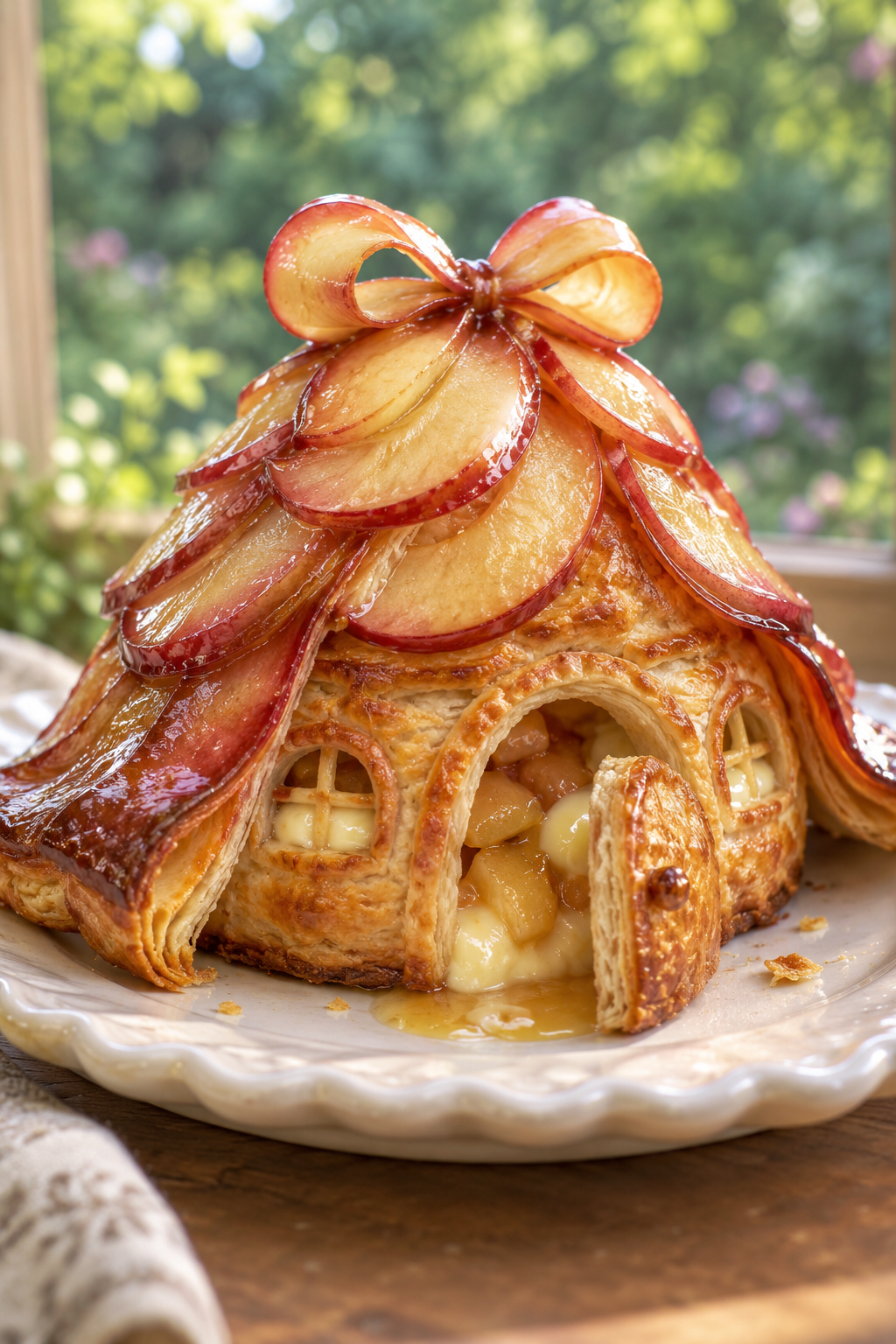
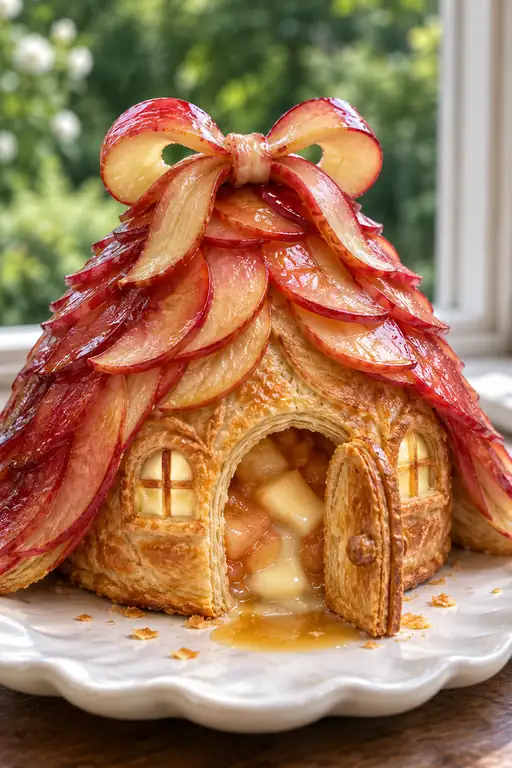
Introduction This dessert takes the form of a small house with a roof made from glossy red-edged fruit slices. A bow of the same thin slices crowns the roof. The open doorway displays its pastry layers. Description The house stands at the center of a white scalloped plate. Its golden walls have two small latticed windows, while a curved piece of crust leans outward like an opened door. Cream and diced fruit spill through the entrance. Overlapping slices descend from the bow across the sloping roof, their red skins outlining translucent yellow flesh. Blurred foliage sits beyond the table in leftward light. Analysis Roof and arched doorway make the structure legible. Curving fruit slices soften the building's straight sides and guide the eye downward from the bow to the exposed filling. Their shiny surfaces differ from the dry, flaky edges of the crust and the dense cream at the door. Repeated red margins make a rhythm across the roof, while the white plate separates the warm pastry from the darker tabletop. The blurred garden leaves keep attention on the closely worked foreground. Interpretation and Evaluation Architecture organizes the edible materials. The little windows and open doorway establish scale, yet the fruit and cream remain recognizable as food. The composition is strongest where the cut crust reveals layers beneath the smooth, lacquered roof. Gloss and texture distinguish gold, red, and ivory. The fruit bow adds a playful flourish without hiding the construction below. Conclusion At first the roof reads as an elaborate decoration; closer viewing reveals how each slice contributes to the house shape. The work's charm rests on this careful balance of structural detail, open interior, and luminous fruit.
 Under the Softest October Sky
 The Story Begins at the Little Door
 Cottage with Crimson Apple Roof
 Sailing Toward the Last Light
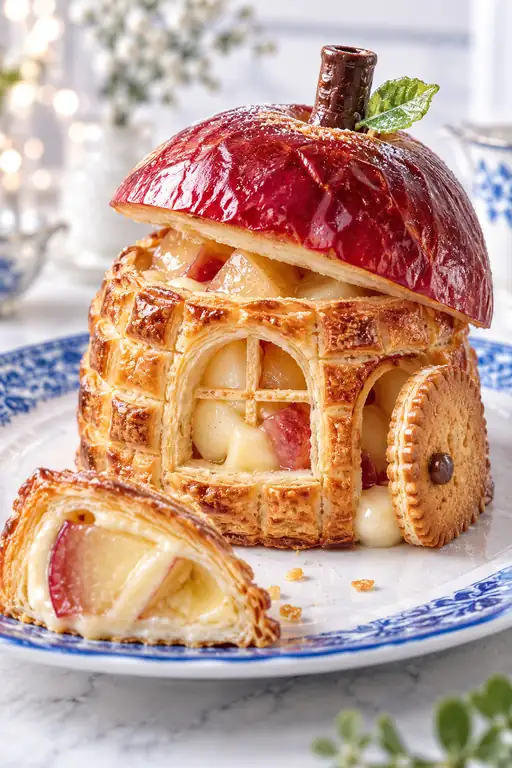 Hearth of the Apple Cottage
 A Cradle for the Last Apple
 The Bear Who Looked Beyond Supper
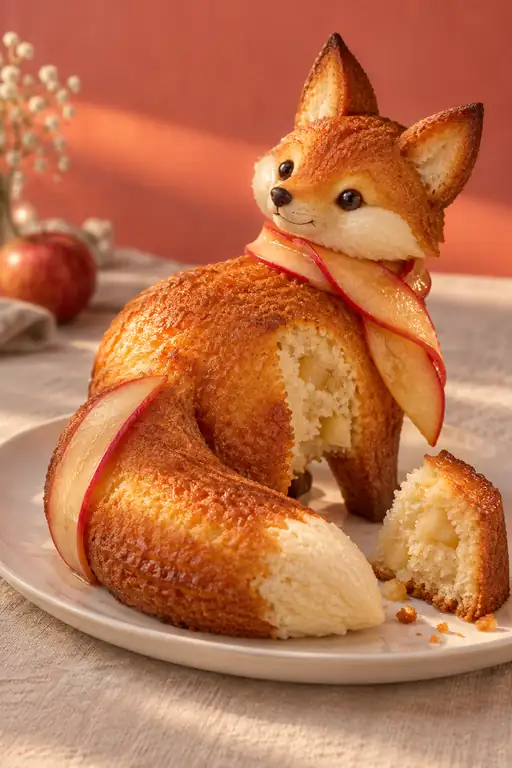 The Scarf Autumn Gave Me
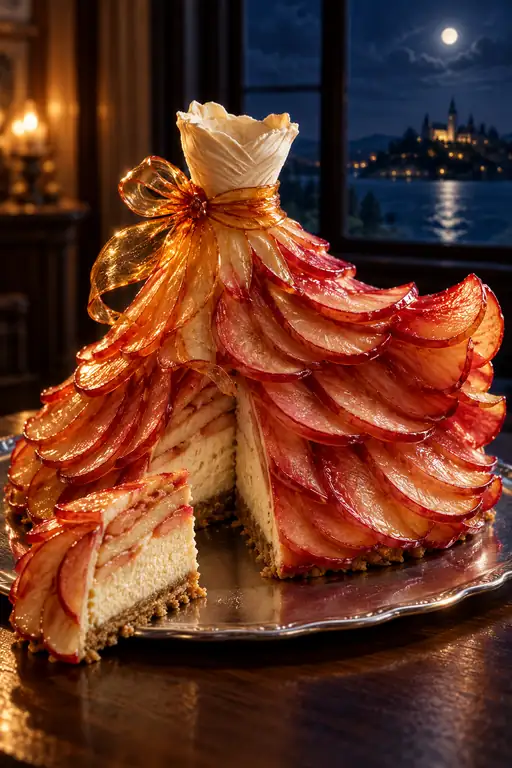 Dressed for the Moonlit Ball
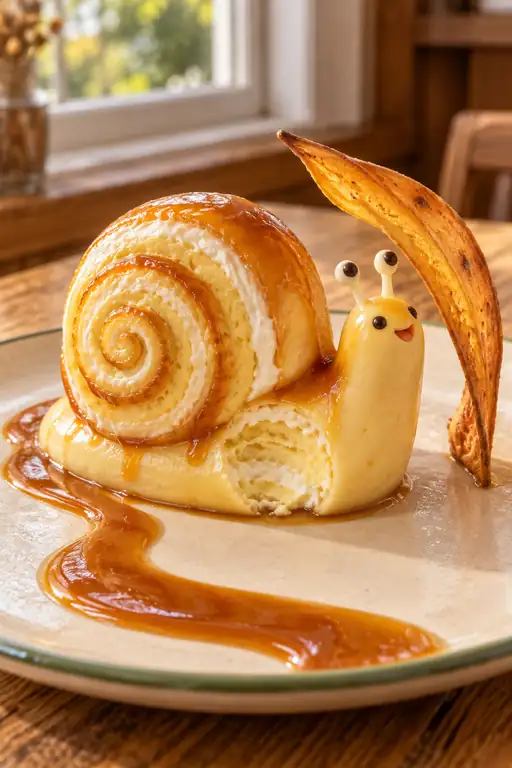 The Long Sweet Road Home
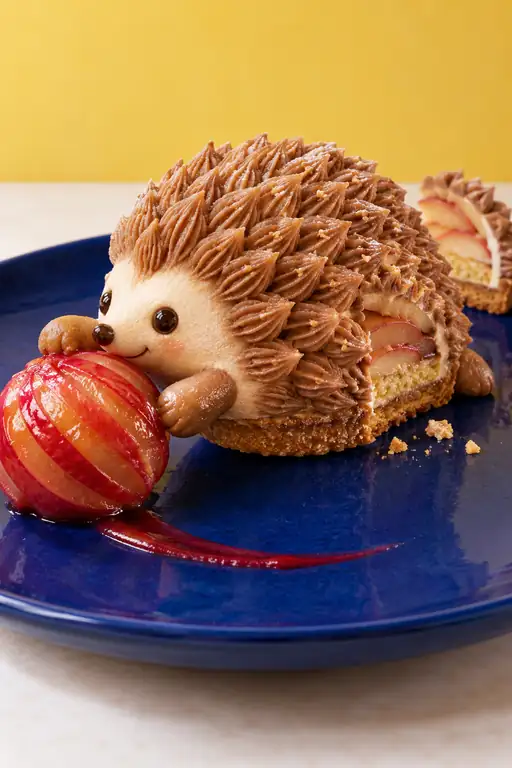 The Roundest Treasure of Fall