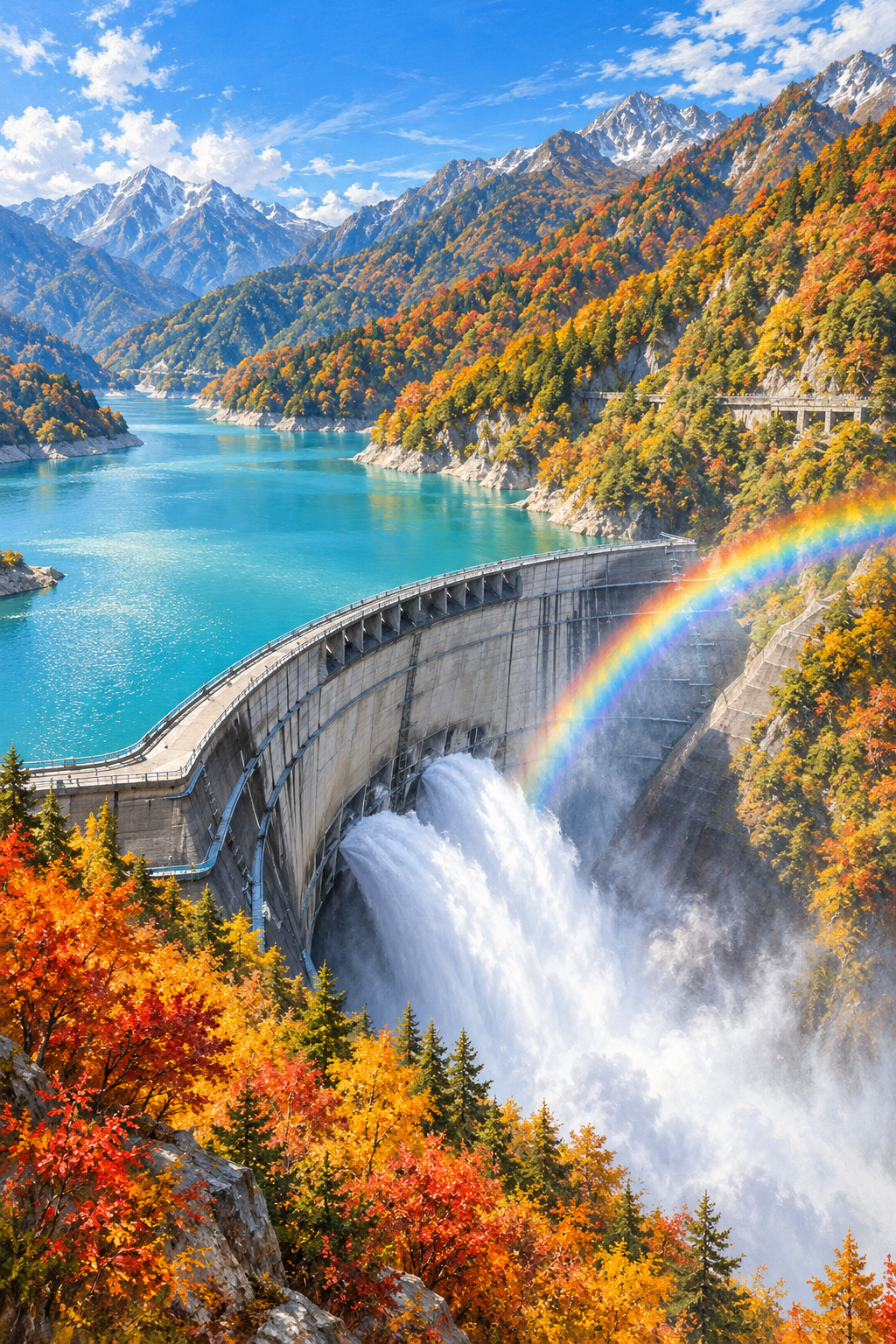
Where the Still Water Finds Its Voice
Critique
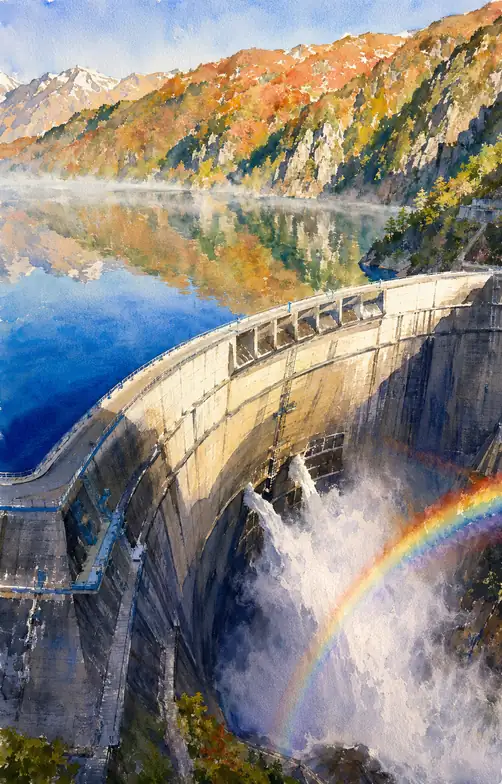
Introduction This landscape presents a curved dam between a turquoise reservoir and a forceful cascade. Snow-streaked peaks, autumn woods, and a rainbow enlarge the scene. Its central contrast is between water held still and water released into motion. Description The reservoir extends from the left foreground toward distant mountains. A concrete wall arcs across the lower middle, with repeated supports along its crest. Two streams pour through openings near its base. Red trees frame the foreground, while a thin road crosses the right slope. The rainbow rises diagonally through the spray. Analysis The dam's sweeping curve draws the eye from the lower left into the central spillway, then the bright water carries it downward. The horizontal reservoir slows this movement and opens depth toward the mountains. Warm foliage is set against cool blue water and sky; pale rock and concrete keep these saturated areas distinct. The sharp edges of the wall contrast with the softer, broken textures of trees, clouds, and mist. Interpretation and Evaluation The built form occupies a vast landscape without dominating the whole view. Its carefully described supports and outlets make the scale of the release legible. The composition effectively joins the dam's controlled geometry to the irregular mountain contours, while the color arrangement gives the rainbow a clear visual role. Bright spray adds spectacle, yet remains tied to the outlets. Conclusion At first the rainbow and autumn color command attention; closer looking reveals that the central subject is the transition from contained water to falling water. The work sustains that idea through its contrast of curved masonry, calm lake, and dissolving mist.
Same Subcategory
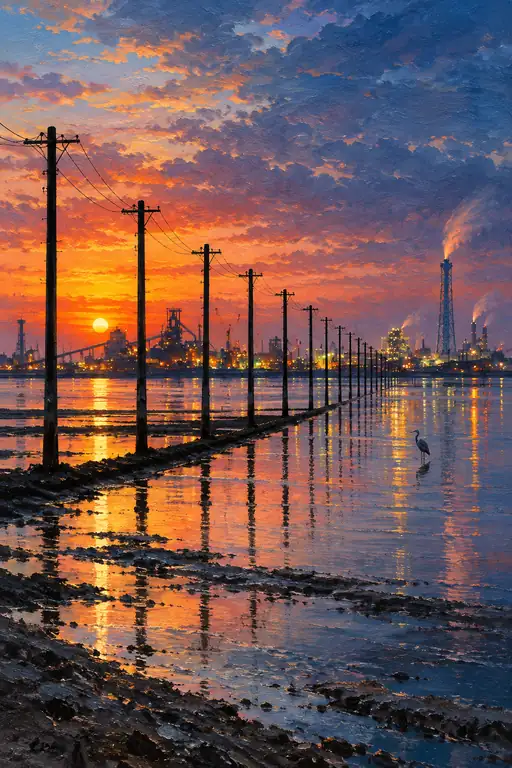 Solitary Heron Where Currents and Power Lines Meet
Similar Artworks
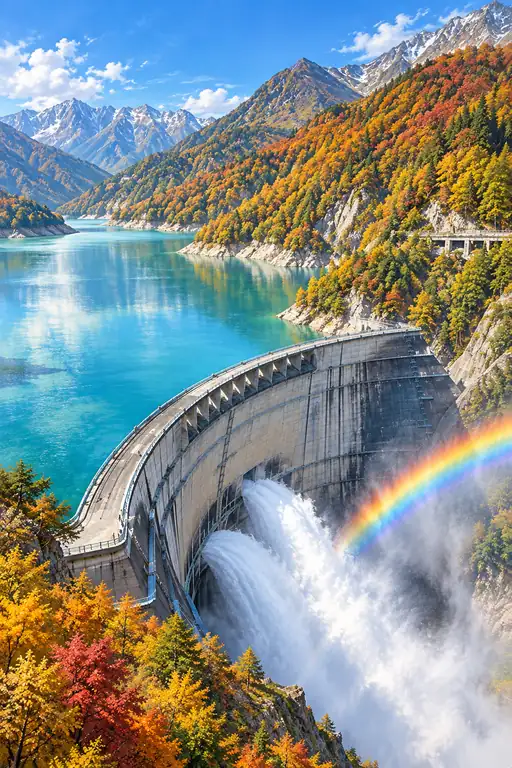 Beyond the Curve, a Sudden Rainbow
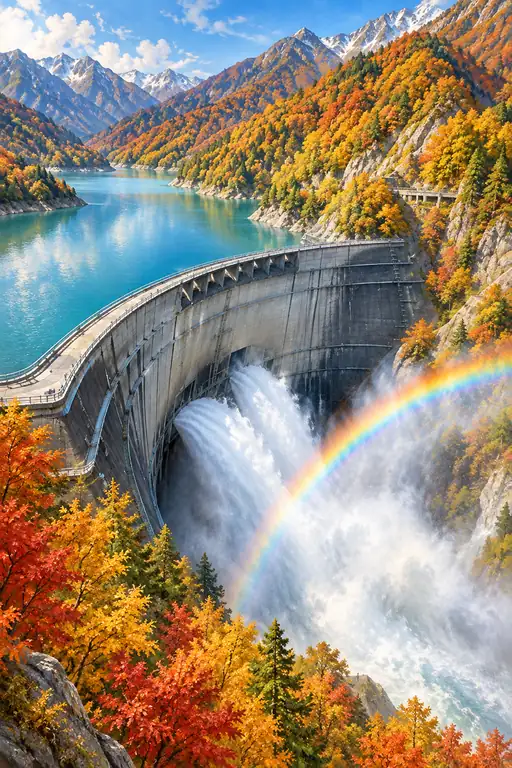 The Valley Answers in Color
 A Rainbow Bends to Human Hands
 When the Mountain Lets the Water Speak
 Autumn Carries the Mountains Home
 The Curve of Human Will
 The Pulse of the Concrete Giant
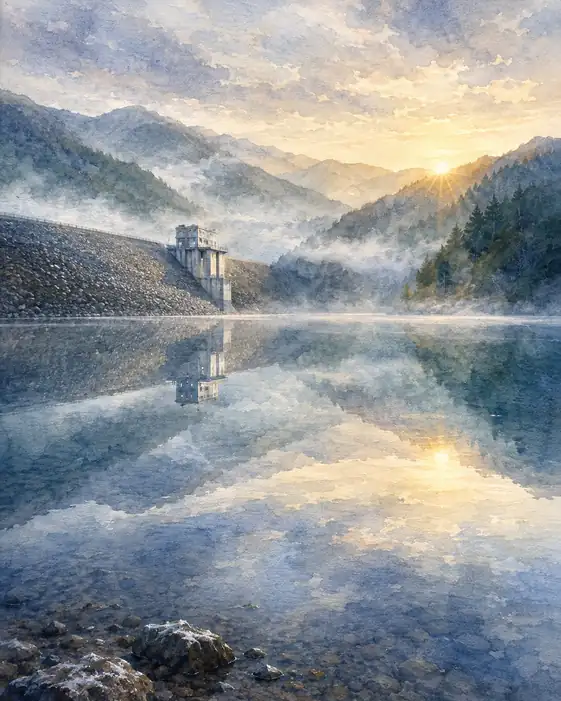 The Mountain's Silence, Engineered
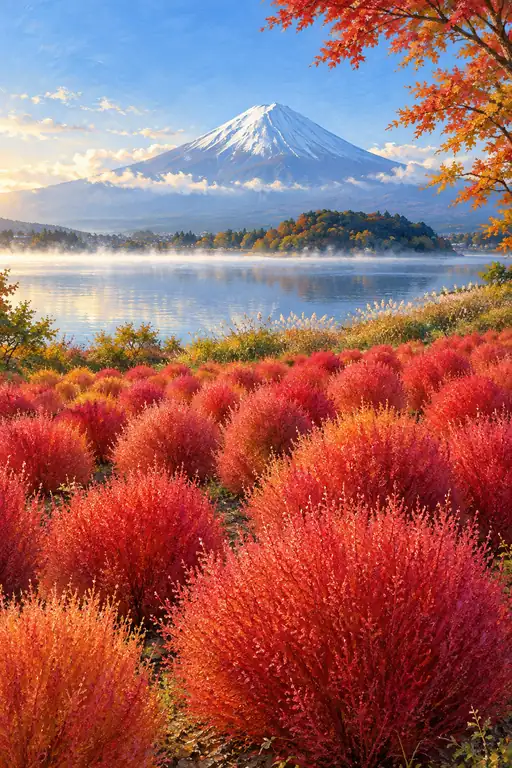 When Crimson Meets the Morning Mist
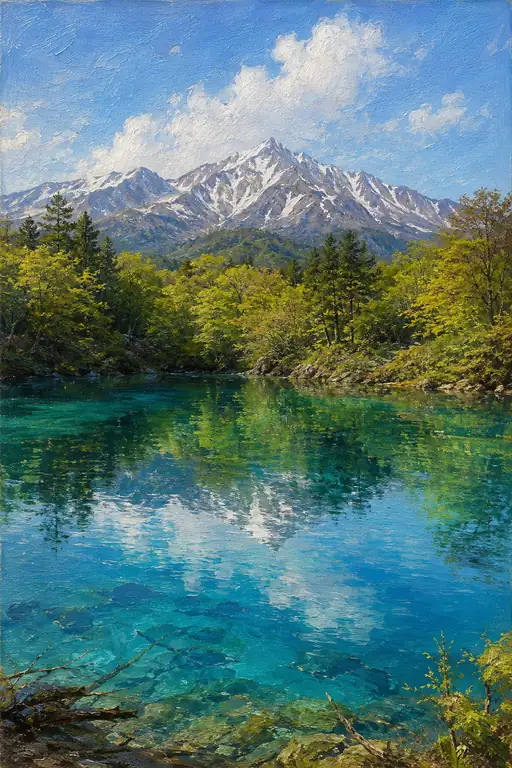 Pristine Mirror of the Alpine Spring