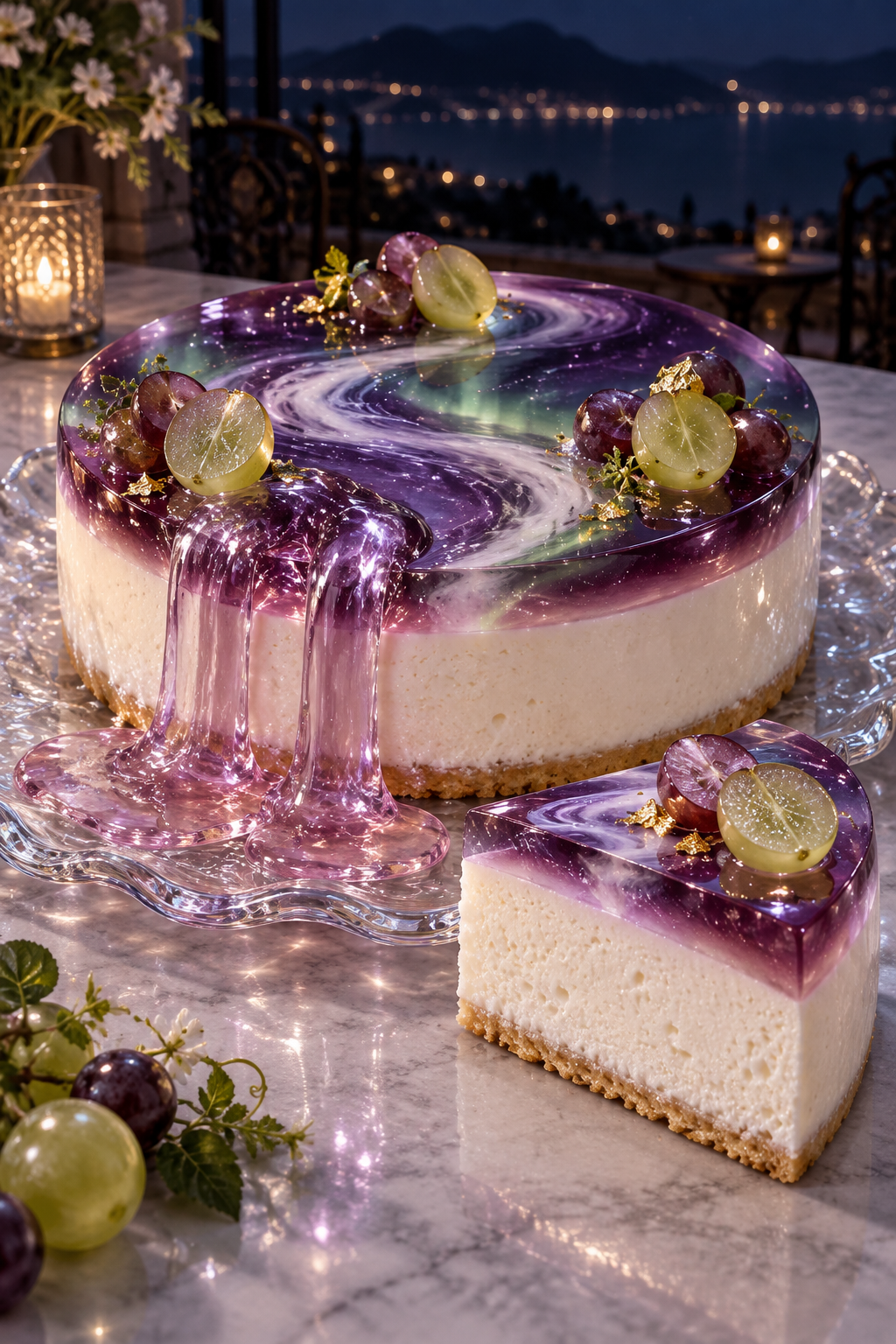
When the Night Cascades in Amethyst
Critique
1. Introduction A grape cheesecake becomes a flowing night landscape. Purple jelly resembles a starry river spilling over the edge. 2. Description The round cake has a crumb base, a thick pale filling, and a glossy violet top. White swirls cross the top between clusters of dark and green grapes, some cut in half. Gold leaf and tiny light points punctuate the surface. Two translucent ribbons of jelly descend onto the glass platter. A separate slice at the right reveals the same layers and carries fruit on top. Beyond the table, a candle and distant lights reflect across dark water. 3. Analysis The cake's horizontal layers make a calm foundation for the restless upper surface. The S-shaped white current guides the eye from the rear fruit toward the front falls. Green halves interrupt the violet field, and gold catches highlights in the dark. The falling jelly gives depth and movement to an otherwise stable circular form. The exposed slice reinforces the physical construction and provides a second, smaller version of the main cake. 4. Interpretation and Evaluation The nocturnal backdrop encourages a reading of the top as a cosmic river or luminous lake. Fruit clusters become islands along its course. The effect works because the glaze retains the weight and translucency of dessert while suggesting a larger landscape. Some glittering reflections crowd the left edge, but the broad white current remains legible. The slice is valuable: it reminds the viewer of the creamy body beneath the spectacle. 5. Conclusion Edible layers meet a water-and-sky illusion. Its strongest gesture is the jelly flowing beyond the cake, carrying the imagined landscape into the space of the plate.
Same Subcategory
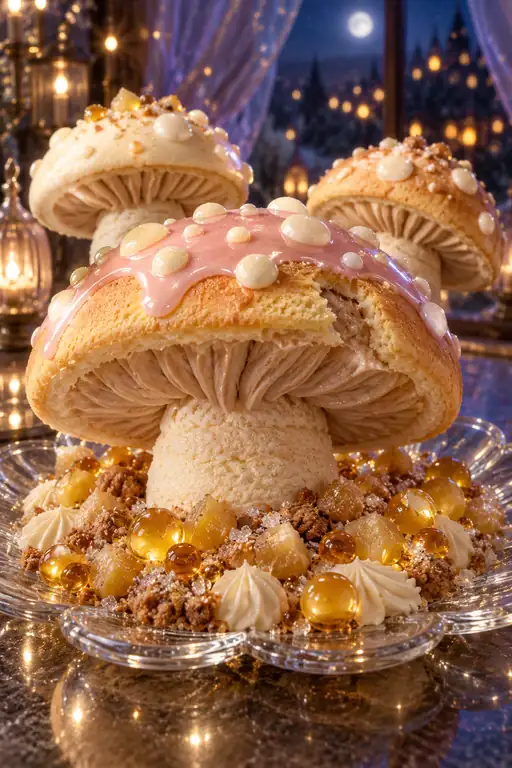 Under the Moonlit Spire, an Enchanted Grove
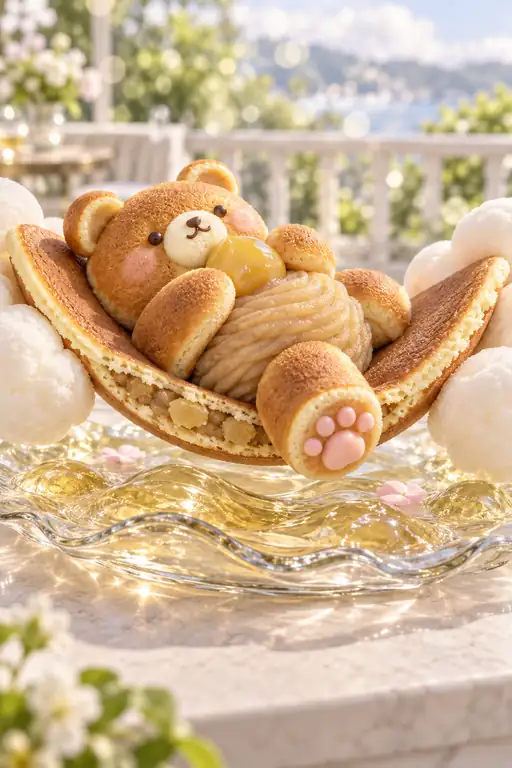 Dreaming in the Sunlit Cradle
Similar Artworks
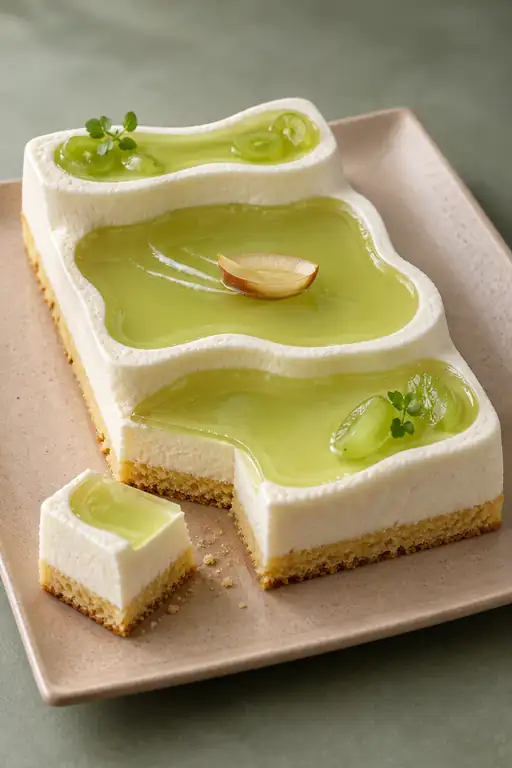 Quiet Pools of Green Light
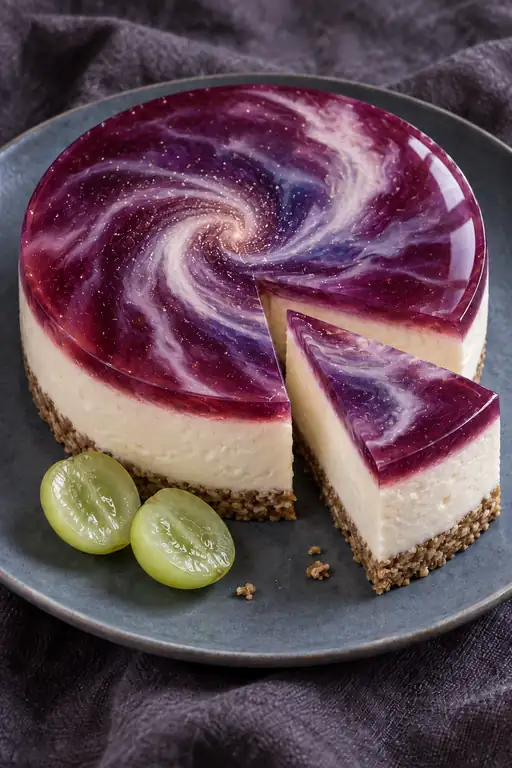 Where the Spiral Comes to Rest
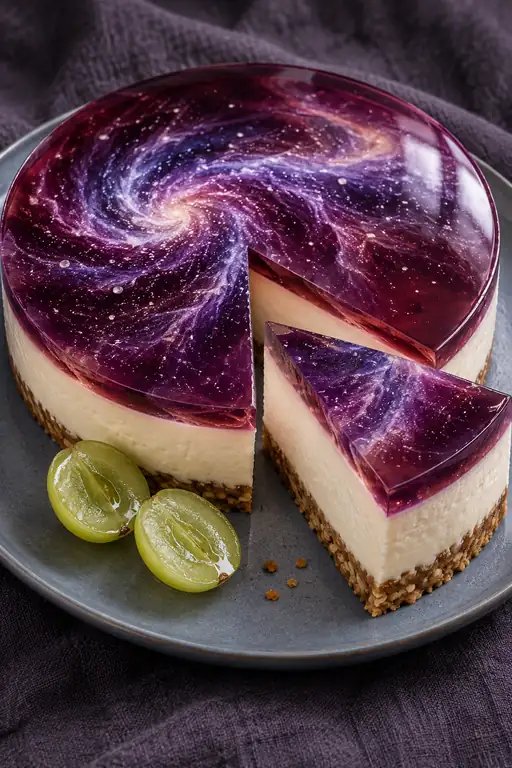 A Universe in One Slice
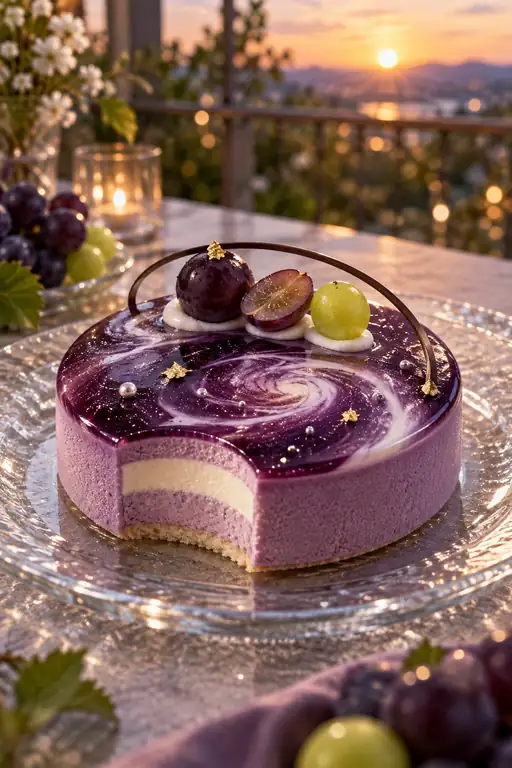 Celestial Galaxy of Autumn Grapes
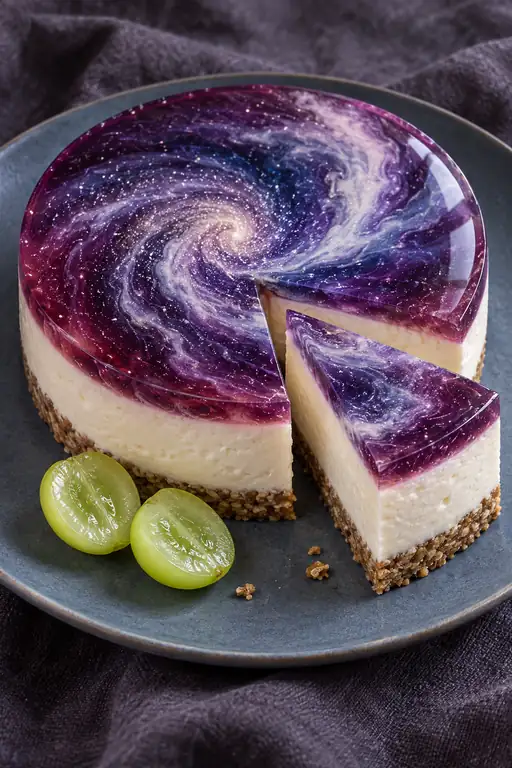 The Night I Could Hold
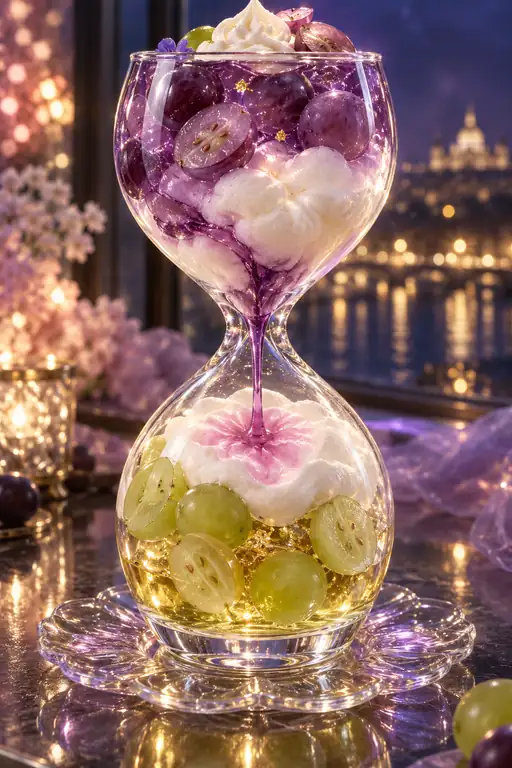 Hourglass of Violet and Emerald Wine
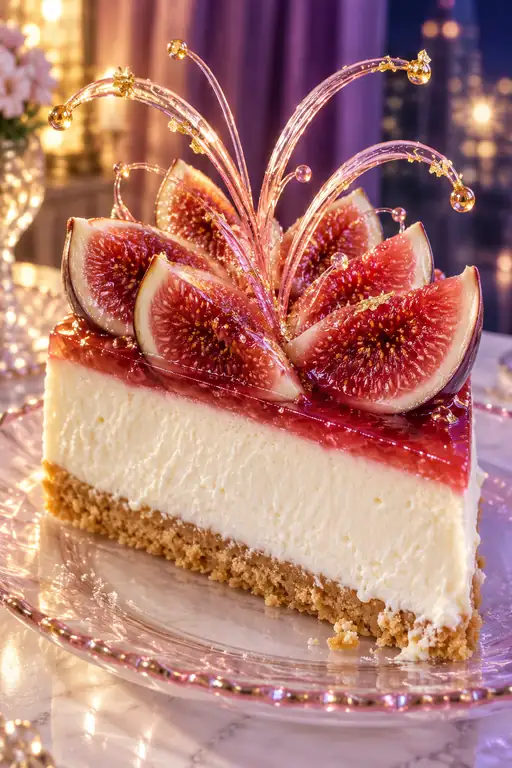 Crown of Crimson Fig and Sugar Sprays
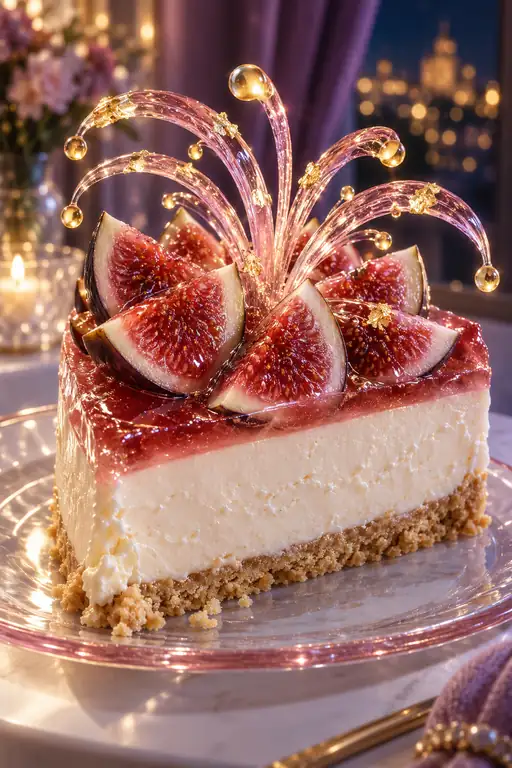 Fireworks of Fig and Spun Gold
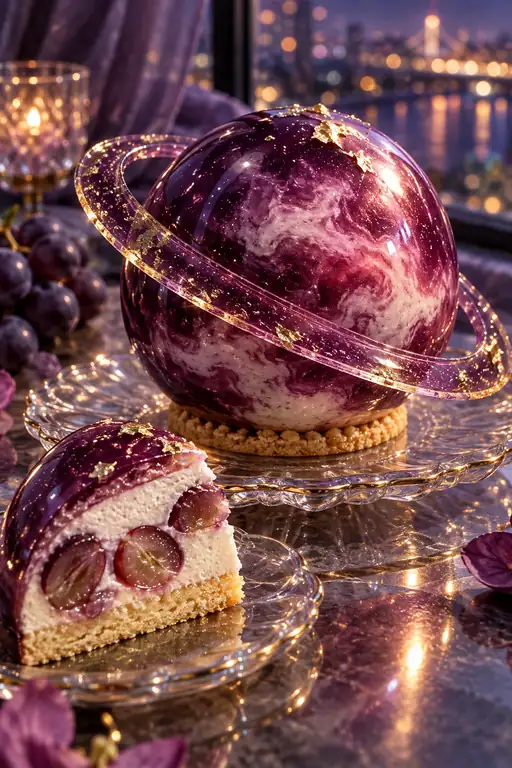 Cosmic Ring of the Velvet Saturn
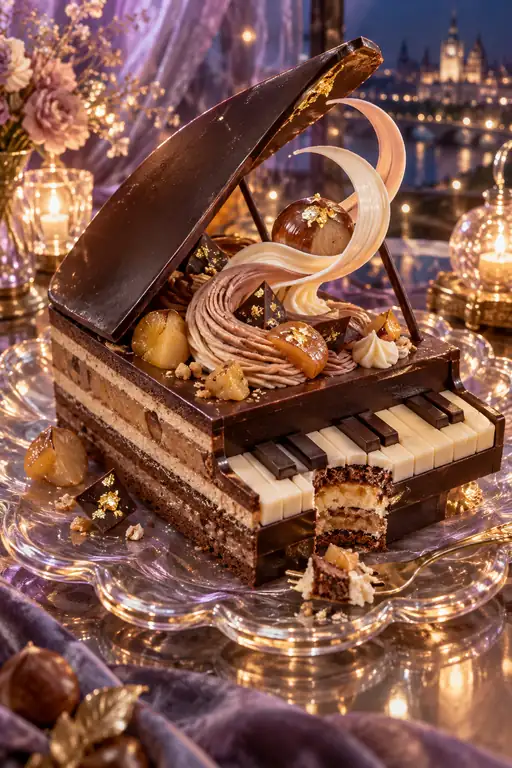 Nocturne in Roasted Gold