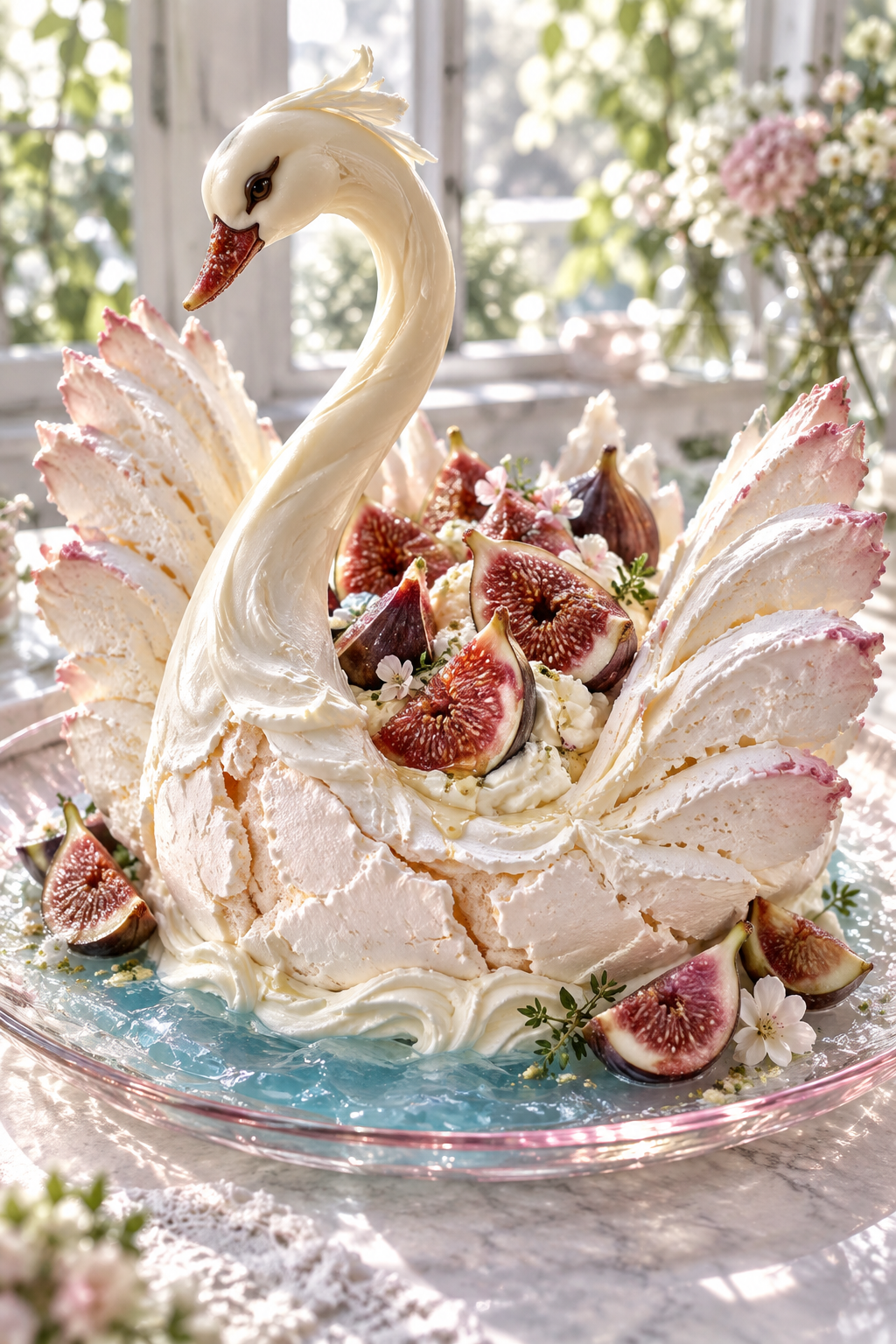
Grace of the Swan at Morning Light
Critique
1. Introduction A swan dessert spreads its wings around cut figs on a pink glass platter. Its neck bends toward the fruit. Window light gives the scene a calm feeling. 2. Description The swan has a dark eye, reddish beak, and a few raised feathers on its head. Tall wings are made from overlapping white pieces with pink-tipped edges. Inside the body are cream, whole figs, and red-centered wedges, with tiny flowers and leaves between them. The lower shell is cracked and rough. A blue translucent layer and white frosting gather at the base, while more figs rest on the platter. 3. Analysis The neck's sweeping S curve establishes the bird before the eye reaches the dense fruit. Wings spread outward and balance the vertical neck. Their repeated ridges contrast with the smoother head and the seeded fig centers. Red in the beak echoes the fruit; pink edges connect the wings to the platter. Bright blue at the base cools the warm fruit tones and helps separate the white shell from the glass. 4. Interpretation and Evaluation The dessert makes a bird into a vessel for fruit. The swan looks elegant, yet the cracked shell and visible cream reveal its complexity. The figs are not hidden filling: their cut faces form the body's colorful center. Flowers link the edible sculpture to the room. The image is strongest where white shapes frame the seeds and glossy skin of the fruit. 5. Conclusion The work joins a graceful silhouette to tactile pastry detail. Viewers can first recognize the swan, then inspect wings, figs, cracks, cream, and blue base. The bright window keeps the dense arrangement airy.
Same Subcategory
 Sunny Voyage of the Pastry Otter
 Stairway of Pastel Clouds and Pear
Similar Artworks
 Serenade of the Fig-Adorned Swan
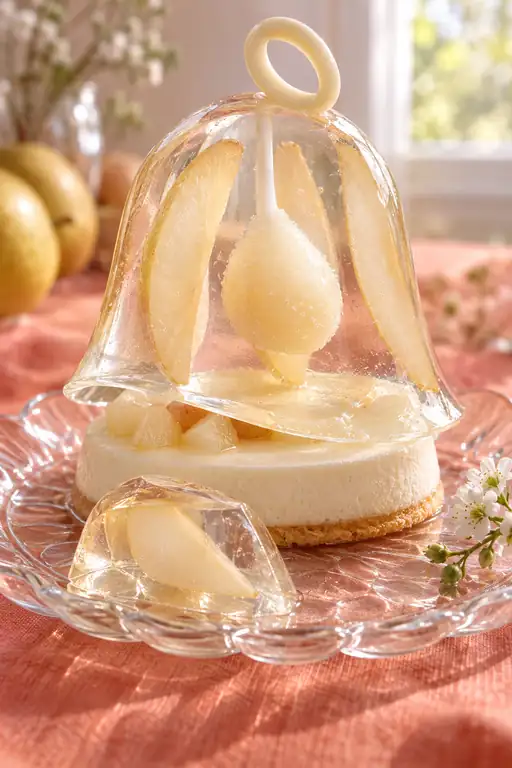 A Clear Note of Autumn
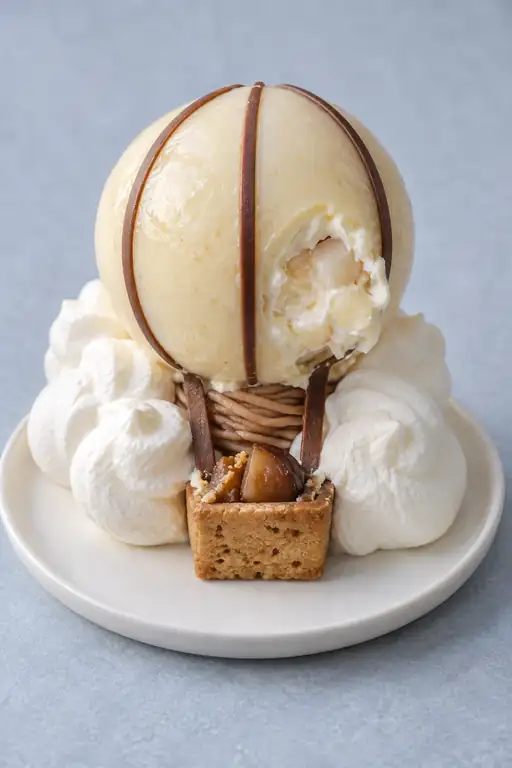 The Balloon with a Chestnut Basket
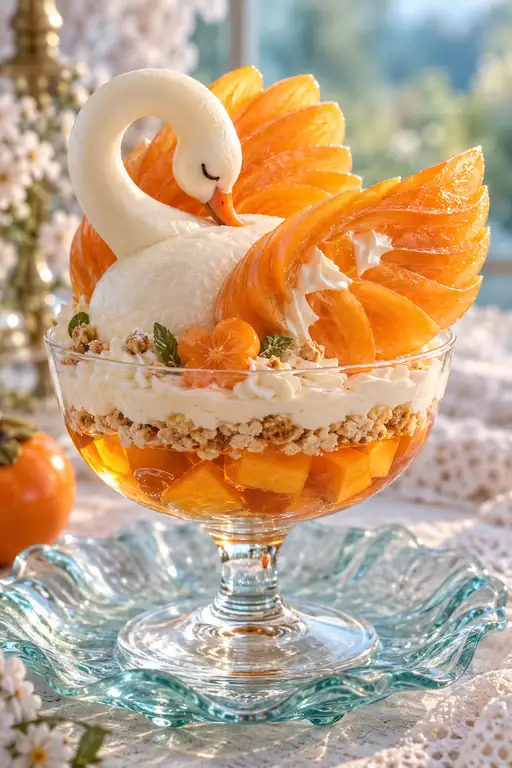 An Autumn Wing at Rest
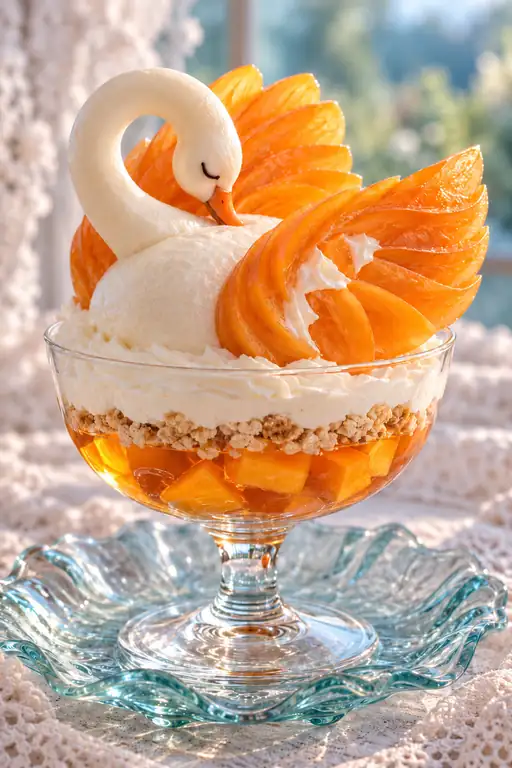 The Quiet Arc of Amber Wings
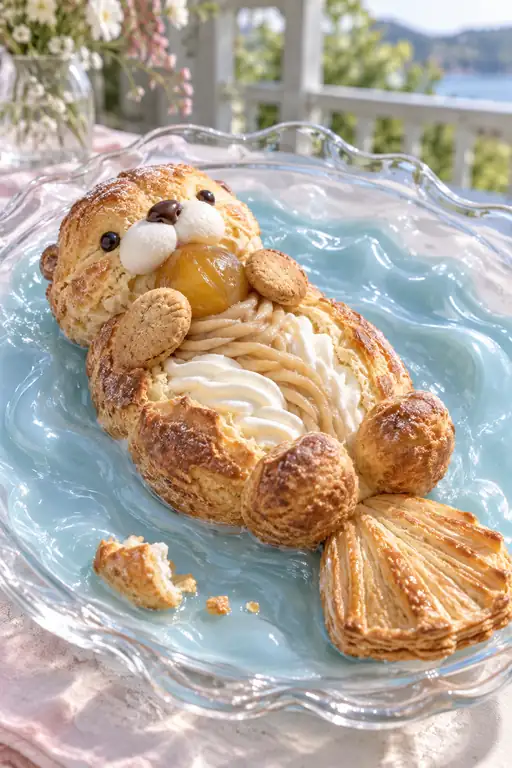 Gentle Ripple of the Sea Otter Prow
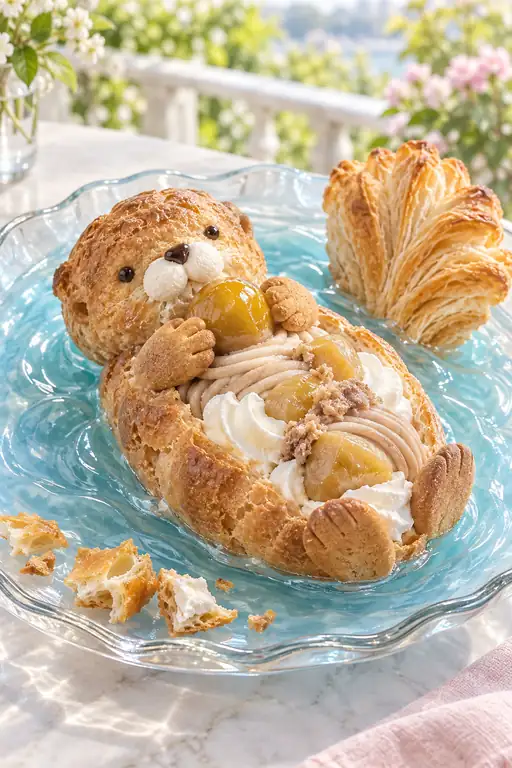 Whimsical Drift of the Chestnut Otter
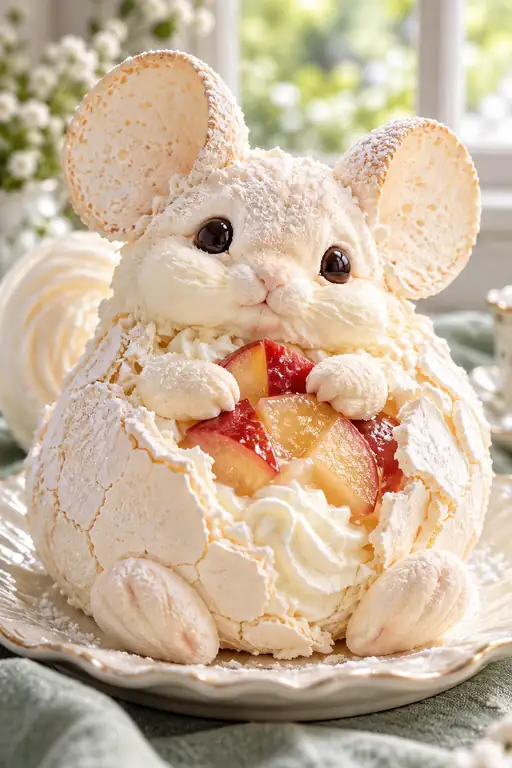 Embrace of the Orchard Meringue
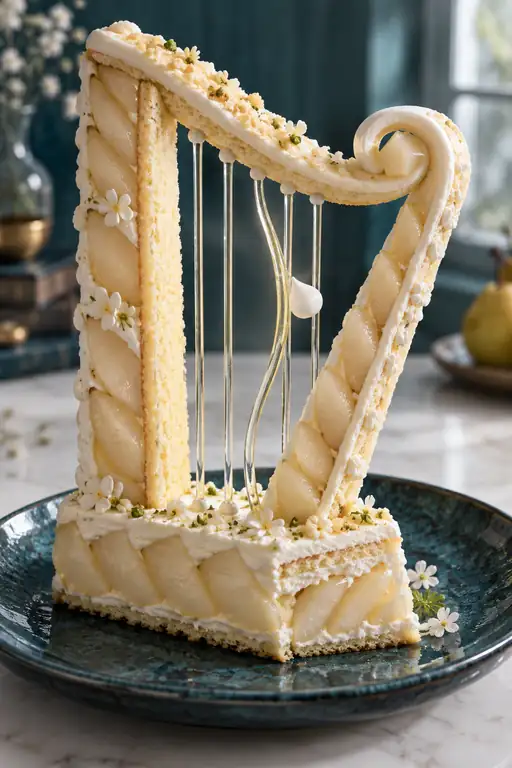 One Note Held in Light
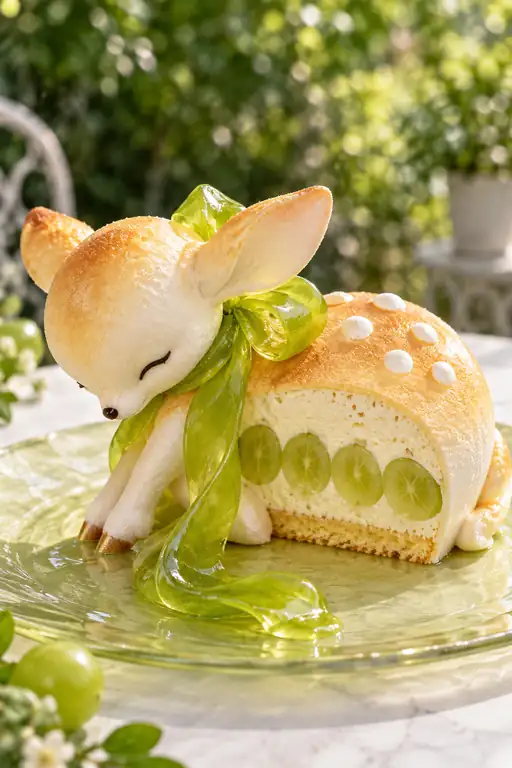 Dreaming Beneath the Green Ribbon