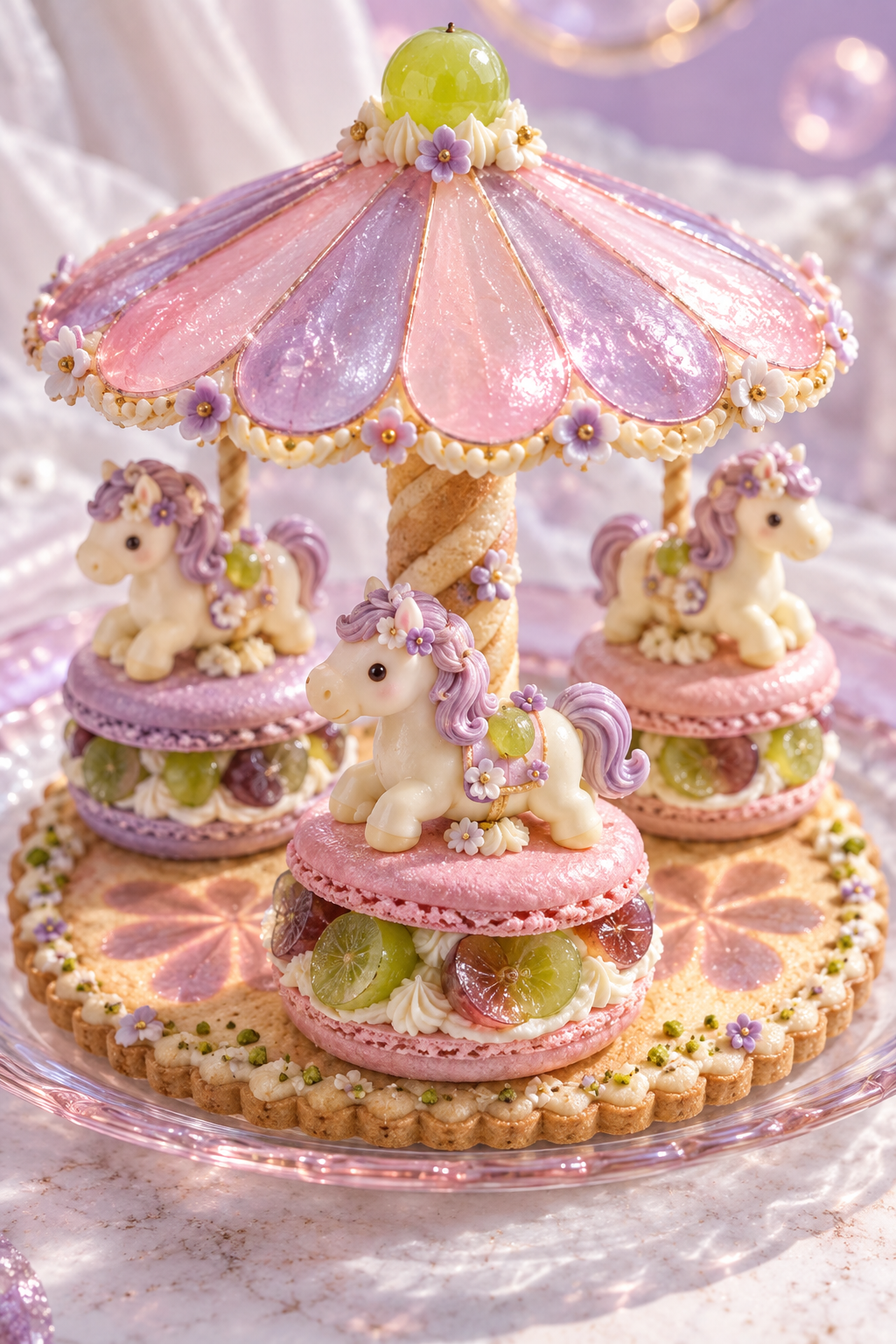
Carousel of the Grape Fairies
Critique
1. Introduction A sweet carousel occupies a clear plate against pink. Three horse figures stand on filled macarons beneath a striped canopy. The arrangement uses play and repeated form. 2. Description Pink and lavender panels radiate from a central green fruit at the canopy top. Tiny flowers line its rim, and a twisted column supports it. Each cream colored horse has a purple mane, small floral ornaments, and a curved tail. The macaron bases reveal cream and sliced green and red grapes. They sit on a circular pastry foundation bordered with small white decorations. 3. Analysis The canopy creates a broad upper disk balanced by three separate lower circles. Its alternating colors direct the eye around the center, while the column anchors the arrangement vertically. Repeated horses and macarons establish rhythm, but the nearer figure is largest and clearest. Glossy panels contrast with porous pastry, and green fruit punctuates the dominant pink and lavender palette. 4. Interpretation and Evaluation The carousel form transforms individual sweets into a shared miniature world. The use of edible textures gives that world both decorative charm and material specificity. The composition is carefully balanced around the central column, with depth supplied by the three figures. The pastel colors remain coherent, and fine flowers, tails, and fruit slices are attentively rendered. The many details invite slow viewing without obscuring the overall design. 5. Conclusion At first the canopy and horses read as a single festive object. Closer looking separates the fruit, striped panels, individual figures, filled macarons, and circular base. The image's appeal lies in the precise coordination of repeated shapes and contrasting surfaces.
Same Subcategory
 Celestial Ribbon of the Moonlit Hare
 Sweet Slumber of the Chestnut Lamb
Similar Artworks
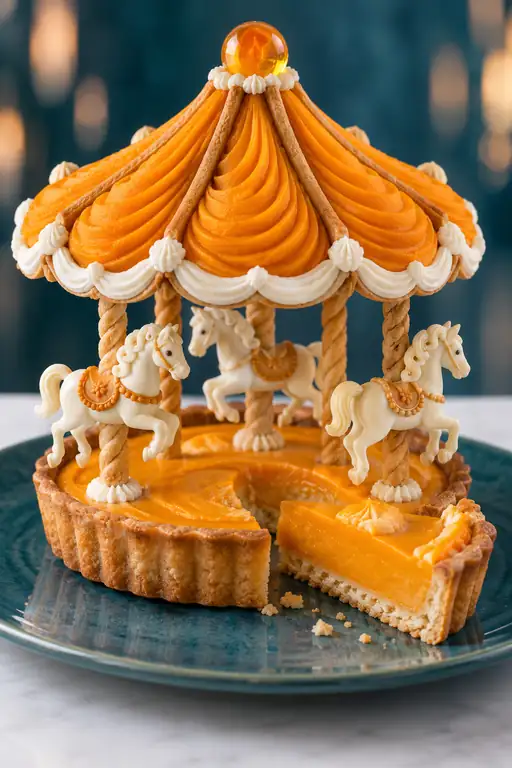
 Twirling Memories of the Sugar Carousel
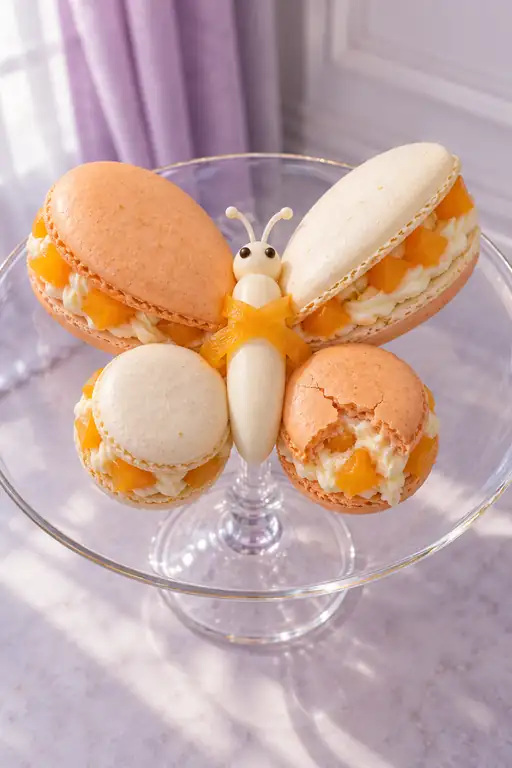 The Butterfly's First Sweet Flight
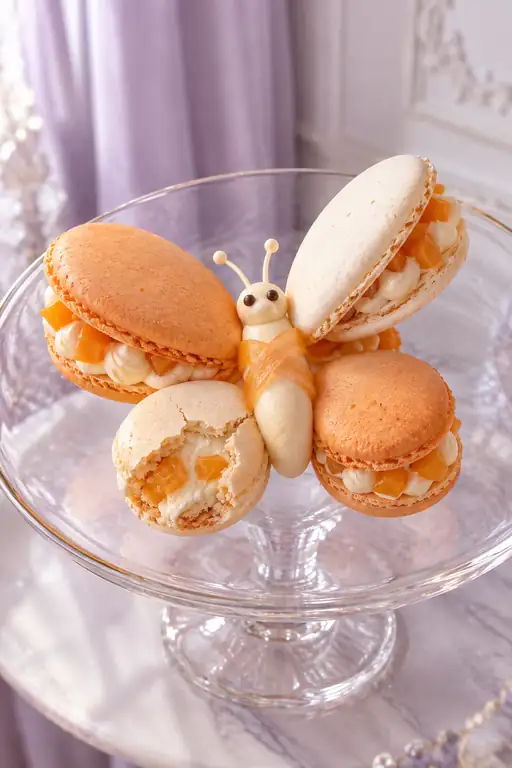 Four Wings for a Sweet Afternoon
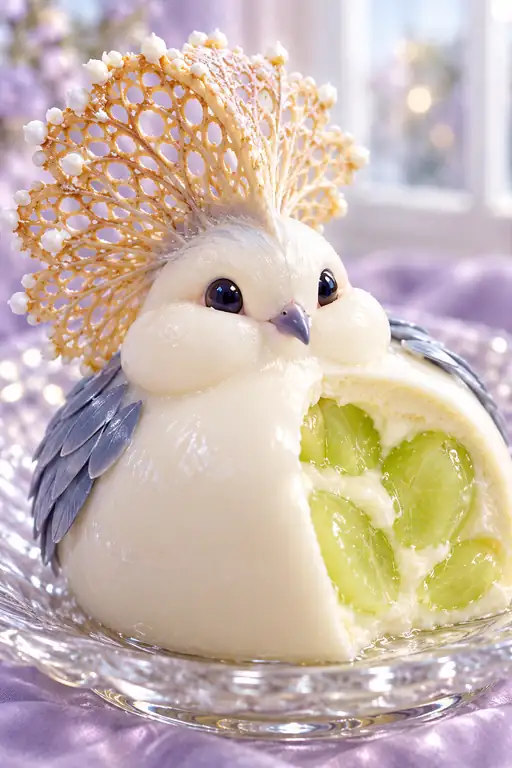 A Crown Above the Green Secret
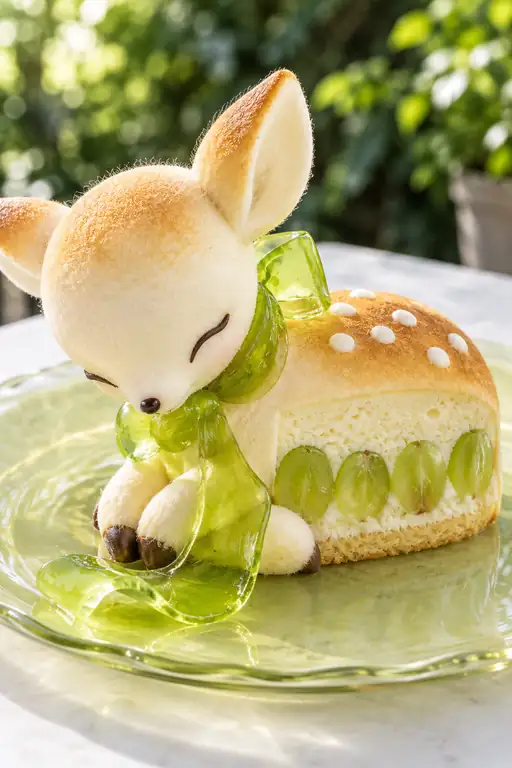 The Ribbon Dreams in Sunlight
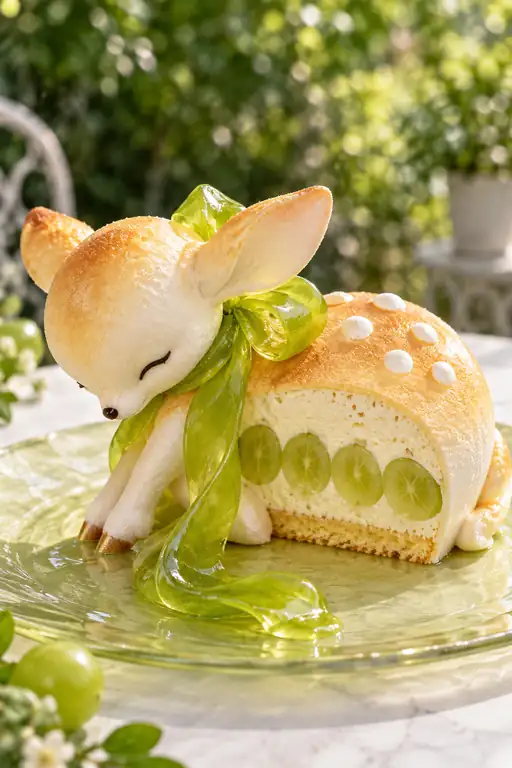 Dreaming Beneath the Green Ribbon
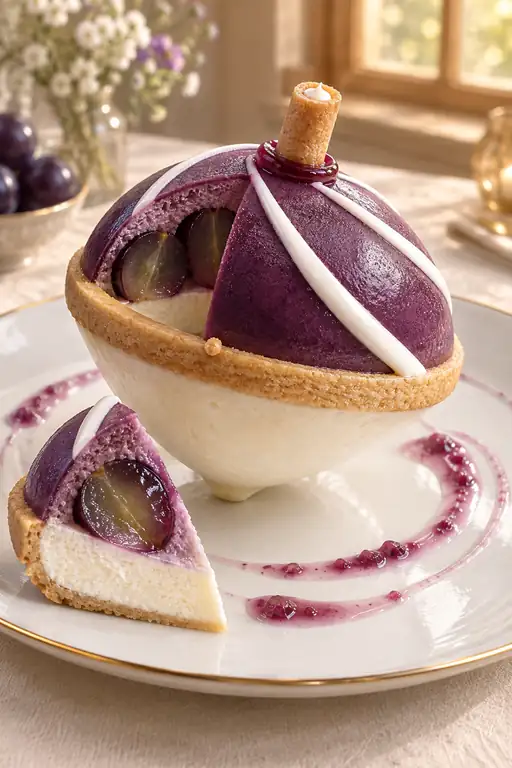 A Grape-Colored Spin
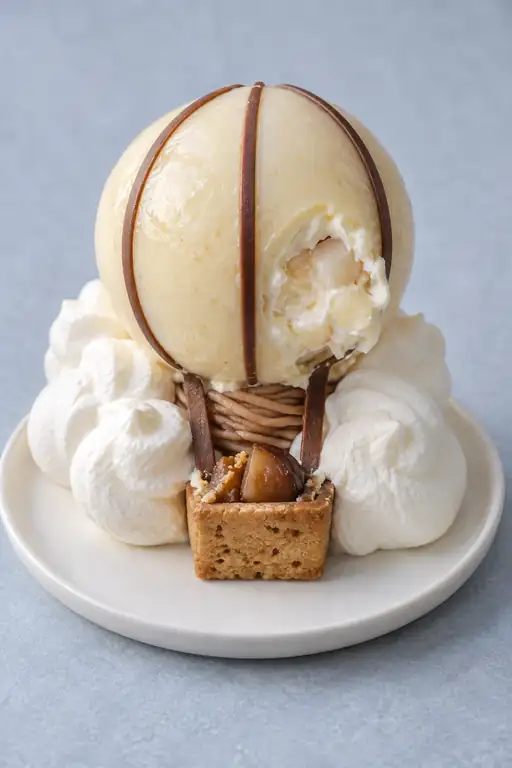 The Balloon with a Chestnut Basket
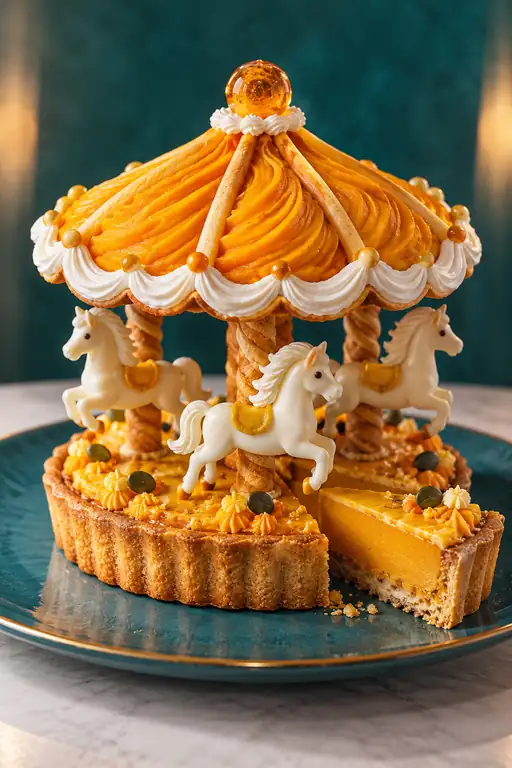 Waltz of the Starlit Steeds
 Carousel of Candied Twilight