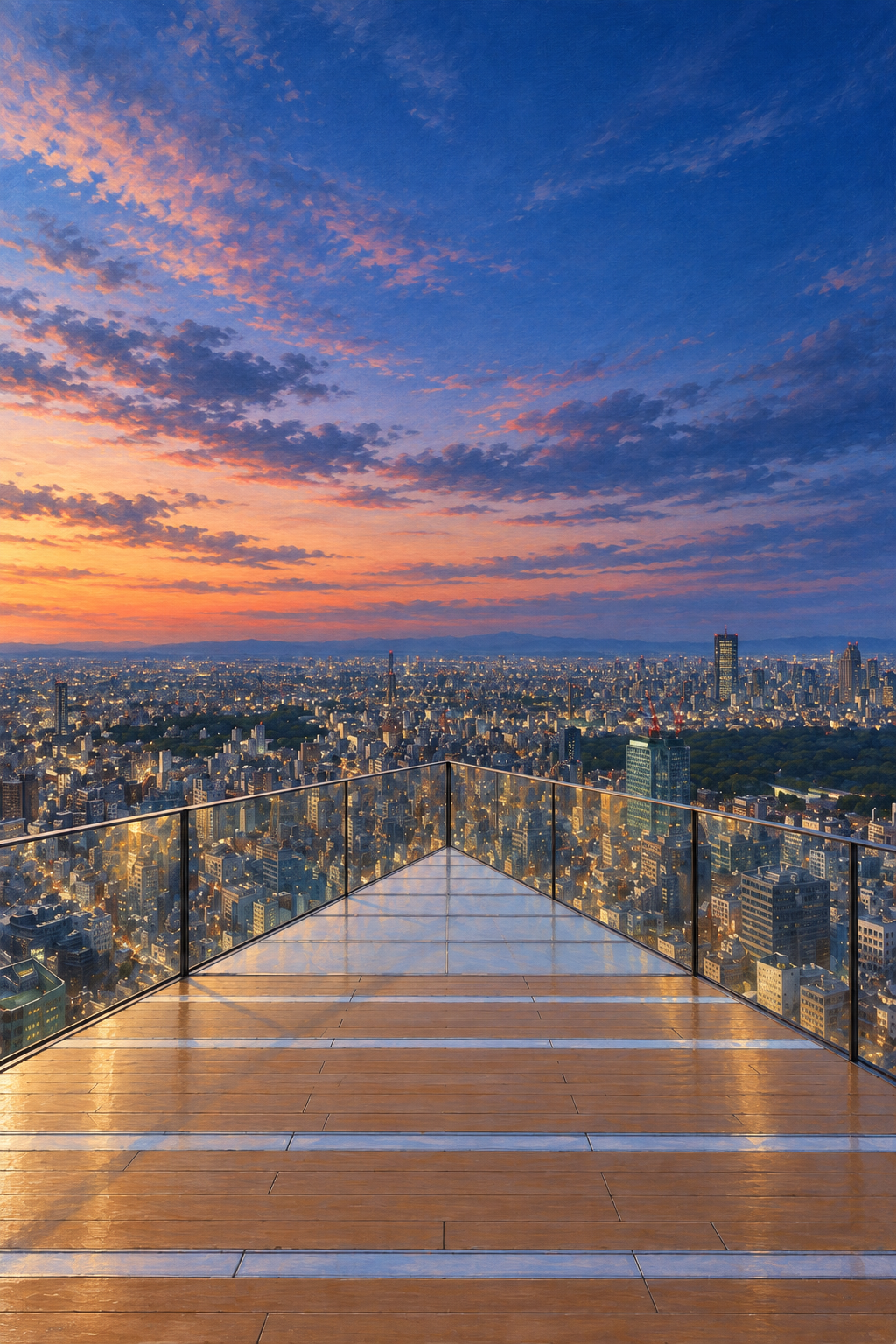
Nocturnal Awakening Above the City Lights
Critique
1. Introduction A rooftop deck overlooks a city at dusk. Glass railing and wood fill the foreground; orange light persists beneath an indigo sky. Windows glow across the buildings. 2. Description The railing's panels meet at a central tip above a pale triangular floor section. Wide wooden boards fill the near half, crossed by lighter strips that reflect the remaining sky. A dark park lies beyond the right railing, surrounded by blocks and a few tall towers. The horizon is a narrow line of hills. Pink cloud streaks spread through the upper blue. 3. Analysis The symmetrical point directs the gaze toward the central city, while horizontal boards steady the lower field. Orange along the left horizon and tiny window lights are separated by a wide zone of blue shadow. Glass panels allow the buildings to remain visible through their reflections. The park creates a dark pause among many illuminated facades, and cloud streaks extend the scene's horizontal rhythm into the sky. 4. Interpretation and Evaluation The terrace presents the city as a changing field of light rather than a fixed collection of buildings. Its empty floor makes the viewer's position unusually explicit. The composition's clear perspective supports the huge panorama, and the contrast of orange with indigo is measured. Small window marks reward close looking, while the broad sky prevents visual crowding. The reflective railing is an effective intermediate layer. 5. Conclusion The first impression is of a vivid sunset above the city. With further attention, the deck's structure, dark park, and many individual lights become equally important. The image records the gradual transfer of brightness from sky to streets through a carefully placed vantage point.
Same Subcategory
Similar Artworks
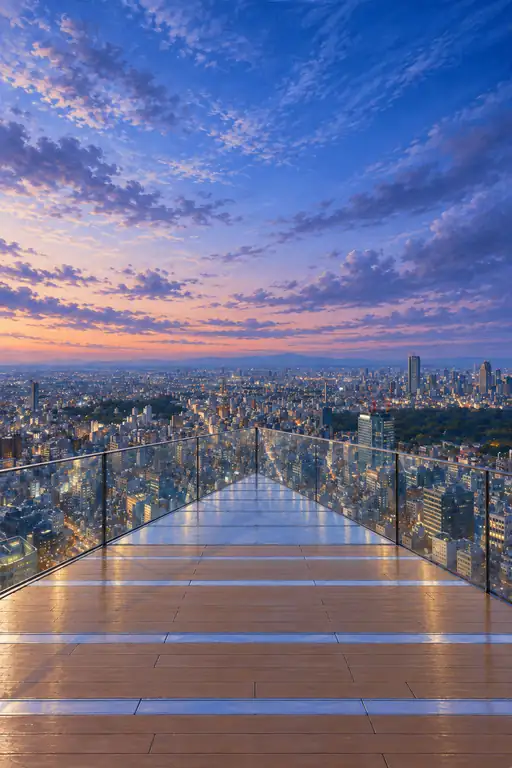 Twilight Reverie Over the Glimmering City
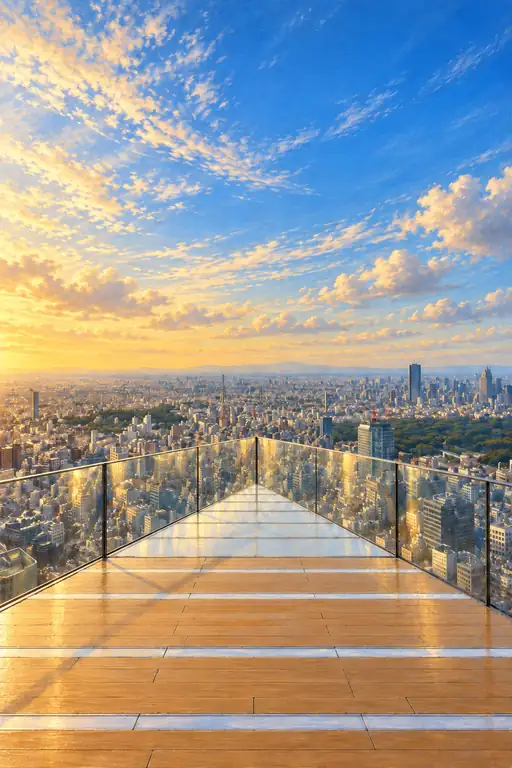 Golden Horizon from the Sky Terrace
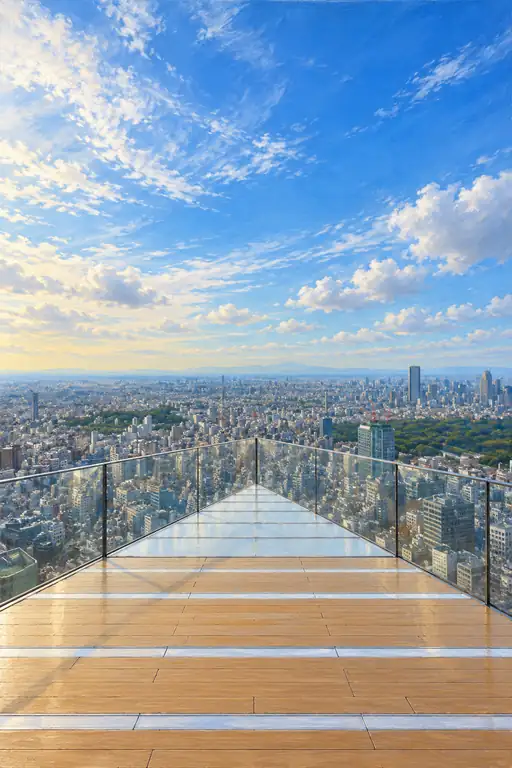 Prow of the Sky Above the Megalopolis
 Gilded Dusk Over the Sprawling Metropolis
 Threshold of Azure Horizons
 Sunset Over the River of Glass
 Amber River of the High Terrace
 Twilight Harbor and the Slopeway Light
 Twilight's Golden Observation
 The Night Opens Beyond My Footsteps