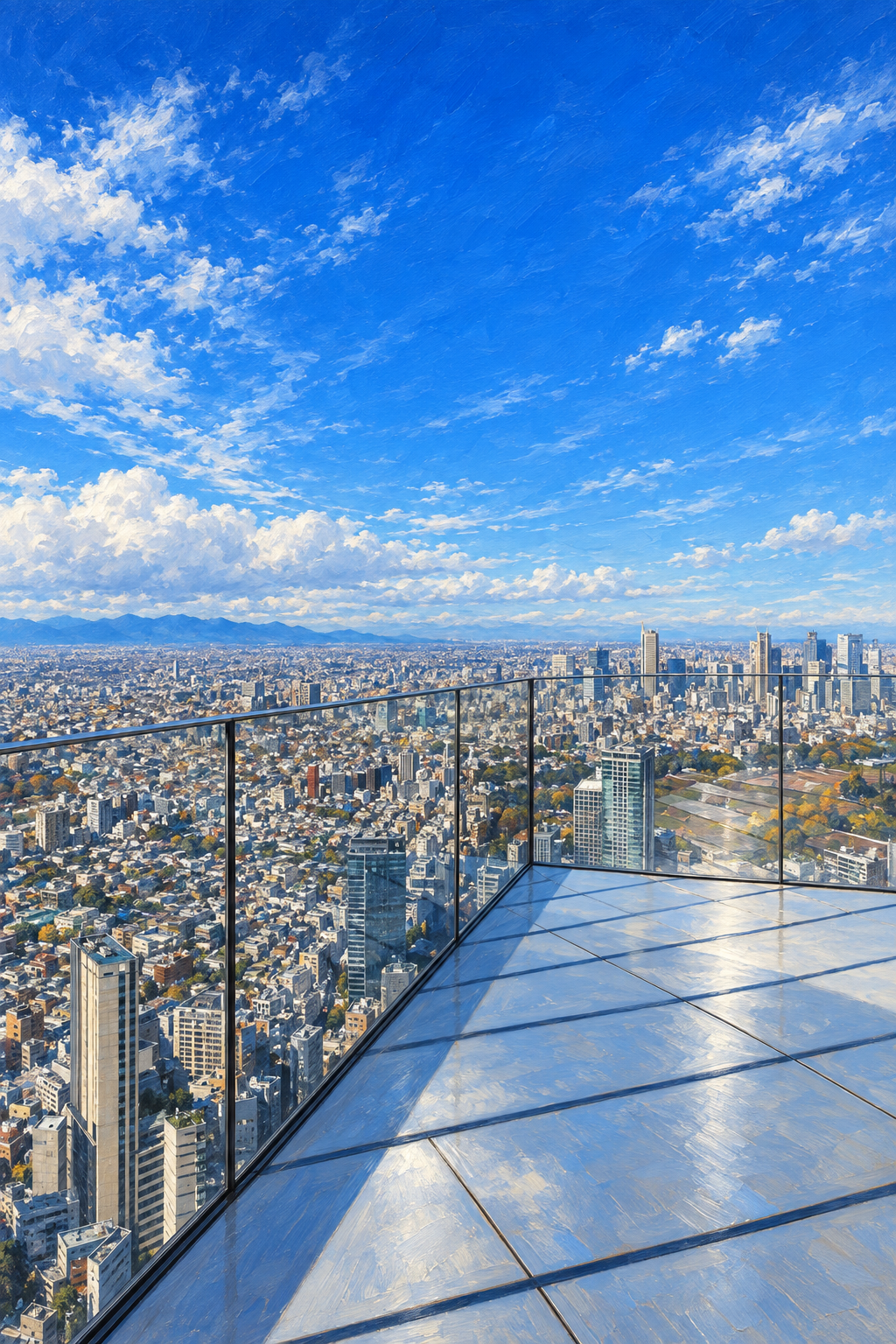
Threshold of Azure Horizons
Critique
1. Introduction This painting surveys a city from a high terrace beneath blue sky. Buildings extend toward distant mountains. Height, line, and color organize the urban panorama. 2. Description Pale floor panels form a large angular foreground, bounded by a transparent railing. Beyond it, countless small buildings fill the middle distance, with a few taller towers standing to the right. Low mountains make a narrow blue band at the horizon. White clouds spread across the upper left and center, leaving an expanse of saturated blue above. 3. Analysis The railing draws a long horizontal boundary between terrace and city, while floor seams converge toward it. Their diagonal lines make the viewer's elevated position clear. Dense, varied building marks contrast with the broad open sky. Light and dark blue brushwork gives clouds and floor a textured surface, and the distant mountains soften the transition between architecture and sky. 4. Interpretation and Evaluation The terrace provides a place from which to measure the city's extent. The huge sky tempers the density below and prevents the panorama from feeling enclosed. The composition manages scale through the railing, repeated rooftops, and distant ridge. Its blue palette creates unity despite many buildings, and short visible strokes give the scene an active painted surface. The transparent barrier adds a distinctive intermediate layer. 5. Conclusion At first the view may seem dominated by blue sky. Closer inspection reveals how the terrace's lines lead across the crowded city toward the mountains. The painting joins the experience of standing at a specific height with the breadth of the urban landscape.
Same Subcategory
 Lemon Terrace Overlooking the Mediterranean
Similar Artworks
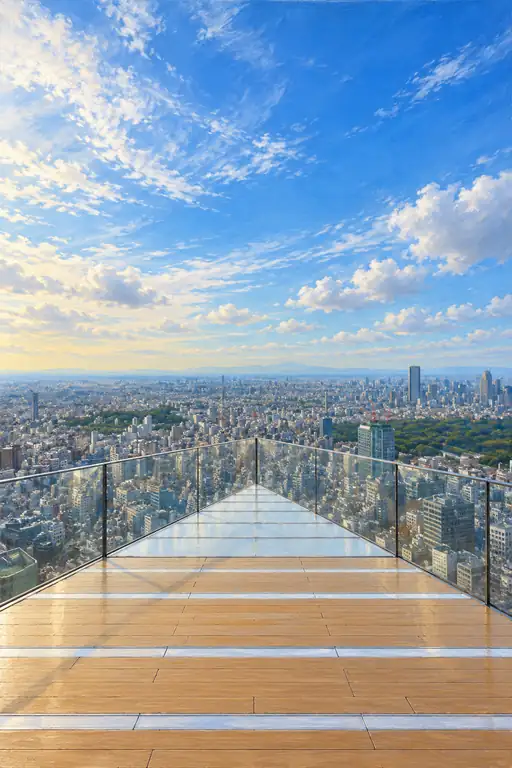 Prow of the Sky Above the Megalopolis
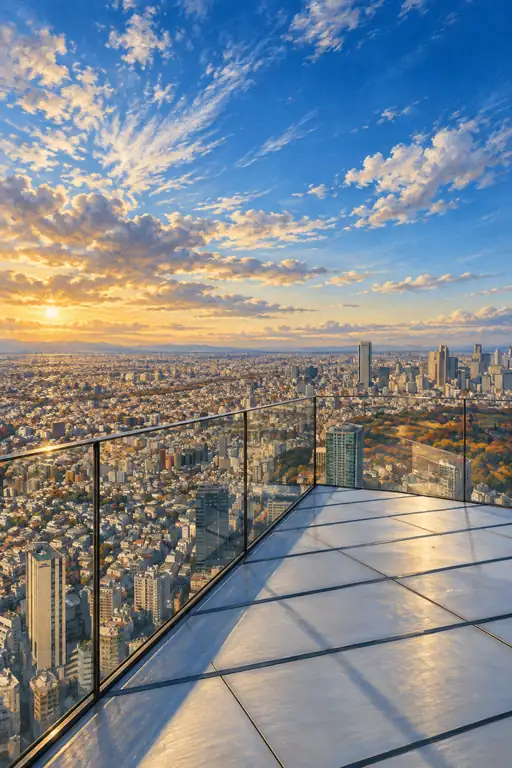 Gilded Dusk Over the Sprawling Metropolis
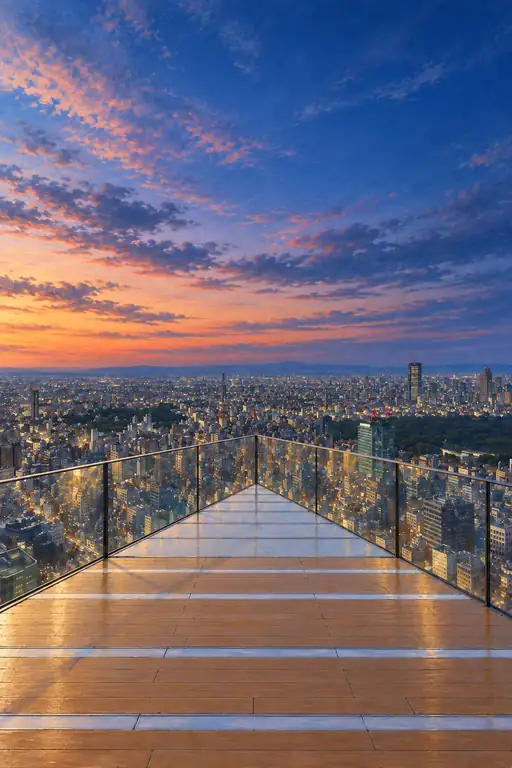 Nocturnal Awakening Above the City Lights
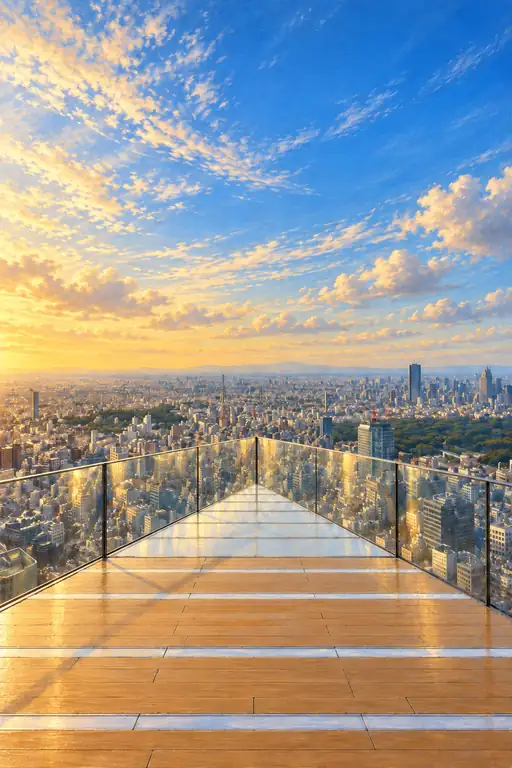 Golden Horizon from the Sky Terrace
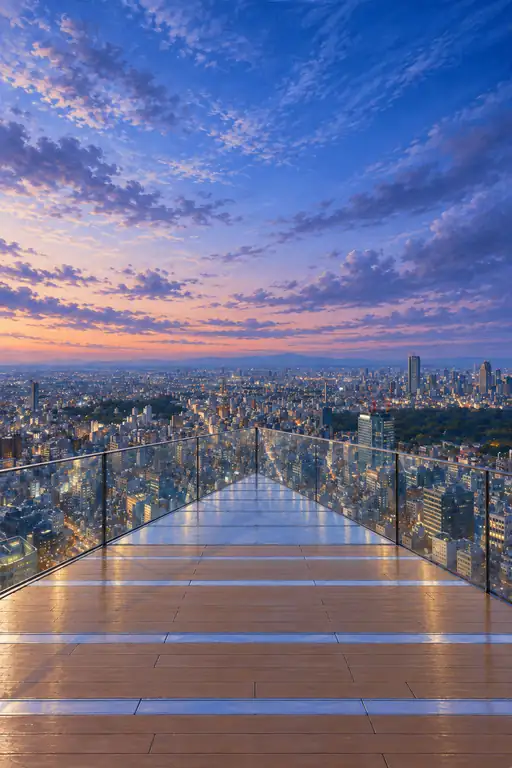 Twilight Reverie Over the Glimmering City
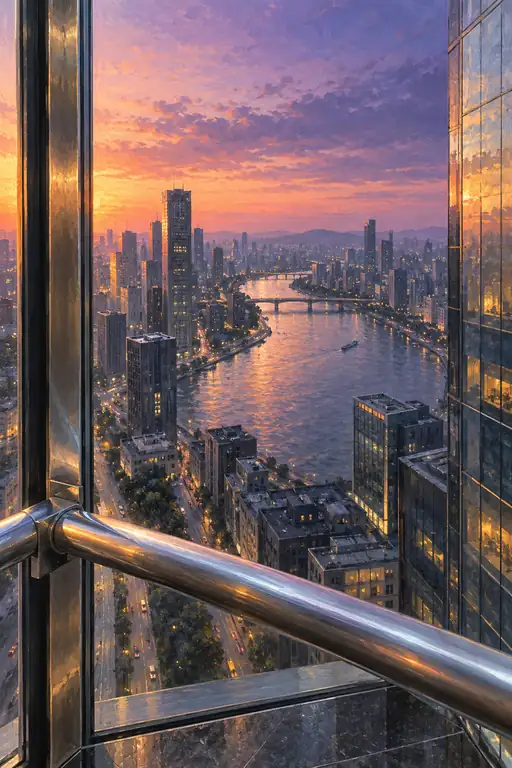 Amber River of the High Terrace
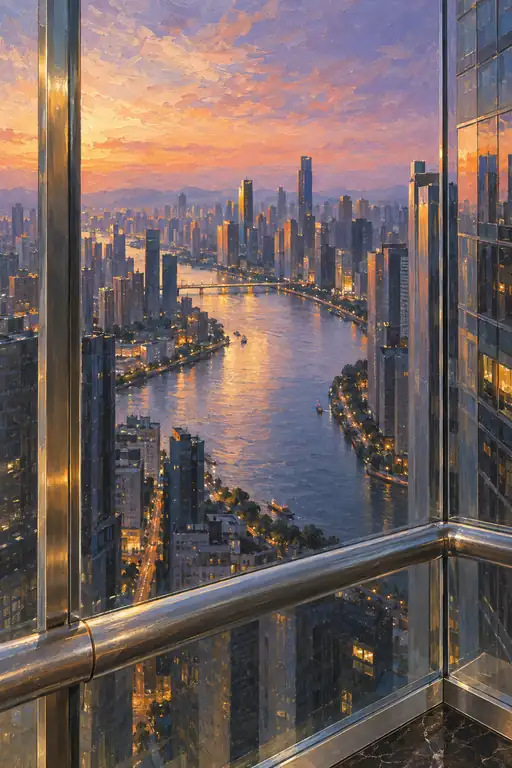 Sunset Over the River of Glass
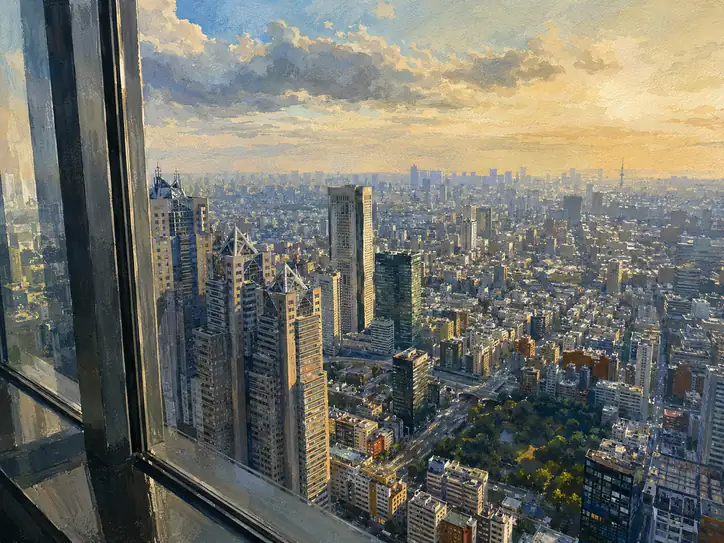 Echoes of a Gilded Metropolis
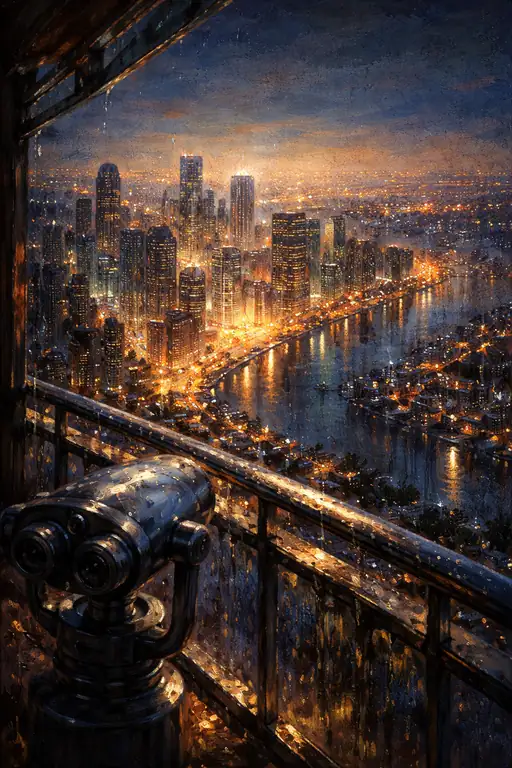 The Observer's Urban Constellation
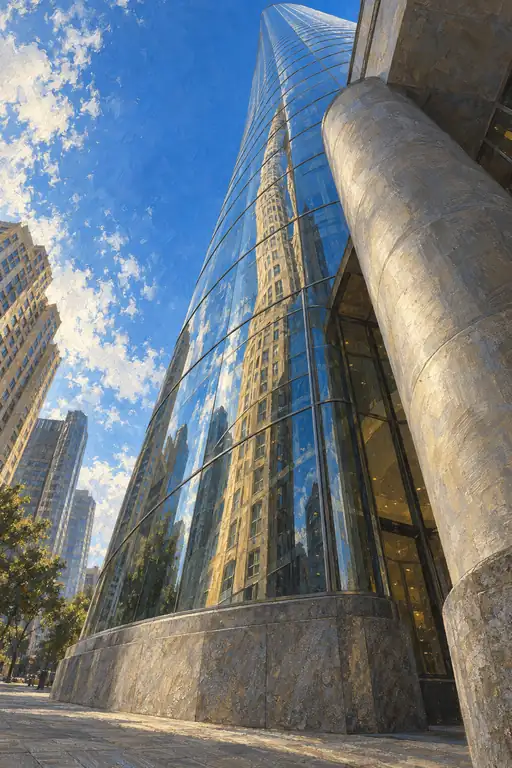 Yesterday Climbs the Walls of Tomorrow