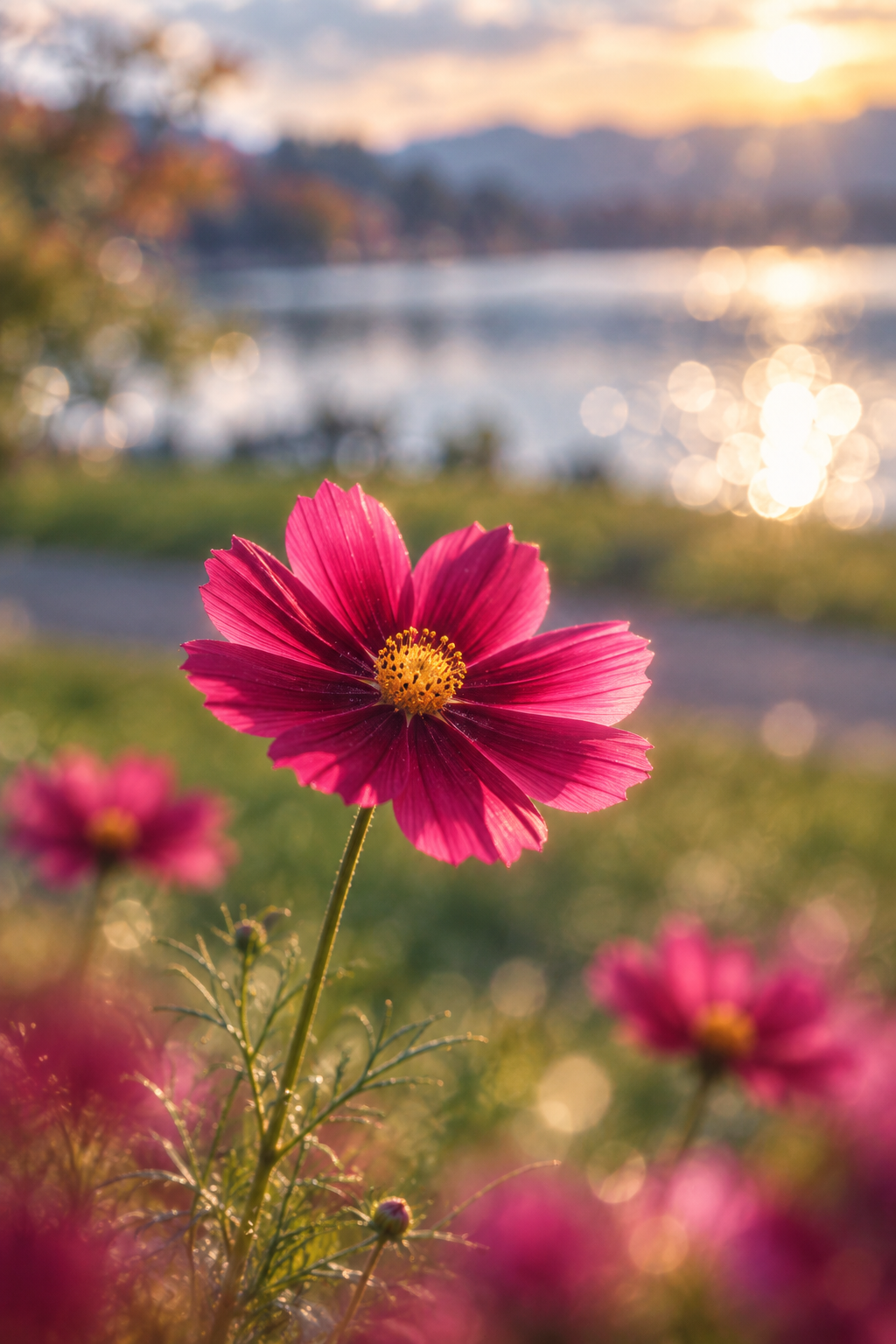
Lakeside Whisper at Sunset
Critique
Introduction A magenta cosmos stands before a lake at sunset. The main flower sits below the center of a tall frame, set against distant hills and a bright horizon. Its defined shape contrasts with the soft, expansive setting, making the view both a floral portrait and a landscape. Description Broad petals radiate around a small yellow center, their ribbed surfaces deepening toward burgundy in the shade. The flower rises on a slender, slightly angled stem with finely divided leaves and a round bud below. Two smaller pink flowers blur near the lower corners. Across the middle distance, a horizontal band of water catches numerous bright reflections beneath low blue hills. Analysis The horizontal lake and hills steady the upward movement of the single stem. Backlighting picks out the thin edges and veins of the petals, while their dark central folds preserve the flower's weight. A band of green shore separates the saturated magenta from the pale water. Strong focus on the foreground and scattered light circles in the distance move attention between close texture and remote atmosphere. Interpretation and Evaluation The cosmos appears temporary against the broad, enduring lines of the landscape, yet its color commands the entire view. The composition uses scale effectively: the small blossom is visually larger than the hills because it stands so near. Restrained drawing of the distant terrain and careful color gradation in the petals create a convincing depth. The flower's slight asymmetry prevents the scene from feeling overly arranged. Conclusion A vivid flower leads to awareness of the lake's light and fading horizon. The image gives a modest garden bloom a broad spatial setting without losing its particular form.
Same Subcategory
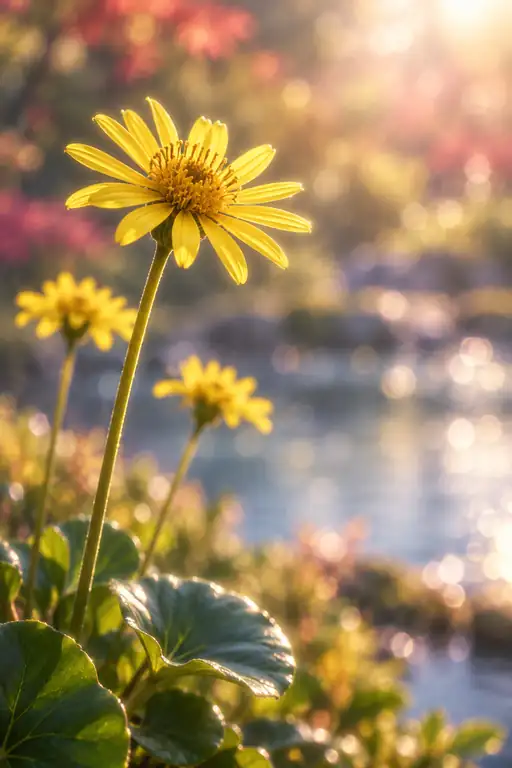 Gilded Petals by the Autumn Pool
Similar Artworks
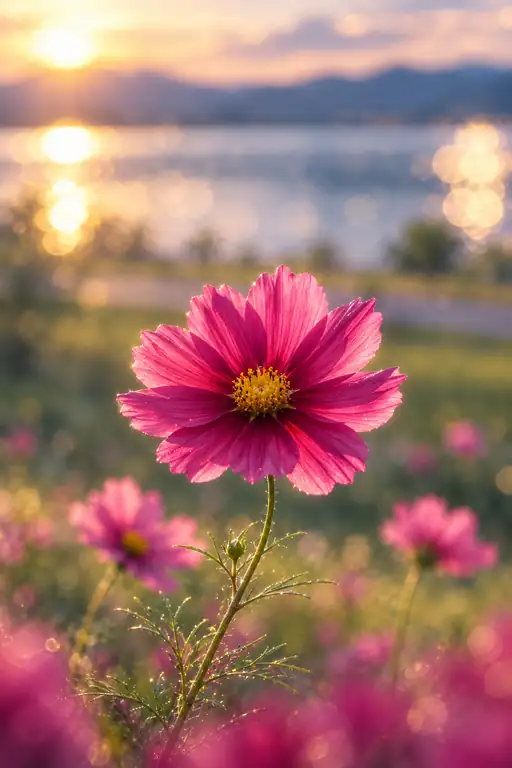 Lakeside Twilight in Crimson Glow
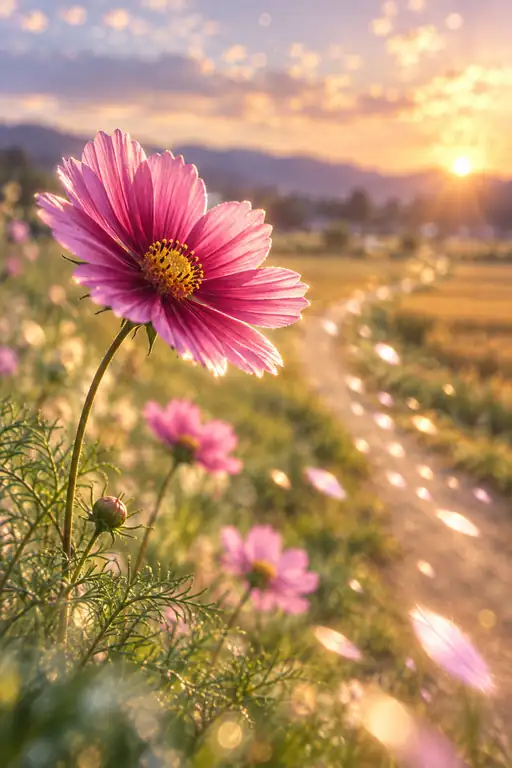 Sunset Trail Across the Rice Fields
 Sunset Beacon on the Mountain Path
 Echoes of Sunset by the Stream
 Luminescence Along the Riverbank
 Twilight Reverie by the Waterside
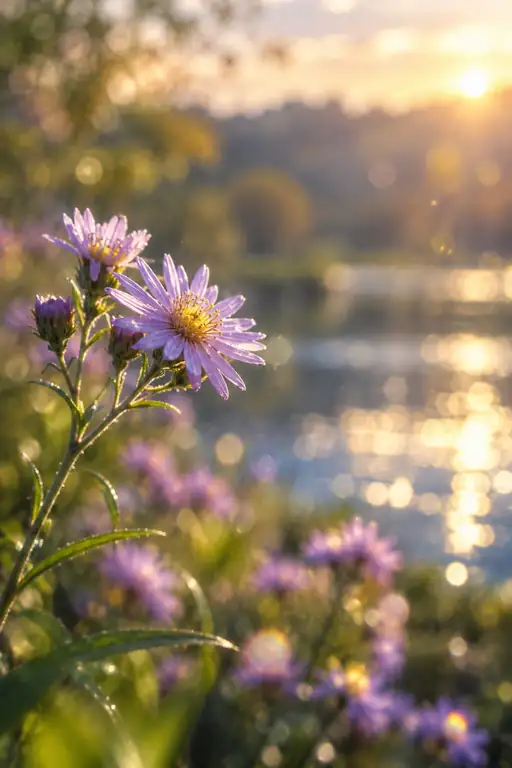 Violet Whispers at the Golden Sunset
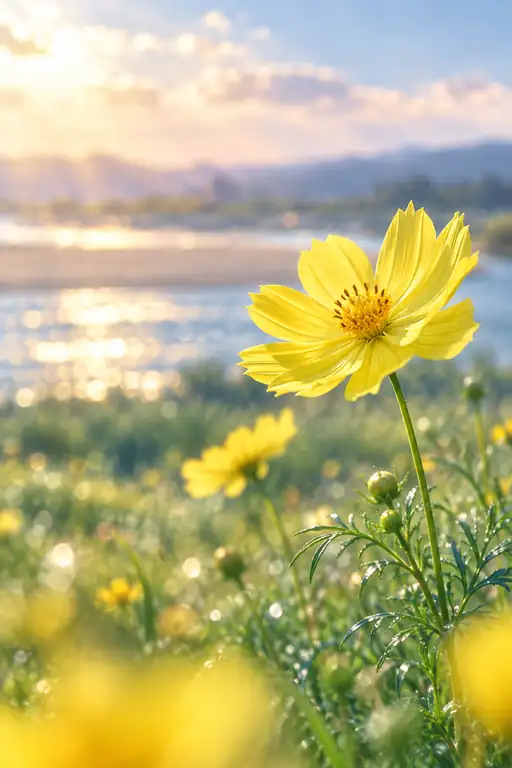 Sunset Melody by the River Shore
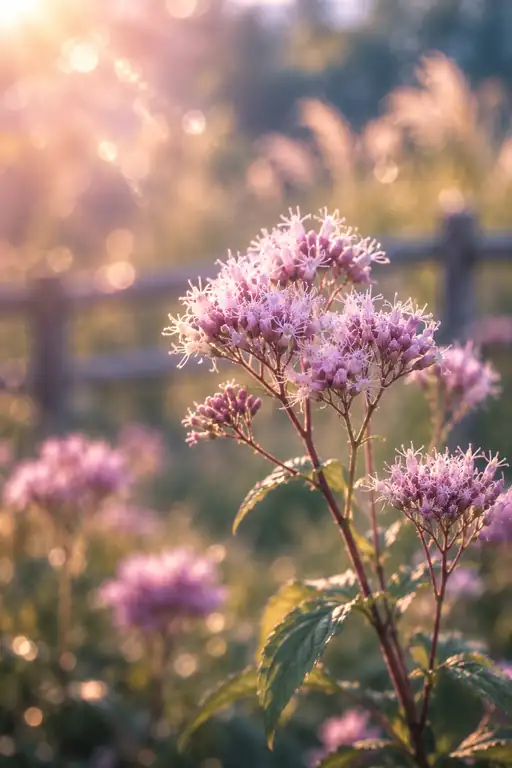 Sunset Symphony in Mauve and Gold
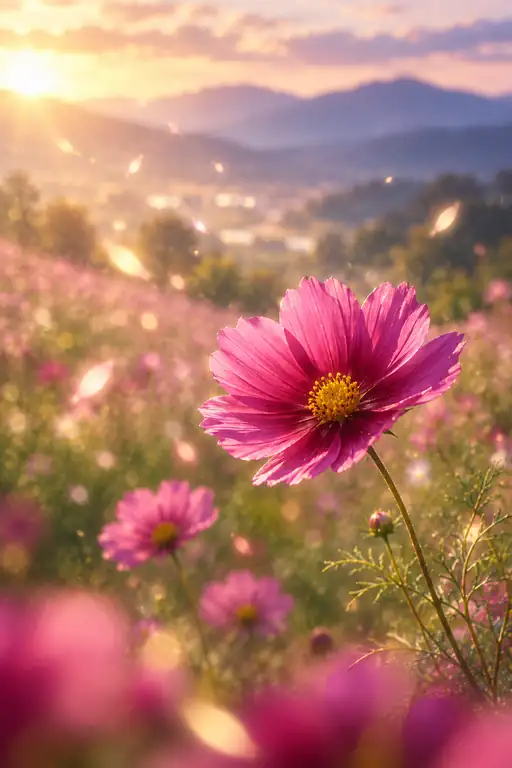 Sunset Reverie in the Bloom