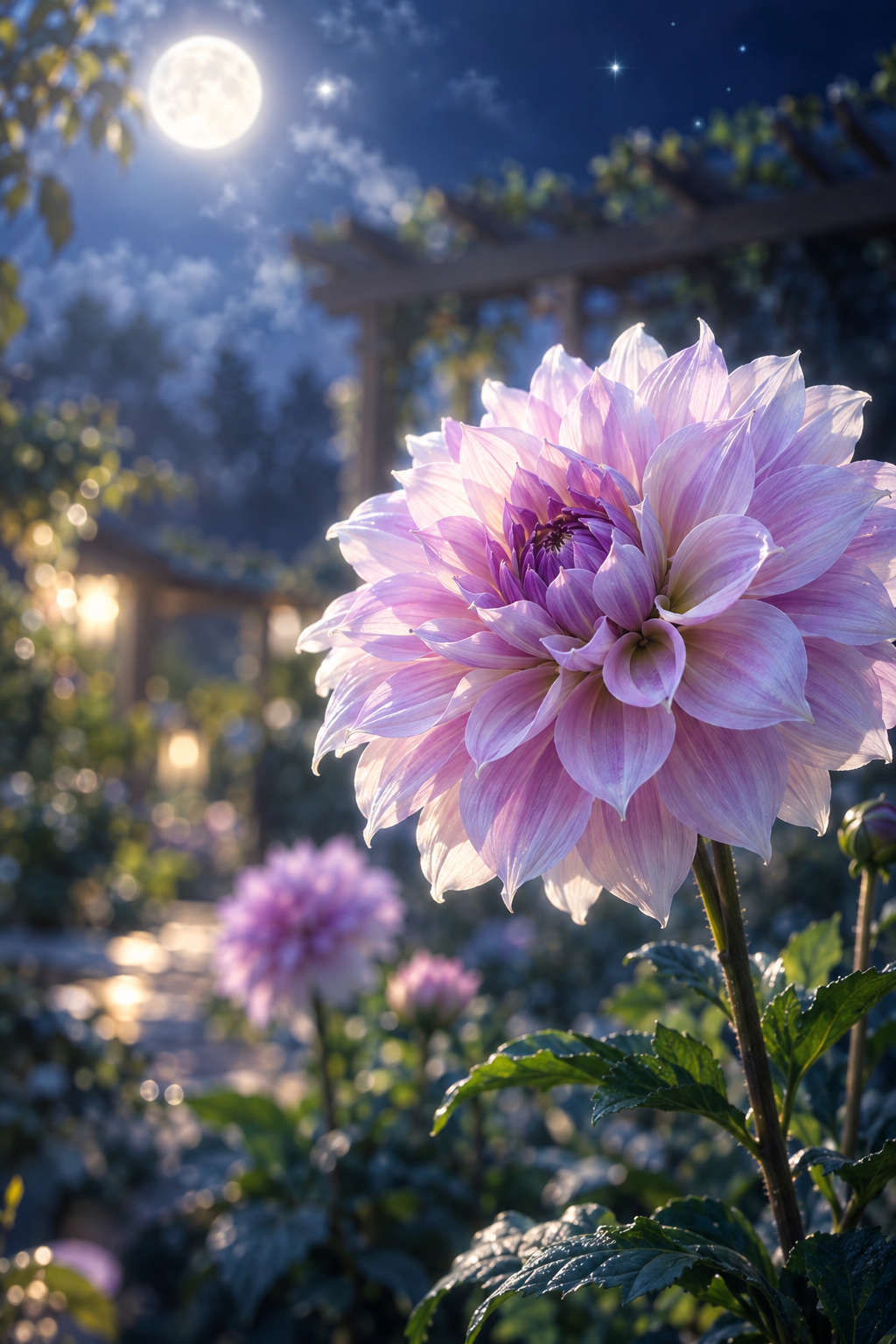
Nocturne in Moonlit Petals
Critique
1. Introduction A lavender dahlia occupies the right foreground of a moonlit garden. The moon sits high on the left, while a pergola crosses behind. Near and far forms give the composition depth. 2. Description Pointed petals overlap around a dark center. They shift from pale lilac edges to violet folds. A stem descends among serrated leaves, and a bud stands at far right. Smaller flowers soften below. Moon, stars, pergola beams, and garden lights remain visible beyond. 3. Analysis The flower's radial structure contrasts with straight beams. Petals catch cool light while inner shadows preserve depth. The moon balances the bloom diagonally. Warm garden lights interrupt the blue palette. Selective focus keeps petals sharp and dissolves distant flowers and lamps. 4. Interpretation and Evaluation The close flower seems to gather the night's dispersed light into one elaborate form. Its many petals invite slow inspection, while the pergola locates it within a tended garden. The composition uses the moon and beams to balance the dominant bloom. The lilac-blue color relationship is controlled, and the folded petals are convincingly rendered. Stars and glows lend the scene a heightened, decorative quality. 5. Conclusion At first the moon and oversized flower appear to compete for attention. Longer viewing reveals the beams, bud, and smaller blooms that place them within one garden. The image draws strength from the difference between the flower's intricate surface and the broad, softly lit night around it.
Same Subcategory
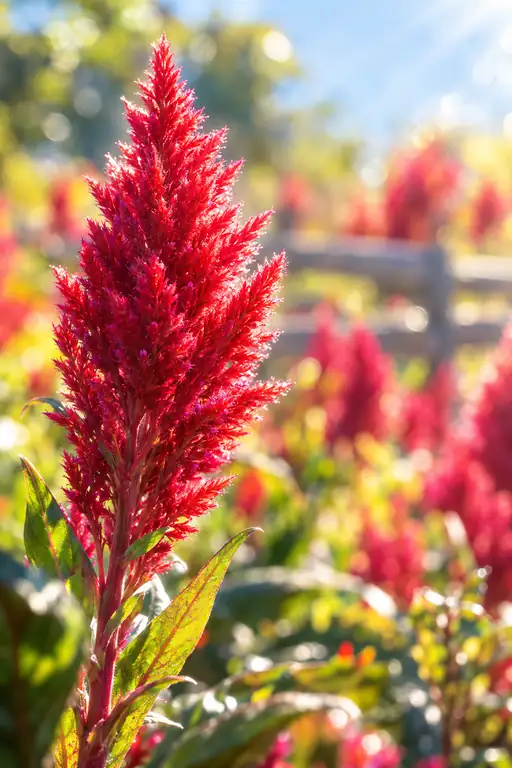 Crimson Feather Reaching for Light
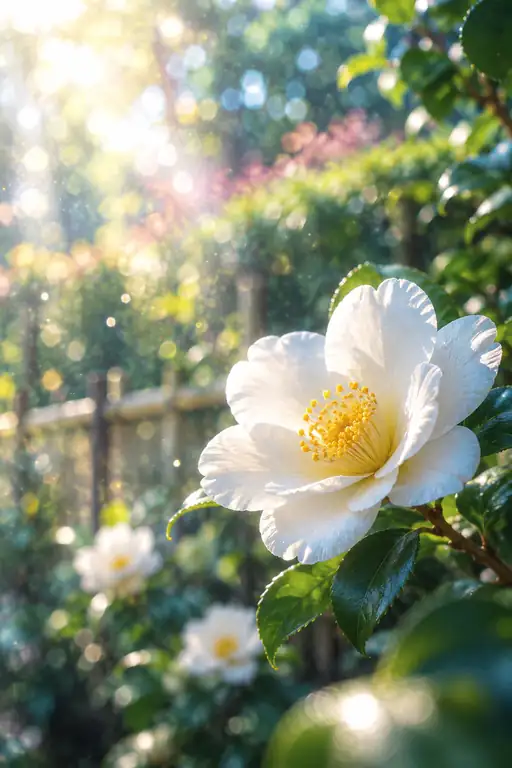 Whispers of Winter Sun
Similar Artworks
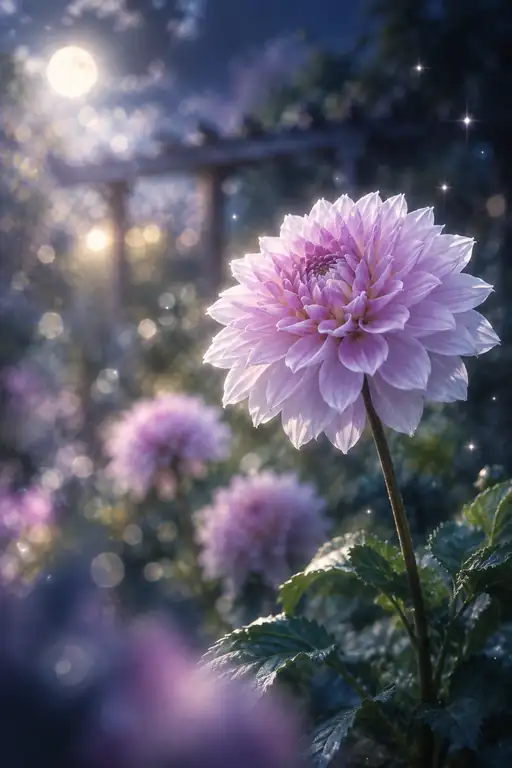 Serenade to the Autumn Moon
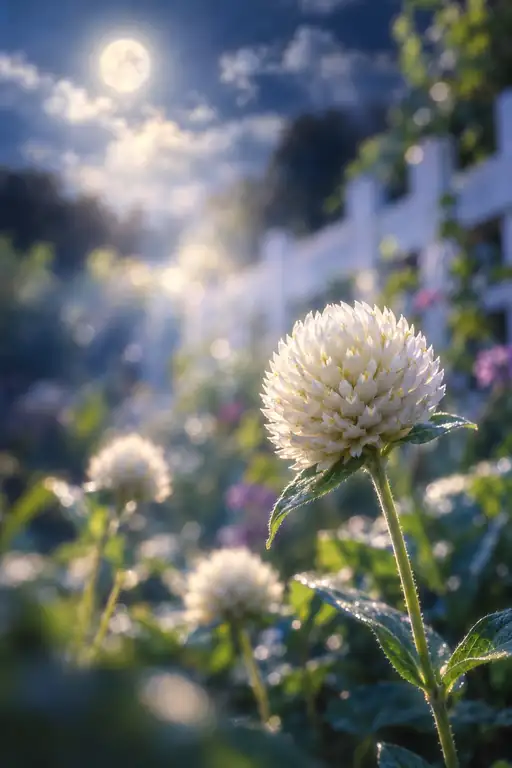 Moonlit Whispers by the Fence
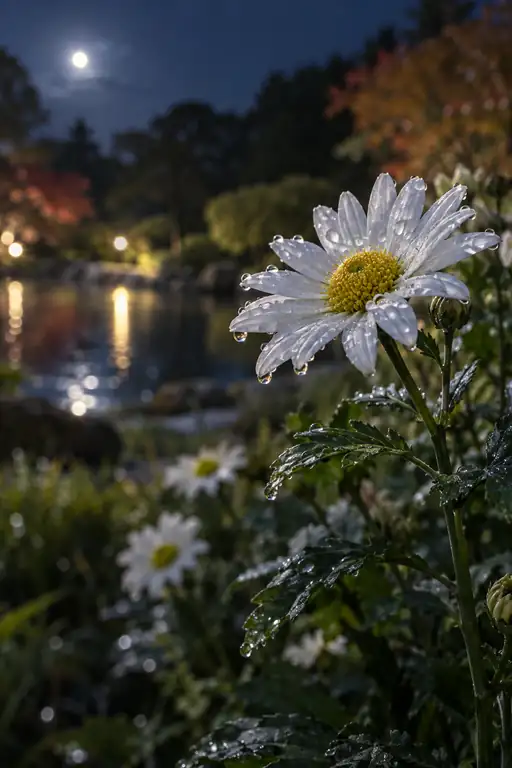 Dewdrop Echoes Beneath the Moon
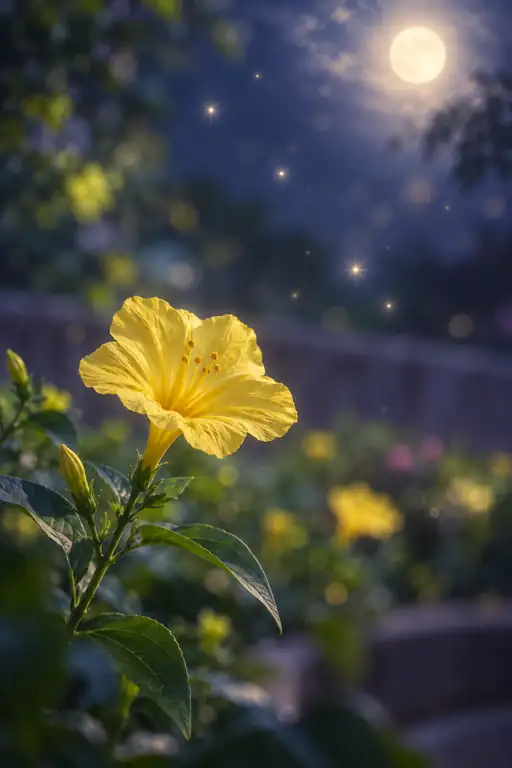 Golden Serenade under the Autumn Moon
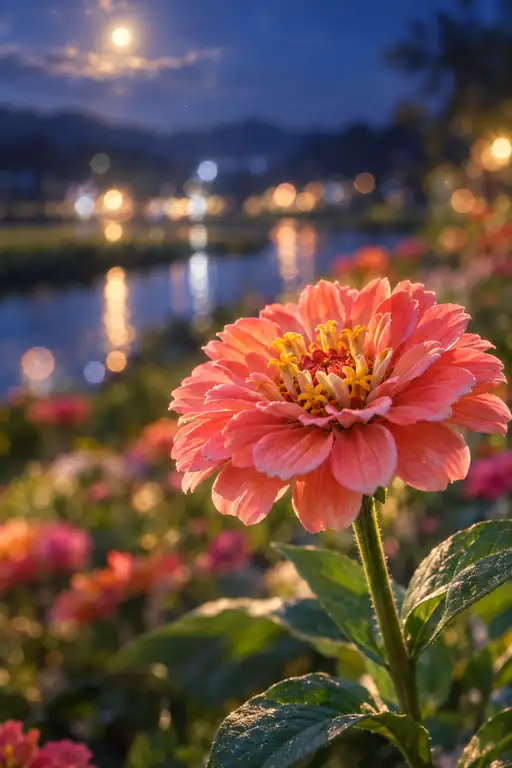 Night Glow Along the Shore
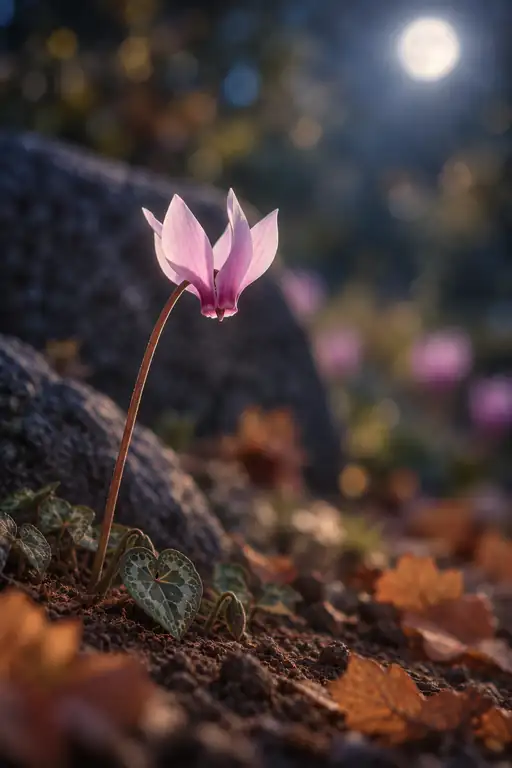 Solitary Bloom in the Autumn Night
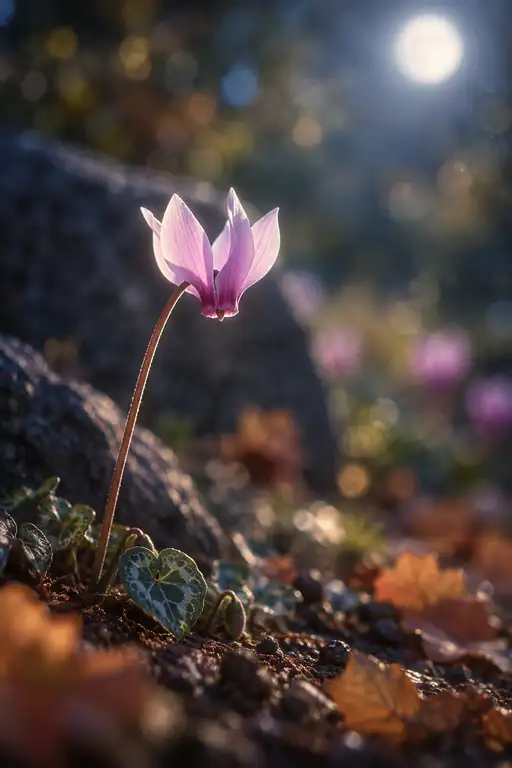 In Lunar Solitude
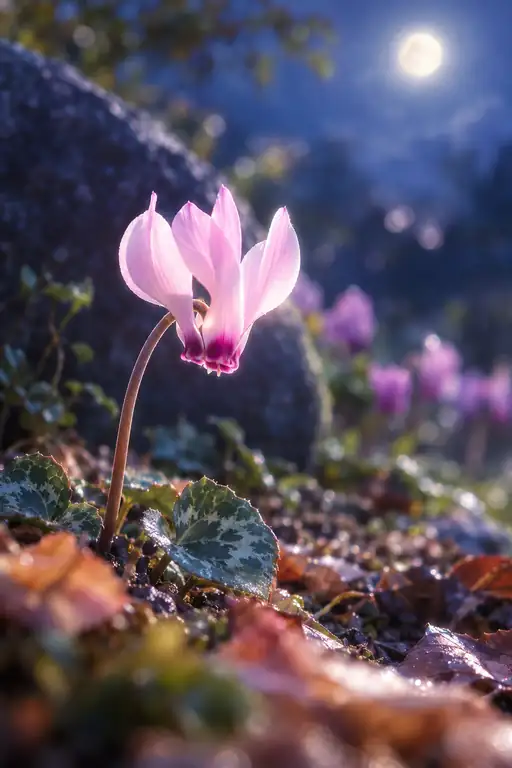 Wings of Light under the Autumn Moon
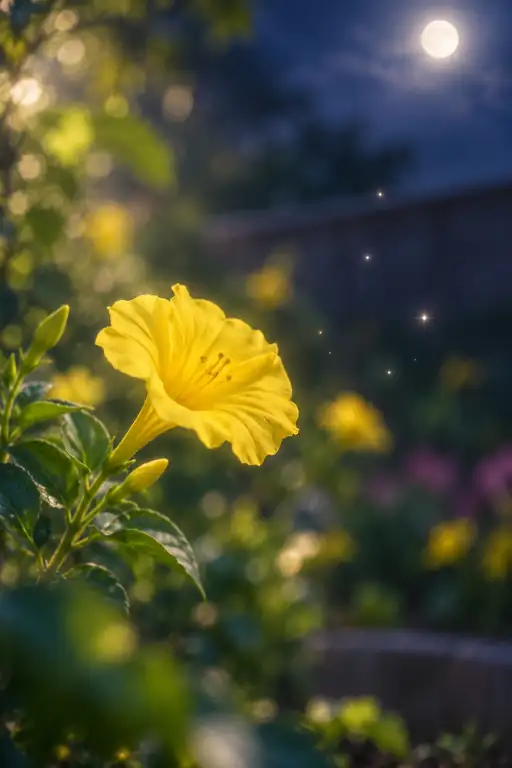 Golden Gaze toward the Celestial Moon
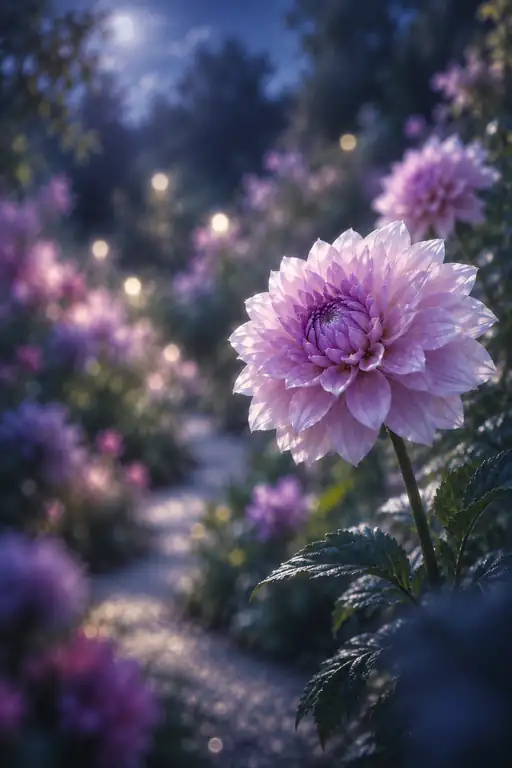 Night Mist and the Lavender Dahlia along the Moonlit Path