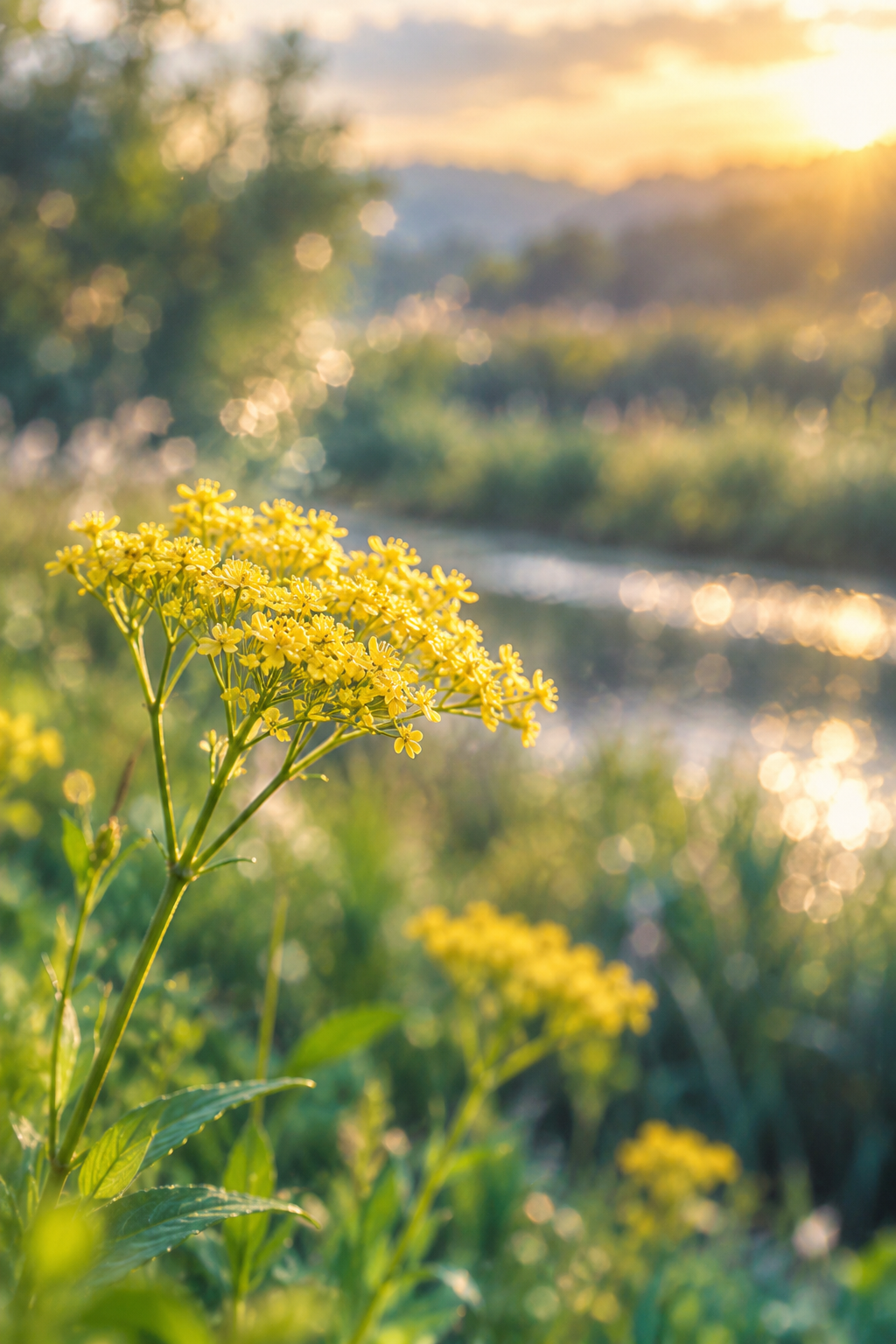
Amber Twilight by the Water's Edge
Critique
1. Introduction The vertical composition captures a golden pastoral sunset focused on a radiant spray of yellow patrinia wildflowers beside a tranquil stream. Positioned in the left foreground, the airy floral umbrella basks in the warm glow of dusk spreading across a peaceful river valley. 2. Description The prominent wild plant displays an intricate corymb of delicate butter-yellow florets supported by slender, branching green stems with elongated lanceolate leaves. Across the midground, the meandering stream reflects the setting sun, transforming the water into an impressionistic trail of sparkling golden bokeh beneath a hazy horizon where the sun sets behind gentle hills. 3. Analysis Lighting descends warmly from the upper right, casting an intense amber glow that illuminates the yellow florets and edges the green leaves in gold. The high-key reflections across the river water create rhythmic, circular light accents that counterbalance the crisp, detailed rendering of the foreground plant. The vertical thrust of the flower stalk anchors the tranquil, horizontal recession of the river. 4. Interpretation and Evaluation The painting captures the quiet, nostalgic beauty of late-summer sunsets in rural Japan. The wild patrinia stands as a modest symbol of natural endurance, seasonal harmony, and rustic peace. Bathed in golden twilight, the riverside scene invites the viewer into a comforting state of gentle contemplation and emotional warmth. 5. Conclusion In conclusion, this artwork successfully unites classical botanical observation with radiant landscape impressionism. Through skillful sunset lighting, delicate floral articulation, and engaging aquatic depth, the piece stands as an eloquent and visually captivating celebration of riverside autumn flora.
Same Subcategory
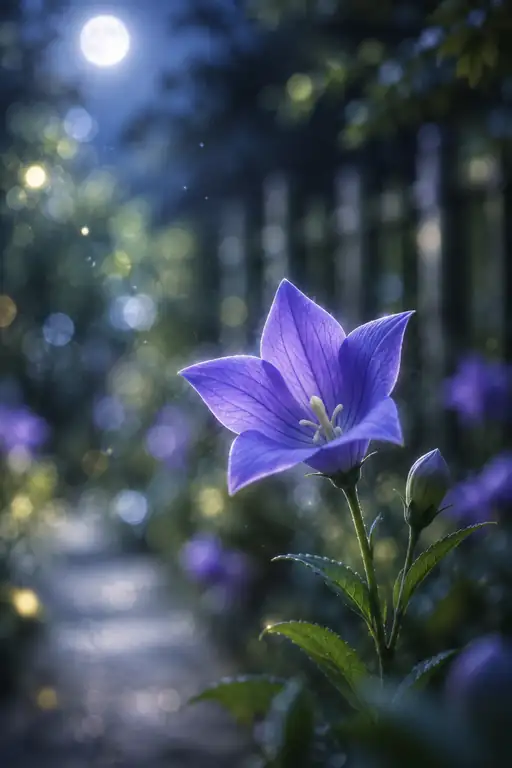 Serenade of the Starry Bellflower
Similar Artworks
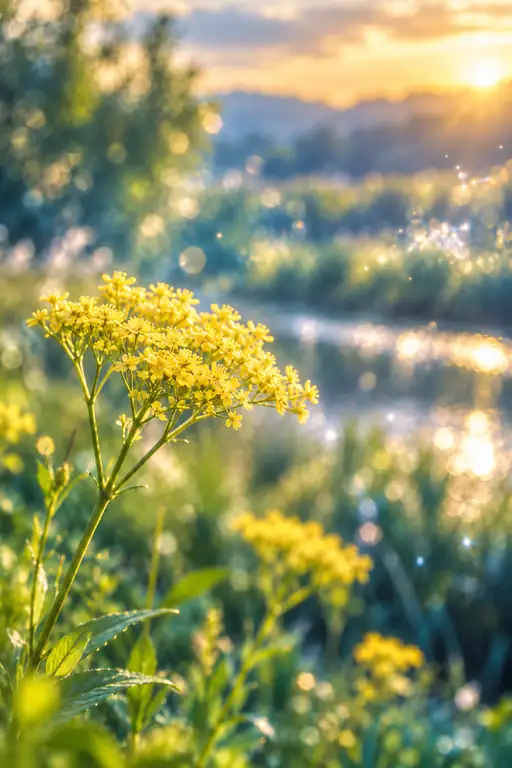 Golden Splendor of the Sunset Shore
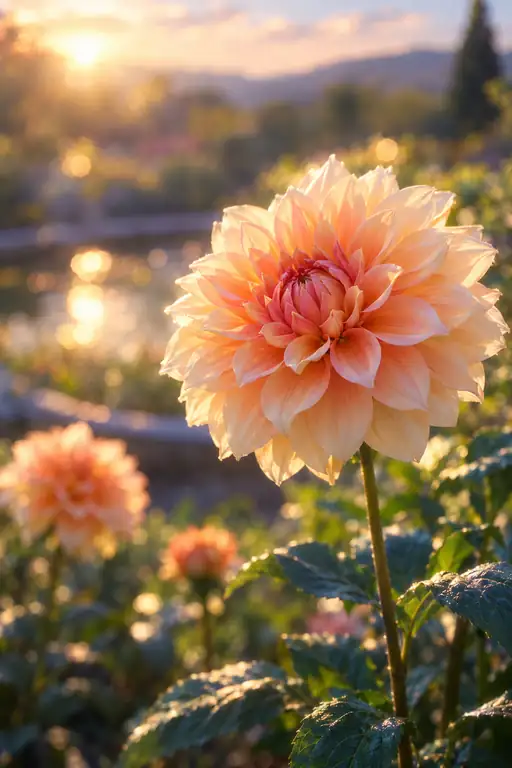 Golden Dusk upon Velveteen Petals
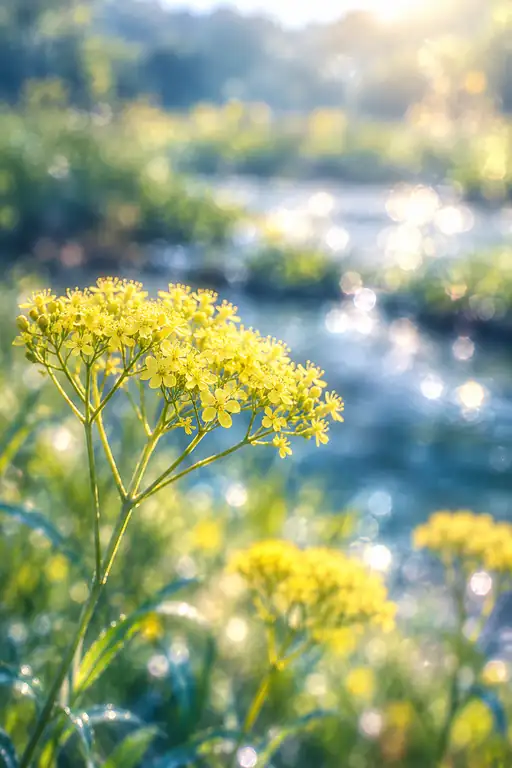 Sparkle of the Shimmering Brook
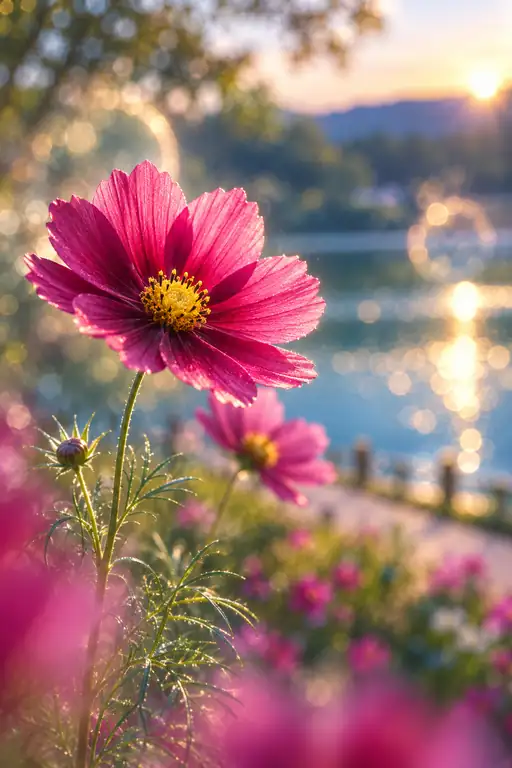 Crimson Song upon the Glistening Lake
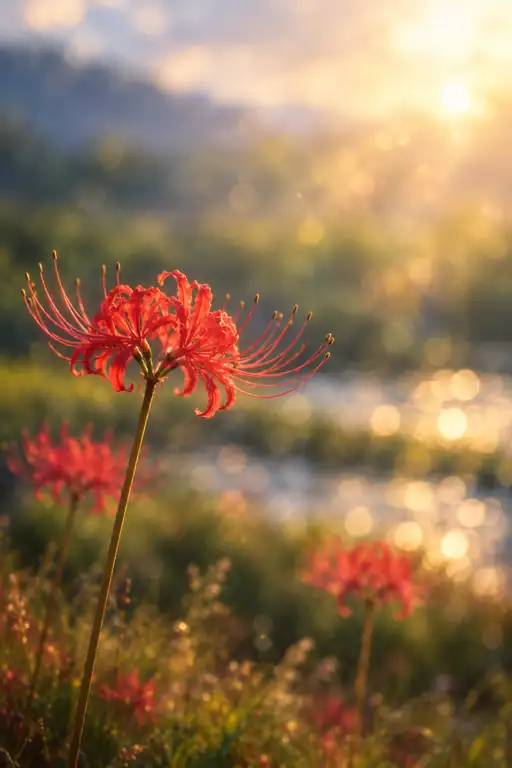 Solitary Radiance by the Riverbank
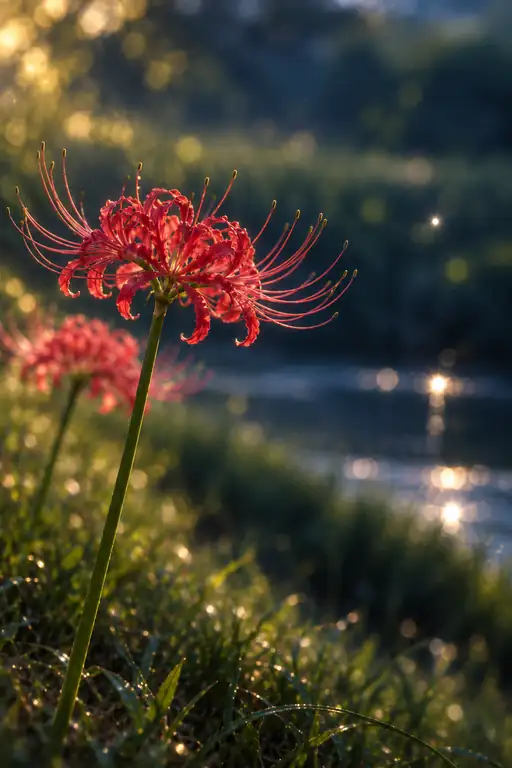 Morning Radiance and the Crimson Lycoris along the Water
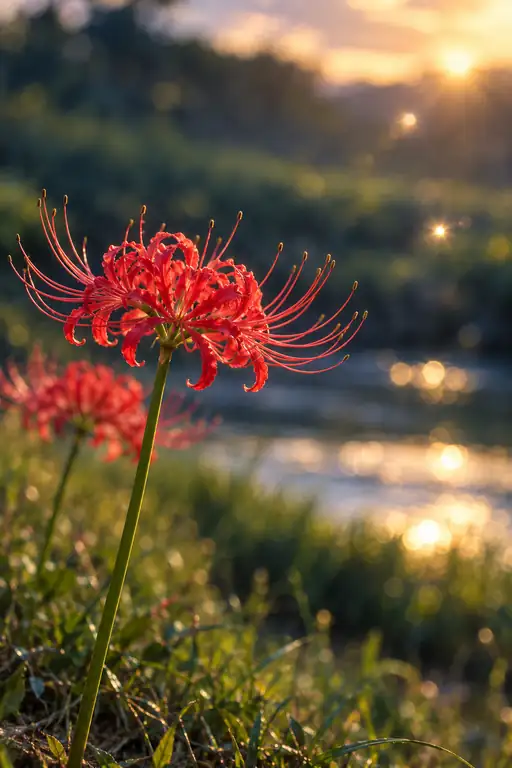 Crimson Lycoris at Twilight by the Glittering River
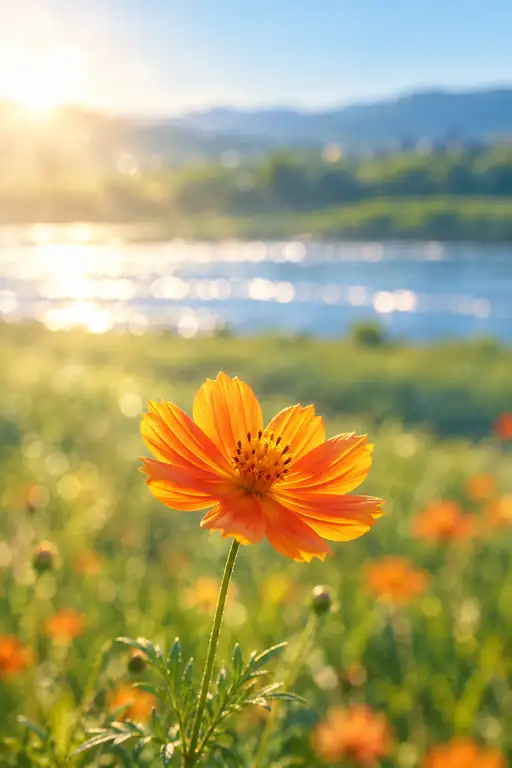 Translucent Amber Cosmos by the River
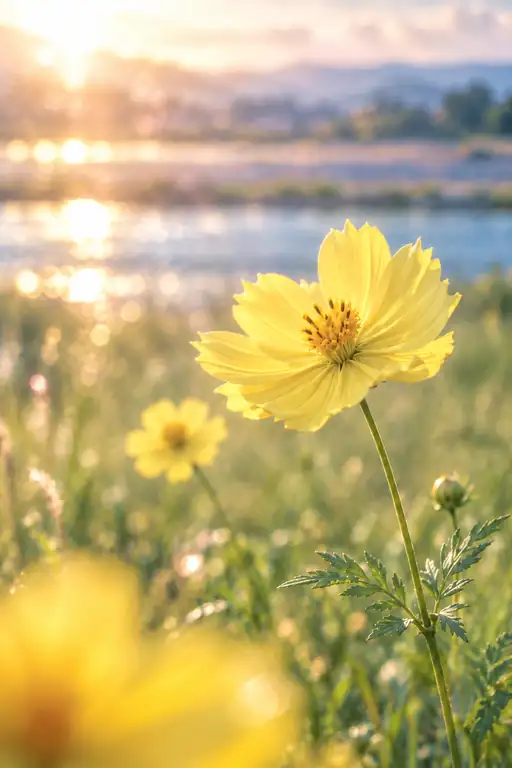 Echoes of Sunset by the Stream
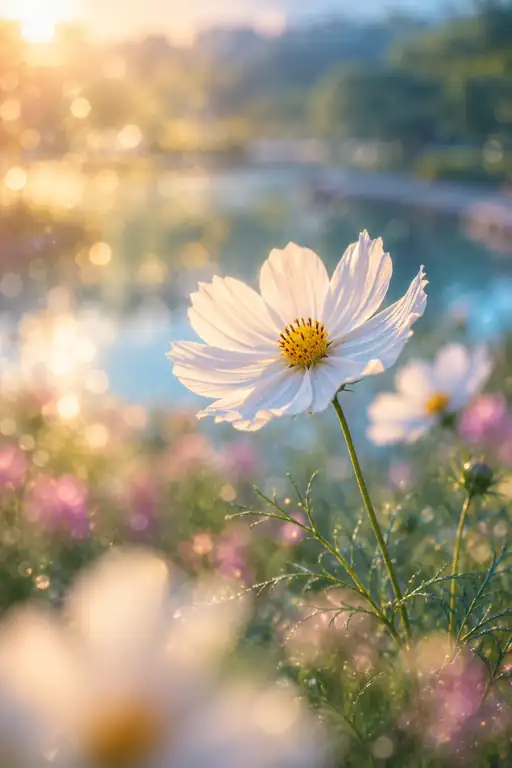 Soft Whisper of Twilight Petals