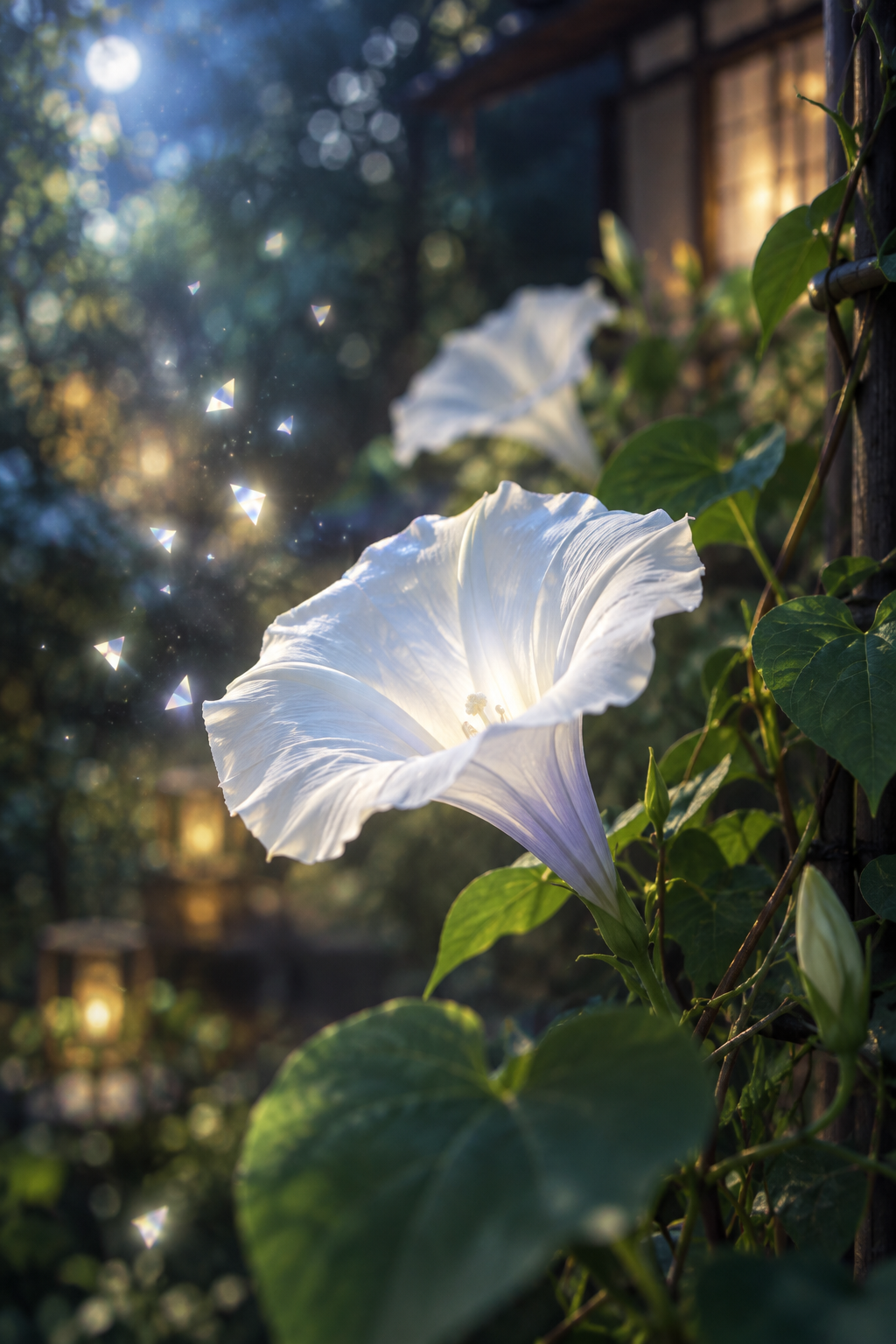
Nocturne of the Crystal Blossoms
Critique
1. Introduction The vertical composition presents an enchanting nocturnal vision where a luminous white moonflower blooms beside a traditional Japanese pavilion. Set against a deep indigo twilight, the pristine trumpet blossom radiates otherworldly light, accompanied by floating crystal facets under a hazy full moon. 2. Description The prominent white flower unfurls its broad, fluted corolla with delicate lavender shading along the throat, terminating in fine pistils and stamens. Large, cordate emerald leaves cling to a dark wooden arbor. In the background, warm golden light glows through the shoji paper screens of a historic pavilion, accompanied by glowing garden lanterns and a shimmering cascade of prismatic crystal flecks dancing through the cool night air. 3. Analysis Lighting is structured upon a magical duality: the cool, silvery radiance of the overhead moon and floating prisms contrasts with the warm amber glow radiating from the shoji windows and lanterns. This interplay creates sharp translucent highlights along the scalloped petal rim, emphasizing its delicate texture. The vertical trellis supports the compositional architecture, anchoring the dynamic drift of geometric light particles. 4. Interpretation and Evaluation The painting captures the mystical romance of an autumn nocturne, blending natural beauty with Japanese aesthetic intimacy. Opening solely under cover of darkness, the moonflower symbolizes purity, mystery, and spiritual awakening. The magical floating crystals elevate the realistic architectural setting into a dreamscape where nature and spirit harmonize in quiet contemplation. 5. Conclusion In conclusion, this artwork successfully unites classical botanical fidelity with magical realism. Through its evocative dual-light chiaroscuro, poetic staging, and imaginative prismatic elements, the piece offers a spellbinding celebration of the secret elegance of night gardens.
Same Subcategory
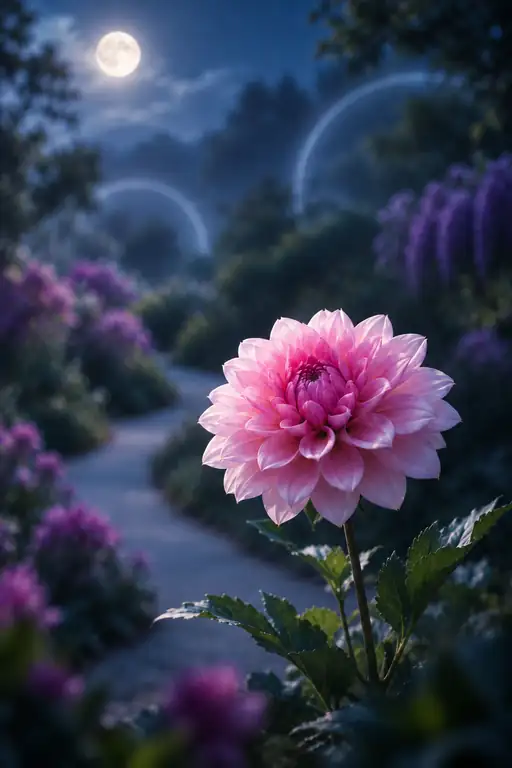 Full Moon and Light Arches over the Blooming Dahlia
Similar Artworks
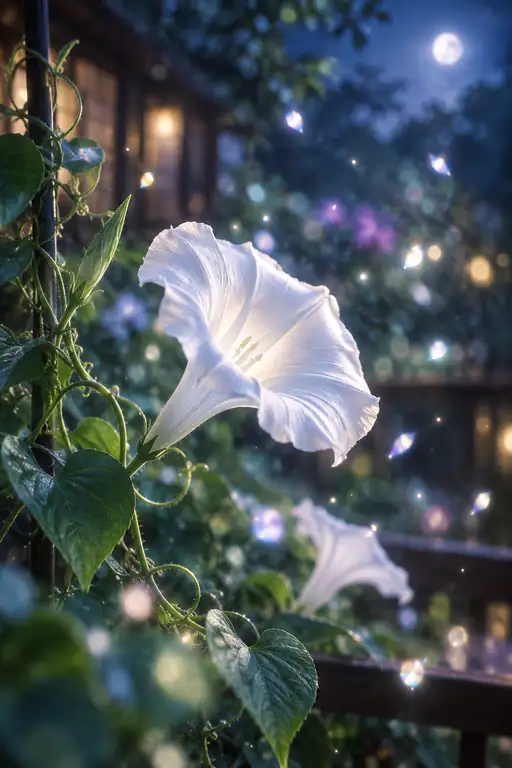 Moonlit Resonances in Pure White
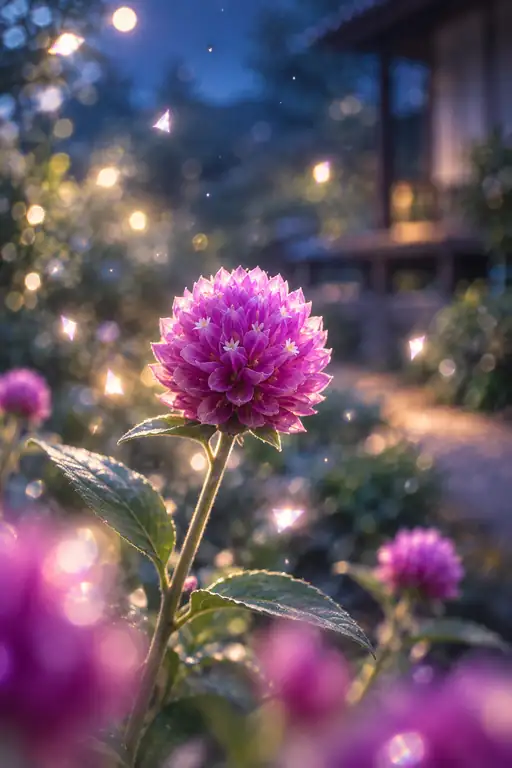 Midnight Glow in the Silent Courtyard
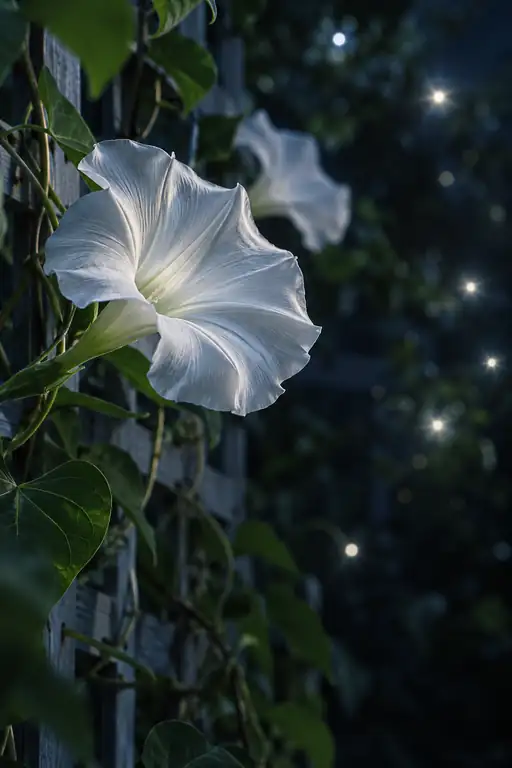 Veil of Starlight on the Lattice
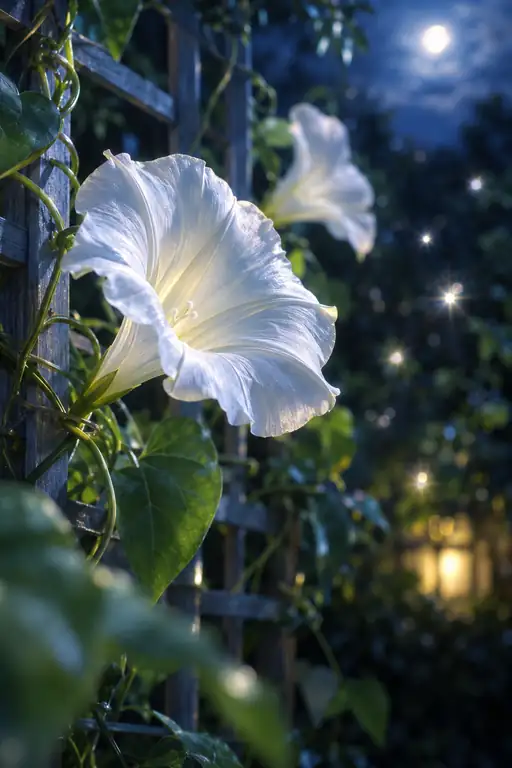 Moonlit Chalice in the Deep Night
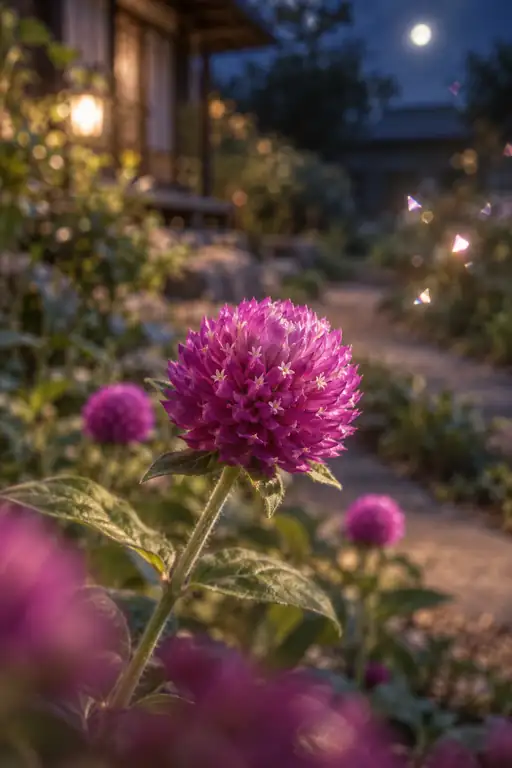 Crimson Sphere by the Moonlight Lantern
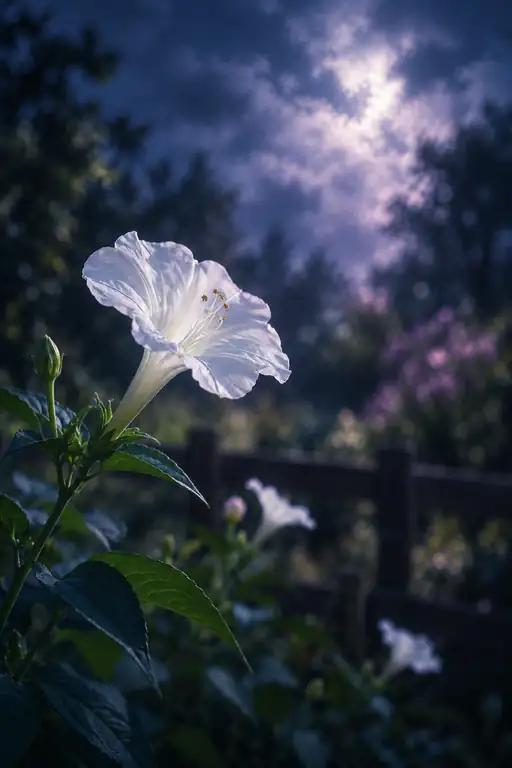 Pale Radiance under the Purple Night
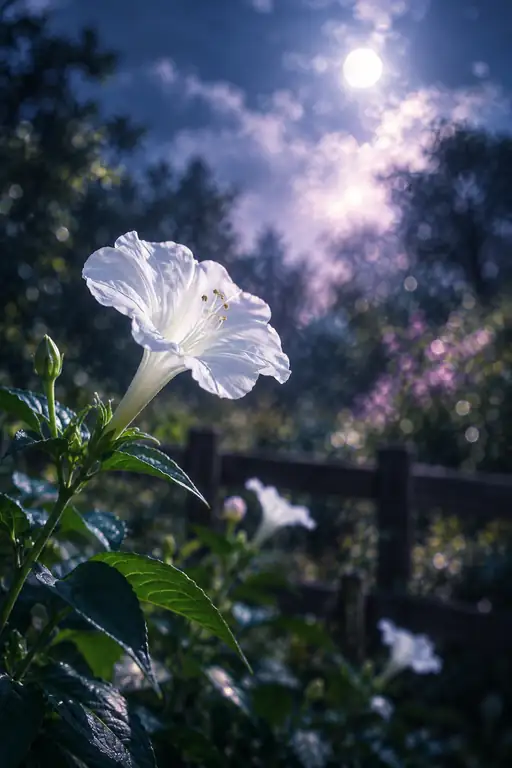 Whisper of the Moonlit Bloom
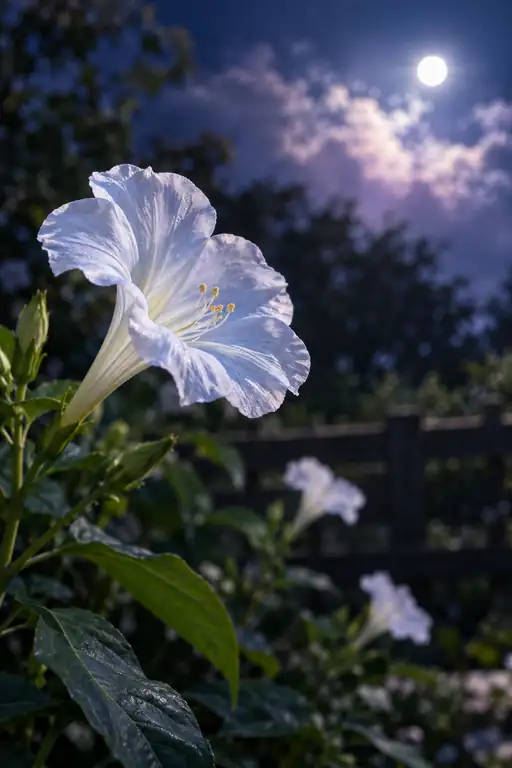 White Bloom beneath the Autumn Moon
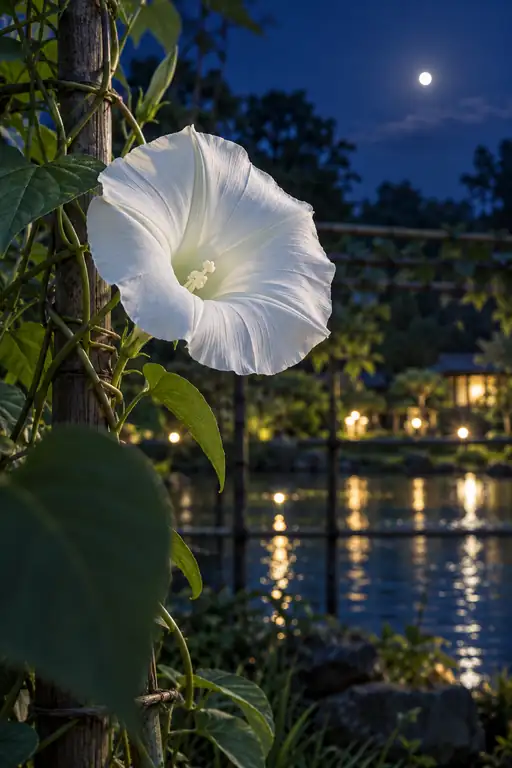 Serenade of the Water's Moonflower
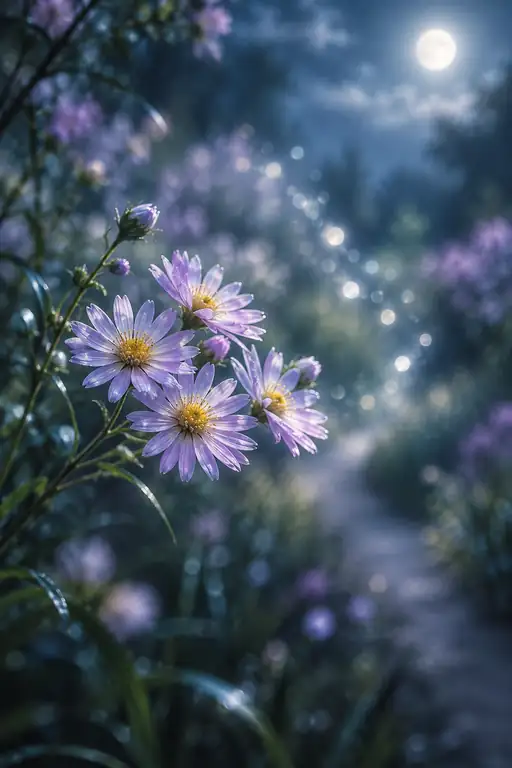 Trail of Luminous Stardust