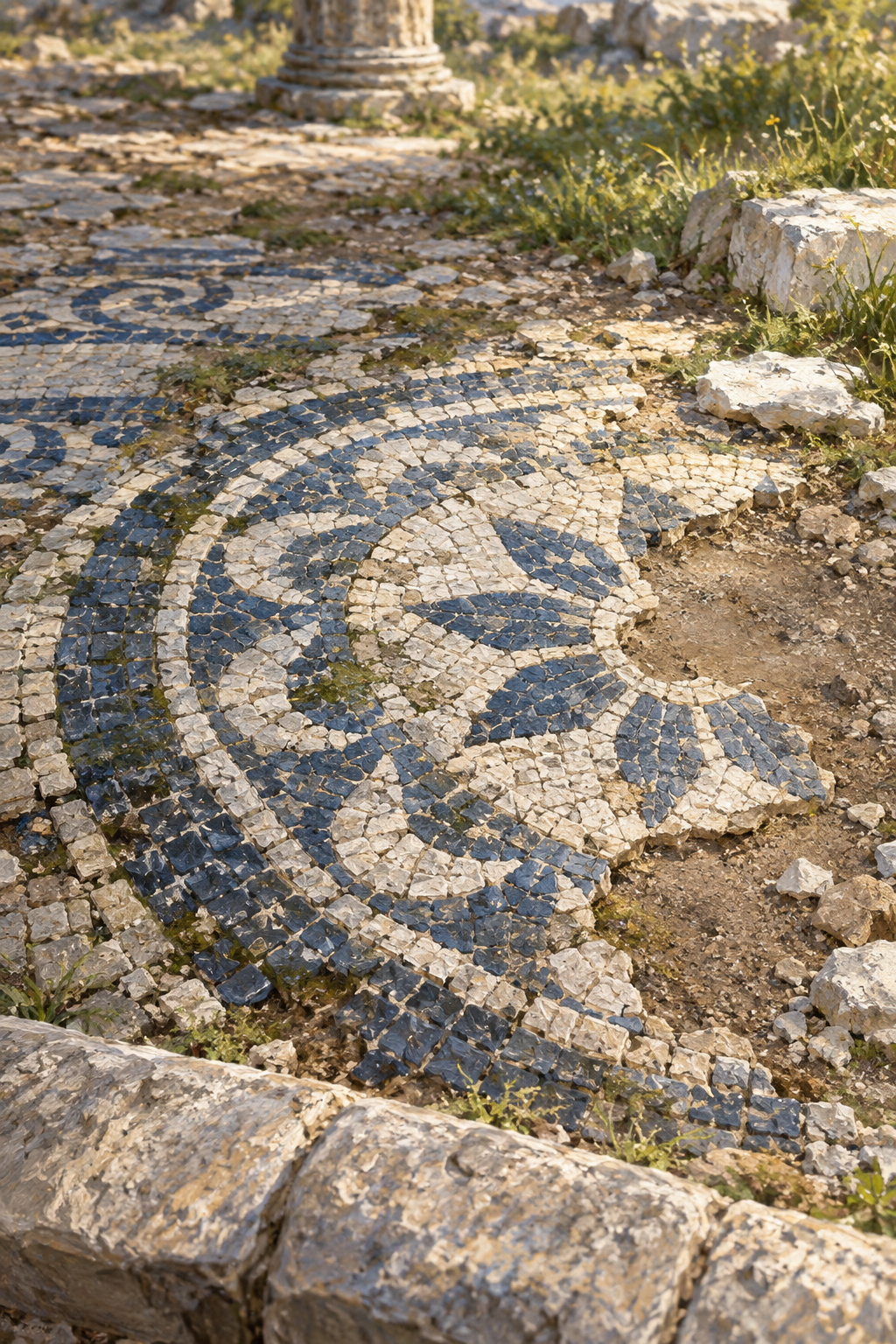
Remnants of the Azure Rosette
Critique
1. Introduction This archaeological still-life landscape focuses on a fractured Roman mosaic floor unearthed amid Mediterranean ruins. Captured from a close, downward perspective, the geometric palmette rosette lies partially swallowed by earthen erosion. Warm sunlight washes across weathered limestone, evoking classical elegance alongside the inexorable passage of time. 2. Description Centering the composition, an ornate semicircular medallion made of dark navy and ivory tesserae fans out in stylized floral petals. A jagged crater along the right breaks the pattern, exposing sandy soil and stony aggregate. In the foreground, heavily textured limestone curb blocks reveal fissures beneath thick impasto strokes. Beyond, a ruined column base stands among wild grasses and crumbling marble fragments. 3. Analysis Eliminating distant skylines concentrates pictorial energy entirely upon the material ground plane, transforming the floor into a meditation on tactile history. Directional sunlight from the upper right casts minute shadows within each mosaic grout line and along fractured stone boundaries. Saturated cobalt-blue tiles offer a vibrant counterpoint to neutral sandstone, umber earth, and scattered green sprigs. 4. Interpretation and Evaluation The partially obliterated mosaic serves as a visual metaphor for historical transience, where disciplined artistic order gradually surrenders to primeval soil. Yet, the enduring vibrancy of the remaining tesserae affirms the lasting resonance of ancient creative genius. The painter balances archaeological objectivity with poetic melancholy, honoring the dignity of cultural remnants. 5. Conclusion This painting is an exceptional study in archaeological texture, natural erosion, and classical design. Through disciplined compositional focus, tactile impasto handling, and luminous Mediterranean lighting, the artist immortalizes the sublime, poignant beauty of antiquity’s enduring remnants.
Same Subcategory
 1789079440375
Similar Artworks
 Where Yesterday Breathes
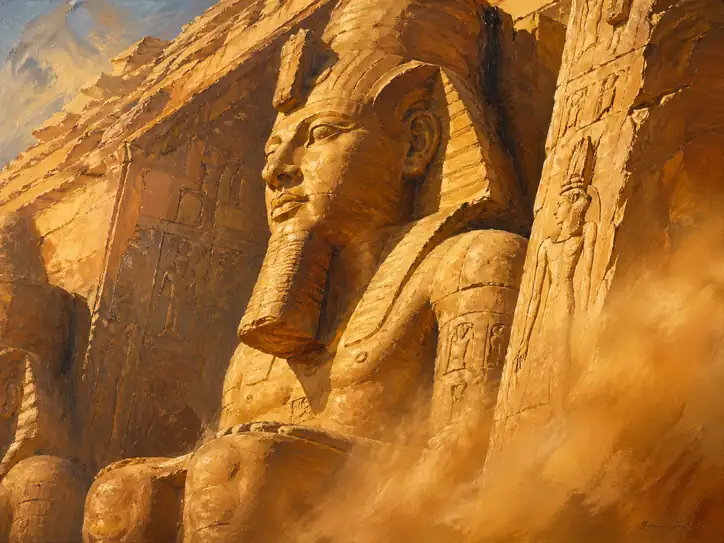 The Pharaoh's Eternal Vigil in the Storm
 Pillars Remembering the First Sky
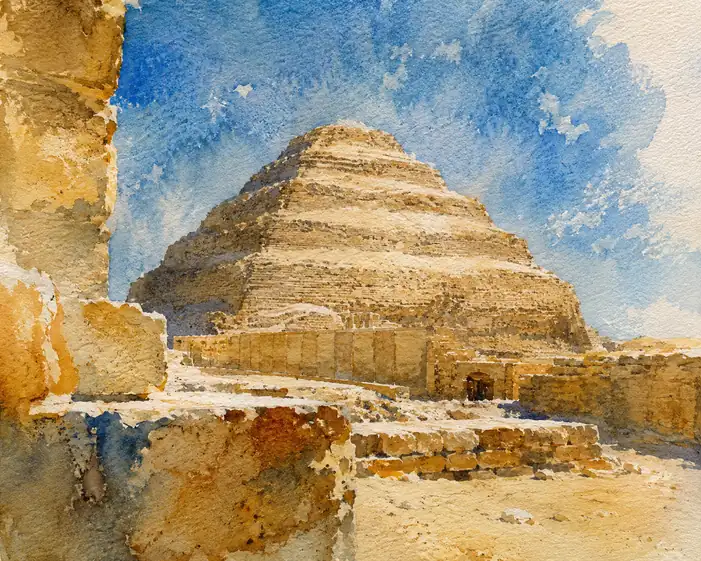 Steps to the Azure Sky
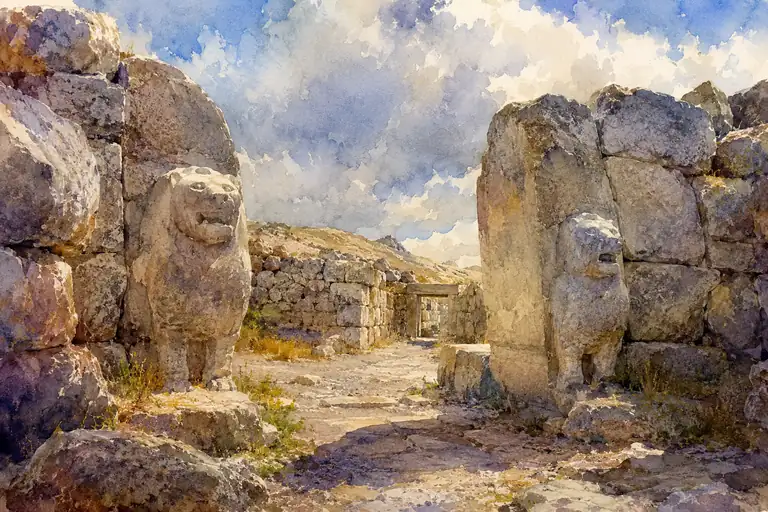 The Silent Roar of Hattusa
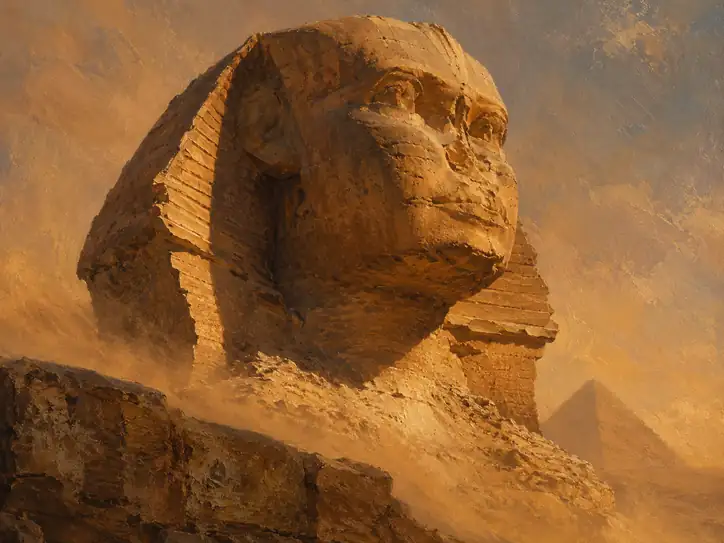 Gaze of the Silent Stone
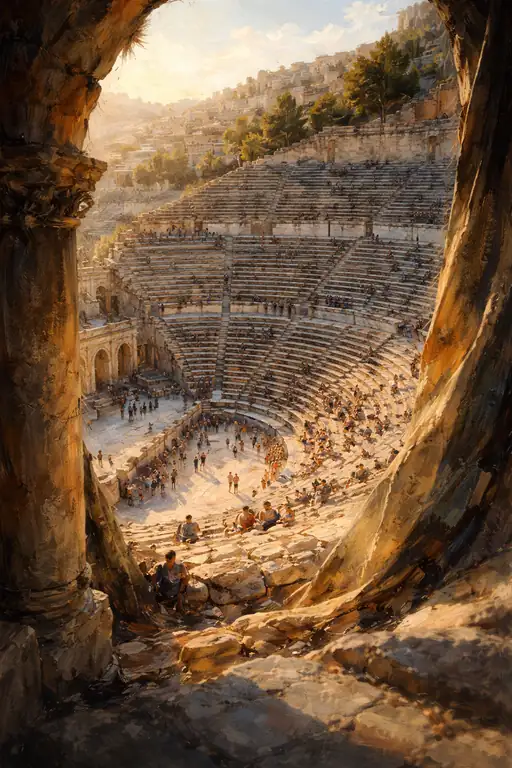 Echoes in Stone: A Portal to the Ancient Theater
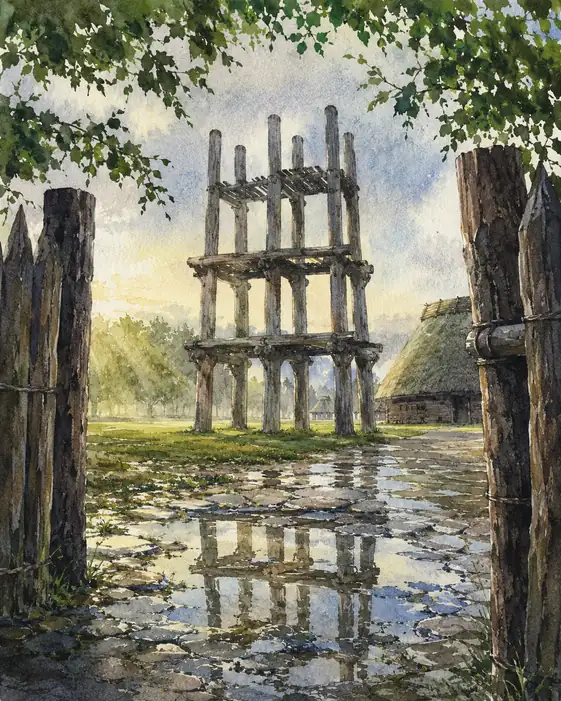 The Empty Tower Remembers Voices
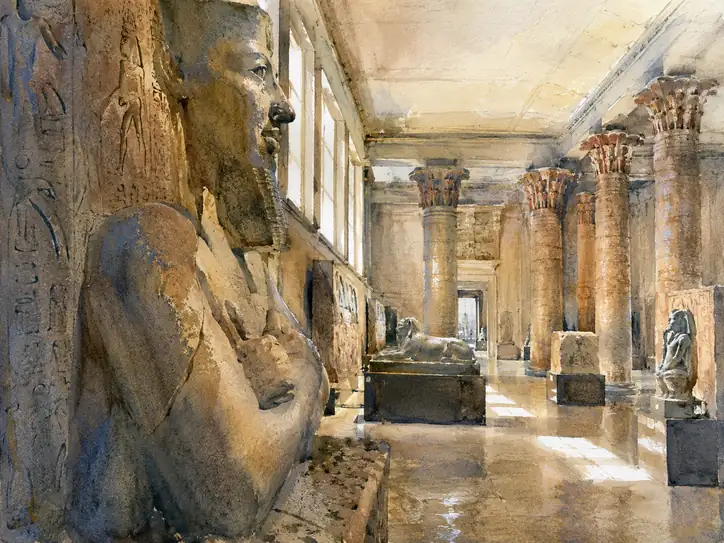 Echoes of the Pharaoh's Silence
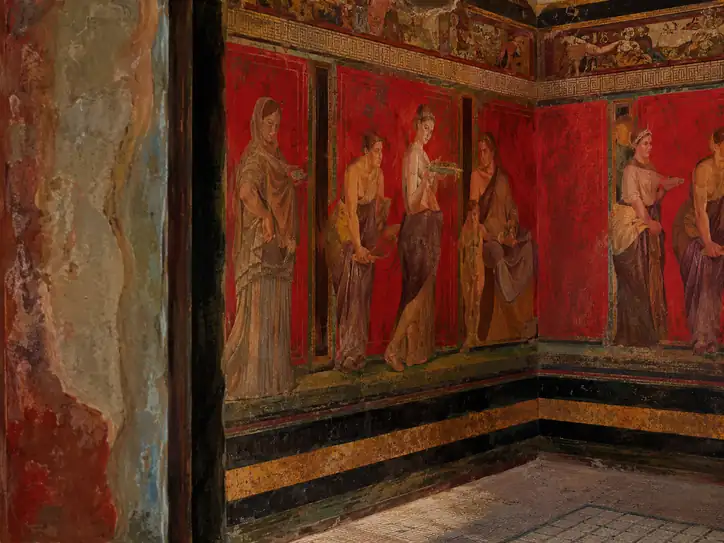 Red Memory of the Forgotten Rite