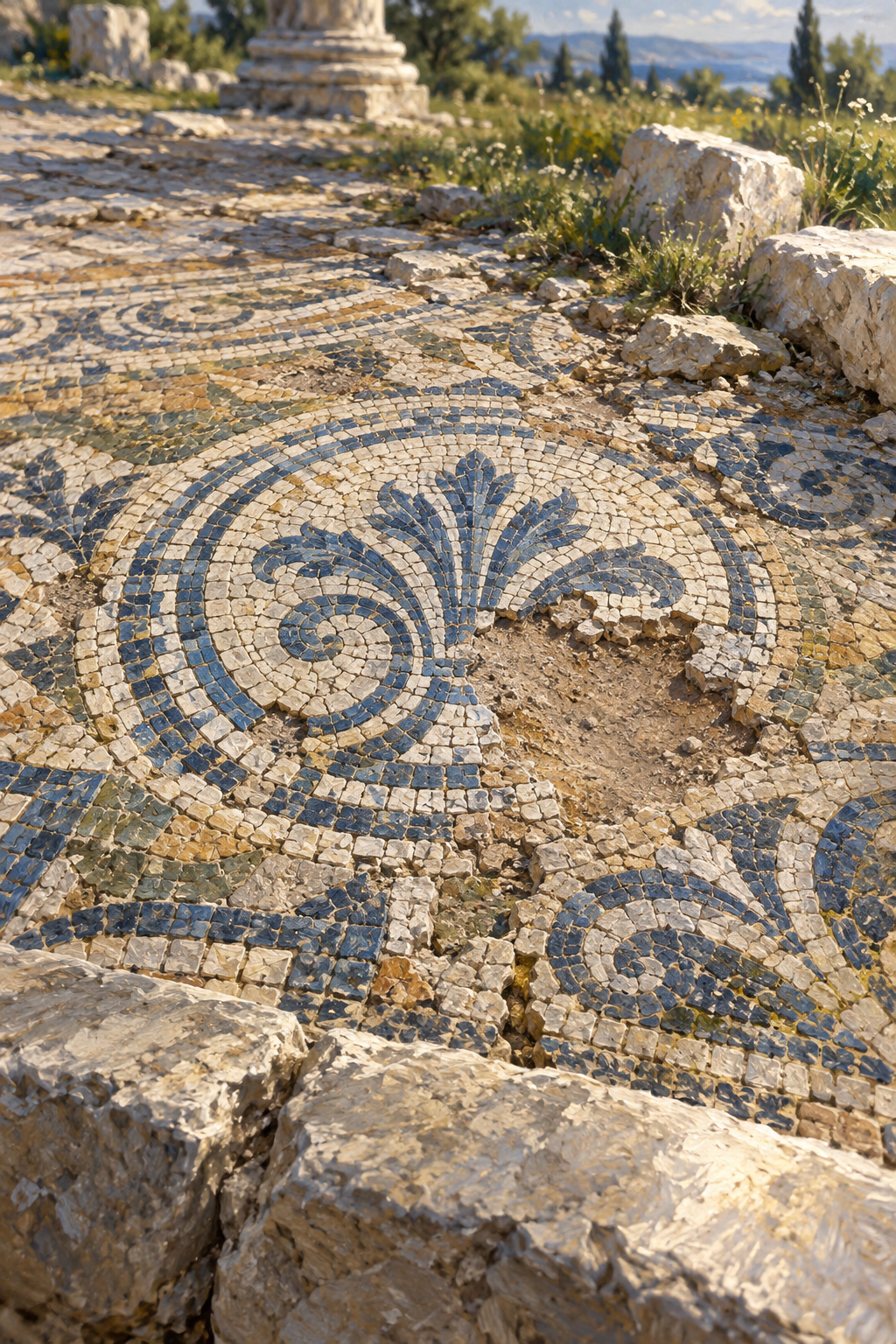
The Blue That Outlived Our Names
Critique
1. Introduction This oil painting presents a realistic view of an ancient mosaic floor surviving among sunlit Mediterranean ruins. Weathered by centuries yet retaining its classical majesty, the intricate ornamental stonework glows warmly under the open sky. The composition contemplates themes of past splendor and natural reclamation. 2. Description Captured from an oblique perspective, the composition centers upon an elaborate spiral acanthus motif formed from blue, white, and ochre tesserae. A fracture disrupts the medallion, revealing bare earth beneath broken edges. In the foreground, hewn limestone blocks anchor the frame, while the background reveals column bases, wild grasses, cypress trees, and the distant blue Mediterranean. 3. Analysis The work achieves strength through the contrast between Roman geometry and irregular decay. Slanting sunlight casts fine shadows across each tile, bestowing three-dimensionality upon the stone floor. The palette pits the warm beige of weathered limestone against deep cobalt and lapis hues. This blue resonates with the distant sea, binding the foreground to the vast landscape. 4. Interpretation and Evaluation The painting explores the aesthetics of ruins, where damage enhances rather than diminishes artistic dignity. Missing tesserae and invading weeds serve as poignant reminders of transience and nature's endurance over human monumentality. The artist demonstrates skill in rendering varied geological textures and optical light, elevating historical inquiry into a visual meditation on time. 5. Conclusion Initially appearing as an archaeological study, the work deepens into a lyrical contemplation of antiquity upon prolonged viewing. It preserves the surviving beauty of classical antiquity with sensitivity, connecting human achievement with the rhythms of the earth.
Same Subcategory
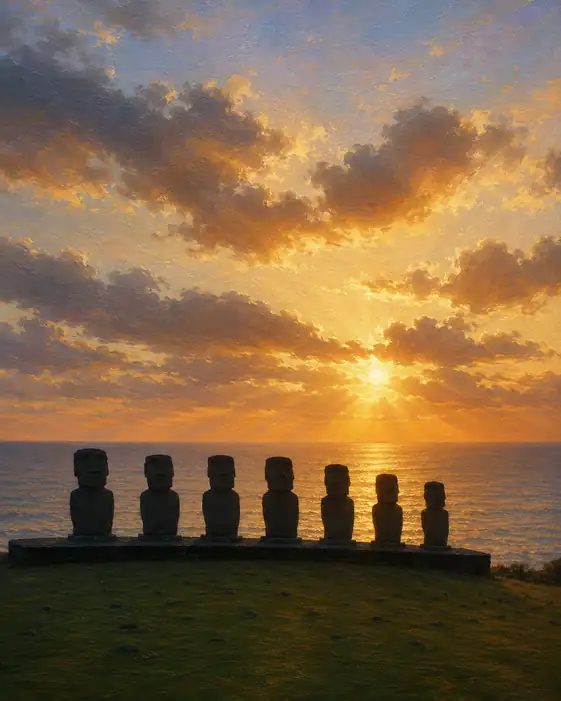 Sunburst at Dusk Over the Seven Moai
Similar Artworks
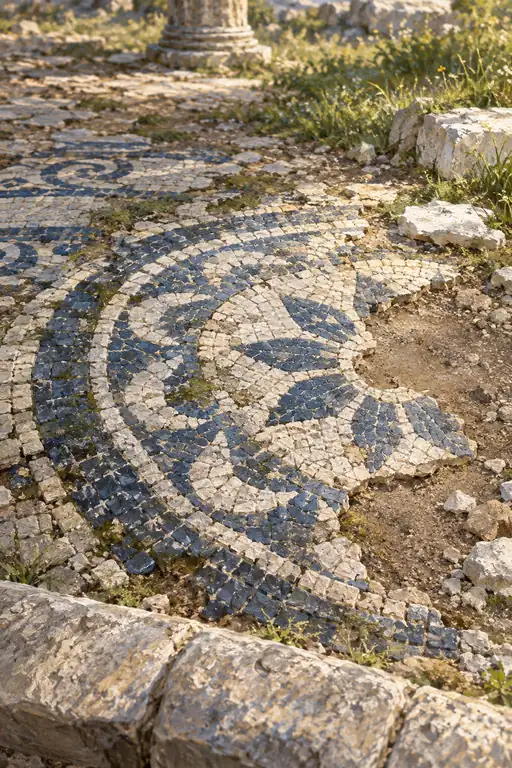 Remnants of the Azure Rosette
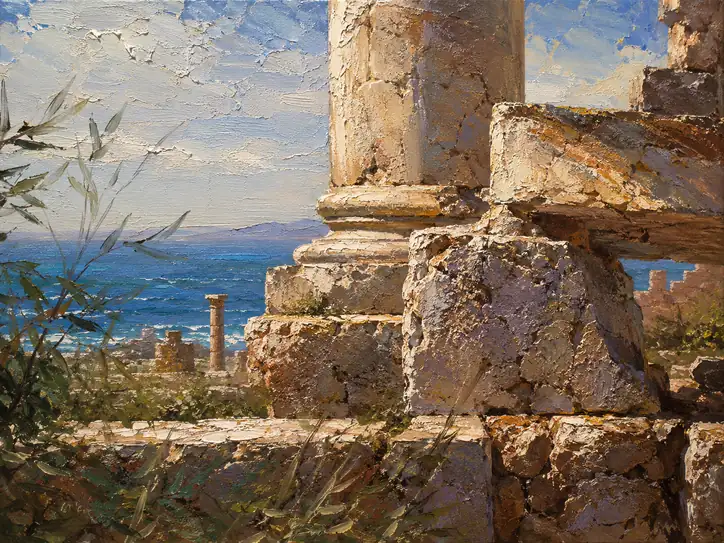 Sentinel of the Eternal Ocean
 Where Yesterday Breathes
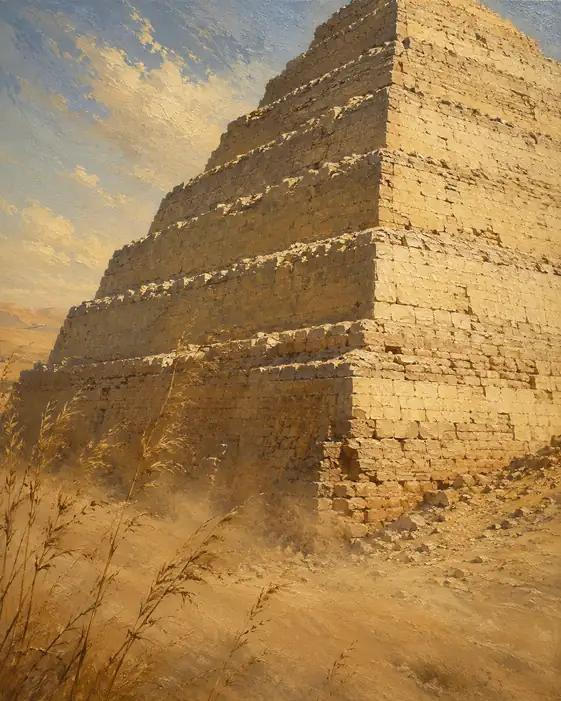 Steps in the Howling Sand
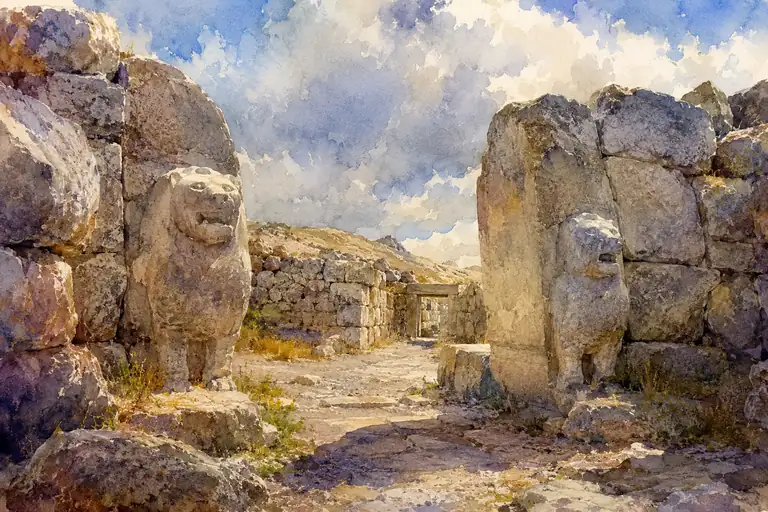 The Silent Roar of Hattusa
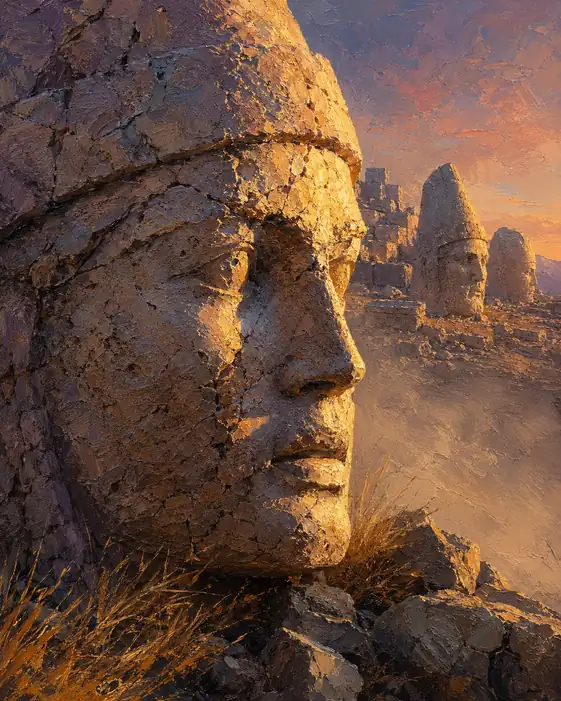 Gaze into the Golden Horizon
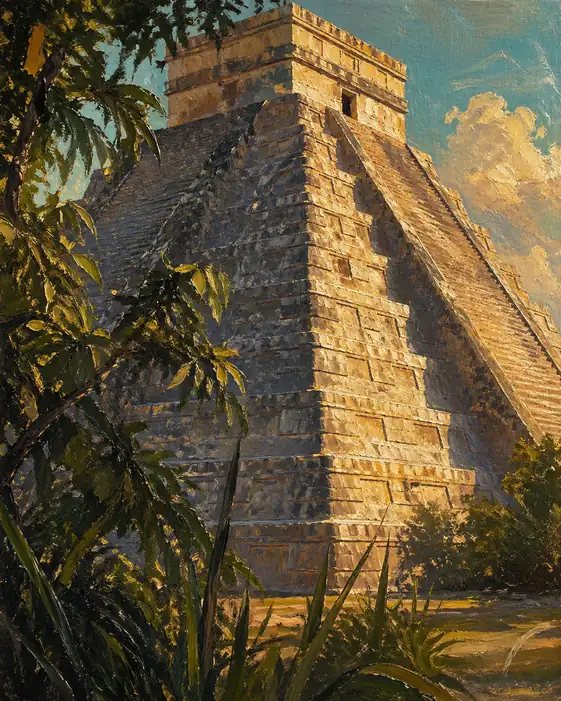 Echoes of the Golden Empire
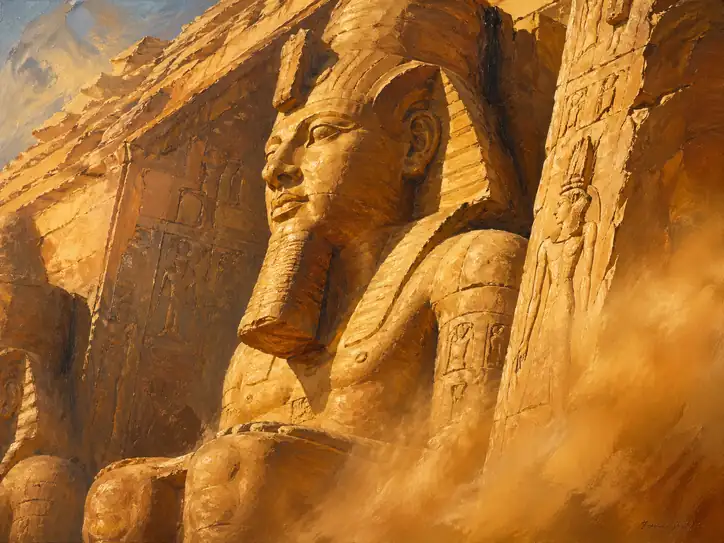 The Pharaoh's Eternal Vigil in the Storm
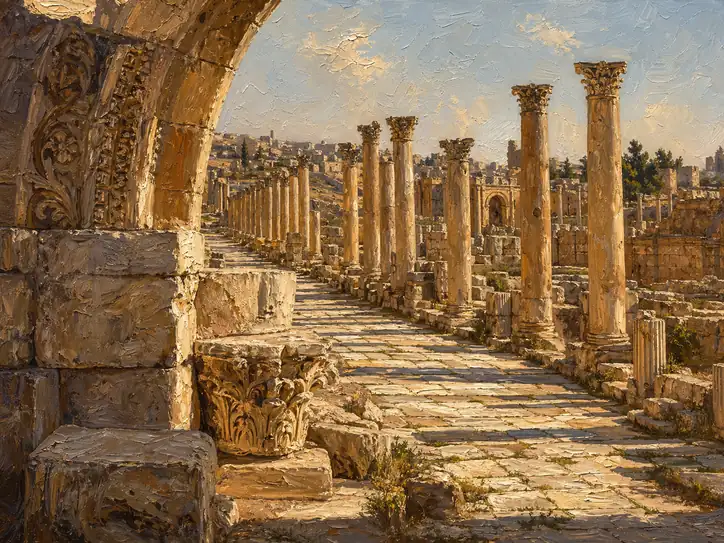 Echoes of the Corinthian Path
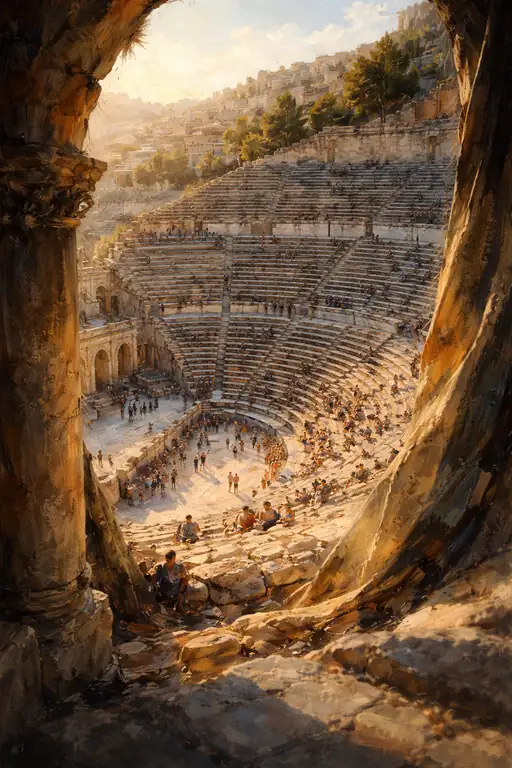 Echoes in Stone: A Portal to the Ancient Theater